$3,416 pp (USD)
2 travelers on Start dateArrival
Arrival

Day 1
Arusha to Tarangire National Park
Arusha to Tarangire National Park
After breakfast, you will be picked up from Arusha and driven further through the Maasai steppe via Makuyuni Junction and down to the Tarangire National Park. Enjoy a full-day game drive in Tarangire National Park.
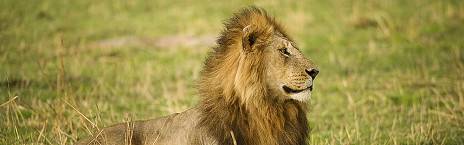
Tarangire has a diverse landscape, with 9 vegetation zones. Ancient baobab trees (the largest trees in Africa) dot the landscape, dwarfing the animals that feed beneath them. The Tarangire River, which meanders through the park, attracts an abundance of wildlife, from elephants, lions, leopards, buffaloes, zebras, giraffes, antelopes and a variety of colourful birds. The park is famous for having the largest elephant population in Tanzania, and during a safari there, you will have the chance to quietly observe many families of elephants interacting.
Stop for a picnic lunch in an observatory inside the park, where you will be able to view animals drinking water near the Tarangire River.
- Main Destination:
- Tarangire National Park
- Accommodation:
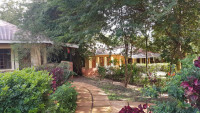
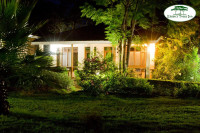
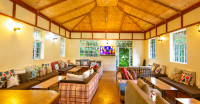
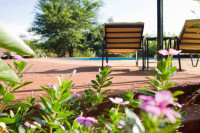
- Eileen's Trees Inn
Wildlife in Tarangire NP


- Meals & Drinks:
Day 2
From Karatu to Central Serengeti National Park
From Karatu to Central Serengeti National Park
After an early breakfast, depart towards the most famous National Park in the World, the Serengeti. The driving itself, although long, is spectacular. You will drive up the crater highlands, making a quick stop at the rim for an out-of-this-world view of Ngorongoro Crater. This will be an unforgettable moment for anyone seeing it for the first time.
As you progress well into the Serengeti, you will see why the name means, in the local language, "endless plains". The park covers 6,900 sq. miles (18,000 sq. km), and for most of it, the plains stretch to the horizon, defying your senses and perception of distance. It is the home of the great migration and to 2 million wildebeests, hundreds of thousands of zebras and all kinds of antelopes, including the abundant impalas and Thomson's gazelles. As for big cats and large predators, it's the place of choice to look out for lions, cheetahs, leopards and hyenas. More than 500 species of birds also inhabit this park.
- Main Destination:
- Central Serengeti National Park
- Accommodation:
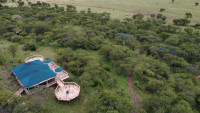
- Kumbukumbu Luxury Tented Camp
Wildlife in Serengeti NP
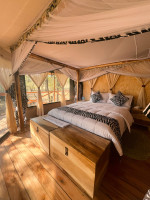

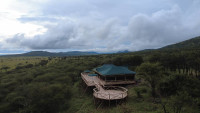
- Meals & Drinks:

Day 3
Exploring Northern and Central Serengeti National Park
Exploring Northern and Central Serengeti National Park
Take an early-morning game drive in Central Serengeti in search of hunting predators, then return to the camp for breakfast. After breakfast, depart with a picnic lunch and drive towards the Northern Serengeti for a game drive. The great migration is expected to occur in this area from late July to mid-October, crossing the famous Mara River into the Masai Mara Reserve in Kenya and back to the Serengeti. You will have a high chance of seeing them cross while the crocodiles attack them.
The Northern Serengeti is also home to many big cats, elephants, giraffes, impalas, and hippos, and it is another good place to see the endangered black rhino. In the late afternoon, you will continue to Northern Moyo Migration camp (located in the Northern Serengeti) for dinner and overnight.
- Main Destination:
- Northern Serengeti National Park
- Accommodation:
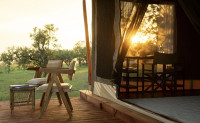
- Northern Serengeti Moyo Migration Camp Mara
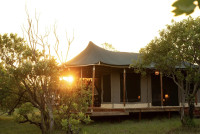
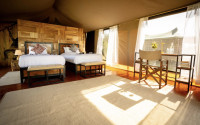

- Meals & Drinks:

Day 4
Northern Serengeti National Park - Mara River crossing
Northern Serengeti National Park - Mara River crossing
You can have a relaxed breakfast and depart for full-day game drives around 9:00 AM with a packed lunch, returning to camp in the late afternoon around 6:00 PM. Alternatively, you can depart at 6:00 AM for an early-morning game drive. Later, return to the accommodation for breakfast, relax for a bit and depart for an afternoon game drive with a packed lunch.
In the months between July and September, the Mara River offers the most dramatic river crossing of the great migration. Fierce, deep and heavily rain-fed, the river takes an enormous toll on the migrating wildebeest. Watching the wildebeest surging through the torrential flow, some drowning and a few falling prey to lurking crocodiles, is an unforgettable sight. If it’s your lucky day, you will be able to witness this natural wonder and watch nature take its course. Tracing the great migration, you might even move towards the Lobo Valley.
- Main Destination:
- Northern Serengeti National Park
- Accommodation:
- Northern Serengeti Moyo Migration Camp Mara
- Meals & Drinks:
Day 5
Northern to Central Serengeti National to Ngorongoro Highlands
Northern to Central Serengeti National to Ngorongoro Highlands
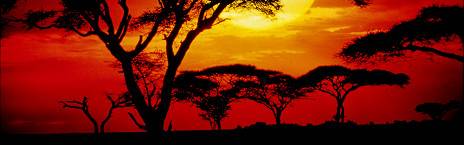
Return to Central Serengeti after spending a few days in the northern part of the park bordering the Masai Mara. The sunrise in the African savannah is one of the most beautiful experiences one can have. After the late-afternoon game drive, we will stop for a picnic lunch before transferring to Ngorongoro, the 8th Natural Wonder of the World. With walls 2,000 ft high and a crater floor spanning 102 sq. miles, the crater is a virtual Noah's Ark, inhabited by almost every species of wildlife indigenous to East Africa, including the rare black rhino. In fact, the crater has the greatest concentration of wildlife on the planet. It contains a river, several swamps, a soda lake that, from the top, looks like steam, full of flamingoes, a forest and open plains.
- Main Destination:
- Central Serengeti National Park
- Accommodation:
- Kumbukumbu Luxury Tented Camp
- Meals & Drinks:
Day 6
Ngorongoro Crater to Karatu
Ngorongoro Crater to Karatu
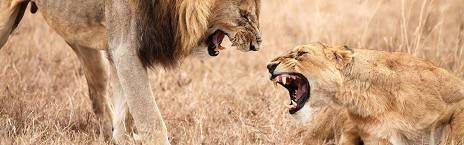
Today, after breakfast, we will drive down to Ngorongoro Crater, often referred to as a wonder of the world. This is the world's largest caldera, full of grassland, forest and swamp, a setting of jaw-dropping beauty. The crater floor's permanent water supports a resident population of more than 25,000 large mammals. Here you will find many of the reasons you chose to go on safari in Tanzania. Lion, waterbuck, hippo, baboon, black rhino, leopard, hyena, jackal, buffalo, warthog, gazelle and many more animals are sheltered here.
The Maasai share this incredible space with their cattle in an area that has been a separate conservation area since 1956 and a UNESCO World Heritage Site since 1978. This harmonious cohabitation of man and beast makes Ngorongoro unique. After a stop for a picnic lunch, drive slowly up the steep road out of the crater and drive to Karatu for dinner and an overnight stay.
- Main Destination:
- Ngorongoro Crater
- Accommodation:
- Eileen's Trees Inn
Wildlife in Ngorongoro Crater


- Meals & Drinks:

Day 7
Visit the Hadzabe tribe - Return to Arusha
Visit the Hadzabe tribe - Return to Arusha
Today will be a special and unique day. You will wake up very early, just before sunrise, and follow your guide until he finds the Hadzabe tribe, one of the last true nomadic tribes in Africa. After some background on the tribe, you will join them for their morning activities. This experience is off the beaten track and does not feel touristy by any means. The photographic opportunities are out of this world. This tour will definitely be a highlight of your safari. The experiences you have with the tribe can either be joining the men in their daily hunting or the women in their fruit-gathering session. In both of them, you will learn about many aspects of the Hadzabe way of living.
After finishing the activities with the tribe, we will drive to Arusha town or the airport.
- Main Destination:
- Lake Eyasi
- Accommodation:
- No accommodation (End of tour)
- Meals & Drinks: