
Tour Length
Rates in USD $ – Change Currency
Per person, excl. international flightsOperator Rating
Other Tour Features
Filter by Operator
Filter by Accommodation
Tanzania Fly-in Safaris
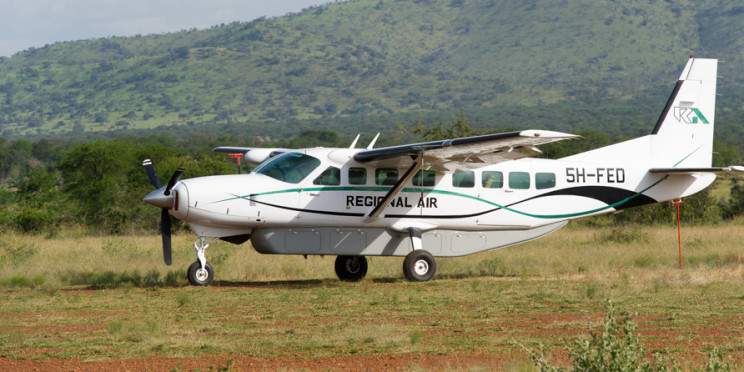
Fly-in safaris are a popular choice in Tanzania. A well-established travel industry ensures that logistics run very smoothly. This includes a large network of flights to and between safari destinations, so that most parks and reserves are now accessible by air as well as by road. In the past, flying into Tanzanian parks and reserves tended to be extremely expensive as this was only possible with charter flights. More recently, the concept of scheduled safari flights has opened up fly-in Tanzanian safaris to more people. Aside from the obvious time-saving logistical advantages of a fly-in safari over a road safari, you’ll have the bonus of an aerial view of the park before landing.
-

8-Day Wildlife Safari & Zanzibar Escape Fly-in and Out
$2,935 to $3,032 pp (USD)
Tanzania: Private tour
Mid-range Lodge & Tented CampYou Visit: Zanzibar (Start), Serengeti NP, Ngorongoro Crater, Tarangire NP, Zanzibar (End)

Go Serengeti African Tours
4.9/5 – 751 Reviews

-

5-Day Fly-in for Mid-Range Safari in Serengeti & Crater
$2,329 to $2,351 pp (USD)
Tanzania: Private tour
Mid-range Lodge & Tented CampYou Visit: Arusha (Start), Serengeti NP, Ngorongoro Crater, Arusha (End)
Amshar Serengeti Adventures
4.9/5 – 256 Reviews
-

4-Day Fly-in & out Safari Tarangire, Ngorongoro & Ndutu
$2,048 pp (USD)
Tanzania: Private tour
Mid-range Lodge & Tented CampYou Visit: Zanzibar (Start), Tarangire NP, Ngorongoro Crater, Ndutu (Southern Serengeti NP), Zanzibar (End)

Uro Adventure & Safaris
5.0/5 – 46 Reviews
-
Best Seller

8-Day Ultimate Luxury Safari in Tanzania (Fly-in)
$6,970 pp (USD)
Tanzania: Private tourLuxuryLodge & Tented Camp
You Visit: Arusha (Start), Serengeti NP, Ngorongoro Crater, Kilimanjaro Airport (End)

Lion King Adventures
5.0/5 – 1,670 Reviews
-
Best Seller
![5-Day After Afcon Serengeti and Ngorongoro Adventure]()
5-Day After Afcon Serengeti and Ngorongoro Adventure
$2,925 pp (USD)
Tanzania: Private tourLuxuryLodge & Tented Camp
You Visit: Arusha (Start), Northern Serengeti NP, Central Serengeti NP, Ngorongoro Highlands, Ngorongoro Crater, Arusha (End)

Fantastic Time Travel
5.0/5 – 23 Reviews
-
![5-Day Fly in Serengeti, Ngorongoro Crater & Lake Manyara]()
5-Day Fly in Serengeti, Ngorongoro Crater & Lake Manyara
$3,206 to $3,285 pp (USD)
Tanzania: Private tour
Mid-range Lodge & Tented CampYou Visit: Zanzibar (Start), Serengeti NP, Ngorongoro Crater, Lake Manyara NP, Zanzibar (End)
Safari Soles
5.0/5 – 653 Reviews
-
![4-Day Above and Beyond - Luxury]()
4-Day Above and Beyond - Luxury
$3,555 to $4,466 pp (USD)
Tanzania: Private tourLuxuryLodge
You Visit: Arusha (Start), Serengeti NP, Arusha (End)
Soul of Tanzania
5.0/5 – 561 Reviews
-
![4-Day Fly in Serengeti, Ngorongoro Crater and Tarangire]()
4-Day Fly in Serengeti, Ngorongoro Crater and Tarangire
$2,171 to $2,276 pp (USD)
Tanzania: Private tour
Mid-range Lodge & Tented CampYou Visit: Zanzibar (Start), Serengeti NP, Ngorongoro Crater, Tarangire NP, Zanzibar (End)
Josh Dreamland Safari
5.0/5 – 117 Reviews
-
![4-Day Fly-in Anniversary in the Wild]()
4-Day Fly-in Anniversary in the Wild
$2,148 pp (USD)
Tanzania: Private tour
Mid-range Lodge & Tented CampYou Visit: Zanzibar (Start), Serengeti NP, Ngorongoro Crater, Tarangire NP, Zanzibar (End)
Go Makini Tanzania Expedition
4.9/5 – 185 Reviews
-
![3-Day Flyin Private Camping to Serengeti & Ngorongoro]()
3-Day Flyin Private Camping to Serengeti & Ngorongoro
$1,816 pp (USD)
Tanzania: Private tourBudgetCamping
You Visit: Zanzibar (Start), Serengeti NP, Ngorongoro Crater, Zanzibar (End)
Lekobe Adventures Safaris
5.0/5 – 147 Reviews
-
![3-Day Fly in Safari to Serengeti National Park]()
3-Day Fly in Safari to Serengeti National Park
$2,121 pp (USD)
Tanzania: Private tour
Mid-range Tented CampYou Visit: Arusha (Start), Central Serengeti NP, Arusha (End)
Tanzania Songbirds Safaris
5.0/5 – 46 Reviews
-
![5-Day Ultra Luxury Fly-in Serengeti with Meliá Lodges]()
5-Day Ultra Luxury Fly-in Serengeti with Meliá Lodges
$3,971 to $4,080 pp (USD)
Tanzania: Private tourLuxuryLodge & Hotel
You Visit: Moshi (Start), Arusha (City), Serengeti NP, Central Serengeti NP, Ngorongoro Highlands, Ngorongoro Crater, Arusha (End)
Sereland Africa Safaris
5.0/5 – 182 Reviews
-
![3-Day Fly Safari from Arusha to Serengeti & Ngorongoro]()
3-Day Fly Safari from Arusha to Serengeti & Ngorongoro
$1,817 pp (USD)
Tanzania: Private tourLuxuryTented Camp
You Visit: Arusha (Start), Serengeti NP, Ngorongoro Crater, Arusha (End)
Akondo Adventures
5.0/5 – 217 Reviews
-
![4-Day Serengeti & Ngorongoro Sky Safari Luxury Fly-in]()
4-Day Serengeti & Ngorongoro Sky Safari Luxury Fly-in
$2,160 to $2,250 pp (USD)
Tanzania: Private tourLuxuryLodge & Tented Camp
You Visit: Arusha (Start), Serengeti NP, Central Serengeti NP, Ngorongoro Crater, Arusha (End)
Magic of Wild
5.0/5 – 17 Reviews
-
![3-Day Private Midrange Serengeti Ngorongoro Fly -in]()
3-Day Private Midrange Serengeti Ngorongoro Fly -in
$2,006 to $2,059 pp (USD)
Tanzania: Private tour
Mid-range Lodge & Tented CampYou Visit: Zanzibar (Start), Central Serengeti NP, Serengeti NP, Ngorongoro Crater, Zanzibar (End)
Kilipath African Safari
4.9/5 – 447 Reviews
-
![3-Day Luxury Safari from Zanzibar with Walking Safari]()
3-Day Luxury Safari from Zanzibar with Walking Safari
$1,613 pp (USD)
Tanzania: Private tourLuxuryLodge & Hotel
You Visit: Zanzibar (Start), Tarangire NP, Ngorongoro Crater, Arusha NP, Zanzibar (End)
Karibu Tena Tours
4.9/5 – 86 Reviews
-
![5-Day Fly-in Serengeti Safari from Zanzibar]()
5-Day Fly-in Serengeti Safari from Zanzibar
$2,530 to $2,630 pp (USD)
Tanzania: Private tour
Mid-range Lodge & Tented CampYou Visit: Zanzibar (Start), Serengeti NP, Ngorongoro Crater, Lake Manyara NP, Zanzibar (End)
Serengeti Insider Safaris
4.9/5 – 47 Reviews
-
![3-Day Luxury Safari Zanzibar -Tarangire, Crater, Manyara]()
3-Day Luxury Safari Zanzibar -Tarangire, Crater, Manyara
$1,764 pp (USD)
Tanzania: Private tourLuxuryLodge
You Visit: Zanzibar (Start), Tarangire NP, Ngorongoro Crater, Lake Manyara NP, Zanzibar (End)
Serengeti Savanna Adventures
5.0/5 – 99 Reviews
-
![3-Day Serengeti Flight Safari Package]()
3-Day Serengeti Flight Safari Package
$2,097 to $2,198 pp (USD)
Tanzania: Private tour
Mid-range Tented CampYou Visit: Zanzibar (Start), Serengeti NP, Zanzibar (End)
Meru Slopes Tours & Safaris
5.0/5 – 1,014 Reviews
-
![3-Day Safari Tarangire Ngorongoro Manyara from Zanzibar]()
3-Day Safari Tarangire Ngorongoro Manyara from Zanzibar
$1,356 pp (USD)
Tanzania: Private tour
Mid-range LodgeYou Visit: Zanzibar (Start), Tarangire NP, Ngorongoro Crater, Lake Manyara NP, Zanzibar (End)
Rioba Safaris
5.0/5 – 80 Reviews














Related Searches
5 Questions About Tanzania Fly-in Safaris

Answered by
Ariadne van Zandbergen
Ariadne is a renowned Africa expert. She and her husband write and update many Bradt guides together, including the guide to Tanzania. She first visited Tanzania 30 years ago, and returns to visit the parks and reserves every three to four years. She has visited most parks on both road and fly-in safaris.› More about Ariadne
5 Questions About Tanzania Fly-in Safaris
 Ariadne van Zandbergen
What are the pros and cons of a driver-guide vs fly-in safari in Tanzania?
“There are two ways to travel in the country. You can either book a safari where a driver-guide travels with you for the duration of your trip. He or she will drive you from park to park and will usually conduct the game drives as well. In this case the guide will be a constant throughout your holiday. You might have to cover big distances between parks, which can be tiresome, but you’ll get to see a lot of rural Tanzania, away from the tourist hot spots. Alternatively, you can opt for a Tanzanian fly-in safari where you travel from park to park by light aircraft. This will save you a lot of time as it cuts out many additional kilometers spent in the car, often on bumpy roads. When you fly between parks, you’ll be met at the airstrip by your local guide who will look after you for the duration of your stay at that particular destination. So, you’ll have a different guide in each place. These guides work on-site and tend to be more knowledgeable than the general guides based in the cities. On a fly-in safari, your game drives will be conducted in the lodge’s open-sided vehicles. These spacious, open cars are superior to the pop-up-roof 4x4s used for road safaris. It is also possible to combine both types of safari. You could, for instance, book a road safari to Serengeti National Park or Nyerere National Park (formerly Selous Game Reserve) with a fly-in extension to a more remote part of the country, such as Mahale Mountains National Park to see chimpanzees.”
1Is a fly-in safari much more expensive than a road safari?
“Flying from destination to destination is usually more expensive than a road safari in Tanzania. And while there are many advantages to a fly-in safari, many people booking a safari are budget-conscious. However, several local carriers now offer scheduled flights between parks. Furthermore, competition between different carriers flying to the popular parks has grown in recent years, bringing down the prices. Most importantly, there is usually no need for charter flights. Since flying from park to park is essentially more time-productive, you can probably do a safari in fewer days compared to a similar road safari. Taking that into account, you might find a fly-in package doesn’t actually work out to be a lot more expensive than a road safari. Having said that, fly-in packages usually focus on the most exclusive and upmarket all-inclusive lodges, and these come at a premium price.”
2What are the luggage restrictions on a fly-in trip in Tanzania?
“Safari flights are mostly on small light aircraft, and strict luggage restrictions apply, usually 15kg/33lb per person. As the planes are quite small, they also ask you to use a soft bag, such as a duffel bag, which is easier to store in a confined space. As you will be allowed more on your international flight, you can either pack with these small aircraft restrictions in mind, or you can leave some luggage with your tour operator or hotel at your city of entry. To accommodate the luggage restrictions, most lodges will do same-day laundry and many luxury lodges even include it in their package. Luggage restrictions on safari flights can be problematic for keen photographers with large lenses and lots of other equipment. If in doubt, always check with your tour operator in advance. In extreme cases you might need to book an extra seat.”
3How reliable and safe are the small aircraft used for fly-in safaris in Tanzania?
“A fly-in safari and the light aircraft used in Tanzania are very safe. Tanzania has a well-established safari industry, and most of the local carriers have been operating for many years. Aside from having very strict safety regulations, they are generally very reliable too. Although several carriers offer scheduled flights to the popular parks and reserves, they do so in a flexible manner depending on bookings. The route will be scheduled, but stops at different airstrips are planned according to the bookings. That means that exact timings are usually announced the day before any given flight. The lodges are in direct contact with the airlines, and they inform their guests in ample time. They also organize transfers to and from the airstrips.”
4Are some parks or reserves in Tanzania more suitable to this type of safari?
“Most parks and reserves can be visited on a road or fly-in safari. Both tour options are popular in the Northern circuit (Ngorongoro Crater, Serengeti, Lake Manyara and Tarangire National Parks). As the Ngorongoro Conservation Area lies en route to the Serengeti, a great option is to drive one way and fly back. This saves time and avoids having to drive the same route twice. The Southern circuit (Mikumi, Nyerere and Ruaha National Parks) is a bit more remote. Many visitors opt to fly-in, although a road trip is the budget-friendly option, especially if only visiting one reserve. The Western circuit is almost exclusively visited on fly-in safaris. It includes Katavi, Mahale Mountains and Gombe National Parks. Katavi is a typical savannah reserve with lion, elephant and so on, while Mahale and Gombe both offer the more-specialized attraction of chimp trekking on the shores of Lake Tanganyika. Katavi and Mahale are usually visited together as they are connected by a convenient flight schedule. Katavi can theoretically be visited by road, but this is hardly ever done as it is so remote and difficult to reach. There are no access roads at all to Mahale and Gombe. Visitors usually come by flight, followed by a private boat transfer. The inaccessibility of the Western circuit makes it very exclusive. There are just a handful of small, mostly rustic lodges in these parks. Fly-in packages are expensive, but visitors get a special wild experience away from the crowds.”
5Tanzania Reviews

Sue is an award-winning writer who specializes in African travel and conservation. She writes for national newspapers, magazines, Rough Guides and Lonely Planet.
The perfect safari destination
With almost a quarter of this vast country dedicated to wildlife reserves and national parks, Tanzania is justifiably regarded as Africa’s premier safari destination. It’s one of my favourite countries, not just for the bush, beaches...

Brian is an award winning travel writer, author of safari books and regular contributor to magazines such as BBC Wildlife and Travel Africa.
Wilderness unlimited
Tanzania may be one of the world’s poorest countries but its national parks and game reserves are the crown jewels of Africa. First among equals is the Serengeti, probably the most famous wildlife refuge on the planet, a wilderness the...
We loved the variety of landscapes including savanna, forest and mountains.
Our main goal was to climb Mount Meru, and this was the highlight of the trip. We bolted on a one-day safari and found it easy to reach the national parks from Arusha, from where we also set off for the mountain climb. We were very pleased...
Amazing, exceeded expectations
Our group of 6 traveled on an amazing Safari in the Serengeti and Ngorongoro crater and local tours to schools, coffee plantations and Maasai village. Aminiel was our amazing guide with Paschal as our driver and guide. They were extremely...
 NL
Mind-blowing wildlife
We did a 3 day safari to Lake Manyara NP, Tarangire NP and Ngorongoro Crater Conservation Area. It was an unforgettable experience! Uncomfortable? Yes, but worth every bump in the road! We did safaris before, but out of the Big 5, still...
 IE
Tanzania is a wonderful destination for bountiful wildlife, beautiful scenery and welcoming people.
We visited Tanzania as a family group on a safari in September 2026. We visited Tarangire National Park, Ngorongoro Conservation Area and the Serengeti. We had the most enjoyable and memorable holiday of our lives. The wildlife was...