

$1,598 pp (USD)
2 travelers on Start dateArrival
Arrival

Day 1
Arrival in Amani Nature Reserve
Arrival in Amani Nature Reserve
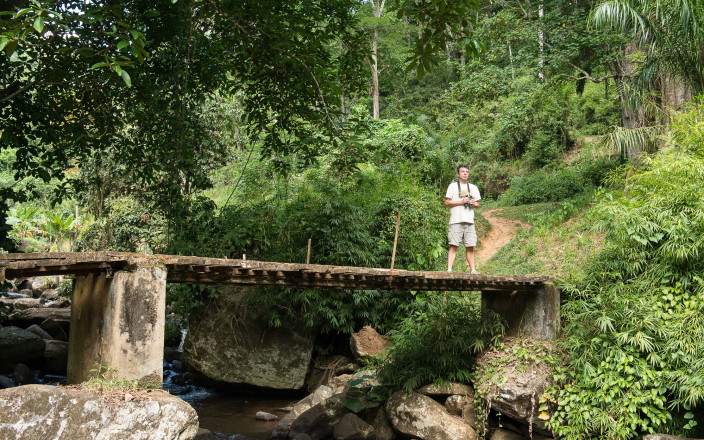
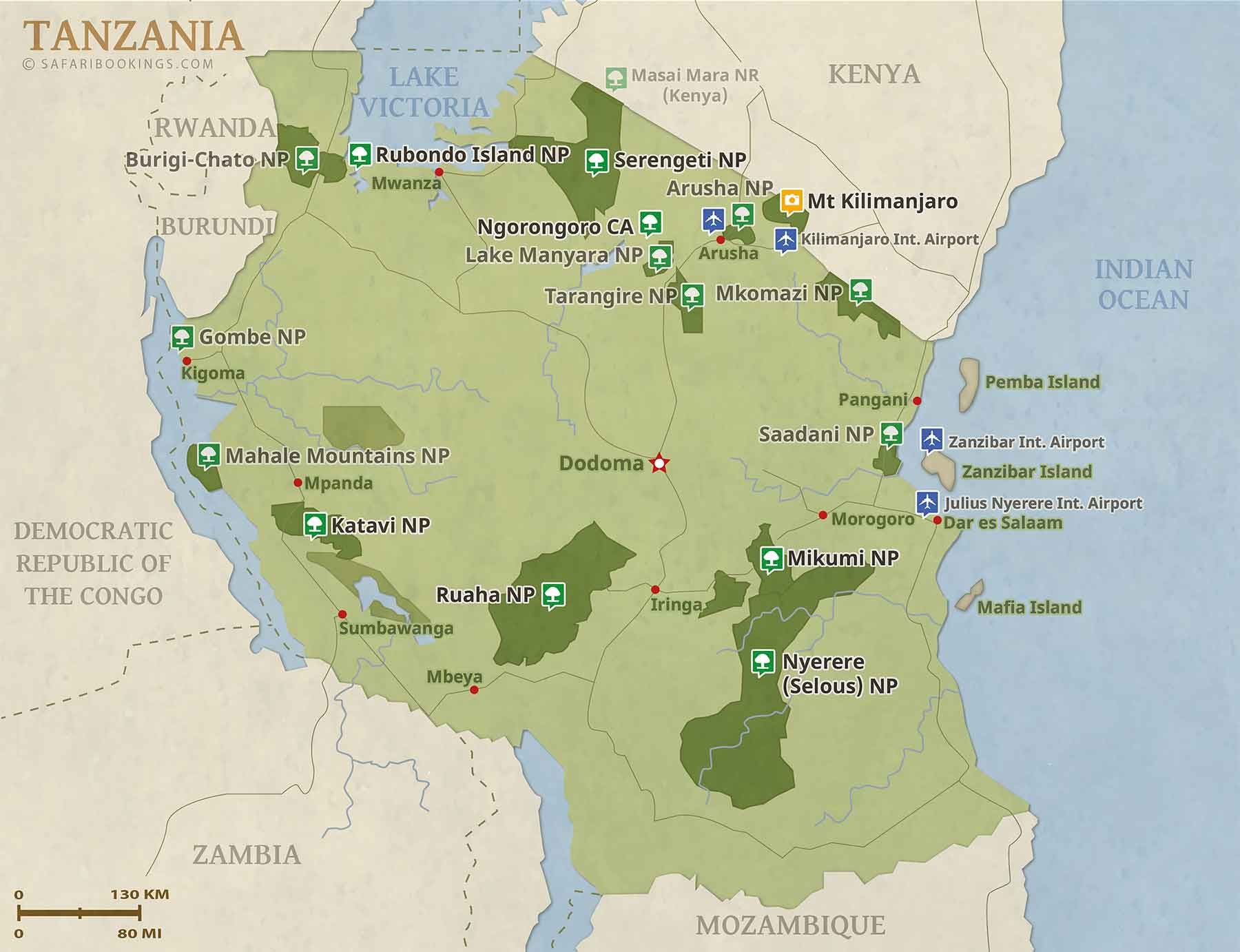
Your journey begins with a scenic morning drive from Dar es Salaam or Arusha into the East Usambara Mountains with private transport, arriving at Amani Nature Reserve. You'll stay in a forest eco-lodge or a restored guesthouse that once housed early 20th-century scientists. After settling in, join a guided walk to explore former laboratories and botanical grounds, reflecting on the area's historical significance. The evening features a welcome dinner with fresh mountain cuisine and a seminar on Amani's ecological and medical importance during the German and British administrations.
Meals: Lunch | Dinner
Accommodation: TFS Rest House.
- Main Destination:
- Amani Nature Reserve (Usambara Mountains)
- Accommodation:
- Amani Rest House
- Meals & Drinks:

Day 2
Medicinal Plants and the Origins of Tropical Pharmacology
Medicinal Plants and the Origins of Tropical Pharmacology
After breakfast, participants explore the historic Amani Botanical Garden, known for cinchona trees and rauvolfia plants used in malaria and hypertension treatments. They enjoy a picnic lunch and visit preserved medicinal laboratories that aided wartime medical efforts. Discussions highlight Amani's contributions to global medicine and the blend of colonial pharmacology with indigenous knowledge. The day emphasizes tropical forests as living pharmacies, with a practical session on plant identification and medicinal properties.
Meals: Breakfast | Lunch | Dinner
Accommodation: TFS Rest House.
- Main Destination:
- Amani Nature Reserve (Usambara Mountains)
- Accommodation:
- Amani Rest House
- Meals & Drinks:

Day 3
Tropical Disease Research and the Malaria Legacy
Tropical Disease Research and the Malaria Legacy
The day focuses on Amani's contributions to malaria, sleeping sickness, and yellow fever research. Participants explore historic research stations with preserved microscopes and insect slides, and learn about mosquito breeding and sanitation campaigns influenced by European public health theories. A seminar highlights Amani's foundational work in malaria research in Tanzania, advancing modern epidemiology and vector control. Medical students observe the evolution of diagnostic techniques, while researchers discuss surveillance and the transition from colonial science to national research infrastructure. The afternoon includes examining ethical issues in early human subject research in tropical medicine.
Meals: Breakfast | Lunch | Dinner
Accommodation: TFS Rest House.
- Main Destination:
- Amani Nature Reserve (Usambara Mountains)
- Accommodation:
- Amani Rest House
- Meals & Drinks:
Day 4
Documentation, Specimens, and Scientific Method
Documentation, Specimens, and Scientific Method
The Amani Natural History Museum showcases preserved specimens that highlight early European scientists' cataloguing practices. A colonial-era library features handwritten journals and botanical drawings, acknowledging the often-overlooked contributions of African assistants. Participants in a hands-on workshop learn historical documentation techniques like plant pressing and specimen labeling, fostering an understanding of research methodologies and the recognition of credited individuals in science. An optional evening documentary screening explores Amani's role in German East Africa and British administration, prompting reflections on science as both knowledge production and a political tool.
Meals: Breakfast | Lunch | Dinner
Accommodation: TFS Rest House.
- Main Destination:
- Amani Nature Reserve (Usambara Mountains)
- Accommodation:
- Amani Rest House
- Meals & Drinks:
Day 5
Entomology and Sustainable Ecosystems
Entomology and Sustainable Ecosystems
At the Amani Entomology Laboratory, participants explore historic butterfly collections and insect archives that aided early agricultural planning for German plantations. Interactive sessions cover biological control methods, emphasizing colonial agricultural science's impact on ecosystems. The afternoon links historical studies to modern sustainable agriculture and climate adaptation, featuring local scientists discussing research on food security and biodiversity balance in the Usambara landscape.
Meals: Breakfast | Lunch | Dinner
Accommodation: TFS Rest House.
- Main Destination:
- Amani Nature Reserve (Usambara Mountains)
- Accommodation:
- Amani Rest House
- Meals & Drinks:
Day 6
Biodiversity, Field Science, and Nocturnal Ecology
Biodiversity, Field Science, and Nocturnal Ecology
A guided forest trek showcases endemic birds, blue monkeys, amphibians, and chameleons, highlighting ecological interdependence. A herpetology session compares historical German studies of amphibians and reptiles with modern conservation challenges amid climate change. After dinner, a nocturnal ecology walk allows participants to experience the forest as early researchers did, addressing challenges of field science in tropical conditions. Discussions cover health risks faced by early scientists, such as malaria and snakebites, and the evolution of modern field safety protocols.
Meals: Breakfast | Lunch | Dinner
Accommodation: TFS Rest House.
- Main Destination:
- Amani Nature Reserve (Usambara Mountains)
- Accommodation:
- Amani Rest House
- Meals & Drinks:
Day 7
Colonial Medicine to Contemporary Conservation
Colonial Medicine to Contemporary Conservation
The morning focuses on the shift from German to British governance post-World War I and its impact on scientific work at Amani. Visits to former colonial hospital sites highlight the practice of tropical medicine under challenging conditions, allowing examination of old medical records and pharmaceutical stores. In the afternoon, discussions shift to Amani's current conservation and climate research initiatives, emphasizing its role in biodiversity protection, reforestation, and eco-tourism. A farewell ceremony at a botanical viewpoint celebrates the integration of science, healing, and the environment that shapes Amani's identity, concluding with a group reflection on the week's lessons.
Meals: Breakfast | Lunch | Dinner
Accommodation: TFS Rest House.
- Main Destination:
- Amani Nature Reserve (Usambara Mountains)
- Accommodation:
- Amani Rest House
- Meals & Drinks:
Day 8
Transition from Amani to Muheza
Transition from Amani to Muheza
After breakfast, participants travel from the mountains to Muheza town, a key site for Amani's malaria research. This journey marks a shift from historical laboratories to modern healthcare systems. Upon arrival, they receive an orientation on Tanzania's district healthcare structure, including the roles of medical offices, hospital administration, and community programs. Participants also get a briefing on clinical engagement, covering professional conduct, infection prevention, and cultural considerations.
Meals: Breakfast | Lunch | Dinner
Accommodation: Hilltop Muheza.
- Main Destination:
- Muheza (Town)
- Accommodation:
- Hilltop Hotel Muheza
- Meals & Drinks:
Day 9
Clinical Practice and Modern Research in Muheza
Clinical Practice and Modern Research in Muheza
The day starts with a visit to Muheza District Hospital, where participants observe various health services, including maternal and child health, malaria management, and outpatient care. Clinical staff lead discussions on managing childhood illnesses amid resource limitations. Following this, participants meet with scientists from the National Institute for Medical Research to learn about malaria and infectious disease research through laboratory demonstrations and discussions on funding, ethics, and sustainable research partnerships. The evening concludes with a roundtable on decolonizing global health, focusing on power dynamics and equitable academic exchanges, encouraging participants to share their insights.
Meals: Breakfast | Lunch | Dinner
Accommodation: Hilltop Muheza.
- Main Destination:
- Muheza (Town)
- Accommodation:
- Hilltop Hotel Muheza
- Meals & Drinks:
Day 10
Community Health Systems and Living Ethnomedicine in Nimri
Community Health Systems and Living Ethnomedicine in Nimri
The final day focuses on community-based healthcare in Nimri village, where participants engage with health workers and traditional practitioners. Observations highlight social determinants of health, such as nutrition and education, influencing household health outcomes. A session on ethnomedicine emphasizes local knowledge of medicinal plants, showcasing preparation methods and diagnostic frameworks distinct from biomedical approaches. Discussions cover intellectual property rights and integrating traditional knowledge into health systems. The journey concludes with a workshop for participants to reflect and design ethical, collaborative research proposals with Tanzanian institutions, emphasizing community-centered health practices and equitable collaboration.
Meals: Breakfast | Lunch | Dinner
Accommodation: Hilltop Muheza.
- Main Destination:
- Muheza (Town)
- Accommodation:
- Hilltop Hotel Muheza
- Meals & Drinks:
Day 11
Departure
Departure
After ten days of immersive engagement with tropical science, clinical medicine, biodiversity, and community health, participants depart with a profoundly deepened understanding of East Africa's medical history and its evolving global health landscape. Transfers to Dar es Salaam or Arusha are arranged according to individual flight schedules.
- Main Destination:
- No major destination visited
- Accommodation:
- No accommodation (End of tour)
- Meals & Drinks: