
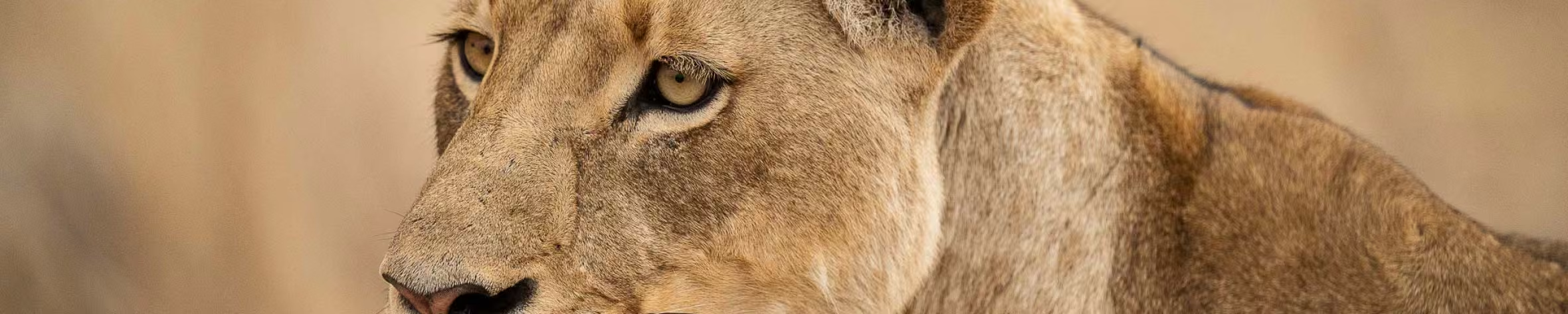
Balule Nature Reserve is part of the same vast unfenced ecosystem as Kruger National Park. Created in the 1990s, this patchwork of private properties is home to several relatively well-priced, all-inclusive lodges that offer comparable viewing to elsewhere in Greater Kruger. However, the wilderness feel in parts of Balule is diluted by the density of small, built-up plots.
-
 Best Time To Go
- May to September (Dry season)
-
 High Season
- October to March (Not overly crowded)
-
 Size
Size
- 420km² / 162mi²
-
 Altitude
-
340-519m /1,115-1,703ft
 View Photos
 View Photos
+24
Photos
View Photos
+24
Photos
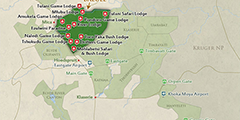 Open Map
Pros & Cons
- Excellent wildlife viewing, with all of the present
- Part of the vast Greater Kruger ecosystem
- Bisected by the scenic Olifants River, a wildlife magnet in the Dry season
- All-inclusive lodges are generally less expensive than in other private reserves in Greater Kruger
- Guided in open 4x4 vehicles
- Many lodges offer and
- No permitted
- Leopards are less easily seen than elsewhere in Greater Kruger
- Some properties are small and cluttered with human-made constructions
Wildlife
Balule offers an authentic wildlife experience. Most of the animals you’d hope to see on safari are free to wander back and forth across unfenced borders with neighboring parts of Greater Kruger. The perennial Olifants River, which runs through Balule, attracts large concentrations of wildlife, including elephant, buffalo, giraffe, , , and . These in turn attract lions and other predators in good numbers.
More about Balule’s wildlifeScenery
The main habitats in Balule are and grassland. A scenic highlight is the perennial Olifants River, which flows eastward through the northern part of the reserve for 20km/12mi before crossing into Kruger National Park. To the west, the lofty mountains of the provide Balule with a dramatic backdrop.
Activities
The main activity in Balule is guided in open 4x4 vehicles. These are usually included in overnight packages offered by the reserve’s various lodges and take place in the early morning and late afternoon, which are the most productive times for viewing wildlife. Some lodges also offer guided and . game drives and other unguided activities are not permitted.
Weather & Climate
Summer runs from October to April. As in other parts of Greater Kruger, these hottest months coincide with the Wet season and are characterized by high humidity and occasional afternoon storms. Winter, which falls between May and September and is known as the Dry season, tends to be pleasant with milder temperatures and practically no rain. At this time of year, the mercury drops at night, so you may need an extra blanket.
More about the weather and climateBest Time To Visit
Wildlife viewing in Balule is at its best throughout the dry winter months (May to September), with conditions peaking in September as the days warm up. This is also a relatively low season for tourism, so the reserve tends to be quieter than in summer (October to April). Vegetation is greener and lusher in summer, but this makes spotting animals more difficult. Birding is excellent from November to April.
More about the best time to visit