

$1,631 pp (USD)
2 travelers on Start dateArrival
Arrival

Day 1
Arrival in Amani Nature Reserve
Arrival in Amani Nature Reserve
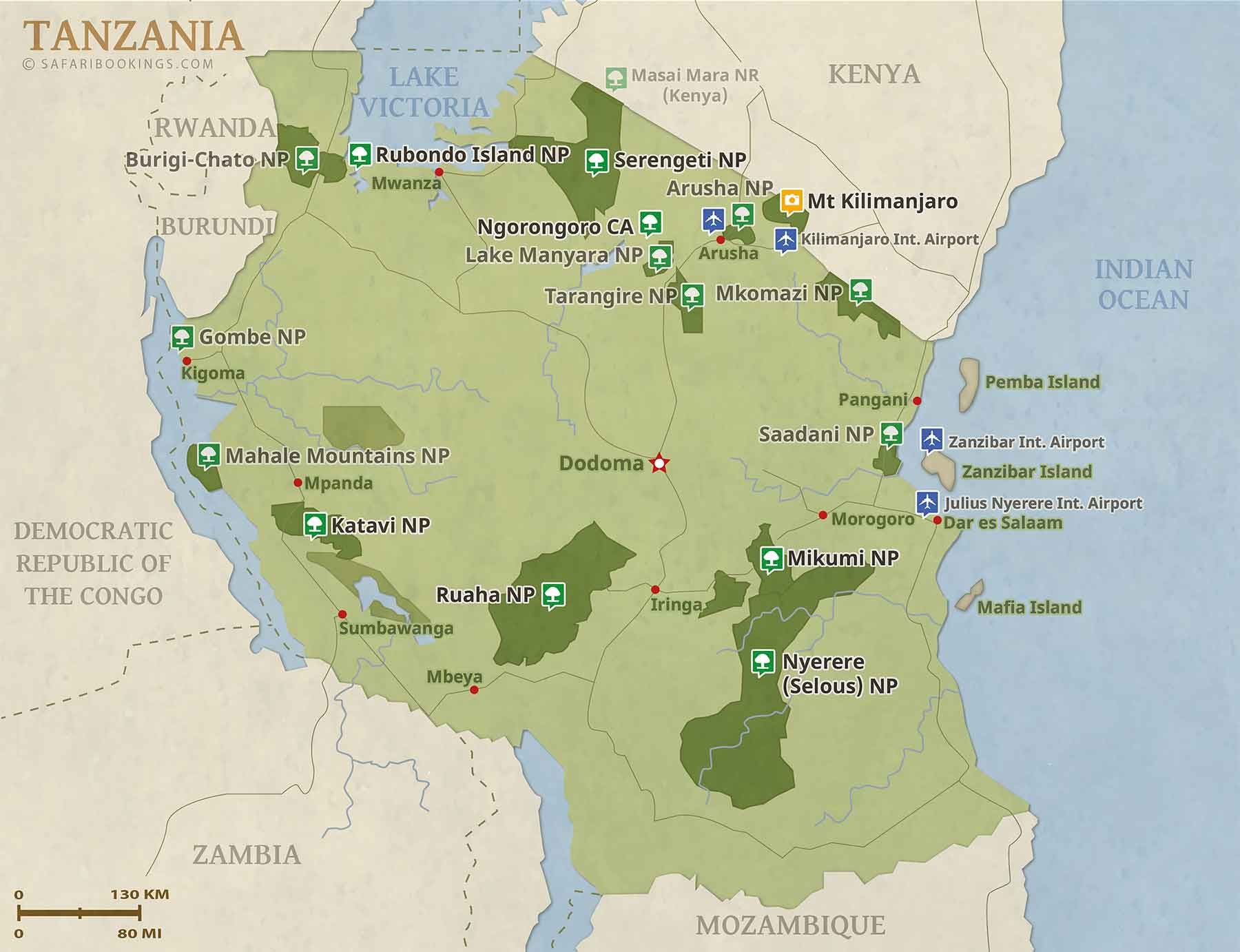
Your trip begins with arrival in Amani Nature Reserve via Muheza or Tanga, followed by a scenic transfer through the lush East Usambara Mountains to your eco-lodge or historic German guesthouse. After check-in and some time to relax after travel, you take a short introductory walk around the surrounding forest environment to experience the cool montane climate and unique rainforest atmosphere. In the evening, an orientation session introduces the history and ecological significance of the Amani Nature Reserve and its role as one of the earliest tropical research centers in Africa. The program schedule, scientific themes, and field activities for the coming days are presented before dinner and overnight stay at the lodge.
- Main Destination:
- Amani Nature Reserve (Usambara Mountains)
- Accommodation:
- Amani Rest House
- Meals & Drinks:

Day 2
Colonial Foundations – German Cultural and Scientific Legacy
Colonial Foundations – German Cultural and Scientific Legacy
The day centers on Amani's colonial history under German rule in the late 19th century. Participants explore historic German colonial buildings, including administrative houses and laboratories, showcasing original stone architecture and European design. British-era structures are also compared. The visit includes the German memorial site and a discussion on the establishment of the Amani Agricultural and Biological Institute, a pioneer research institute in Africa. Participants learn about Amani's role in scientific exchange and Germany's ambition to create a major botanical garden. The day ends with insights into German botanical documentation and classification methods.
- Main Destination:
- Amani Nature Reserve (Usambara Mountains)
- Accommodation:
- Amani Rest House
- Meals & Drinks:
Day 3
Amani Botanical Garden and Medicinal Plant Research
Amani Botanical Garden and Medicinal Plant Research
In the morning, there will be a guided tour of the Amani Botanical Garden, one of Africa’s oldest, featuring over 1,000 species, including Cinchona for malaria, Rauvolfia for hypertension, and various medicinal plants like Camphor and Eucalyptus. The tour includes visits to old German medicinal plant extraction labs and demonstrations of traditional methods such as drying, tincture extraction, and oil distillation. A talk will cover Amani's role as a medical research institute during WWI and WWII, highlighting the preparation of quinine and herbal medicine for soldiers, along with the small infirmaries and specialized tropical disease hospital on-site.
- Main Destination:
- Amani Nature Reserve (Usambara Mountains)
- Accommodation:
- Amani Rest House
- Meals & Drinks:
Day 4
Medical Research and Vector-Borne Disease Studies
Medical Research and Vector-Borne Disease Studies
In the morning, participants visit old medical research labs and entomology stations, focusing on research related to malaria, sleeping sickness, and yellow fever. They study mosquito vectors (Anopheles, Aedes, Culex) and view 20th-century microscopes and modern vector research equipment. Hands-on learning includes breeding, dissecting, and studying mosquitoes under German-British protocols, as well as using vector control tools like traps and insect netting, inspired by German sanitation theories.
In the afternoon, they visit the Zenet Experimental station and sentinel houses, culminating in a presentation on vector-borne diseases and their symptoms, covering bacterial, parasitic, fungal, and viral diseases.
- Main Destination:
- Amani Nature Reserve (Usambara Mountains)
- Accommodation:
- Amani Rest House
- Meals & Drinks:
Day 5
Museum, Library, and Colonial Scientific Documentation
Museum, Library, and Colonial Scientific Documentation
In the morning, you visit the Amani Research Museum to explore crabs, insects, amphibians, snakes, and herbarium collections. You access British and German archival materials, including colonial-era journals and field logs.
Afternoon: Participate in a workshop on German research methods, focusing on botanical survey techniques, plant identification, and collection methods.
In the evening, you engage in species discovery and naming, learning about the use of Latin for naming plants and newly discovered species at Amani.
- Main Destination:
- Amani Nature Reserve (Usambara Mountains)
- Accommodation:
- Amani Rest House
- Meals & Drinks:

Day 6
Tropical Fauna, Herpetology, and Nocturnal Ecology
Tropical Fauna, Herpetology, and Nocturnal Ecology
The morning hike includes a guided forest trek featuring:
Mammals: Blue monkeys, bush babies, forest squirrels
Birds: Uluguru bush-shrike, Amani sunbird (endemic)
Reptiles & Amphibians: Chameleons, Hyperolius frogs, tree vipers
In the afternoon, a herpetology session covers early German research on amphibians and reptiles, focusing on specimen collection and preservation techniques.
The night activity involves a nocturnal ecology walk, observing bats, frogs, moths, and nocturnal snakes, along with discussions on managing nighttime tropical health risks by soldiers and scientists.
- Main Destination:
- Amani Nature Reserve (Usambara Mountains)
- Accommodation:
- Amani Rest House
- Meals & Drinks:
Day 7
Entomology, Butterflies, and Useful Insects
Entomology, Butterflies, and Useful Insects
In the morning, you visit the Amani Entomology Lab to study butterflies, bees, and beetles, noting the historical role of Germans in cataloguing pollinators for agriculture. Research involves breeding and tagging butterflies and using natural predators like wasps and beetles for pest control. In the afternoon, you discuss the economic and ecological value of beneficial insects and their relevance to sustainable agriculture and ecosystem management.
- Main Destination:
- Amani Nature Reserve (Usambara Mountains)
- Accommodation:
- Amani Rest House
- Meals & Drinks:
Day 8
British Administration and the Scientific Legacy of Amani
British Administration and the Scientific Legacy of Amani
In "Morning Talk: Transition from German to British Rule," the British maintained German infrastructure, focusing on malaria control and agriculture. You will visit:
Remaining structures of expanded British research institutions
Old hospital sites for colonial soldiers
In the afternoon session, you'll explore how the world benefited from the Amani Institute of Biological and Agricultural Research.
- Main Destination:
- Amani Nature Reserve (Usambara Mountains)
- Accommodation:
- Amani Rest House
- Meals & Drinks:
Day 9
Departure
Departure
The final day starts with breakfast at the lodge and time for reflection on the expedition's experiences. You can take final photographs of the forest and botanical gardens before checking out. Your transfers to Muheza, Tanga, or other destinations conclude the immersive exploration of Amani Nature Reserve.
- Main Destination:
- No major destination visited
- Accommodation:
- No accommodation (End of tour)
- Meals & Drinks: