
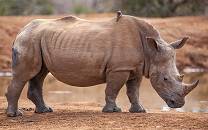
The most rewarding wildlife-viewing destination in Eswatini (formerly Swaziland), Hlane Royal National Park hosts four of the (no buffalo), with being especially common. It was proclaimed in 1967 by King Sobhuza II to protect a royal hunting ground that had become depleted of wildlife. A wide variety of animals has since been reintroduced under private management.
-
 Best Time To Go
- May to September (Dry season)
-
 High Season
- December to January and July to August (It never gets very busy)
-
 Size
Size
- 220km² / 85mi²
-
 Altitude
-
210-330m /689-1,083ft
 View Photos
 View Photos
+24
Photos
View Photos
+24
Photos
Pros & Cons
- Four of the present (buffalo absent)
- are very common around the rest camp
- Great birdlife
- Affordable self-catering accommodations
- Family-friendly
- Restaurant overlooking a
- allowed except in the lion enclosure
- Guided and available
- Some big animals are kept in separate enclosures
- Relatively small game-drive circuit
- Lion enclosure can only be visited on guided game drives
Wildlife
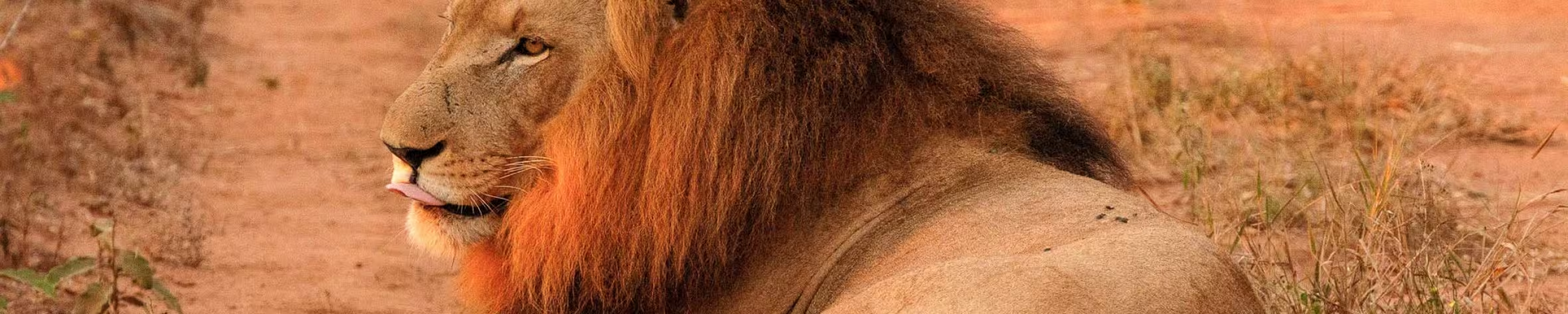
Hlane is divided into three separately fenced sectors in order to keep certain species apart. inhabit the area around Ndlovu Camp and a few individuals are almost always present at the in front of the restaurant. Lions live in a separate enclosure that can be visited only on guided . Other wildlife includes elephant, giraffe, zebra, , and a variety of antelope.
More about Hlane’s wildlifeScenery
Hlane is Eswatini’s only national park and its siSwati name means ‘wilderness’, which aptly describes the pristine and wild-feeling tract of typical it protects. The low-lying, flat land is interspersed with thickets and next to the sandy rivers that meander through the park. The east of the park reaches to the foothills of the Lebombo Mountains.
Activities
The main activity is . Most parts of Hlane are open to , but not the lion enclosure, so if you want to see these majestic creatures you need to join a guided drive. Other activities include guided game or bird-watching walks, rhino-tracking excursions (which involve a mix of driving and walking) and cultural visits to a Swazi village. Overnight using rustic are also offered.
Weather & Climate
Hlane has a subtropical climate typical of the southern African . Summer (October to April) and winter (May to September) occur at opposite times to North America, Asia and Europe. Summer corresponds with the Wet season, and days are hot (temperatures typically peak at 30°C to 35°C/86°F to 95°F), and evenings are warm. Winters are pleasantly warm and dry, but nights tend to be chilly, and warm clothing is necessary for early morning drives.
More about the weather and climateBest Time To Visit
Since animal movement in Hlane is controlled to some extent, wildlife viewing is good throughout the year. The best months, however, are in the Dry winter season from May to September when the thins out considerably. The end of this period is particularly recommended as animals gather around and the mornings are less chilly than in the middle of winter.
More about the best time to visit