
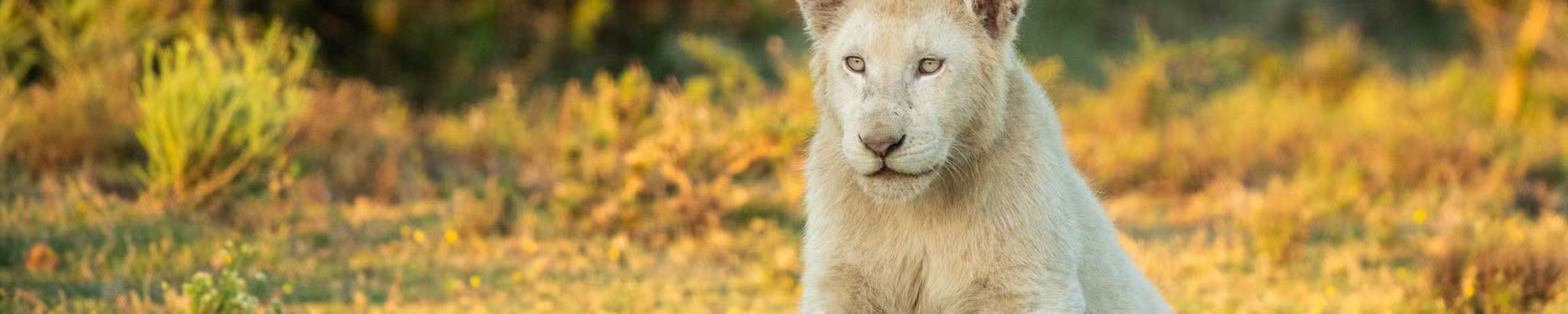
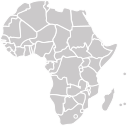
Pumba Private Game Reserve is an upmarket safari destination set in the green hills of the Eastern Cape between Gqeberha (Port Elizabeth) and Makhanda (Grahamstown). A wide variety of reintroduced wildlife includes the rare . Pumba is one of the few private reserves in this malaria-free area to offer both overnight and day safaris.
-
 Best Time To Go
- January to December (All year)
-
 High Season
- October to April (Summer)
-
 Size
Size
- 70km² / 27mi²
-
 Altitude
-
590-650m /1,936-2,133ft
 View Photos
 View Photos
+15
Photos
View Photos
+15
Photos
Pros & Cons
- Four of the present, including the sought-after
- Tranquil and uncrowded with just two 12-unit luxury lodges
- in open vehicles are led by knowledgeable guides
- Day safaris available, with optional transfer from Gqeberha
- A popular add-on to a road trip from Cape Town via the Garden Route
- More than 300 bird species, with well represented
- Situated on rehabilitated farmland
- Malaria-free
- No self-drive or budget accommodations
- Leopards, though present, are very seldom seen
Wildlife
Pumba is named after the character in ‘The Lion King’ and, as might be expected, this charismatic creature is very common. The reserve is known for its breeding population of , whose unusual coloration is caused by a recessive gene. Cheetah, and are also often seen. Other regularly encountered wildlife includes elephant, , buffalo, giraffe, zebra, , , , and .
Scenery
Pumba protects an attractively hilly area of reclaimed farmland. Much of the reserve supports a cover of , a tangled habitat unique to this region. There are also pockets of , while fields that once were cultivated now typically comprise open grassland. Pumba is home to one of the area’s few stands of (South Africa’s national tree), as well as some impressive stands of .
Activities
The main activity is guided in open 4x4 vehicles. Overnight packages include evening and early morning drives, while day safaris offer midmorning and early afternoon drives. Because these drives don’t overlap, Pumba never feels crowded and you can usually stick with good sightings for longer than you would in busier reserves. Add-on guided activities include , bird watching, proper (starting after dinner) and bass fishing.
Weather & Climate
Pumba experiences summer from October to April and winter from May to September. It has a mid-altitude location in the Eastern Cape interior, where summer daytime temperatures often climb above 30°C/86°F but nights are usually pleasant. In winter, warm days and chilly nights are the norm. Summer coincides with the Wet season, but the area is prone to extended droughts and it also often gets some winter rain.
Best Time To Visit Pumba GR
There is no bad time to visit Pumba, at least when it comes to wildlife viewing, which is good throughout the year. In addition, the climate is mild enough that there are no months when a visit should be avoided. However, some might find the midsummer heat, which peaks over January and February, rather oppressive, and nights can be very chilly in midwinter (especially June and July).
How To Get to Pumba GR
Pumba has an accessible location just north of the N2 about 110km/68mi (1½ hours’ drive*) northeast of Gqeberha and 20km/12mi (25 minutes’ drive*) west of Makhanda (Grahamstown). Regular flights connect Cape Town and Johannesburg to Gqeberha’s Chief Dawid Stuurman International Airport (PLZ). From Gqeberha, you can either rent a car and self-drive, or book a road transfer directly with Pumba.
*Driving times are only a rough indication. You should always consider the possibility of significant delays.
Health & Safety
In our opinion, Pumba is generally a safe park to visit. For more information on health and safety, please read our malaria and vaccinations page for South Africa and our general ‘Wildlife Viewing Safety Precautions’ page: