
Average Expert Rating
Rating Breakdown
Write a User ReviewWalk of the Elephants
Located on the border with Mozambique, Tembe Elephant Park is by far the best government-run Big Five park in KwaZulu-Natal. In my opinion, it also comes a pretty close second to Kruger. Beyond its namesake elephant, the park is also home to larger mammals such as zebra, giraffe, wildebeest and hippo as well as a variety of antelope species including the world’s smallest antelope – the suni, which stands about 12-17 inches high to its shoulder. Noted for its vast swamplands and spectacular sand forests dominated by thickets of tall trees, Tembe is a wild, remote place that is very special indeed. Its true beauty, however, is only revealed if you allow yourself the time to spend a couple of nights in the park.

Giants of the Sand Forest: Tembe’s Legendary Tuskers
Tembe Elephant Park is one of South Africa’s lesser-known reserves. Proclaimed in 1983 along the border with Mozambique, the park was established to protect the country’s last free-roaming elephants. That original purpose still defines Tembe today, even though it has since become a fully fledged Big Five reserve with a wide range of reintroduced wildlife.
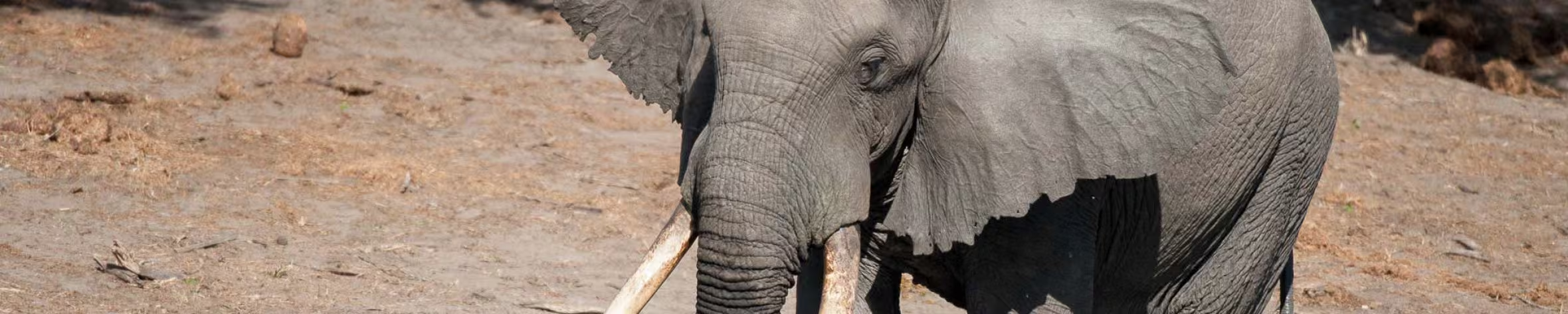
The elephants remain the main highlight. The bulls are truly enormous, often carrying spectacular tusks that rank among the biggest I have ever seen. One of the best ways to experience them is from the hide overlooking a large waterhole. During an early morning visit, I watched several solitary bulls and small bachelor groups arrive to drink. Later, a large breeding herd took over the waterhole and lingered for hours, splashing, wallowing and cooling down in the water.
Beyond its elephants, Tembe plays a vital conservation role by protecting the largest remaining tract of sand forest in South Africa. This
Among the mammals, nyalas are particularly common. Tembe is also prime habitat for the elusive red duiker. Even more special is the suni, one of Africa’s smallest antelope species. I was fortunate to spot this shy and territorial little animal darting around camp at dusk, a fitting end to a visit that showcased Tembe’s unique character and conservation value.
The elephants remain the main highlight. The bulls are truly enormous, often carrying spectacular tusks that rank among the biggest I have ever seen. One of the best ways to experience them is from the hide overlooking a large waterhole. During an early morning visit, I watched several solitary bulls and small bachelor groups arrive to drink. Later, a large breeding herd took over the waterhole and lingered for hours, splashing, wallowing and cooling down in the water.
Beyond its elephants, Tembe plays a vital conservation role by protecting the largest remaining tract of sand forest in South Africa. This
Read more
rare and fragile habitat supports an impressive diversity of plant and animal life and makes the park especially appealing to nature lovers. Birding is outstanding, with many forest specials that are difficult to see elsewhere.Among the mammals, nyalas are particularly common. Tembe is also prime habitat for the elusive red duiker. Even more special is the suni, one of Africa’s smallest antelope species. I was fortunate to spot this shy and territorial little animal darting around camp at dusk, a fitting end to a visit that showcased Tembe’s unique character and conservation value.
Tuskers of the Sand Forest
In my humble opinion Tembe is nothing short of amazing. If you have time to visit just one game reserve in KwaZulu-Natal, then I would unreservedly recommend it be the meandering sand tracks of this gloriously wild reserve. There are only two small lodges within the park, while day visits are limited to a maximum of ten self-drive 4x4 vehicles per day, so Tembe is one of the few game reserves in South Africa that feels truly wild. The 30,013 hectare Tembe Elephant Park is dominated by sand forest and the game-rich Muzi Swamp in the east. It is home to an abundance of wildlife, including wild dogs and a burgeoning lion population. But, it is the Tembe’s elephants – and especially its huge tuskers – on which the park has built its reputation. More than 200 of these gentle giants tramp the sandy paths of this pristine wilderness and sightings are all but guaranteed from the hide overlooking Mahlasela waterhole as well as at nearby Mfungeni Pan. Quite aside from the huge buffalo herds,