
Average Expert Rating
Rating Breakdown
Write a User ReviewFeathers and Fever Trees
Although it was recently incorporated into iSimangaliso Wetland Park (a Unesco World Heritage Site), uMkhuze is one of Africa’s oldest game reserves. With sand forest giving way to gently undulating grasslands, peppered with flat-top acacias and fever tree-choked drainage lines, the park is well-known amongst ornithologists for its varied habitat and rich birdlife. Twitchers tend to concentrate their energies on Nsumo Pan and the neighbouring fig tree forests, while wildlife enthusiasts focus their energies on kuMasinga Hide: the most productive of several recently refurbished game-viewing hides. Despite ongoing problems with poaching, uMkhuze still boasts excellent densities of most antelope species. The reserve is also home to black and white rhino, lion, leopard, cheetah and wild dog.

A Well-Located Reserve With a Good Cross-Section of KwaZulu Natal’s Game Species
uMkhuze features the usual acacia savannah, but as it lies within the northwest boundary of iSimangaliso Wetland Park, it also features tropical swamps and well-watered riverine forest. The roads were easy to navigate, but some passed through areas of thick bush, which were not ideal for game viewing. The grasslands, however, were more open, where we found giraffe, wildebeest, kudu and nyala, and at the airstrip we were lucky to see cheetah (they love the flatness of airstrips). Although I did see rhino, they aren’t as prolific as in Hluhluwe-iMfolozi. At the pans, we were able to get out of the car and walk down to some hides to watch the many aquatic birds. uMkhuze’s appeal is its location; easily accessed off the N2 highway and not far from the coast, offering a good combination of safari options with other reserves in northern KwaZulu-Natal.
Mellow uMkhuze
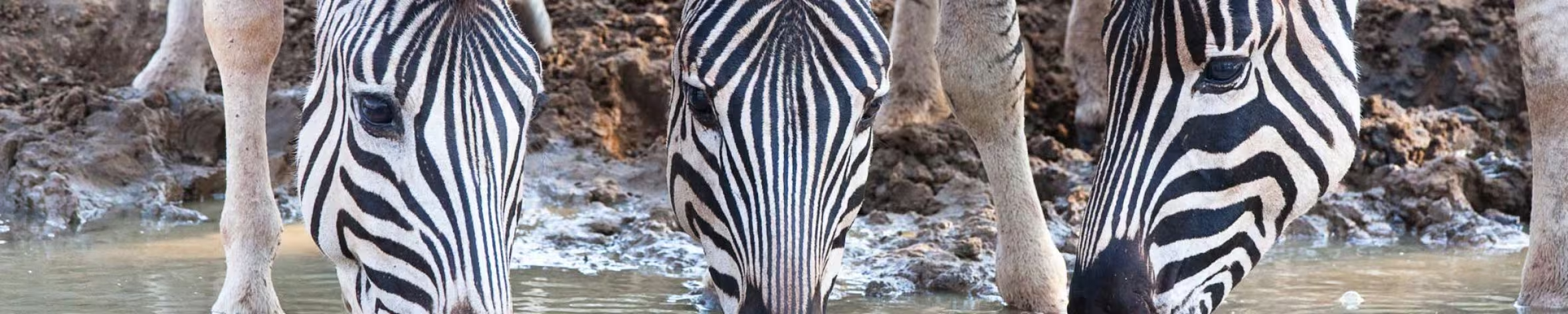
If you’re into birding then you’ll love uMkhuze Game Reserve, since more than 420 species flourish in the park’s swamps and woodlands. For bigger mammal lovers like myself, the park has all of the Big Five, as well as nyala, wildebeest, warthog, impala, kudu and other smaller antelope. The park also offers rare sightings of hyena – heard but sadly not seen in my experience. Birders should make sure they take the guided Fig Forest Walk, which provides numerous bird and monkey sightings. Elsewhere, a network of hides and viewing platforms offers excellent viewing of the larger mammals. At Nsumo Pan’s viewing platform I easily spied hippo and crocodiles, and at Kumahloha hide I was amazed by the constant parade of wildlife coming down to the pan including rhino, giraffe, kudu, wildebeest, zebra and baboon.