$2,500 to $2,712 pp (USD)
2 travelers on Start dateArrival
Arrival

Day 1
Arrival in Arusha
Arrival in Arusha
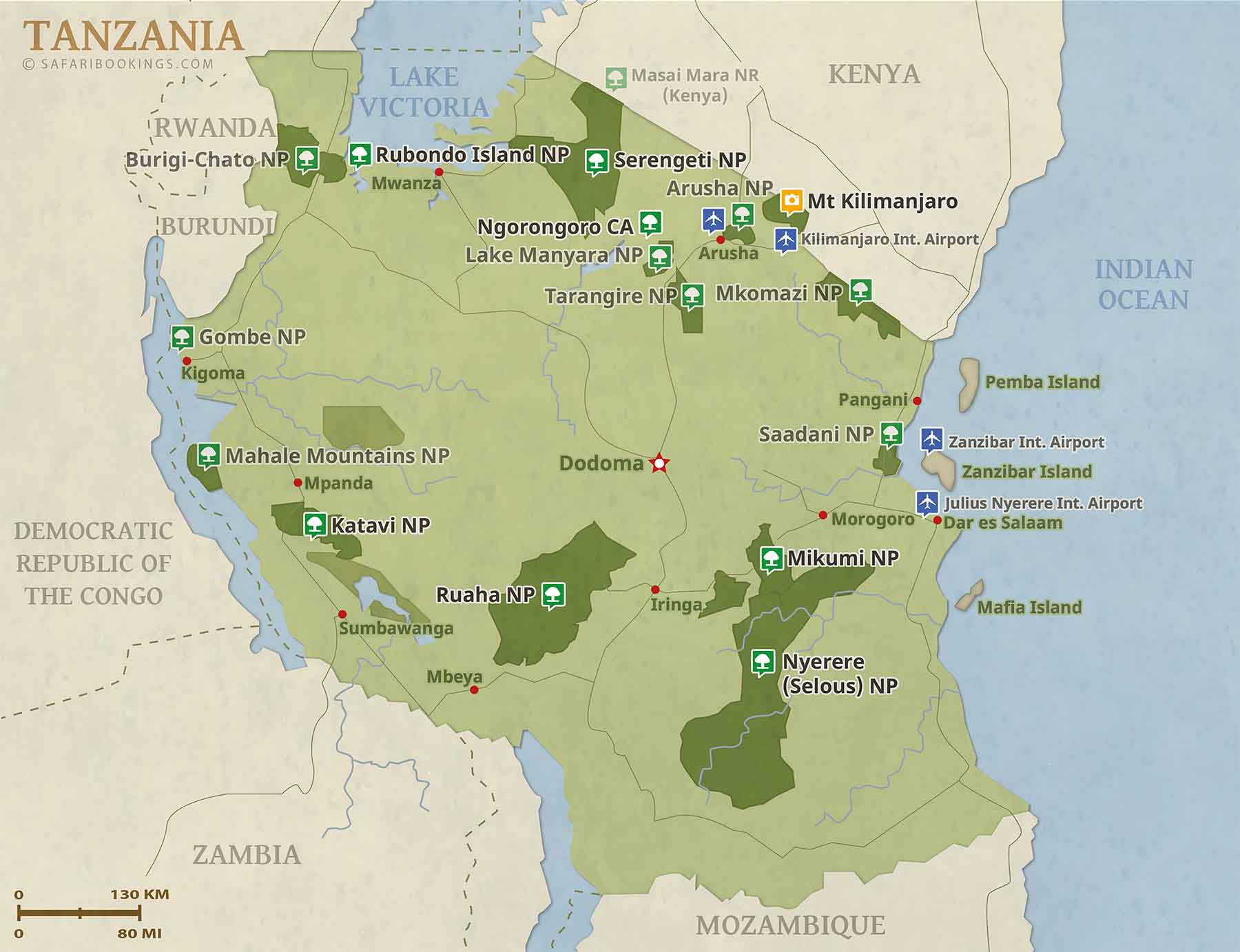
On arrival at Kilimanjaro International Airport and after customs and immigration formalities, you will be met by our representative who will drive you to Arusha City which is the safari capital of Tanzania. It is located beneath the peak twins of Mount Meru and Mount Kilimanjaro. Arusha is a major international diplomatic hub.
Arusha is your gateway to the safari adventures that can be found on the famed northern circuit. Arusha is a dynamic and bustling city where Africa and the west collide in a dizzying, fascinating fusion. With a domestic airport (Arusha) and an international airport (Kilimanjaro), it's also the perfect place to launch your adventures to Dar es Saalam, Zanzibar, or even neighbouring countries such as Rwanda, Kenya, or Uganda. The city is the capital of the East Africa Community and also houses the East Africa Court of Justice, located in the northern highlands of Tanzania. Your overnight stay will be at Under the shade safari Lodge.
- Main Destination:
- Arusha (City)
- Activities:
- Accommodation:
- Under the Shade Safari Lodge


- Meals & Drinks:

Day 2
Arusha to Tarangire National Park
Arusha to Tarangire National Park
Early morning you will be picked up at your accommodation by your private guide and we depart to Tarangire National Park. The Park is named after the Tarangire River which runs through it. This ‘river of warthogs’ is the only source of water for wildlife in the region during the dry season. In places, the vegetation is quite dense, including elephant grass, acacia woodlands and lush groundwater forest. The Park is well known for its elephant families, which can often be seen congregating by the river. You may also see giraffe, bushbuck and hartebeest. These animals are closely followed by a range of predators, including lions and leopards. There are more breeding species of birds found in Tarangire National Park than anywhere else on the planet!
- Main Destination:
- Lake Manyara National Park
- Activities:
- Accommodation:
- Baghayo Garden Suites
Wildlife in Lake Manyara NP


- Meals & Drinks:

Day 3-4
Ngorongoro crater to Serengeti National Park
Ngorongoro crater to Serengeti National Park
Early morning after breakfast, we depart to Ngorongoro crater. When you first see Ngorongoro Crater, it looks like a forgotten world. Concealed by the steep volcanic walls is a pristine wilderness including sweeping savannah, pockets of acacia woodland, and glistening lakes and swamps. The Crater was created when a large volcano exploded and collapsed in on itself two to three million years ago. It is famous for both its geological delights and for being a natural reserve which is home to some of the densest large mammal populations in the whole of the African continent. The drive down the into the Crater is an adventure in itself and when you reach the Crater floor, you quickly find yourself amongst large numbers of wildebeest, zebra, gazelle, and more than 500 bird species. The Crater provides you with the best chance of seeing the endangered black rhino, which can sometimes be spotted in the open grasslands. After Lunch, we drive to the Serengeti National Park for 2 nights.
- Main Destination:
- Serengeti National Park
- Activities:
- Accommodation:
- Zuri Camp, Serengeti
Wildlife in Serengeti NP


- Meals & Drinks:

Day 5
Serengeti to Karatu
Serengeti to Karatu
Early morning after breakfast, we continue with our en-route game drive in the Serengeti to Karatu. Serengeti National Park is undoubtedly the best-known wildlife sanctuary in the world, unequaled for its natural beauty and scientific value, it has the greatest concentration of plains game in Africa. It is the migration for which Serengeti is perhaps most famous. Over a million wildebeest and about 200,000 zebras flow south from the northern hills to the southern plains for the short rains every October and November, and then swirl west and north after the long rains in April, May and June. Late afternoon, drive straight to Karatu through Ngorongoro conservation area.
- Main Destination:
- Serengeti National Park
- Activities:
- Accommodation:
- Baghayo Garden Suites
- Meals & Drinks:

Day 6
Lake Manyara Park to Arusha
Lake Manyara Park to Arusha
After breakfast, you will drive to Lake Manyara National Park. This is a relatively small but diverse park, 120km west of Arusha. The park’s namesake is a shallow, Salt Lake. It covers a large area of the park, flooding and drying with the seasons and is home to thousands of flamingos and over 500 other bird species. On your exploration of the park you will see monkeys, giraffe, zebra, wildebeest, buffalo, elephant and with some luck, lions lounging in the trees. The park is known for its diverse landscapes; not only open grassy plains, but also primate-filled woodlands and baobab dotted cliffs.
After lunch, drive back to Arusha.
- Main Destination:
- Lake Manyara National Park
- Activities:
- Accommodation:
- No accommodation (End of tour)
- Meals & Drinks: