$3,157 pp (USD)
2 travelers on Start dateArrival
Arrival

Day 1
Birding Entebbe Botanical Gardens and Transfer to Mabamba Shoebill Wetland
Birding Entebbe Botanical Gardens and Transfer to Mabamba Shoebill Wetland
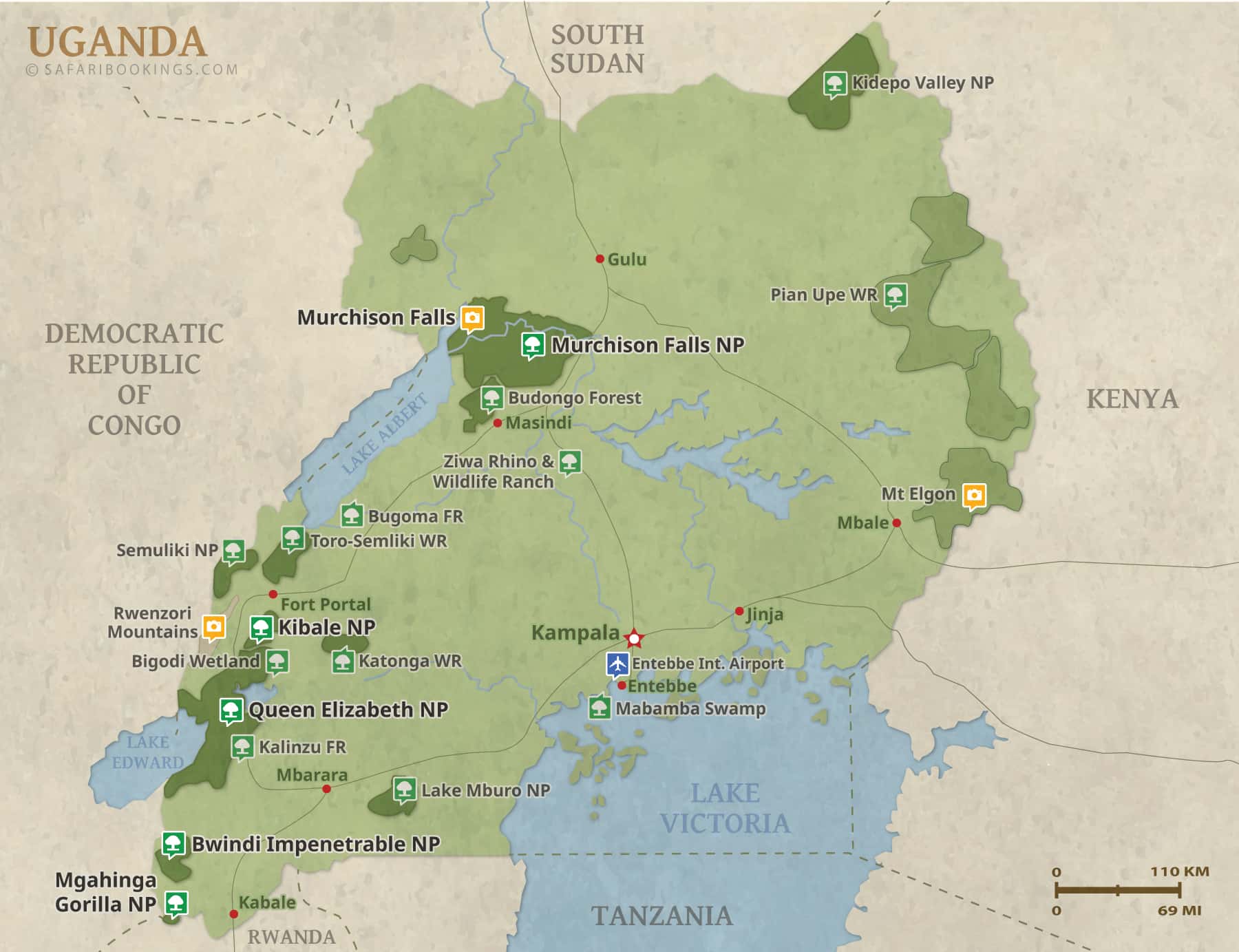
Established in 1898 as a research site for preserving valuable flora, the approximately 40.7ha garden is situated in Entebbe City, just 5minutes drive from the Airport. It adjoins about one mile along the shores of Lake Victoria and is currently under the management of Uganda Wildlife Authority. The gardens house a diverse collection of plant species, both indigenous and exotic, with over 300 species, which support birdlife of over 250species. Vervet Monkeys, Black and White Colobus, and squirrels are also found here.
You'll spend the whole morning here, and in the afternoon, drive to Mabamba Shoebill Swamp.
- Main Destination:
- Entebbe (City)
- Accommodation:
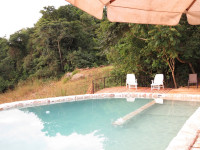
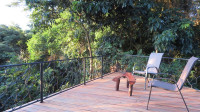
- Nkima Forest Lodge
- Meals & Drinks:

Day 2
Bird Mabamba Wetland in the Morning and Afternoon Transfer to Lake Mburo National Park
Bird Mabamba Wetland in the Morning and Afternoon Transfer to Lake Mburo National Park
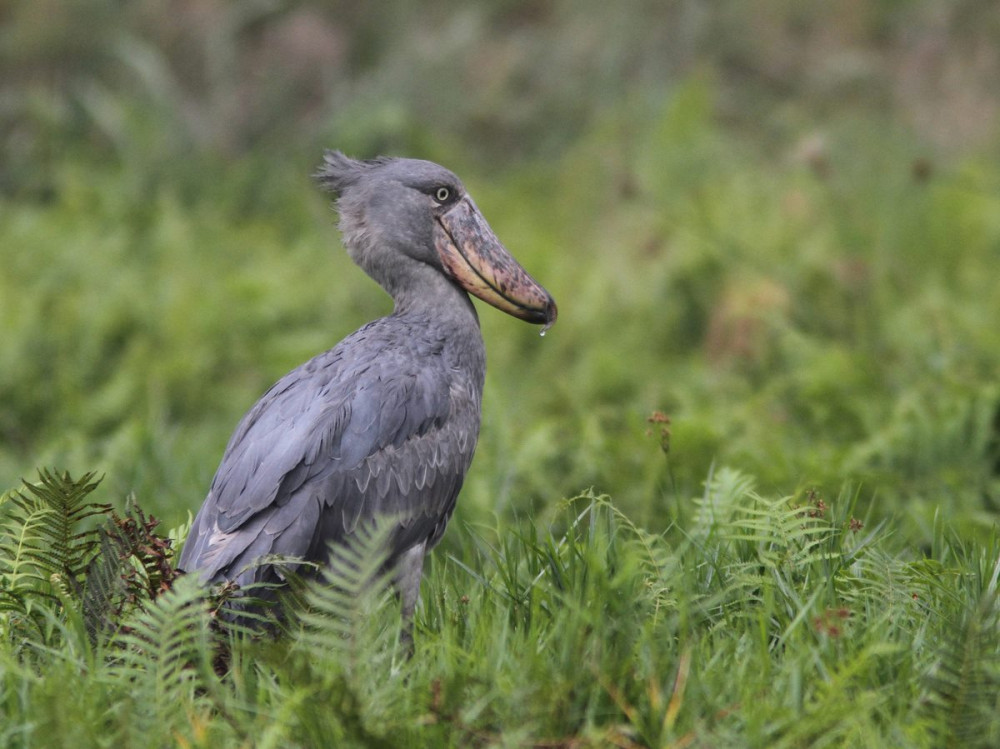
You'll start very early after breakfast and drive for a few minutes to the swamp from our lodge in the morning to look for the shoebill. You will be here till mid-morning and have lunch at our lodge. Later, you'll drive to Lake Mburo NP in the afternoon. You'll stay at Rwakobo Rock just outside the park as a stopover. Birding in the Swamp will be on a canoe.
- Main Destination:
- Mabamba Swamp
- Accommodation:
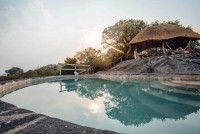
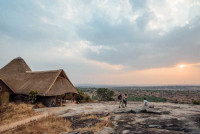
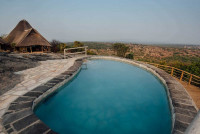
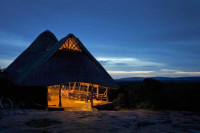
- Rwakobo Rock Lodge
- Meals & Drinks:

Day 3
Lake Mburo National Park to Kisoro
Lake Mburo National Park to Kisoro
Today, you'll check out the lodge, have an early morning breakfast, and drive as you bird on the way. You have a chance to bird along the main road at Echuya forest, or Muchuya Swamp, which is famous for the Malachite sunbird, African Black Duck, Abyssinian thrush, white-starred robin, Rwenzori Batis, plus so many other Albertine rift endemics and high-altitude forest birds. Your ultimate stop will be Kisoro town.
- Main Destination:
- Kisoro (Town)
- Accommodation:
-
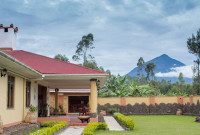
Mucha Riverside Lodge


- Meals & Drinks:

Day 4
Birding at Mgahinga Gorilla National Park
Birding at Mgahinga Gorilla National Park
Mgahinga merits a visit to appreciate the scenery and abundant flora and avifauna. You'll do gentle strolls along slopes covered with a series of distinct altitudinal bands of vegetation. From grass and bushland on the lower slopes, to montane woodland, followed by the bamboo zone, montane forest, and the ericaceous zone. Your intuition will only be satisfied when we encounter such species as the endemic Rwenzori turaco, evergreen forest warbler, western green tinkerbird, malachite sunbird, cape robinchat, dusky turtle dove, Dwarf honeyguide, lemon dove, Doherty’s bush shrike, Albertine boubou, Rwenzori hill babbler, white-starred robin, barred-long-tailed cuckoo, white-browed crombec, Abyssinian Crimson-wing, mountain yellow warbler, dusky crimson-wing, Archer’s Robinchat, Stulmann’s Sunbird, bamboo warbler, plus any other interesting creature that may come our way.
You'll do picnic lunch and be here till 5:00 pm. You drive back later to our hotel for dinner and an overnight stay.
- Main Destination:
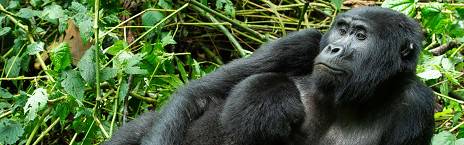
- Mgahinga Gorilla National Park (Gorillas)
- Accommodation:
- Mucha Riverside Lodge
Wildlife in Mgahinga Gorilla NP


- Meals & Drinks:

Day 5
Birding to Ruhiija Sector of Bwindi Impenetrable National Park
Birding to Ruhiija Sector of Bwindi Impenetrable National Park
You'll leave Kisoro and drive to Bwindi Impenetrable Forest. You'll spend the whole afternoon on the community trail in Bwindi Forest— a very good location for most of the Albertine rift endemics like the Strange weaver, Grauer’s Warbler, Rwenzori Batis, Rwenzori Hill Babbler, Stripe-breasted Tit, Rwenzori Apalis, yellow-streaked greenbul, Mountain-masked Apalis, red-faced woodland warbler, etc.
- Main Destination:
- Bwindi Impenetrable National Park (Gorillas)
- Accommodation:
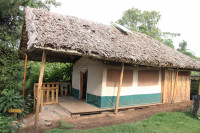
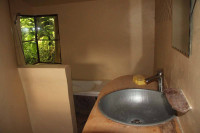
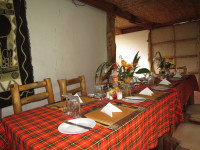
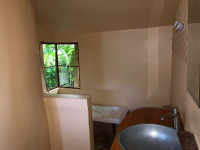
- Broadbill Forest Camp
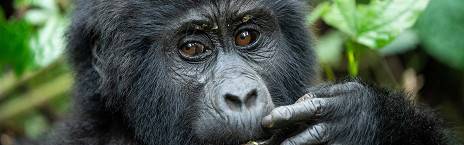
Wildlife in Bwindi Impenetrable NP
- Meals & Drinks:

Day 6
Birding in Ruhiija Sector to the Mubwindi Swamp
Birding in Ruhiija Sector to the Mubwindi Swamp
After breakfast, you'll carry your picnic lunch and head for a whole day of birding following the famous trail through the forest up to Mubwindi Swamp. The 4km trail to Mubwindi Swamp drops from 2350m to 2050m ASL and is the best place for some of the most difficult to find of all the Albertine Rift Endemics, including the rare and localized Grauer's Rush Warbler, African Green Broadbill, the beautiful Regal Sunbird, and Archer's Robin Chat. Mubwindi Swamp is home to Dwarf Honeyguide, Stripe-breasted Tit, Rwenzori Apalis, African/Rwenzori Hill Babbler, and Carruthers' Cisticola. Other key species here include Fraser's Eagle-Owl, Purple-breasted Sunbird, Blue-headed Sunbird, Eastern Mountain-Greenbul, Strange Weaver, Black-headed Waxbill, Bar-tailed Trogon, White-headed Wood-hoopoe, Waller's Starling, Stuhlmann's Starling, Ludher's Bush-shrike, Handsome Francolin, and Montane Nightjar.
- Main Destination:
- Ruhija Sector (Bwindi Impenetrable NP)
- Accommodation:
- Broadbill Forest Camp
- Meals & Drinks:
Day 7
Bird to Buhoma Sector of Bwindi Forest via the Neck
Bird to Buhoma Sector of Bwindi Forest via the Neck
You'll spend some time birding along the main road in the forest along the “NECK” – a narrow stretch of Bwindi forest connecting the northern sector to the broader main body in the south, comprising riverine forest vegetation crossed by River Ihihizo.
These species can be easily seen here compared to other parts of the forest. The many-coloured bush shrike, dwarf honey guide, black bee-eater, red-throated Alethe, Narina and bar-tailed trogon, Doherty’s bush shrike, Cassin’s flycatcher, dusky blue flycatcher, mountain wagtail, are quite common here. Birding is along the main road.
- Main Destination:
- Buhoma Sector (Bwindi Impenetrable NP)
- Accommodation:
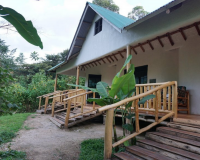
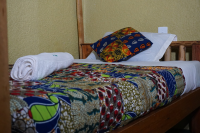
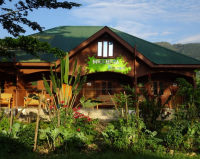
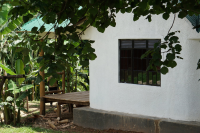
- Ride 4 a Woman Guesthouse
- Meals & Drinks:
Day 8
Birding Buhoma Main Trail
Birding Buhoma Main Trail
Starting at 6:30 am with a packed lunch, you'll spend the whole day in the most celebrated forest for hosting over 90% of Albertine Rift endemics. Amongst those that we look for here are equatorial Akalat, grey-winged Akalat, red-capped robin chat, bar-tailed trogon, Ant-pecker, African broadbill, oriole finch, Tullbergs’ woodpecker, olive woodpecker, pink-footed puffback, yellow-footed flycatcher, to mention but a few.
- Main Destination:
- Buhoma Sector (Bwindi Impenetrable NP)
- Accommodation:
- Ride 4 a Woman Guesthouse
- Meals & Drinks:

Day 9
Transfer to Kibale National Park via the Ishasha Sector of Queen Elizabeth National Park
Transfer to Kibale National Park via the Ishasha Sector of Queen Elizabeth National Park
Ishasha is the southernmost segment of Queen Elizabeth National Park, famed for tree-climbing lions — you pass through here along the main road, which is a birdy area. The black coucal, Stout Cisticola, plain-backed Pipit, croaking Cisticola, etc are usual encounters. You have lunch in Fort Portal Town and later continue driving to Kibale.
Early arrivals here will have a chance to do an afternoon walk along the Bigodi Community wetland, famous for different species of monkeys - red colobus, grey-cheeked Mangabey, white-nosed, black and white colobus, etc.
- Main Destination:
- Kibale National Park (Chimps)
- Accommodation:
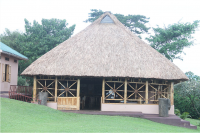
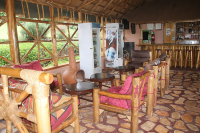
- Chimpanzee Forest Lodge
Wildlife in Kibale NP


- Meals & Drinks:

Day 10
Birding in Kibale National Park Looking for the Pitta
Birding in Kibale National Park Looking for the Pitta
The Pitta normally displays from 5:00 am – 6:30 as a way of communicating with its mate and then later comes together and stays on the ground for the rest of the day feeding. You go to the forest very early in the morning to catch up with the display time, which makes it easy to locate it in the forest. You do this until late morning.
In the afternoon, you'll spend time birding along the main road in the forest, or otherwise bird the famous Bigodi community swamp, optional.
- Main Destination:
- Kibale National Park (Chimps)
- Accommodation:
- Chimpanzee Forest Lodge
- Meals & Drinks:
Day 11
Transfer to the Airport
Transfer to the Airport
Today, there is no major activity. You may bird around the lodge for a couple of hours before traveling to Entebbe Airport. The airport is just a 5-hour drive from here, so you have plenty of time.
- Main Destination:
- Entebbe (City)
- Accommodation:
- No accommodation (End of tour)
- Meals & Drinks: