
Average Expert Rating
Rating Breakdown
Write a User ReviewQuiet Wilderness and Rare Antelope in Mokala National Park
Mokala National Park exceeded my expectations. Its location, about 55km south of Kimberley, makes it an ideal stopover on the long journey between Johannesburg and Cape Town. Yet, two decades after being proclaimed South Africa’s newest national park, it remains surprisingly little known, giving it a wonderfully undiscovered feel.
Although Mokala has no big predators, the wildlife experience is good. We enjoyed excellent sightings of buffalo, giraffe and white rhino, while black rhino – present but elusive – added an element of anticipation to every drive. Our total mammal count reached 21 species, an impressive number for a relatively small park. The real highlight, though, is the remarkable diversity of antelope. Both sable and roan, notoriously difficult to find elsewhere in southern Africa, are regularly seen here. Because antelopes are the stars of the show, vehicles stop for them often, and this has made them noticeably more relaxed around visitors than in many
Mokala has two main rest camps. Lilydale Rest Camp is beautifully positioned on a cliff overlooking the Riet River. Mosu Rest Camp lacks a dramatic setting, but its central location makes it the best base for exploring both the northern and southern reaches of the park. If staying at Mosu, try to book a perimeter unit for a more immersive bush experience – we watched baboons amble past, spotted a lone giraffe on the horizon, and even had a curious yellow mongoose visit right outside our chalet. Do note that both camps are small and can fill up quickly during weekends and school holidays.
Although Mokala has no big predators, the wildlife experience is good. We enjoyed excellent sightings of buffalo, giraffe and white rhino, while black rhino – present but elusive – added an element of anticipation to every drive. Our total mammal count reached 21 species, an impressive number for a relatively small park. The real highlight, though, is the remarkable diversity of antelope. Both sable and roan, notoriously difficult to find elsewhere in southern Africa, are regularly seen here. Because antelopes are the stars of the show, vehicles stop for them often, and this has made them noticeably more relaxed around visitors than in many
Read more
more popular reserves. One of the most rewarding aspects of our stay was the sense of solitude: in two full days, we encountered hardly another car.Mokala has two main rest camps. Lilydale Rest Camp is beautifully positioned on a cliff overlooking the Riet River. Mosu Rest Camp lacks a dramatic setting, but its central location makes it the best base for exploring both the northern and southern reaches of the park. If staying at Mosu, try to book a perimeter unit for a more immersive bush experience – we watched baboons amble past, spotted a lone giraffe on the horizon, and even had a curious yellow mongoose visit right outside our chalet. Do note that both camps are small and can fill up quickly during weekends and school holidays.

A Gem in the Thornveld
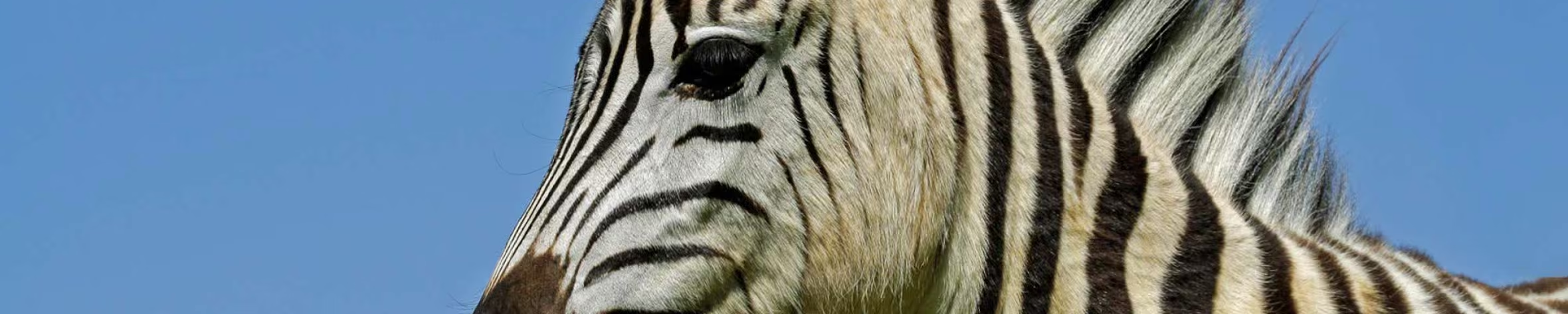
South Africa's newest national park is small compared with the likes of Kruger, but certainly not short of wildlife. Black and white rhinos, buffalos, giraffes, zebras and a long list of antelopes are found in the park's 20,000 hectares. I spent a couple of hours driving around one morning and spotted many animals. I even came across a buffalo lounging in the middle of the road.
With its low Big Five count, Mokala isn't worth a special trip, but its location, off the N12 freeway southwest of Kimberley, makes it a handy stopoff on a cross-country journey. The park also offers a good range of activities and lodges among its rocky hills, sandy plains and camel thorn trees.