
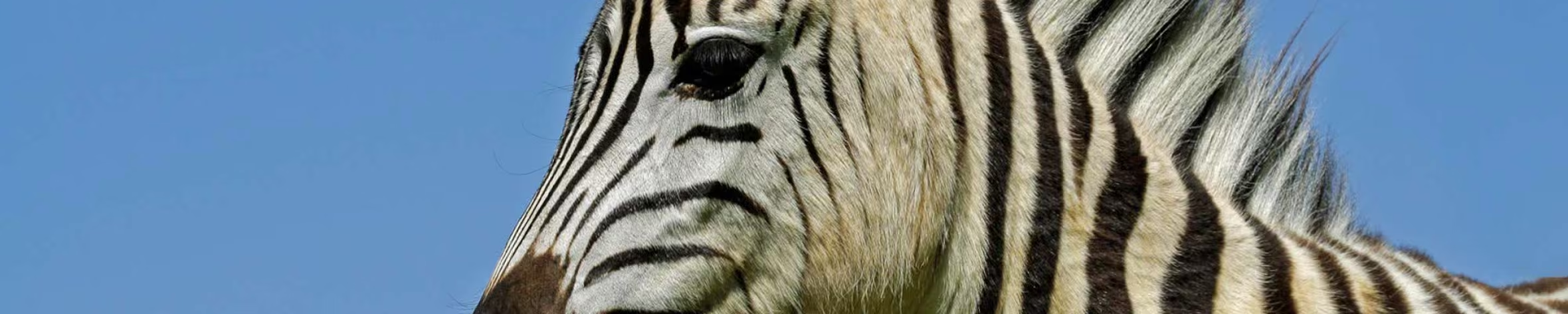
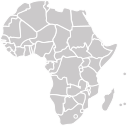
Mokala National Park was established in 2007 on the plains southwest of Kimberley. South Africa’s newest national park, it supports a tremendous variety of antelope and other wildlife, including buffalo and both species. Although little visited and somewhat remote, it’s a convenient and worthwhile stopover along the N12 (a quieter alternative to the N1) between Cape Town and Johannesburg.
-
 Best Time To Go
- May to September (Best wildlife viewing)
-
 High Season
- Never (Might be busier during school holidays)
-
 Size
Size
- 275km² / 106mi²
-
 Altitude
-
1,091-1,291m /3,579-4,236ft
 View Photos
 View Photos
+24
Photos
View Photos
+24
Photos
 Open Map
Pros & Cons
- Remote, beautiful semi-arid scenery with big
- Ideal for , but guided and are available
- Several rock engraving sites can be visited with park guides
- Convenient stop between Johannesburg and Cape Town
- Affordable self-catering chalets
- Wildlife is plentiful and mostly very
- Varied birdlife with many specials
- Malaria-free
- No elephants or
- Far away from South Africa’s main tourist attractions
- No shop or restaurant; you need to bring your own food
Wildlife
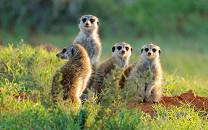
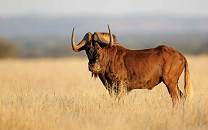
Mokala came into existence following the closure of the now defunct Vaalbos National Park, from where an amazing 863 animals were translocated. Introduced wildlife includes , , buffalo, giraffe, zebra and . Mokala shelters 15 antelope species, notably , , , , , , , and . No are present, but smaller predators include , and .
More about Mokala’s wildlifeScenery
Mokala protects a compelling area of wilderness that is transitional between the and the . However, its red sandy soils and make it look and feel more like the Kalahari. The plains are hemmed in by isolated hills and dotted with (called ‘mokala’ in the local Setswana language). The Riet River flows through an impressive gorge on the park’s northern boundary.
Activities
can explore the park on a well-signposted and well-maintained network of wildlife-viewing roads. Most roads are suitable for all vehicles, but some are restricted to 4x4 only. Wildlife is most prolific on the open plains immediately south of the Riet River. Other worthwhile stops include a photographic at Stofdam and the museum-like Interpretation Centre. Guided activities include , and visits to ancient rock engraving sites.
Weather & Climate
Mokala has a typical climate with relatively little rain and substantial differences between daytime and nighttime temperatures. In summer (October to April), it tends to be very hot in the day and pleasant in the evening. In winter (May to September), it is warm by day but often very cold at night. Summer coincides with the Wet season, when you can expect occasional short-lived afternoon storms.
More about the weather and climateBest Time To Visit
Mokala can be visited throughout the year. Due to the conditions, wildlife viewing isn’t much affected by the seasons. However, the days are most pleasant during the dry winter months (May to September), and this period is also slightly better for wildlife viewing as animals gather around water sources. It can be unbearably hot in the middle of the day during the summer months (October to April).
More about the best time to visit