
 Google Maps


Lake Natron is a narrow and exceptionally lake set in the east of Ngorongoro Conservation Area. Overlooked by the active volcano Ol Doinyo Lengai, its boiling hot, extremely salty water is deadly
Read more
to most life-forms other than the that color it red when viewed from the air. This is no conventional beach-holiday destination, but it does possess a starkly compelling beauty that’s particularly atmospheric in the early morning and late afternoon. Natron’s timeless, primitive feel is enhanced by the proximity of some of the world’s oldest fossilized Homo sapiens footprints and Ol Doinyo Lengai.What To See and Do at Lake Natron

Natron measures 57km/35mi from north to south, but much of its shoreline is more or less inaccessible. The easiest part of the lake to visit is the southern extremity, which can be explored from a parking
Read more
spot 5km/3mi from the village of Engaresero. From the car park, you’ll need to walk at least 1km/0.6mi across a bed of white-crusted flats to get close to the water’s edge. These flats comprise a mixture of dried salt and volcanic ash spewed out by Ol Doinyo Lengai, which towers majestically above Natron’s southern skyline.Close to the lakeshore, a few climbable formations of pockmarked black volcanic rock offer superb views over the lake, while and other waterbirds pick through the shallows.Why Lake Natron Is Considered To Be Deadly

Lake Natron is a beautiful sight, but swimming is an absolute no-no. No rivers exit the lake, so the only way that water can leave is through evaporation. This, combined with regular deposits of ash
Read more
from Lengai, can push the up to 12 when the water level is low. Jump into the lake for a swim, and the high level of , combined with temperatures of up to 60°C/140°F, might well prove fatal.The deadliness of the lake is amplified by the fatiguing heat along the shore, which is set in a low-lying part of the where midday temperatures frequently soar to 40°C/104°F.The Story Behind the Stone Animals

While Natron is one of the most dangerous lakes on Earth, it is not entirely true that it can turn animals into stone. This legend arises from photographs of birds and other animals that perished in
Read more
the lake and then later, when the water receded, emerged preserved in action like ghostly statues. The natural preservative responsible for creating these so-called stone animals is sodium carbonate (also known as soda ash). This odorless compound was one of the ingredients used in Ancient Egypt for mummification.A Flamingo Paradise

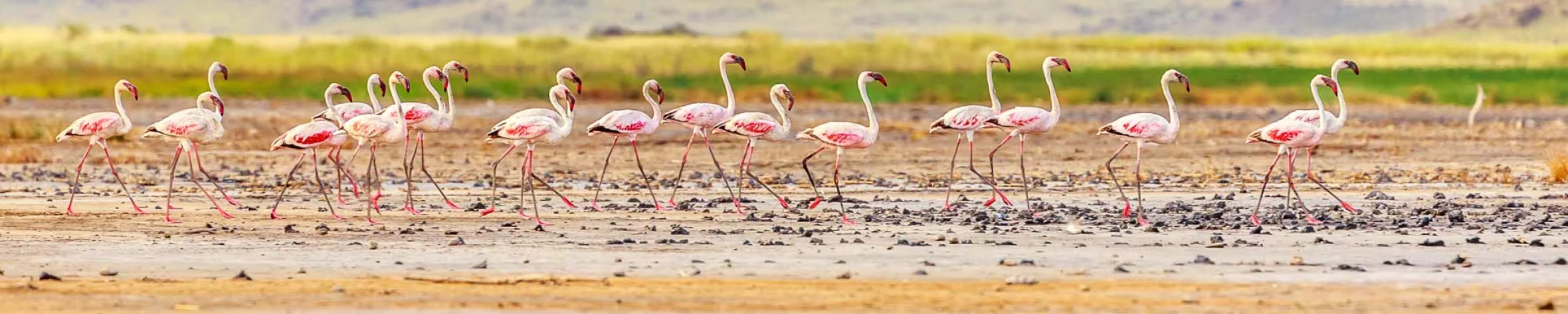
Lake Natron’s and thriving form a powerful deterrent to most living creatures, but oddly enough this habitat is ideal for flamingos. So much so, in fact, that Natron is the only known breeding ground
Read more
for East Africa’s 2.5 million . The main breeding site, which peaks in activity over October to February, is inaccessible on foot or by boat. However, you should see large flocks of lesser flamingo foraging one-legged in the shallows at any time of year.Wildlife Around the Lakeshore

Natron doesn’t lie within a national park, but since 2009 much of the lake and surrounding area has been protected in a Wildlife Management Area bordering the greater Serengeti ecosystem. As a result, a fair amount
Read more
of wildlife is present. Animals you can expect to see include zebra, , , , , , and . Lion and cheetah also pass through occasionally but tend to keep a low profile and are seldom seen.Natron is something of a bird-watching hot spot. hog the headlines, but the lakeshore also supports various pelicans, egrets, herons, lapwings and waders. The surrounding plains are good for large ground birds such as and , while a long list of dry-country specials includes , and .The Oldest Homo Sapiens Footprints in East Africa

Many thousands of years ago, not far from the shore of Lake Natron, a family party of around 25 hunter-gatherers walked through a patch of muddy ash deposited by Ol Doinyo Lengai. Doubtless it seemed like
Read more
an unremarkable event at the time, but as it transpired the wanderers left behind a trail of more than 400 footprints that were preserved for posterity as the mud solidified into volcanic tuff.Visiting these immaculately preserved relics is a truly moving experience, especially when you consider that they represent the oldest-known fossil footprints made by Homo sapiens (as opposed to other extinct species) in East Africa. No shoes are permitted for fear of damaging the footprints, and the sunbaked black rocks are searingly hot when the sun is high, so try to be there in the early morning or toward sunset.How To Get to Lake Natron

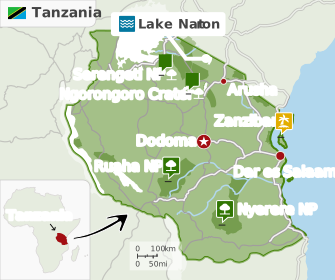
By road, Engaresero, the largest village on Natron’s shore, lies about 215km/130mi northeast of Arusha, which is the ‘safari capital’ of northern Tanzania. The drive from Arusha takes up to 5 hours and passes through the
Read more
small town of Mto Wa Mbu, the established gateway for safaris into Lake Manyara National Park. From Natron, it is possible to drive to Serengeti National Park’s remote Klein’s Gate along a rough gravel road that can be covered in half a day. By air, Lake Natron is serviced by Auric Air, which has flights from destinations such as Arusha, Dar es Salaam, Serengeti and Zanzibar. The airstrip is near Engaresero.Best Time To Visit Lake Natron

The best time to visit Lake Natron is the relatively cool months of June to August. If you are thinking of climbing Ol Doinyo Lengai, these are also the best months for this demanding activity. However,
Read more
the lake can be visited at any time of year. Most visitors would choose their timing based on seasonal factors related to other places they intend to visit in Tanzania, such as Serengeti National Park, Ngorongoro Crater, Mt Kilimanjaro and/or Zanzibar.Nearby Attractions

Probably the most popular day activity in Natron is a guided day walk to the Engaresero Waterfall. This walk follows a narrow gorge formed by the Engaresero River as it descends through the ,