
 Google Maps


Unlike many other lakes in the , Naivasha is a freshwater lake, and this has always given it a character and appeal that no other Kenyan lakes can match. It gets really busy, especially on
Read more
weekends, but what it lacks in wilderness appeal it more than makes up for with historical intrigue, human interest and genuine natural beauty. Naivasha can be a destination in its own right: it has great hotels, picturesque scenery and some interesting wildlife possibilities. But its location in the heart of the country also means that Naivasha can provide a fine stopover on your way elsewhere.Return to the Past

Lake Naivasha has always been at the crossroads of Kenya’s human populations. It’s where the traditional lands of numerous peoples meet, but Naivasha was, above all, the realm of the Maasai. The name ‘Naivasha’
Read more
derives from a word the Maasai use for large bodies of water with wind and waves. The British adapted the name to ‘Lake Naivasha’ and this is even used by some Maasai. But when we say ‘Lake Naivasha’, we’re actually saying ‘Lake Lake’ …As a freshwater lake, in precolonial times Naivasha was of critical importance as a source of water for the Maasai and their livestock. Later, Naivasha became a favorite getaway for high-living, high-society colonial types, such as Lord Delamere. The parties held here were legendary. Many of their descendants still own properties in the area, but those who now visit here on weekends are much more representative of the local population. It’s an incredibly popular weekend getaway for people from Nairobi and across central Kenya.Amazingly, the lake was Kenya’s main airport from 1937 to 1950. took four days to get here from the UK.Explore Natural Naivasha & Crescent Island


Lake Naivasha’s natural beauty is often overlooked, simply because there is so much else going on here, from weekend parties to luxury accommodations lining the lakeshore. It’s also because there are some pretty spectacular parks a
Read more
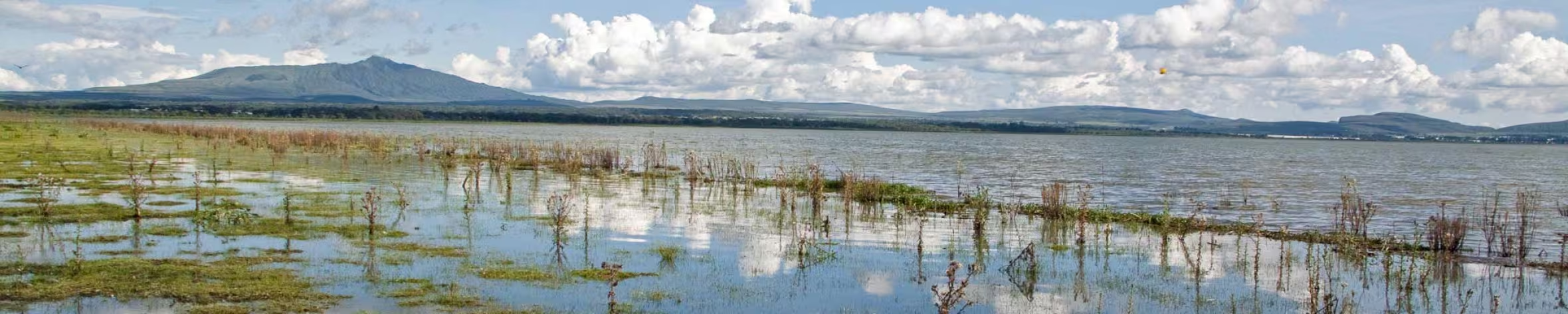
short distance away. But Naivasha is a beautiful lake in its own right, surrounded by lush and varied vegetation. The north side of the lake, in particular, is very sparsely populated and filled with trees.As one of few freshwater lakes in the area, Naivasha draws an astonishing array of birds, especially when from Europe and North Africa are in Kenya from November to April. More than 540 bird species have been recorded in the Naivasha area. The biggest animals you’re likely to see are the lake’s . It’s much better to see them on a boat safari by day than wandering through your hotel grounds at night!Crescent Island is a small island close to Lake Naivasha’s eastern shore. It’s accessible only by boat and is special because you can walk among giraffes, zebras, and , which you can’t do in many other places in Kenya. There’s a leopard or two in the sanctuary, but they’re almost impossible to see.Relive the Film ‘Born Free’


Lake Naivasha may feel like it’s a long way from the wilds of Kora and Meru National Parks, where George Adamson and Elsa the Lioness lived out the story that some may know from the film
Read more
‘Born Free’. But Elsamere, the home that Joy and George Adamson shared along the shores of Lake Naivasha, is a very important part of the ‘Born Free’ story. The Adamsons bought the house in 1967 and lived here until Joy was killed in Shaba National Reserve in 1980.This gracious home by the shores of Lake Naivasha was very much Joy’s space. It was here that she painted, wrote (although ‘Born Free’ was published in 1960, before she arrived here) and ran most of her conservation projects. and , as well as troops of resident , surround the Adamsons’ former home. There are film screenings and a museum featuring the Adamsons’ original animal-behavior manuals, typewriters and photos. The museum also houses the vehicle George was in when he was shot and killed by poachers in 1989. For the full experience, enjoy high tea on the lawn.Tour a Cut-flower Farm

Few visitors realize that Naivasha is the center for Kenya’s cut-flower industry, with more than 60 flower farms in the Lake Naivasha area. The industry employs more than 50,000 workers and earns an estimated US$150 million
Read more
a year. Remarkably, nearly three-quarters of all roses sold in the UK come from here, and a flower picked alongside Naivasha’s shores in the morning can be sold at a flower auction in Europe the very same day. Although the industry is not without its problems, a tour of one of the farms is a fascinating insight into a hugely important local industry.Party by the Lake

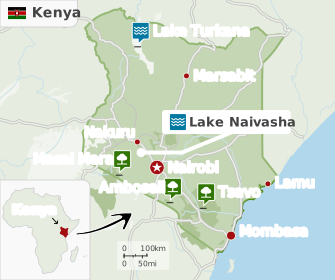
Located close to halfway between Nairobi and Nakuru, Kenya’s largest and third-largest cities, Naivasha has always been a playground for city types. Back in colonial times, that meant wealthy expats. These days, it’s a much wider
Read more
cross section of Kenyan society. Every Friday evening, cars with Nairobi or Nakuru license plates pull into Naivasha’s luxury hotels, while the matatus (public minibuses) deposit everyone else into the grassy, shade-filled campsites along the lake’s southern shore. Sometimes, it’s for a wedding. More often it’s simply because there are few better places away from the Kenyan coast for a party by the water.Practical Info
- Statistics
-
Lake Naivasha is the highest of Kenya’s lakes, sitting at 1,884m/6,181ft above sea level. Until 2010, the lake covered 139km²/54mi², but by 2020 its surface area had increased to 198km²/76mi². The lake’s average depth
Read more
is 6m/20ft, but it reaches 30m/98ft in places. - How to get to Lake Naivasha
-
By road, Naivasha is 90km/56mi northwest of Nairobi, and 71km/44mi southeast of Nakuru. The A104, which connects Nairobi and Nakuru via Naivasha, is one of Kenya’s busiest roads; avoid driving this road after dark. The drive
Read more
from Nairobi takes almost 2 hours*, and it’s just over 1 hour* from Nakuru. From Nakuru, it is possible to drive west via Njoro and then southwest toward the Masai Mara National Reserve, or you can head east toward Aberdare National Park and beyond to Laikipia Plateau.
*Driving times are only a rough indication. You should always consider the possibility of significant delays. - Best time to visit Lake Naivasha
-
Naivasha is a great place to visit year-round, although the driest conditions are from May or June to October. Rains are possible from November to April, but this is the best time for birders to visit,
Read more
as there are many in the area.
Nearby Attractions

Part of Naivasha’s appeal is how close it is to so many other top-notch Kenyan attractions, which is why it works so well as a stopover on your way elsewhere.You hardly even have to leave Naivasha