
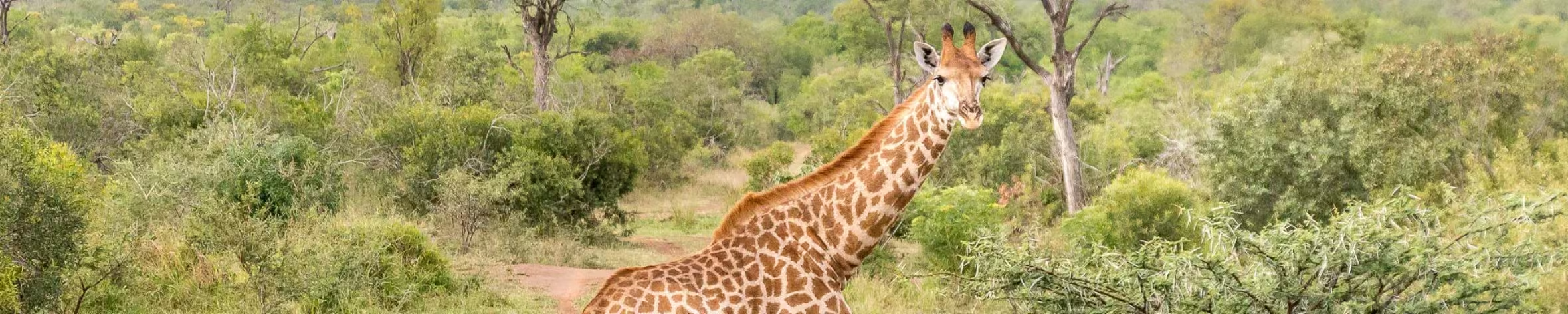
Mkhaya Game Reserve is the most exclusive safari destination in Eswatini (formerly Swaziland) and an important breeding center for endangered wildlife. Four of the are present, including both and , but not lions. All activities are guided and it offers overnight stays in a luxury as well as day tours.
-
 Best Time To Go
- May to September (Dry season)
-
 High Season
- December to January and July to August (It never gets very busy)
-
 Size
Size
- 100km² / 39mi²
-
 Altitude
-
200-355m /656-1,165ft
 View Photos
 View Photos
+19
Photos
View Photos
+19
Photos
Pros & Cons
- Four of the present (no lion)
- Sanctuary for endangered species
- Eswatini’s only , buffalo, , and
- Good place to see both African species
- Guided open-vehicle and offered
- Excellent safari lodge offering a great experience
- Many animals are kept in enclosures
- The only are leopards, which are seldom seen
- Lack of wilderness appeal
- No allowed
Wildlife
Mkhaya supports the only , , , buffalo and populations in Eswatini. It is also home to elephant, , and . Smaller animals that often come through camp include , , , and and . Leopards are around, but these shy creatures aren’t easily seen.
More about Mkhaya’s wildlifeScenery
Mkhaya protects a tract of dominated by , with some thicker woodland in the north. The reserve is named after the knob thorn , a large hardwood tree that is common in the Lowveld and used by the Swazi people in the frames of traditional houses. Several rivers cross the reserve, each fringed with beautiful . Spring and summer bring a lot of color with beautiful wildflowers.
Activities
The main activity is guided in open safari vehicles. Overnight visitors are typically taken on early morning and late afternoon drives, and are also offered guided walks. Day visits start at 10 AM and include two game drives either side of a at the camp. All activities come with an excellent chance of closeup encounters with both and . No is permitted.
Weather & Climate
Mkhaya has a defined winter and summer (at opposite times of the year to those seasons in Europe, Asia and North America). These seasons correspond to the Dry and Wet season, respectively. The wet summer months tend to be humid and very hot. It rains regularly in summer, but mostly in the late afternoons and seldom for the whole day. Dry winter months offer warm days, but nights and early mornings are cold.
More about the weather and climateBest Time To Visit
Wildlife viewing is not much affected by season, as animals are mostly kept in drive-in enclosures. That said, the best time to visit is in the dry winter months, from May to September, when the climate is mild and it seldom rains. The shoulder months (April, May, September and October) are particularly agreeable as it is less cold at night and in the early morning than in midwinter.
More about the best time to visit