
Average Expert Rating
Rating Breakdown
Write a User ReviewThe Connoisseur’s Choice
Many seasoned East African safari-goers regard Ruaha to be the most rewarding of all East African game reserves, and while I’d rate it slightly below the Serengeti for overall game viewing, it is certainly one of the region’s very finest reserves, especially for those who place a higher premium on wilderness vibe than on wall-to-wall wildlife. Ruaha is also the second-largest national park in Tanzania (after Nyerere), a 20,226km2/7,809mi2 tract of rugged and remote semi-arid bush whose wild quality is embodied by the spectral baobab trees that stud the boulder-strewn slopes.
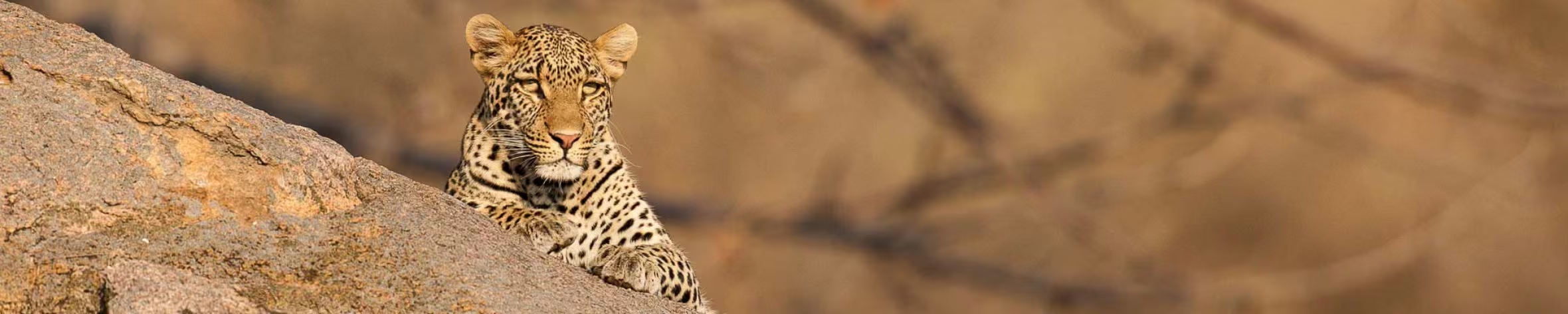
Ruaha is no slouch when it comes to game viewing either. Indeed, it is one of the few African parks where I’ve seen all three of Africa’s large cats – leopard, lion and cheetah – on most visits to date, though the latter has become significantly more scarce in recent years. Ruaha is also one of the best places to look for African wild dog. They are less common than they
With the ivory poaching of a few years back now said to be under control, large elephant herds are a plentiful feature of the Ruaha landscape and they are usually very relaxed around vehicles. An unusually high antelope diversity includes Grant's gazelle and lesser kudu at the southern extent of their range, as well as the miombo-associated sable and roan antelope. The spectacular greater kudu is clearly thriving in Ruaha; we saw more of these handsome antelope on our 2022 visit than we had on all our previous safaris combined.
The birding is a treat, with 570-odd species recorded, notably central Tanzanian endemics such as ashy starling and black-collared lovebird. Ruaha is also the type locality for the recently described and rather localised Tanzania red-billed hornbill (which is very common here) and Ruaha chat (which needs to be actively sought out).
Ruaha is no slouch when it comes to game viewing either. Indeed, it is one of the few African parks where I’ve seen all three of Africa’s large cats – leopard, lion and cheetah – on most visits to date, though the latter has become significantly more scarce in recent years. Ruaha is also one of the best places to look for African wild dog. They are less common than they
Read more
used to be in the developed part of the park, possibly due to competition with lions, but are often quite easy to locate in the denning season of June and July.With the ivory poaching of a few years back now said to be under control, large elephant herds are a plentiful feature of the Ruaha landscape and they are usually very relaxed around vehicles. An unusually high antelope diversity includes Grant's gazelle and lesser kudu at the southern extent of their range, as well as the miombo-associated sable and roan antelope. The spectacular greater kudu is clearly thriving in Ruaha; we saw more of these handsome antelope on our 2022 visit than we had on all our previous safaris combined.
The birding is a treat, with 570-odd species recorded, notably central Tanzanian endemics such as ashy starling and black-collared lovebird. Ruaha is also the type locality for the recently described and rather localised Tanzania red-billed hornbill (which is very common here) and Ruaha chat (which needs to be actively sought out).

A southern wilderness well worth the trek
I love Tanzania’s southern circuit – less tourists than the north and so many excellent camps and lodges. The Ruaha National Park is up there with the Selous amongst my favourites, and I reckon the two parks combined make an excellent option if you’ve got the time and the money and have already been to the north, or just fancy getting further off the beaten track. The landscape of Ruaha is spectacular, with tumbling boulders, hot springs and giant baobab trees, and best of all, you’ll have it almost all to yourself.
At the park’s heart is the well-named Great Ruaha River, a massive watercourse that dwindles to only a few pools in the dry season, but bursts its banks and roars over boulders at the height of the rains. In dry season, most of the camps along the river organize walks and even dinners in the dry river bed – I love to go out in the morning and try to identify all the different footprints left overnight in the soft sand.
Because it’s so far south,
At the park’s heart is the well-named Great Ruaha River, a massive watercourse that dwindles to only a few pools in the dry season, but bursts its banks and roars over boulders at the height of the rains. In dry season, most of the camps along the river organize walks and even dinners in the dry river bed – I love to go out in the morning and try to identify all the different footprints left overnight in the soft sand.
Because it’s so far south,
Read more
Ruaha represents a transition zone where eastern and southern species of flora and fauna overlap – lesser and greater kudu co-exist with northern species such as Grant’s gazelle. Rare sable and roan antelope are also here in abundance, so I managed to tick off a few new species on my list on my first visit there.Wild, remote Ruaha – the land of lions
Ruaha is the star of Tanzania’s lesser-known Southern Circuit. Not only is it wild and remote, it’s home to East Africa’s highest population of elephants and 10% of the entire continent’s lions, with some 28 lion prides roaming its plains.
Don’t be surprised if your guide gets out a tablet at a lion sighting and starts filling in data – many of them are helping the remarkable NGO Ruaha Carnivore Project (RCP) to gather information on the predators. We spent a couple of days with RCP, learning about the fabulous work they’ve been doing with the local Barabaig and Maasai people to reduce traditional rituals involving lion killings and also to limit the number of cattle killed by lions. They occasionally come to lodges to give talks to visitors about their work in lion conservation – do join them if you get the chance.
There are few lodges in Ruaha and those that are here are relatively expensive, but the real luxury is the bush solitude – we rarely
Don’t be surprised if your guide gets out a tablet at a lion sighting and starts filling in data – many of them are helping the remarkable NGO Ruaha Carnivore Project (RCP) to gather information on the predators. We spent a couple of days with RCP, learning about the fabulous work they’ve been doing with the local Barabaig and Maasai people to reduce traditional rituals involving lion killings and also to limit the number of cattle killed by lions. They occasionally come to lodges to give talks to visitors about their work in lion conservation – do join them if you get the chance.
There are few lodges in Ruaha and those that are here are relatively expensive, but the real luxury is the bush solitude – we rarely
Read more
encountered other visitors on our drives and walks. The scenery is spectacular, with masses of baobab forests and ilala palms, rolling hills and sand rivers, and the Great Ruaha River and escarpment of the same name which dominate the park. While wildlife can play hard-to-get in the wet season, in December when we visited, we saw plenty including zebras, antelopes, giraffes, greater kudus, wildebeest, black-backed jackals, spotted hyenas and leopards – and of course, lions – all on one drive.Wilderness in Tanzania’s Second-largest National Park
Visitors are often surprised to learn that Ruaha is bigger than the Serengeti. At more than 20,000km2/7,700mi2, this is Tanzania’s second-largest national park (after Nyerere) and one of those safari destinations that tends to attract the ‘best-kept secret’ epithet. It’s true that for such a vast area, Ruaha is surprisingly undeveloped, with only a handful of permanent camps and few other vehicles to crowd your game drives. This makes any safari here a joy, as the wildlife is extremely rich.
Ruaha spans an ecological transition zone between eastern and southern Africa. Its habitats comprise a tapestry of thorn bush, open savanna, rocky kopjes and wooded hills, all studded with the park’s signature baobabs. The winding Jongomero and Great Ruaha Rivers define the southern and eastern boundaries. Across this wilderness roams Tanzania’s largest population of elephants (around 15,000), plus plentiful buffalo, giraffe, zebra and numerous hippos in
Ruaha is renowned for large predators, notably its impressive lion prides and abundant leopards. Both cheetah and wild dog also occur in small numbers, spotted hyena are numerous, and striped hyena is another East Africa species that is here at the far south of its range (though is seldom seen). Birders can seek out more than 500 species with, again, an interesting overlap of the eastern and southern African. Variety peaks during the rains (November to April), with such unusual migrants as sooty falcon and Eleonora’s falcon. The endemic Tanzania red-billed hornbill is common.
My most recent visit took place during the dry season, based at a camp on the Ruaha River. This time I saw fewer large predators than on my previous visit, though we spent an excellent morning with a lion pride on a buffalo kill, and leopards were seen daily – just not by me. Elephant were ubiquitous, including a group of mature bulls that wandered through camp, and we saw two very large buffalo herds, plus plentiful greater kudu and a good variety of other antelope. Highlights among over 150 bird species included black-faced sandgrouse, grey crowned crane and buff-crested bustard, plus several – such as D’Arnaud’s barbet and Von der Decken’s hornbill – that are here at the very southern limit of their range.
Most camps can arrange additional activities, if booked through National Parks. On my trip, a night drive produced such nocturnal specials as white-tailed mongoose, bat-eared fox and Verreaux’s eagle owl, while a guided bush walk took us close to large aggregations of hippos and crocodiles in the river’s permanent pools.
My most memorable moment, however, was undoubtedly a dawn hot-air balloon flight. This is the perfect way to appreciate the true scale of the Ruaha wilderness, with (by contrast with the Serengeti/Masaai Mara) not another balloon or even vehicle in sight. From high above, we heard lions roaring, spied herds of zebra and watched a line of elephants crossing a riverbed. The magical morning was capped by meeting a group of three wild dogs bounding along the road as we returned to camp. No sighting in Ruaha is nailed on – this is not the Serengeti: the bush is thick and the place is vast – but you can always guarantee a special experience.
Ruaha spans an ecological transition zone between eastern and southern Africa. Its habitats comprise a tapestry of thorn bush, open savanna, rocky kopjes and wooded hills, all studded with the park’s signature baobabs. The winding Jongomero and Great Ruaha Rivers define the southern and eastern boundaries. Across this wilderness roams Tanzania’s largest population of elephants (around 15,000), plus plentiful buffalo, giraffe, zebra and numerous hippos in
Read more
the permanent rivers. Impala are abundant. The park is at the southern limit for some East African antelope, such as Grant’s gazelle and lesser kudu – the latter occurring alongside greater kudu in a rare overlap. Sable and roan antelope are found in the Jongomera area, to the south.Ruaha is renowned for large predators, notably its impressive lion prides and abundant leopards. Both cheetah and wild dog also occur in small numbers, spotted hyena are numerous, and striped hyena is another East Africa species that is here at the far south of its range (though is seldom seen). Birders can seek out more than 500 species with, again, an interesting overlap of the eastern and southern African. Variety peaks during the rains (November to April), with such unusual migrants as sooty falcon and Eleonora’s falcon. The endemic Tanzania red-billed hornbill is common.
My most recent visit took place during the dry season, based at a camp on the Ruaha River. This time I saw fewer large predators than on my previous visit, though we spent an excellent morning with a lion pride on a buffalo kill, and leopards were seen daily – just not by me. Elephant were ubiquitous, including a group of mature bulls that wandered through camp, and we saw two very large buffalo herds, plus plentiful greater kudu and a good variety of other antelope. Highlights among over 150 bird species included black-faced sandgrouse, grey crowned crane and buff-crested bustard, plus several – such as D’Arnaud’s barbet and Von der Decken’s hornbill – that are here at the very southern limit of their range.
Most camps can arrange additional activities, if booked through National Parks. On my trip, a night drive produced such nocturnal specials as white-tailed mongoose, bat-eared fox and Verreaux’s eagle owl, while a guided bush walk took us close to large aggregations of hippos and crocodiles in the river’s permanent pools.
My most memorable moment, however, was undoubtedly a dawn hot-air balloon flight. This is the perfect way to appreciate the true scale of the Ruaha wilderness, with (by contrast with the Serengeti/Masaai Mara) not another balloon or even vehicle in sight. From high above, we heard lions roaring, spied herds of zebra and watched a line of elephants crossing a riverbed. The magical morning was capped by meeting a group of three wild dogs bounding along the road as we returned to camp. No sighting in Ruaha is nailed on – this is not the Serengeti: the bush is thick and the place is vast – but you can always guarantee a special experience.