
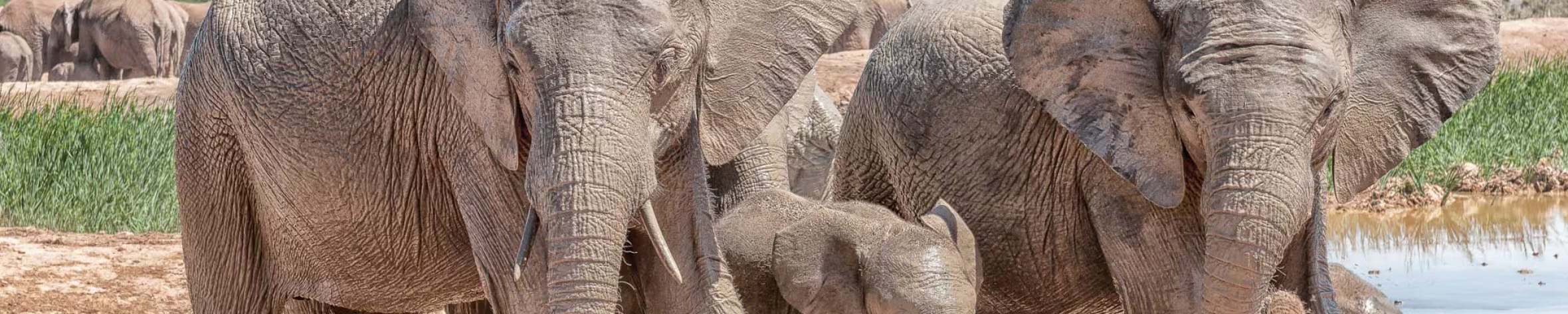
Addo Elephant National Park was established in 1931 to protect one of South Africa’s last free-ranging elephant populations. Situated near Gqeberha (formerly Port Elizabeth), it has since been expanded to become the country’s third-largest national park. Well suited to , Addo is one of Africa’s top elephant-viewing hot spots and it also harbors the rest of the .
-
 Best Time To Go
- January to December (All year)
-
 High Season
- October to April (The park gets crowded)
-
 Size
Size
- 1,640km² / 633mi² (land sector), 2,100km² / 811mi² (marine sector)
-
 Altitude
-
0-901m /0-2,956ft
 View Photos
 View Photos
+24
Photos
View Photos
+24
Photos
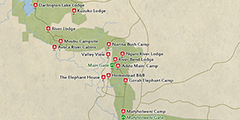 Open Map
Pros & Cons
- Excellent elephant viewing
- Home to all the
- Close to Gqeberha and easily combined with the Garden Route
- Good facilities and all-weather roads
- Rest camps and lodges in and around the park cater to all budgets
- Malaria-free
- The small park gets very busy in high season and school holidays
- Views of bordering farms reduce wilderness appeal
Wildlife
Addo’s 600-plus elephants are incredibly relaxed, and offer an opportunity to observe social behavior. Buffalo and lion are sometimes seen on , but and leopard are rarer. Other wildlife includes , , , , , and . Following the creation of a marine sector in 2019, Addo also supports , , and .
More about Addo Elephant NP’s wildlifeScenery
Addo encompasses five distinct vegetation areas: , , forest, and Indian Ocean coastal belt. The characteristic vegetation of the main area open to tourists is Albany thicket, which is dominated by (literally ‘bacon tree’). This low-growing shrub forms the main food for the elephants. Woody Cape, a coastal sector that runs east from the outskirts of Gqeberha, supports some spectacular dune fields.
Activities
For , a network of wildlife-viewing roads runs through the core of the park from Addo Rest Camp south to Matyholweni Gate. Guided and operate out of Addo Rest Camp. Suited to 4x4 vehicles only, the 45km/28mi Bedrogfontein 4×4 Trail connects the Kabouga and Darlington sectors. The coast around Woody Cape hosts the overnight Alexandria Hiking Trail and 7km/4mi Tree Dassie Trail. Boat tours into the marine sector can be arranged.
Weather & Climate
Unlike most parks elsewhere in South Africa, the summer rainfall (October to April) at Addo doesn’t entirely cease in the winter months (May to September). It just diminishes, along with the heat. In fact, the nighttime temperatures can sometimes drop to freezing in midwinter.
More about the weather and climateBest Time To Visit
There’s no bad time to visit Addo. To avoid crowds and high-season prices, aim for the drier winter months (May to September), which also offer the best wildlife viewing. You’ll need warm clothes, however, to combat chilly temperatures on early morning . Temperatures are more pleasant in summer (October to April), but the park is busier, rain is more frequent, and animals can be harder to find.
More about the best time to visit