Guide to Visiting Masai Mara National Reserve – All You Need To Know
 By Philip Briggs
 Philip is a renowned Africa expert and author of Kenya guides for Bradt, DK Eyewitness and Insight.
Masai Mara National Reserve is Kenya’s flagship safari destination. Home to all the Big Five (lion, leopard, elephant, buffalo and black rhino), this tract of undulating grassland offers outstanding wildlife viewing throughout the year, particularly when it comes to large carnivores. A northerly extension of the Serengeti plains, the Masai Mara also hosts one of the world’s most awe-inspiring wildlife spectacles when the annual wildebeest migration arrives from Tanzania in all its grunting, dust-kicking glory.
Why Should I Visit the Masai Mara National Reserve?
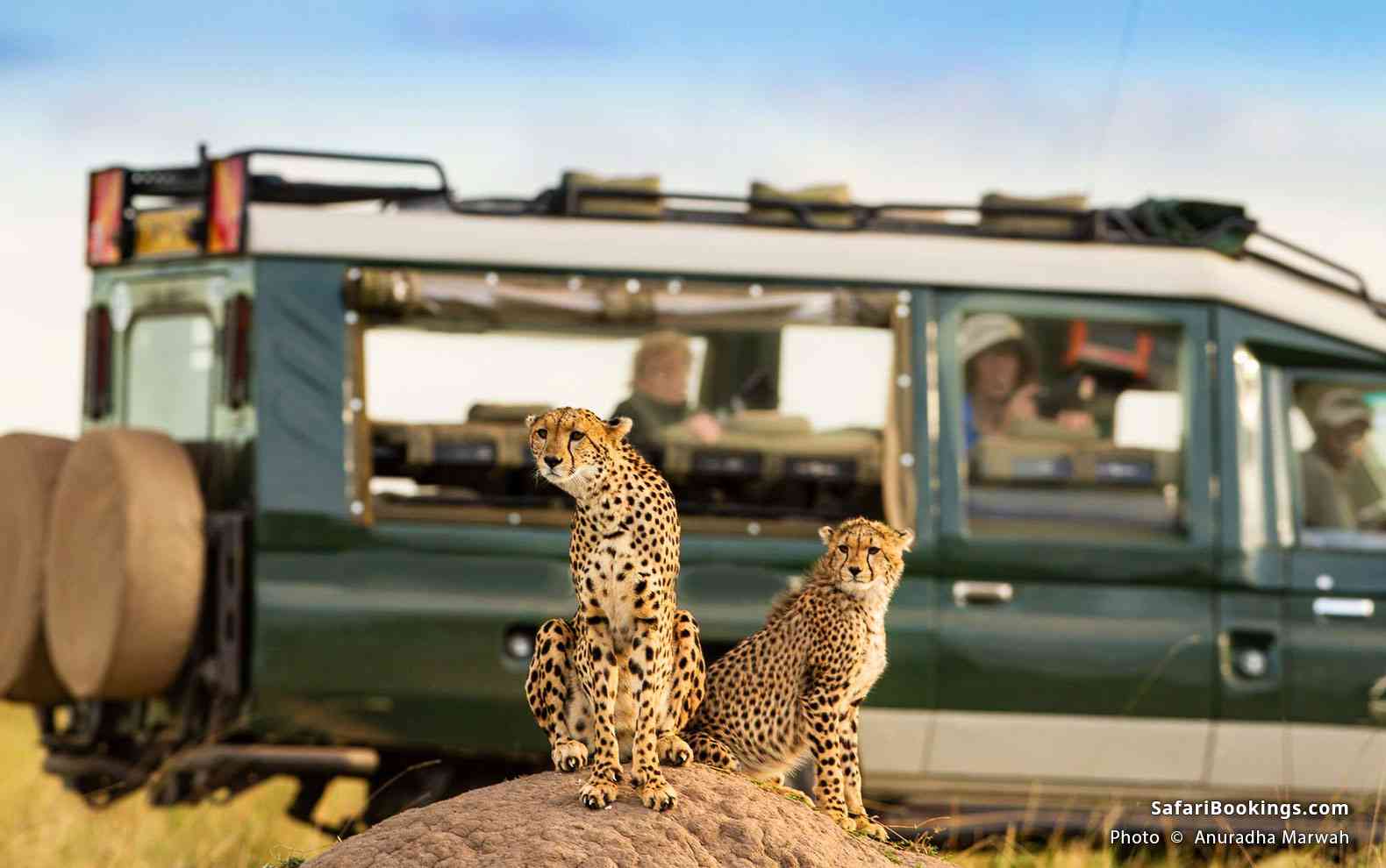 Visitors watching cheetahs from a safari vehicle in Masai Mara National Reserve
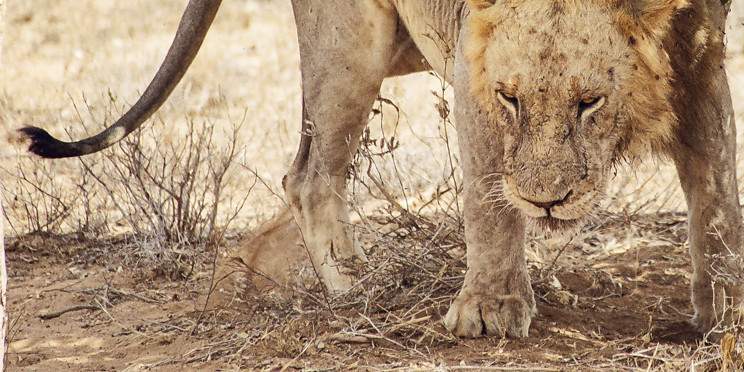
Quite simply, because it is one of Africa’s finest and most iconic safari destinations. Few other public reserves match the Masai Mara for close-up lion sightings. And other large carnivores, including leopard, cheetah and spotted hyena, are also seen with unusual ease.
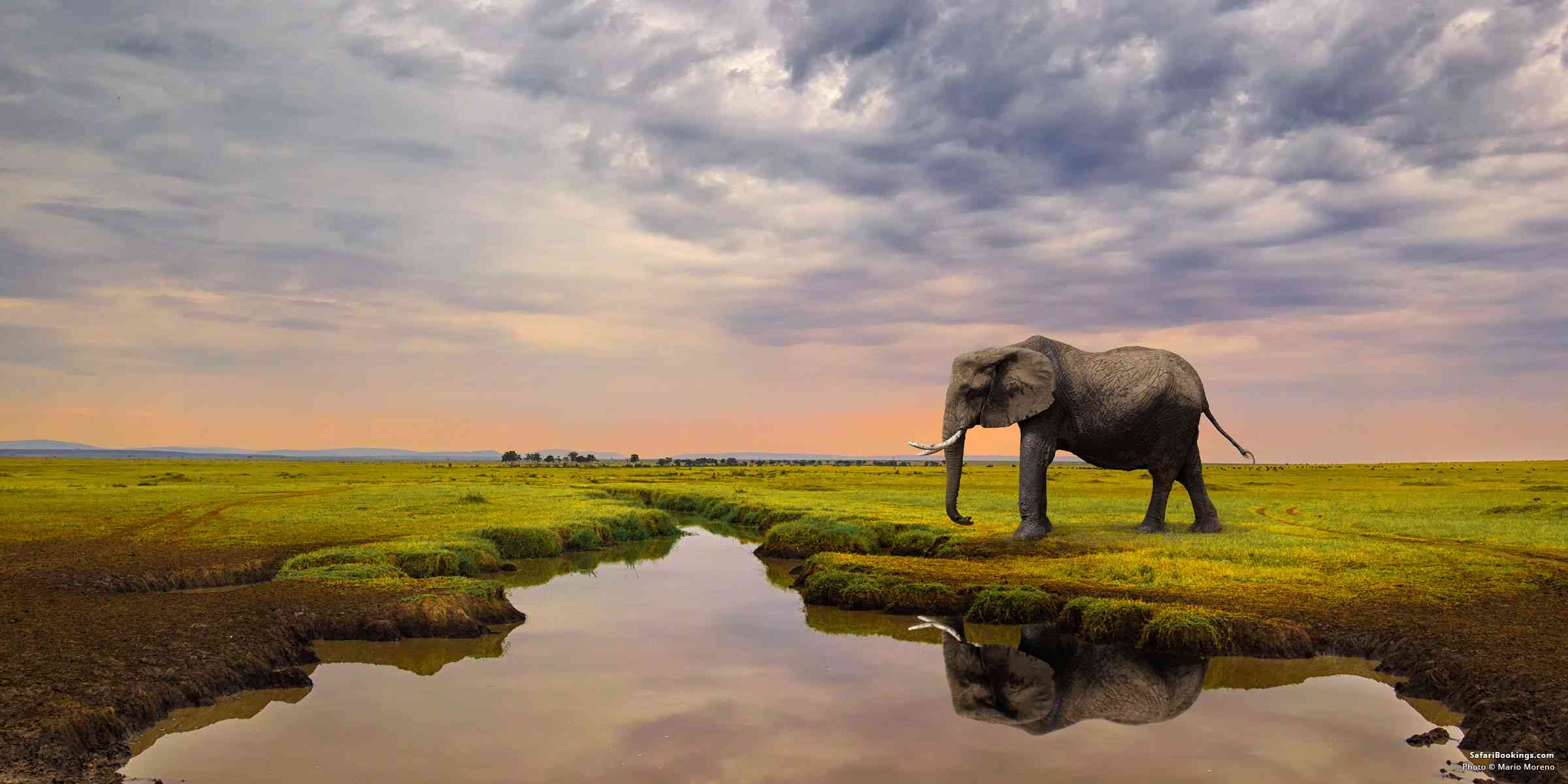
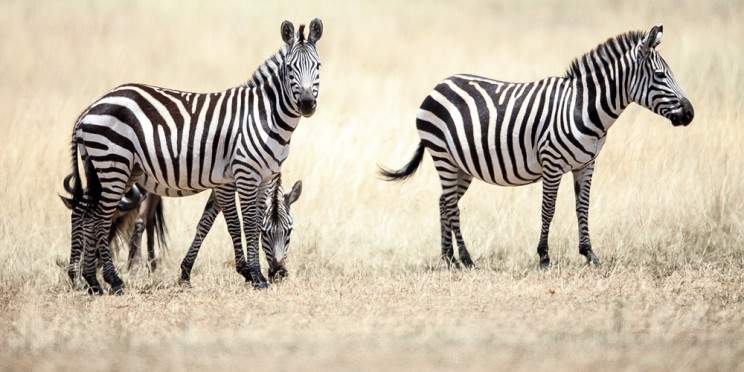
Then there is the sheer volume of plains grazers. It’s not unusual to do a quick sweep of your surroundings and see more than 10 large mammal species in the space of seconds. A lone elephant bull ambling through the grass, a buffalo herd squinting into the distance, a lofty giraffe nibbling at the umbrella-shaped canopy of an acacia tree, and a family of zebras mingling with gazelle, impala, eland and other antelope. It is pretty spectacular at any time of year, but even more so from July to October, when resident wildlife is boosted by hundreds of thousands of migrating wildebeest.
Where Is the Masai Mara National Reserve Located?
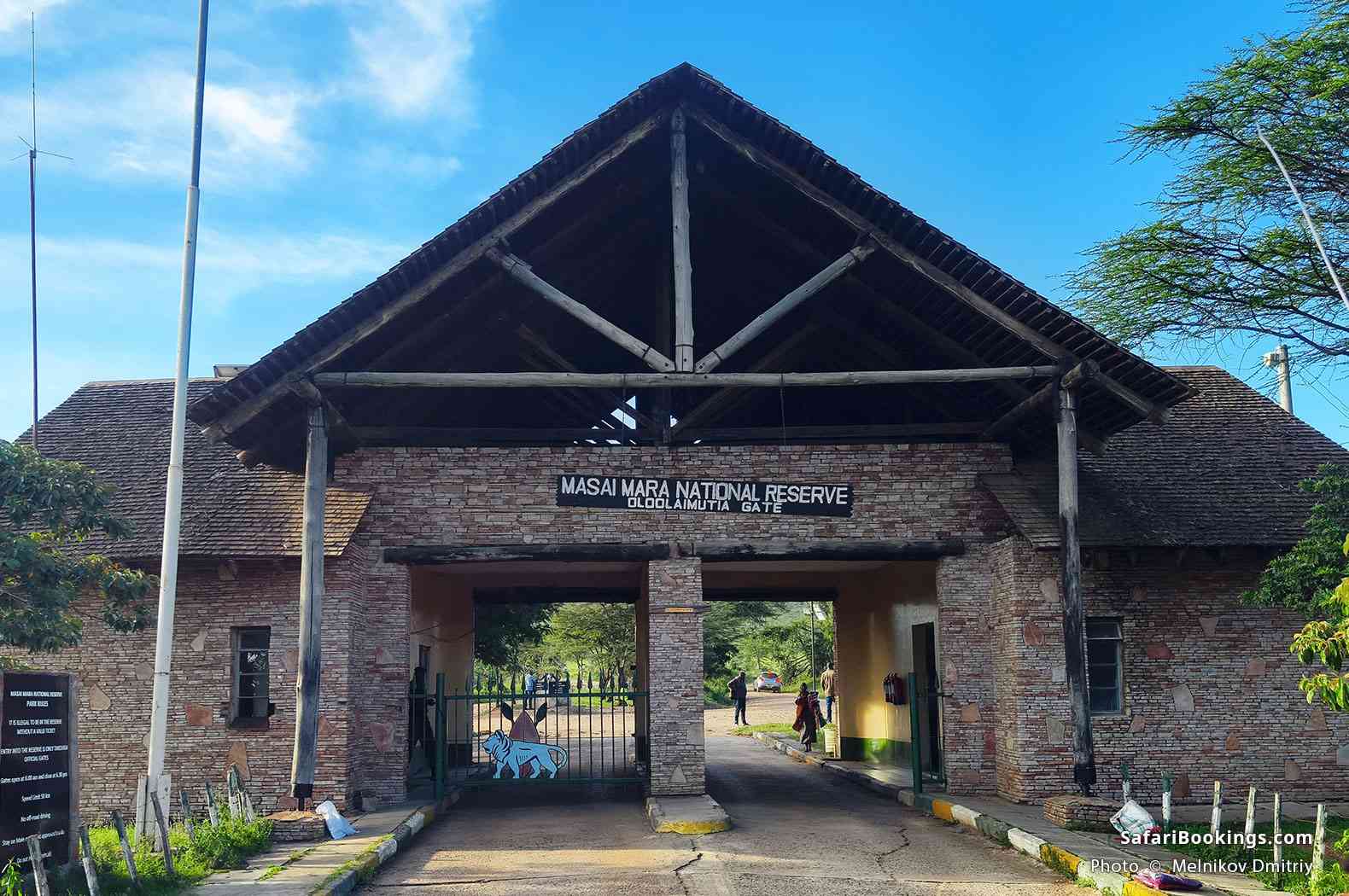 Masai Mara National Reserve main gate
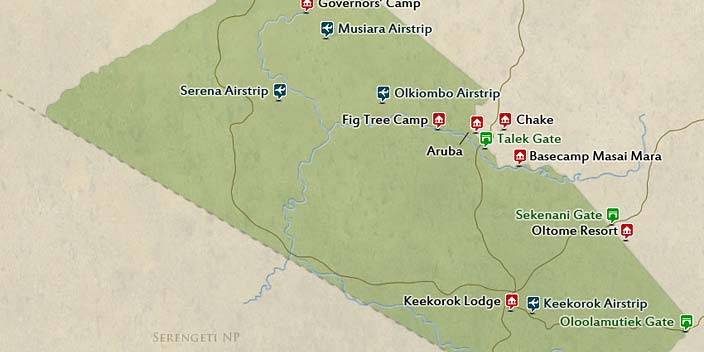
Situated in southwest Kenya, Masai Mara National Reserve lies on a medium-altitude plateau flanked to the east by the Rift Valley and to the west by the Lake Victoria Basin. Although the core reserve is relatively small at 1,510km²/583mi², it forms part of the vast cross-border Serengeti-Mara ecosystem, which hosts the world’s largest land-based mammal migration. The Masai Mara borders Tanzania’s Serengeti National Park to the southwest, while a cluster of community-owned conservancies extend to its north and east. Sekenani Gate, the main point of entrance, lies about 230km/143mi west of Nairobi via the gateway town of Narok.
When Is the Great Migration in the Masai Mara National Reserve?
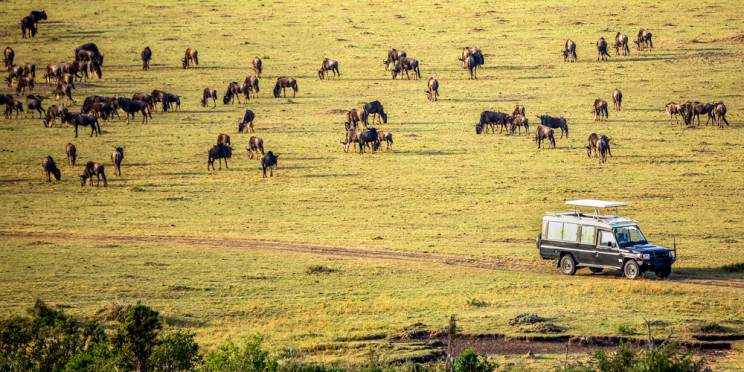
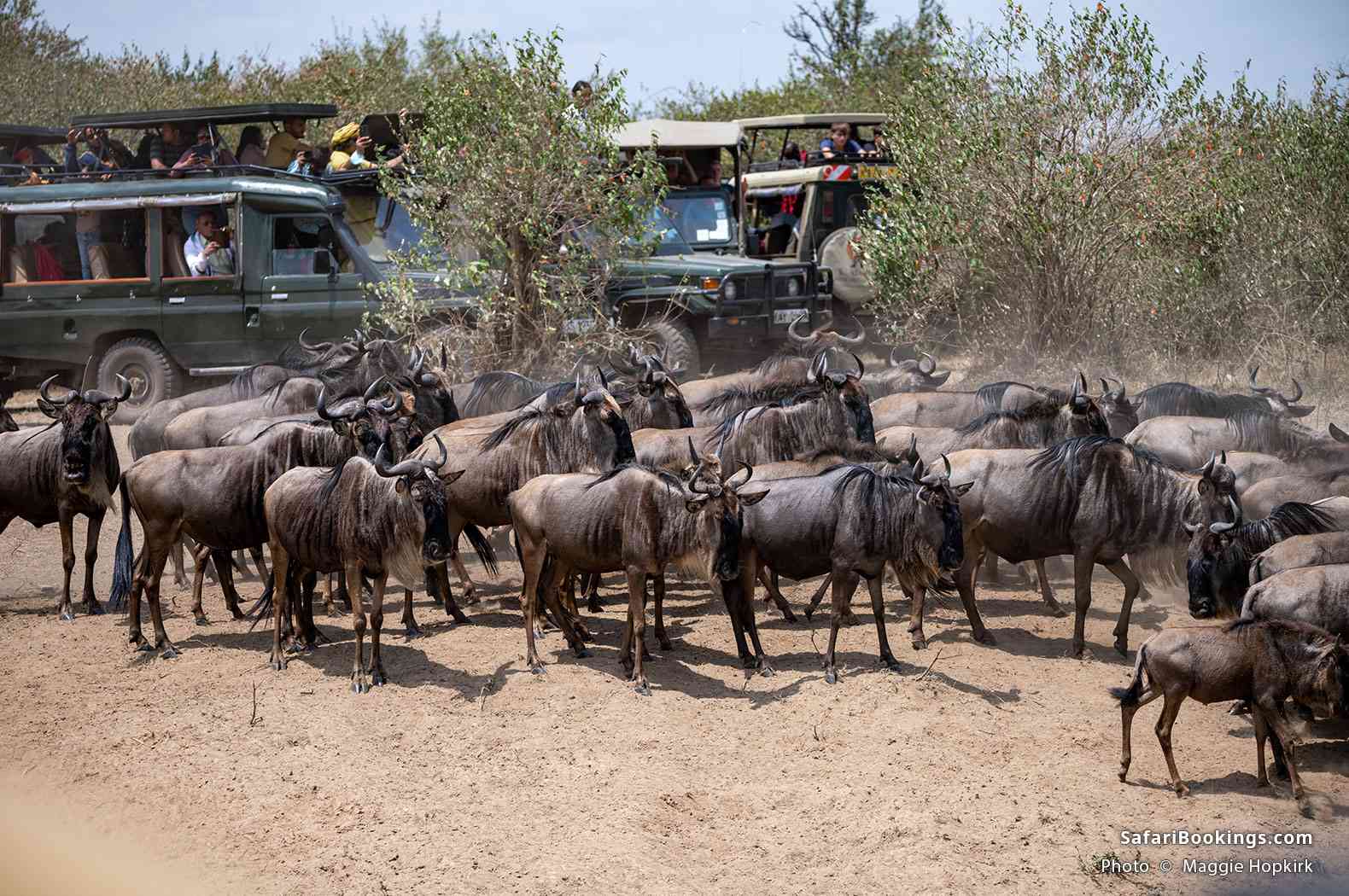 Visitors watching the wildebeest migration from safari vehicles in Masai Mara National Reserve
The annual migration of roughly two million wildebeest through the Serengeti-Mara ecosystem is one of the world’s great wildlife spectacles. Accompanied by large herds of zebra and gazelle, the wildebeest follow the seasonal rains in a clockwise direction, with the action being centered on Tanzania’s Serengeti National Park for most of the year. In July or sometimes August, however, many of the migrating animals cross the Kenyan border into the Masai Mara to enjoy fresh grazing.
Once in the Masai Mara, the wildebeest typically stick around for up to three months, then gradually start to return south over late September and October. An occasional feature of this sojourn in Kenya is dramatic river crossings that might involve tens of thousands of wildebeest.
What Other Wildlife Can I Expect To See?
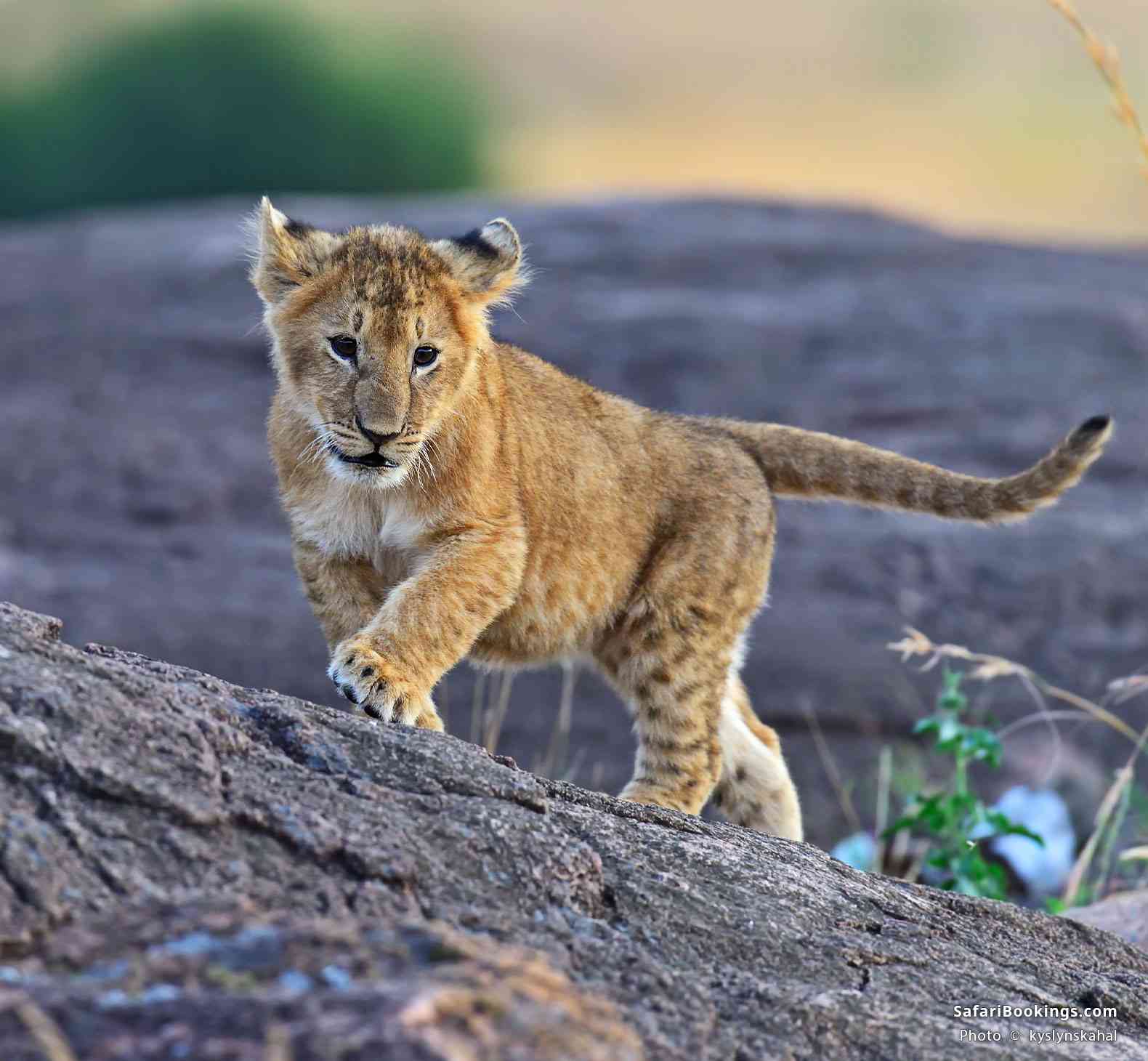 Lion cub in Masai Mara National Reserve
Masai Mara offers fantastic year-round wildlife viewing. The reserve is famed for its numerous lions, which are very used to vehicles, and it is also one of the few places where Africa’s other big cats – cheetah and leopard – are both regularly encountered. Other animals you can be sure of seeing over the course of a couple of days include elephant, buffalo, giraffe, zebra, warthog and spotted hyena. The reserve’s small and secretive black rhino population tends to favor the westerly Mara Triangle and Tanzanian border region. Antelope include Coke’s hartebeest, topi, eland, impala, and Thomson’s and Grant’s gazelles.
Birds of prey are particularly well represented on a bird checklist exceeding 500 species, as are widespread safari favorites such as lilac-breasted roller, white-bellied go-away-bird and superb starling. The Masai Mara is an excellent place to see open-country heavyweights such as common ostrich, secretary bird, southern ground hornbill, kori bustard and Denham’s bustard.
How Do I Get to the Masai Mara National Reserve?
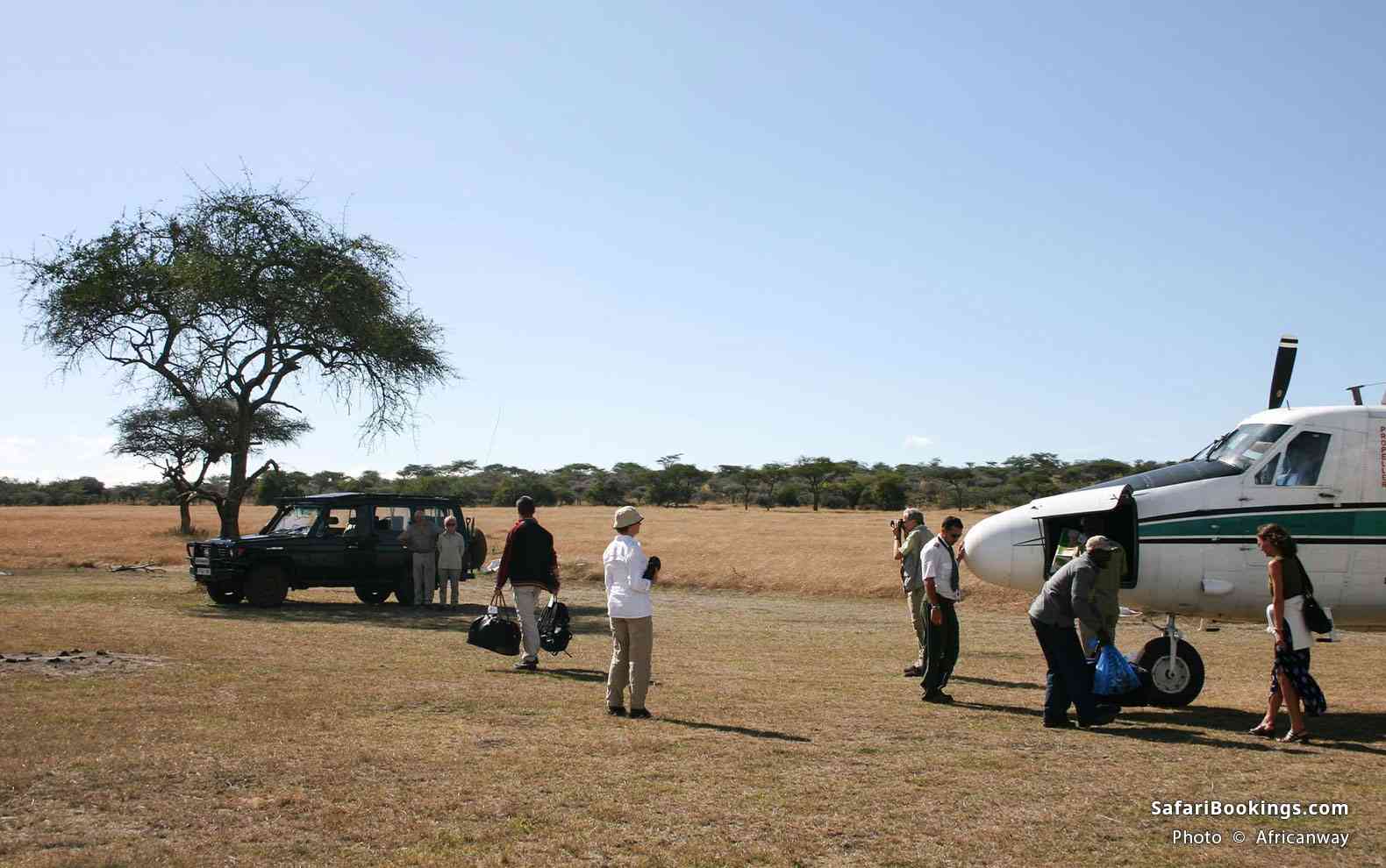 Visitors arriving via a small aircraft in Masai Mara National Reserve
Most visitors to the Masai Mara book an organized safari. The quickest way to get there is to fly, which takes 45 minutes from Nairobi (longer from the coast or most other destinations). The main Sekenani Gate lies 230km/143mi west of Nairobi along a surfaced road that can usually be driven in five hours, allowing for heavy truck traffic on the descent from the town of Limuru into the Rift Valley. Road safaris often combine the Masai Mara with Lake Nakuru National Park, which lies 210km/130mi (roughly four hours’ drive) north of Sekenani Gate.
Self-drivers should be aware that while there are other entrance gates to the Masai Mara, the feeder roads are unpaved and generally in poor shape. In practice, almost everyone visiting the Masai Mara (or conservancies west of the main Nairobi road) passes through Sekenani, even if that means driving through the reserve to exit via another gate.
Can the Masai Mara National Reserve Be Combined With Other Parks?
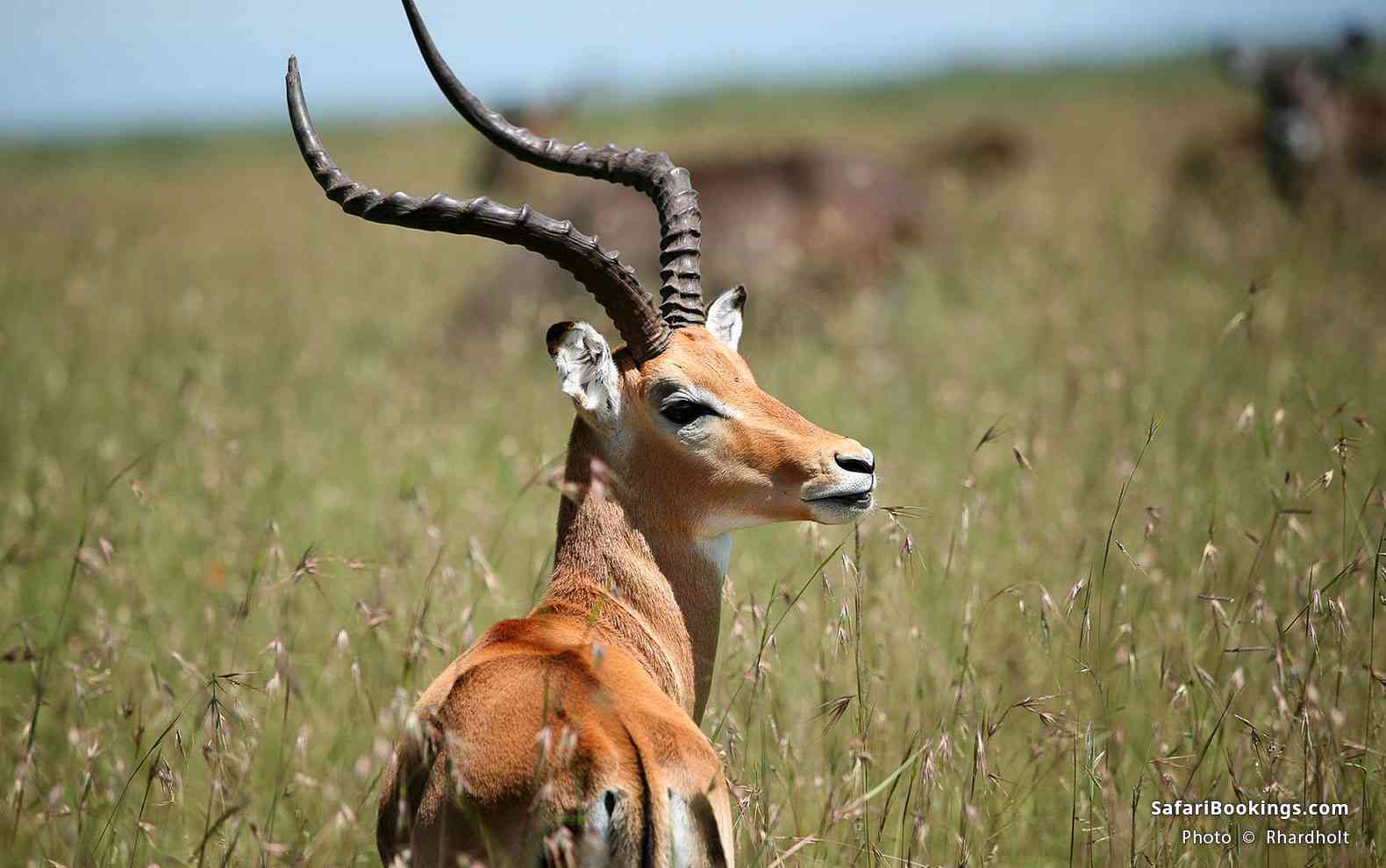 Male impala in Masai Mara National Reserve
Yes, it certainly can, and often is. For budget- or time-conscious travelers, a recommended pairing is Lake Nakuru National Park, with its dramatic Rift Valley scenery, tree-climbing lions and abundant waterbirds (including occasional flocks of flamingo). Importantly, for those hoping to tick off all the Big Five in Kenya, Lake Nakuru is a reliable place to see white rhino, while black rhino is also present but less frequently encountered.
Several other parks can be combined with the Masai Mara. A popular road option is to continue from Lake Nakuru toward Samburu National Reserve, Meru National Park or Laikipia Plateau, where typical safari wildlife is complemented by dry-country specials such as reticulated giraffe, Grevy’s zebra and the long-necked gerenuk antelope. Destinations better suited to fly-in combination safaris include Amboseli National Park, which offers superb elephant viewing below snowcapped Mt Kilimanjaro, and the vast wilderness of Tsavo East and Tsavo West National Parks.
When Is the Best Time To Visit?
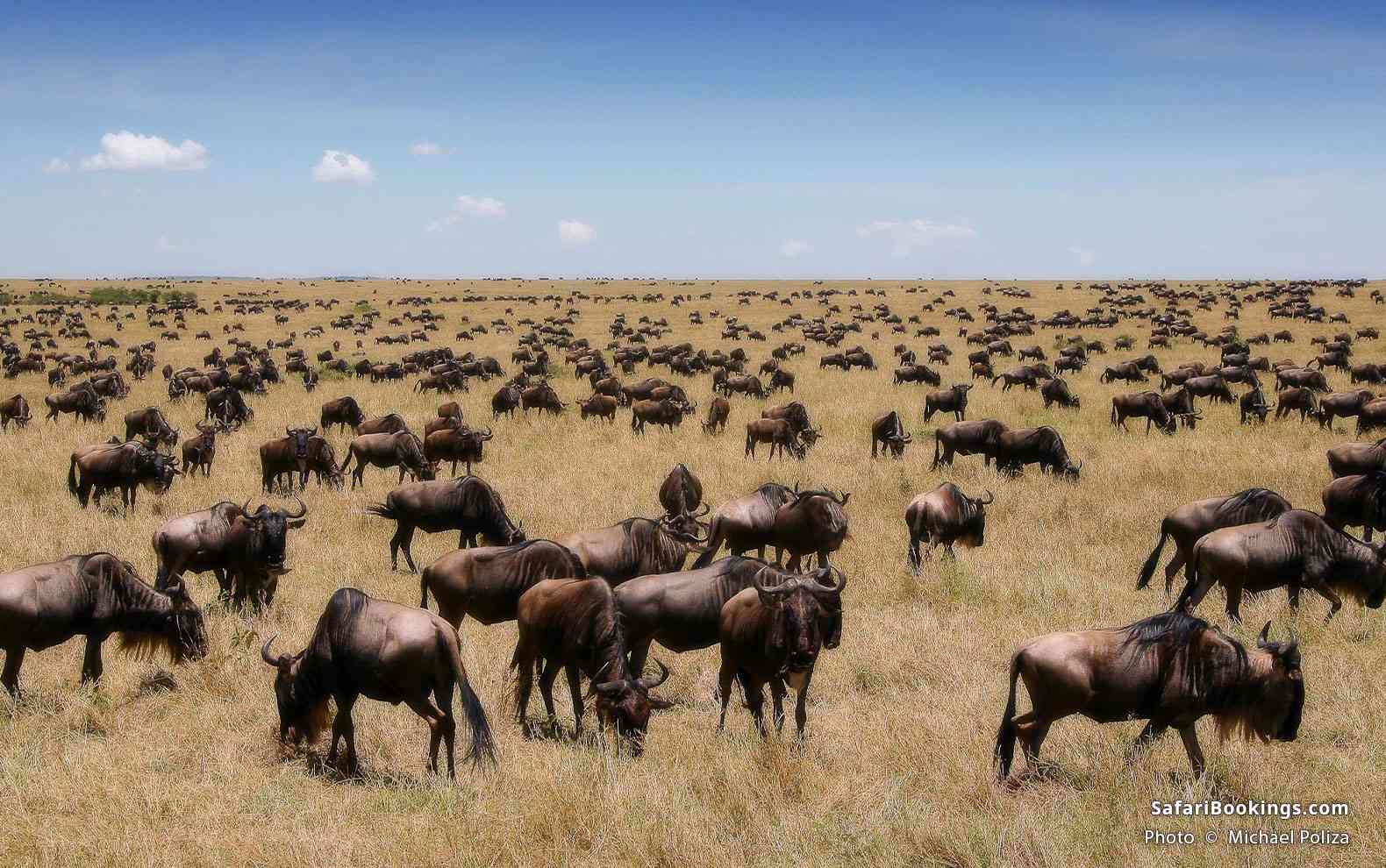 Thousands of wildebeest grazing in Masai Mara National Reserve
That depends greatly on your priorities. If, like many visitors, your main reason for visiting is to catch the wildebeest migration in action, that narrows things down to July to October, with August or September being the safest bet. This window roughly coincides with the Dry season (June to October), when wildlife is easier to find because it tends to concentrate around permanent water, and thinned-out vegetation allows you to see deeper into the bush.
The downside of visiting during the migration is the high volume of tourists, especially – but not only – in the vicinity of river crossing points. From this perspective, there’s much to be said for traveling over the short rains (November and December) or immediately afterward (January and February); this period is relatively dry but less crowded. Wildlife remains prolific during the long rains (March to May), and the risk of activities being rained out is arguably outweighed by the lower tourist volumes.
How Do I Get Around in the Masai Mara National Reserve?
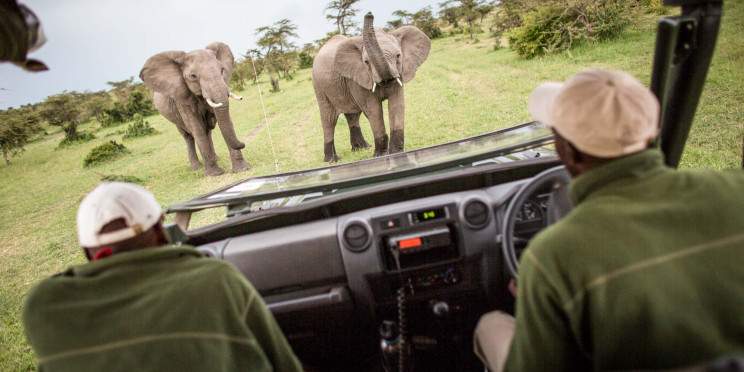
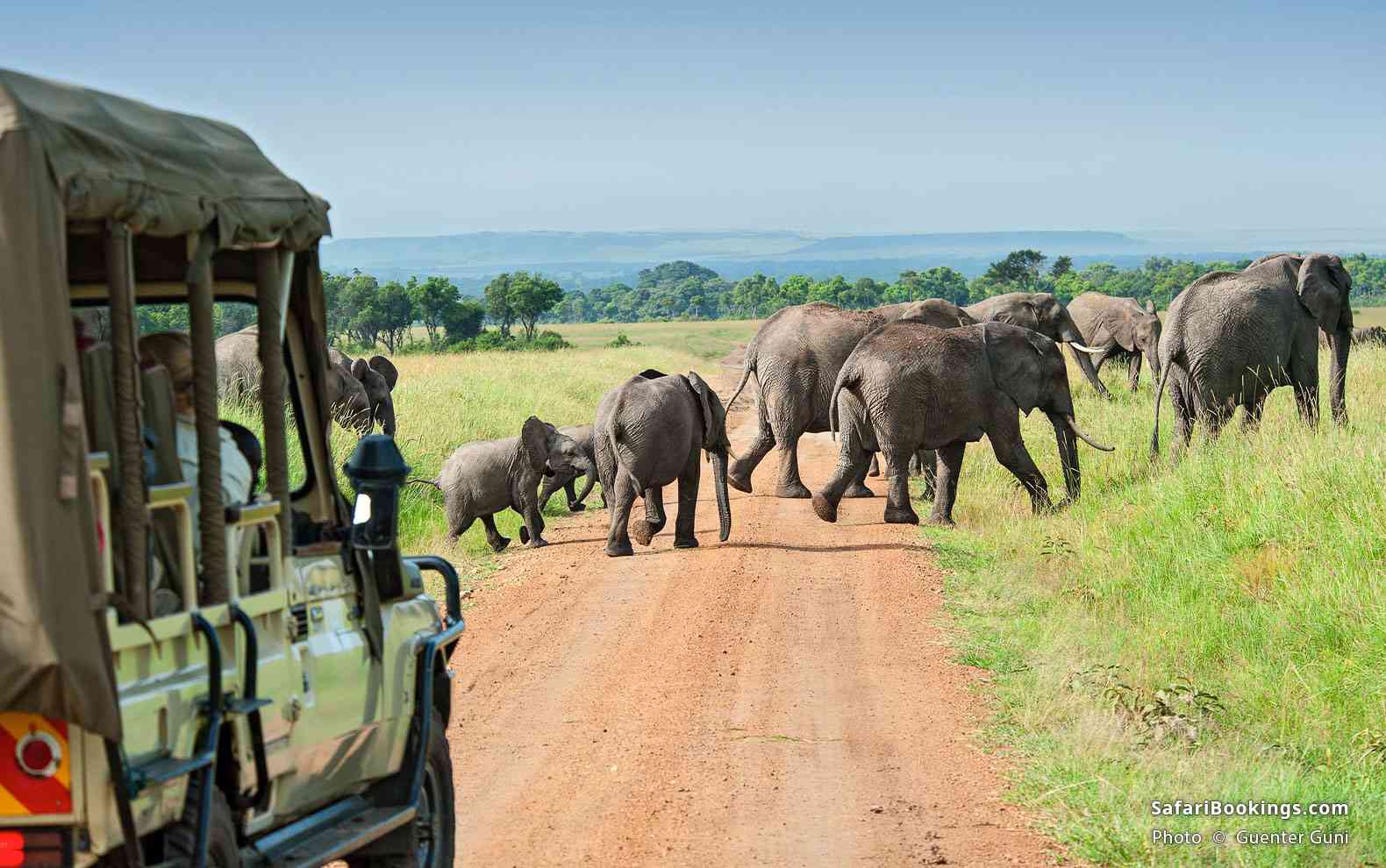 Elephant crossing the road in front of a safari vehicle in Masai Mara National Reserve
The Masai Mara is accessible on a surfaced road, but internal tracks are unsurfaced and often in poor condition, particularly during the rains. This means that the only realistic way to get around is in a high-clearance 4x4 vehicle. Fly-in safaris generally stay at all-inclusive camps that provide game drives with a resident guide, whereas road safaris usually use the vehicle and driver they traveled down with. The only other guided activity is hot-air balloon trips, although night drives and walking safaris are available in some nearby conservancies.
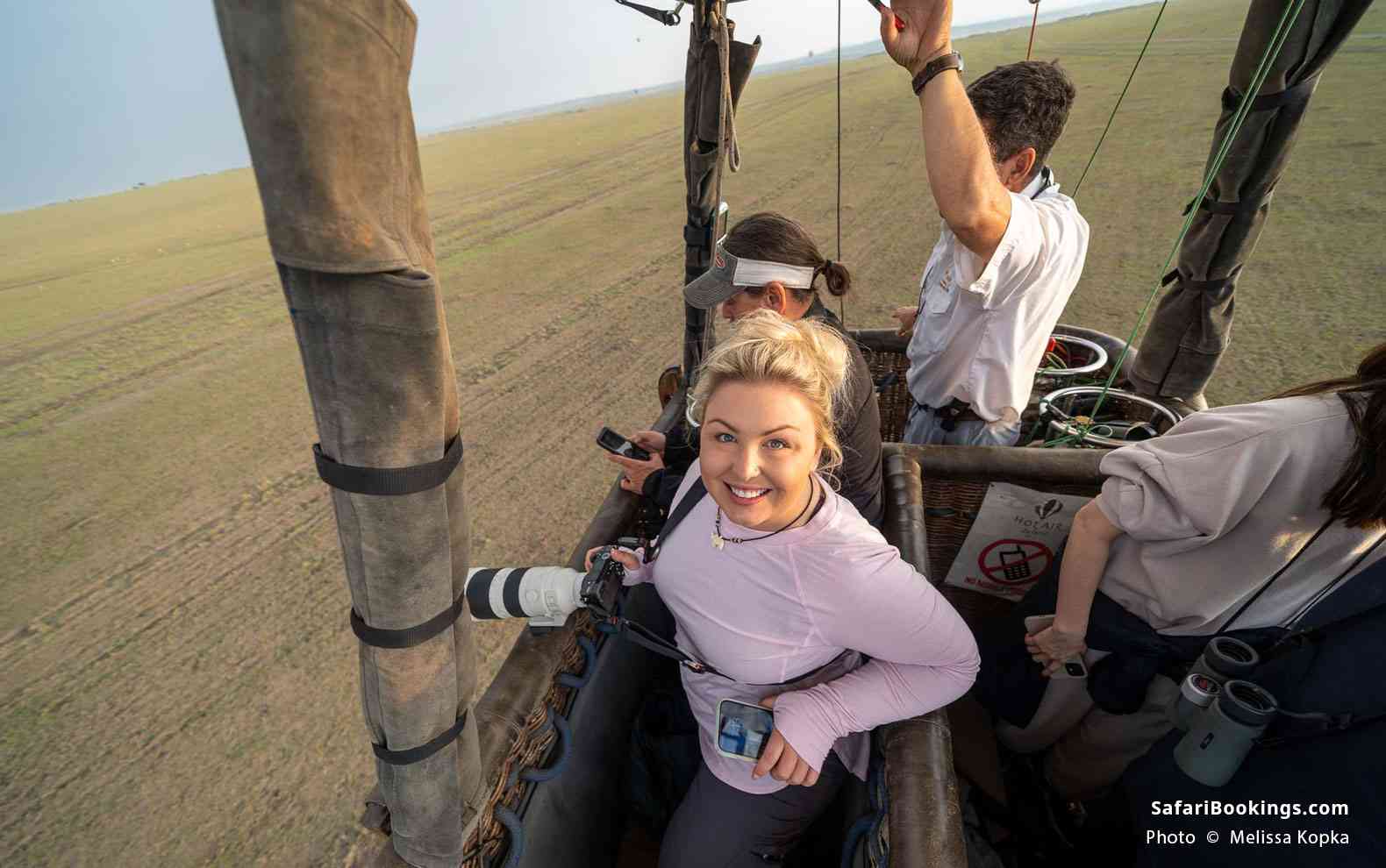 Floating high above the Masai Mara savannah plains on a hot-air balloon safari
The self-drive situation is ambiguous. In 2024, the governing body issued a directive prohibiting private vehicles from undertaking game drives in most parts of the reserve (the exception being the northwestern sector known as the Mara Triangle). In practice, enforcement of this directive has been uneven, and while suitably equipped high-clearance 4x4 vehicles are usually allowed in, you should check the current situation in advance.
How Many Days Should I Stay?
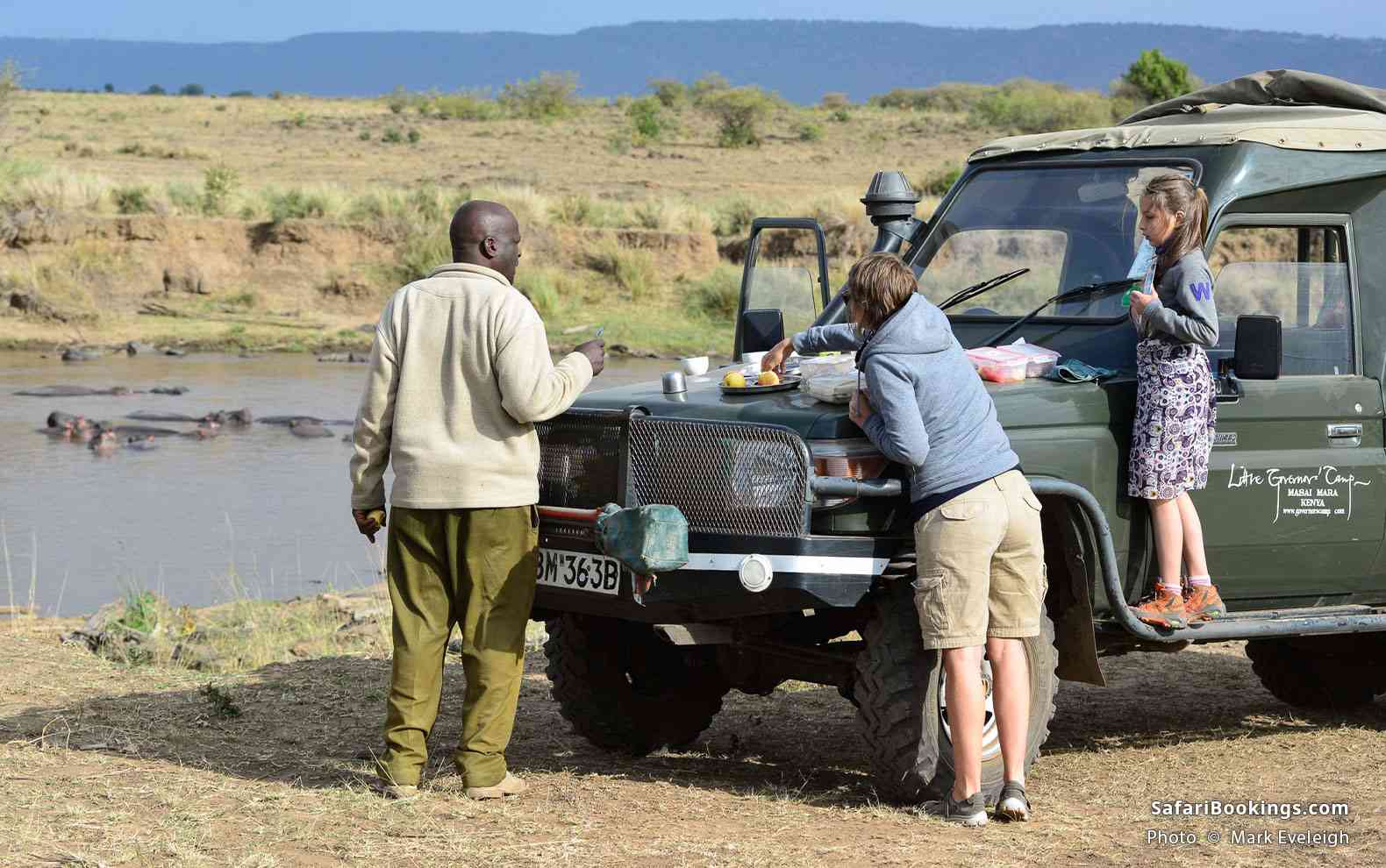 Bush breakfast next to a hippo pod in Masai Mara National Reserve
The ideal duration of a Masai Mara safari falls between three and five days. A one- or two-day safari will be dominated by travel logistics, whether you’re catching costly flights in both directions or doing the five-hour drive to and from Nairobi. On a three-day safari, you get to spend one full day in the reserve and should see most of the large carnivores and other large mammals associated with it.
A four- or five-day safari really allows you to get into the safari groove. But while serious wildlife enthusiasts might want to spend longer than five days in the Masai Mara, most visitors would prefer to mix things up by dedicating extra time to another park or reserve.
Is the Park Safe To Visit?
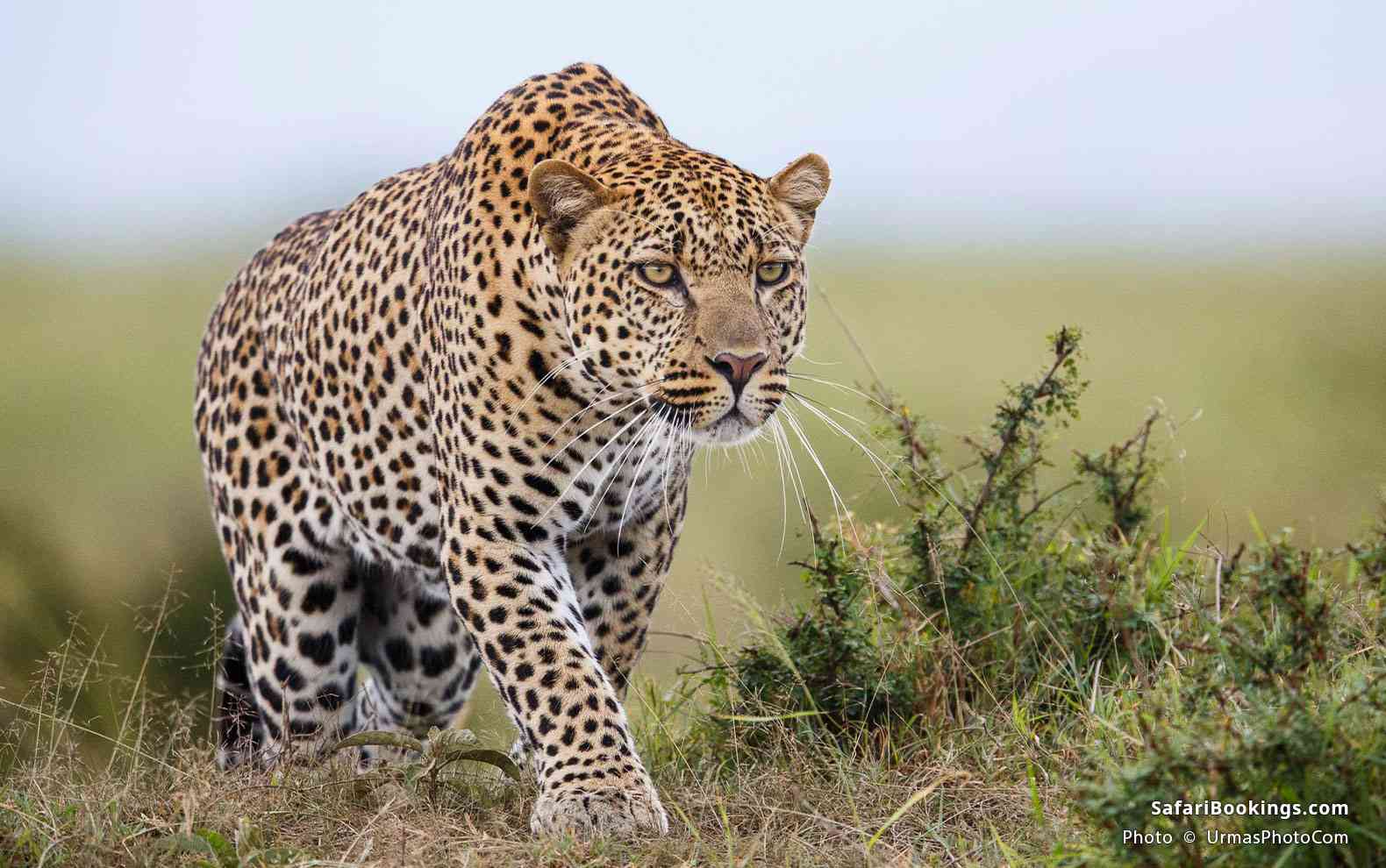 Leopard hunting in Masai Mara National Reserve
The Masai Mara is regarded as a very safe destination. Most people visit on an organized safari and will be looked after by an experienced driver and/or guide throughout. Wildlife poses little risk on game drives, as long as passengers stay inside the vehicle. Elephants in the Masai Mara are usually very relaxed around vehicles, but should be treated with respect. In the unlikely event of a potentially dangerous situation developing, follow your guide’s instructions.
If you self-drive in the Masai Mara, make sure you have a local SIM card or eSIM loaded with data and airtime. Antimalarial drugs are recommended and it’s a good idea to carry mosquito repellent.
How Can I Avoid the Crowds in Masai Mara National Reserve?
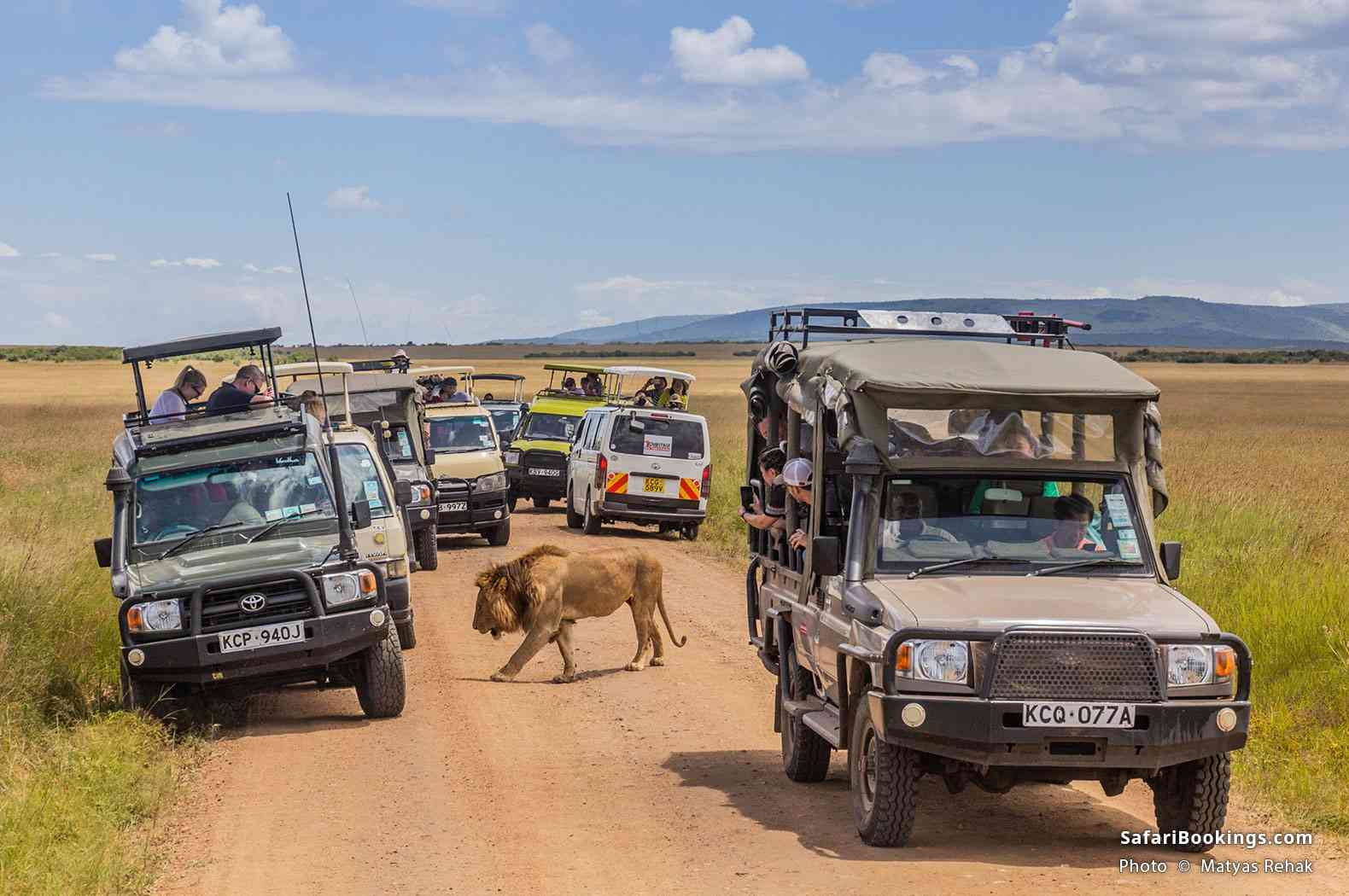 Safari vehicles and a lion in Masai Mara National Reserve
The Masai Mara is one of Africa’s busiest safari destinations. Visitor numbers peak during the migration season from July to October, when carnivore sightings and river crossings are often shared with dozens of vehicles. Frankly, the simplest way to avoid the crowds is to visit at another time of year. If you are there for the migration, however, and hope to see a river crossing, there is no obvious way to escape the crowds, because the regular crossing points mostly lie within the national reserve.
Whenever you visit, the experience will be strongly influenced by the location of your lodge or camp. Expect the reserve to feel most crowded if you stay southeast of the Talek River or outside Sekenani Gate. It will feel somewhat less crowded in the central sector cupped between the Talek and Mara Rivers, and least crowded in the westerly Mara Triangle. Better still would be to stay at a bordering private conservancy such as Olare Motorogi, Mara Naboisho or Mara North; the small exclusive camps on these community lands offer a refreshingly uncrowded variation on the typical Masai Mara experience.
What Are the Best Places To Stay?
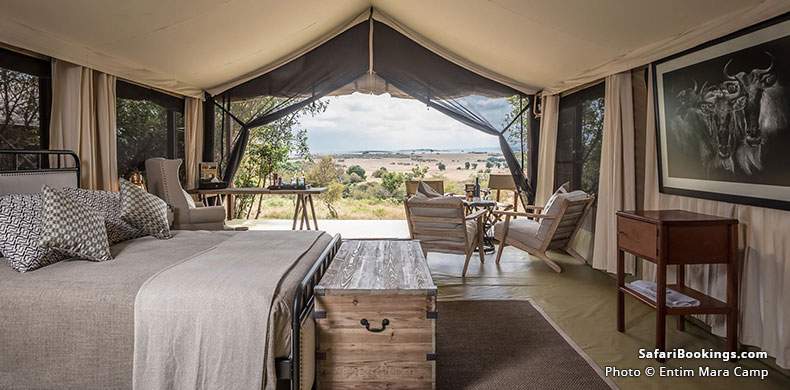 Entim Mara Camp in Masai Mara National Reserve
The greater Masai Mara area is serviced by more than 200 lodges and camps that collectively cater to most tastes and budgets. Several prime locations within the national reserve host well-established medium-to-large lodges with a hotel-in-the-bush feel and matching facilities such as swimming pools and buffet restaurants. The reserve also has a generous scattering of smaller tented camps that offer a more intimate and exclusive safari experience.
Budget options mostly lie outside the reserve boundaries. Particularly around Sekenani and Talek Gates, a selection of low-key lodges, camps and campsites offers simple and affordable accommodations aimed at self-drivers and low-cost group safaris.
At the other end of the price scale, the cluster of private and community conservancies bordering the national reserve is dominated by small, low-impact luxury camps with high guide-to-guest ratios. These conservancies also typically offer night drives, bush walking safaris and other immersive experiences not available inside the reserve.
What Facilities Are There?
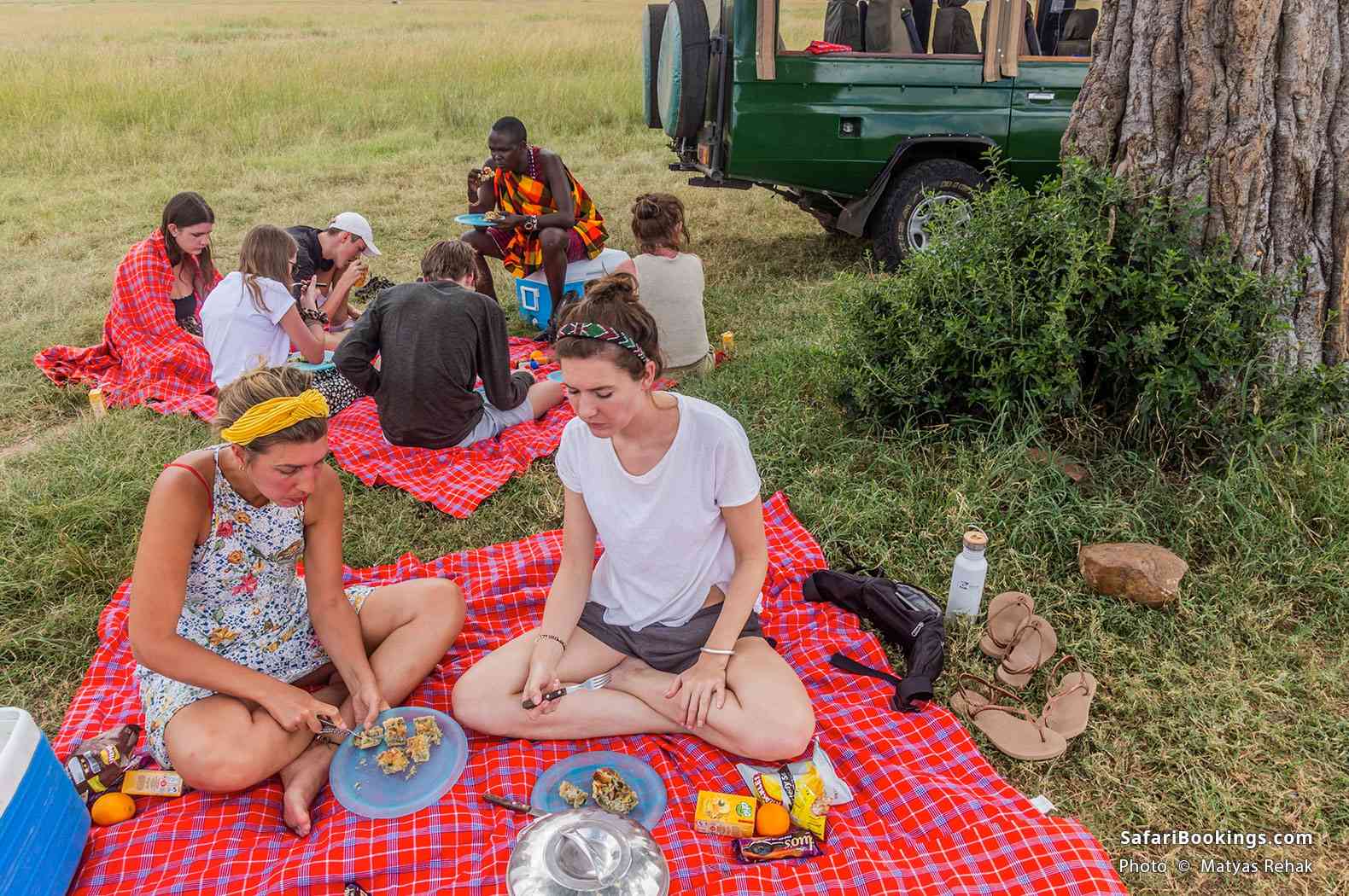 Safari participants having lunch in Masai Mara National Reserve
Most visitor services in the Masai Mara are associated with lodges and camps. The public infrastructure is minimal and amounts to little more than a few entrance gates, airstrips and picnic sites, some with toilet facilities. No filling station, grocery store or stand-alone restaurant can be found within the reserve, but these facilities are available in the small settlement of Nkoilale, just outside Sekenani Gate. If you want to stock up on supplies, or need an ATM or other banking facilities, this is best done in the well-equipped town of Narok en route from Nairobi or Nakuru.
What Are the Costs for Visiting the Masai Mara National Reserve?
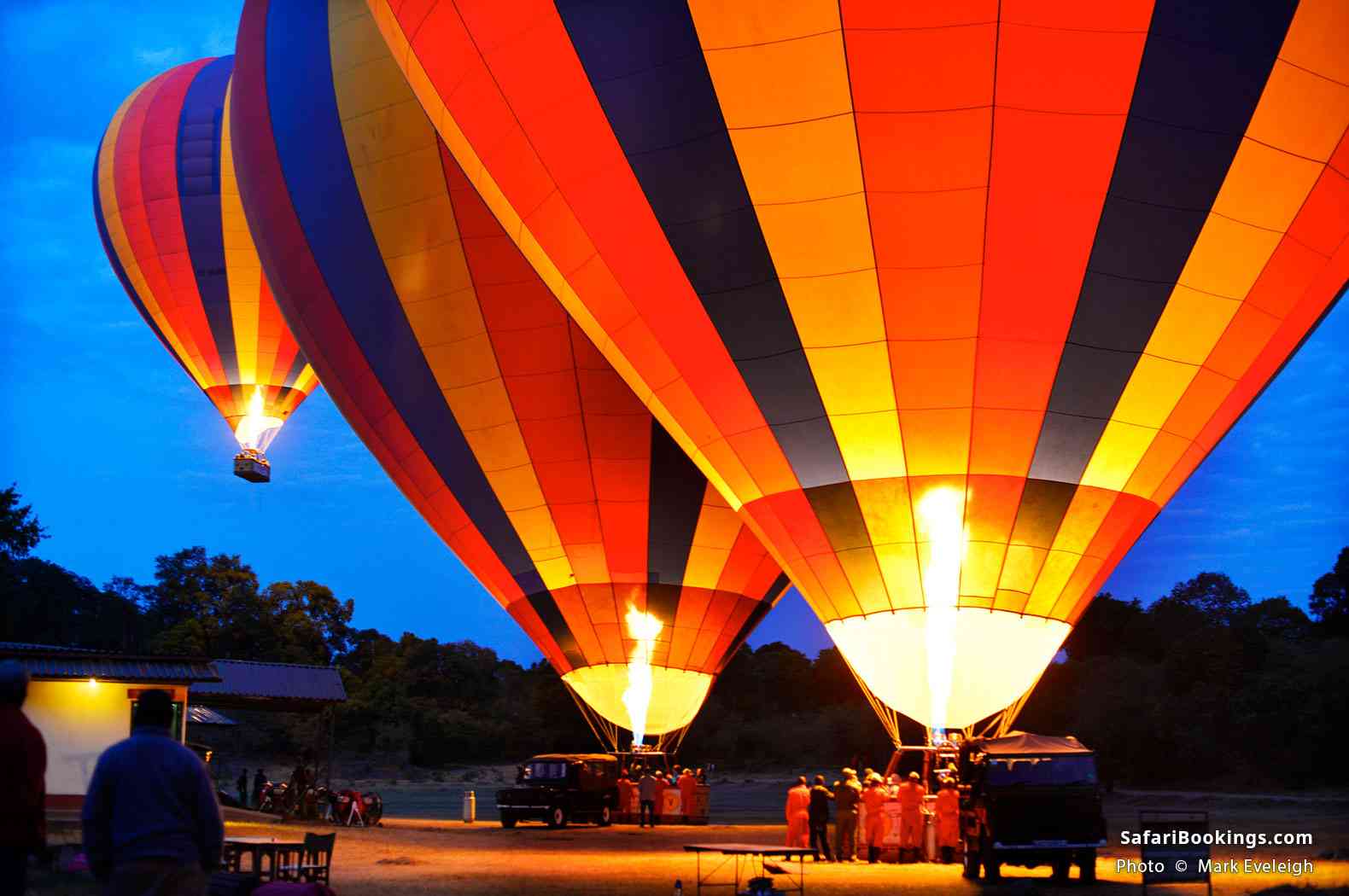 Balloon safari at dawn in Masai Mara National Reserve
The price of a Masai Mara safari will depend on a number of factors, These include duration, group size, quality of accommodations, time of year, whether you stay inside or outside the reserve, and whether you fly or drive down from Nairobi. The cheapest option, starting at around US$400 per person, is a two-day road safari using a simple tented camp outside the reserve. But this really cannot be recommended as it will entail spending more time driving to and from the reserve than watching wildlife inside it.
A more realistic budget option is a four- or five-day safari. This also often includes a visit to Lake Nakuru National Park and starts at around US$150 to US$200 per person per day. Mid-range safaris of a similar duration start at roughly US$250 to US$300 per person per day, while luxury safaris might cost anything upward of US$700 per person per day.
Masai Mara is also often incorporated into longer tours and safaris, but daily rates generally remain comparable to four- or five-day itineraries, at least for those nights spent in reserves and parks.
Want To Visit Masai Mara?
Click on the button below to compare Masai Mara tours offered by top-rated tour operators.
By Philip Briggs Philip is a renowned Africa expert and author of Kenya guides for Bradt, DK Eyewitness and Insight.
More About This Author


 Subscribe to our newsletter
 Follow us on Instagram
Safari Tours to Kenya
-
![4-Day Fly-in Ultra Luxury (Mara - Nakuru) Safari Package]()
4-Day Fly-in Ultra Luxury (Mara - Nakuru) Safari Package
$3,530 to $5,025 pp (USD)
Kenya: Private tourLuxury+Tented Camp
You Visit: Nairobi (Start), Masai Mara NR, Lake Nakuru NP, Nairobi (End)

Leisureway Adventures
5.0/5 – 45 Reviews

-
![3-Day Safari from Mombasa to Tsavo East and Tsavo West]()
3-Day Safari from Mombasa to Tsavo East and Tsavo West
$1,088 to $1,317 pp (USD)
Kenya: Private tour
Mid-range Lodge & Tented CampYou Visit: Mombasa (Start), Tsavo East NP, Tsavo West NP, Mombasa (End)
Osnet Tours And Travels
5.0/5 – 52 Reviews
-
![3-Day Into the Wild – Masai Mara Safari]()
3-Day Into the Wild – Masai Mara Safari
$1,184 to $1,812 pp (USD)
Kenya: Private tour
Mid-range Tented CampYou Visit: Nairobi (Start), Masai Mara NR, Nairobi (End)
Safari Soles
5.0/5 – 602 Reviews