

$11,127 to $12,374 pp (USD)
2 travelers on Start dateArrival
Arrival
Day 1
Arrival in Arusha/Kilimanjaro and Transfer to Hotel
Arrival in Arusha/Kilimanjaro and Transfer to Hotel
Our driver will meet you at the airport and transfer you to your lodge. Standard check-in time is 2 pm.
If you require early check-in, please request it in advance through your travel expert, and we will be happy to assist, subject to availability.
If you need a different pick-up location, please let us know at the time of booking. We’ll be glad to suggest alternative arrangements.
- Main Destination:
- Arusha (City)
- Accommodation:
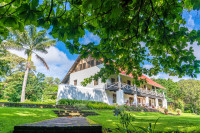
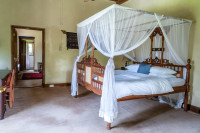
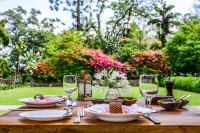
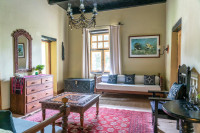
- Ngare Sero Mountain Lodge
- Meals & Drinks:

Day 2
Walking Safari & Canoeing in Arusha National Park
Walking Safari & Canoeing in Arusha National Park
Arusha National Park sits at the foot of Mount Meru and covers a surprisingly varied stretch of terrain for its size —rainforest, open savannah and the Momella Lakes within a single day's reach. It's also one of the few parks in Tanzania where walking safaris are permitted.
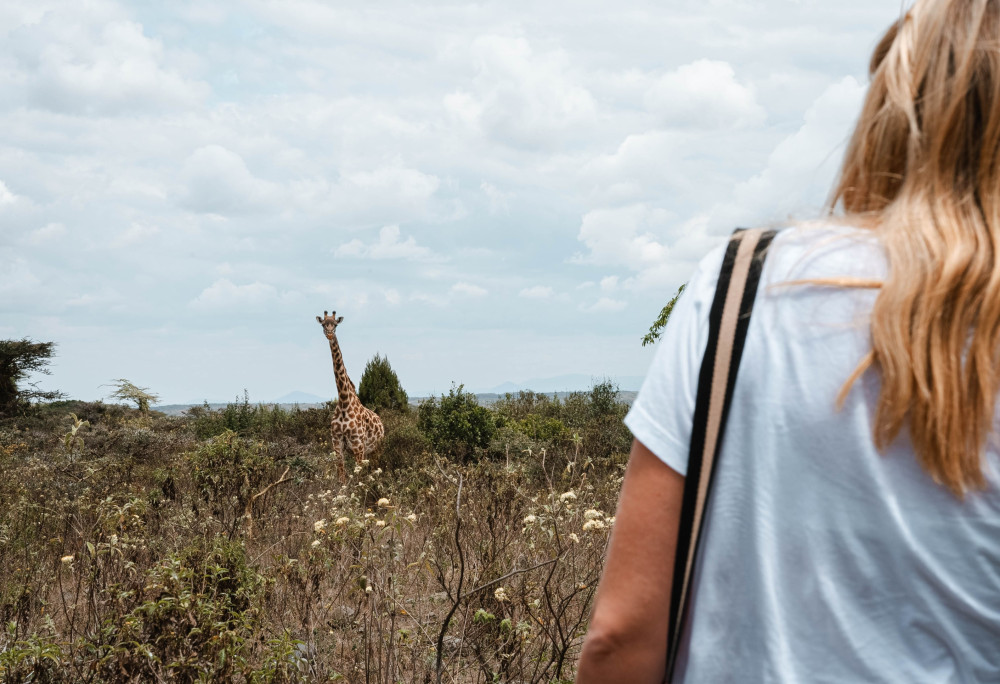
The morning starts on foot with an armed ranger. Giraffe, buffalo and warthog move through the acacia woodland largely undisturbed, and at 20 to 30 metres the proximity feels different than it does from a vehicle. After around an hour and a half, you'll continue to the Momella Lakes — a reliable spot for flamingo, pelican, ibis and hornbill, among more than 200 recorded species.
- Main Destination:
- Arusha National Park
- Accommodation:
- Ngare Sero Mountain Lodge
Wildlife in Arusha NP


- Meals & Drinks:

Day 3
Tarangire National Park
Tarangire National Park
The Tarangire River runs through the park year-round, drawing giraffe, zebra, antelope and buffalo to its banks — and the lions that follow them. They are regularly seen and, in this park, not difficult to find.
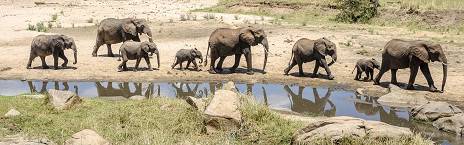
In the dry season the river becomes the only water source for miles around, and elephant herds converge accordingly. Tarangire holds the largest elephant population in northern Tanzania for much of the year — particularly June to October and December to March. The herds are well habituated to vehicles and often approach at close range, unhurried and largely indifferent.
- Main Destination:
- Tarangire National Park
- Accommodation:
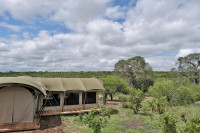
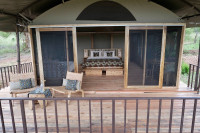
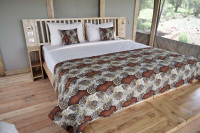
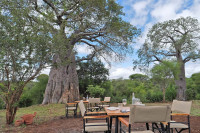
- The Whisper Tarangire Camp
Wildlife in Tarangire NP
- Meals & Drinks:
Day 4
Tarangire National Park
Tarangire National Park
Your second day opens up the sections of the park you didn't reach yesterday. Gerenuk and oryx are both present here — species rarely seen in the Serengeti — and worth looking for in the drier, more open stretches.
Rock hyrax are common on the granite outcrops — small, unhurried animals that tend to allow a close approach. They're also, despite appearances, among the elephant's closest living relatives.
For birders, Tarangire is one of the richer parks in Tanzania, with over 550 recorded species. Binoculars are in the vehicle if you need them.
- Main Destination:
- Tarangire National Park
- Accommodation:
- The Whisper Tarangire Camp
- Meals & Drinks:

Day 5
Tarangire National Park
Tarangire National Park
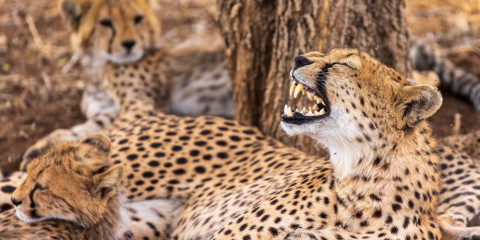
A third day in Tarangire shifts something. The park's rhythms become more familiar — animal behaviour starts to read differently, and the quieter corners of the landscape begin to reveal themselves. Your guide will take you into sections away from the main routes, where cheetah are occasionally found resting in the shade of acacia, and lion prides tend to linger into the morning.
- Main Destination:
- Tarangire National Park
- Accommodation:
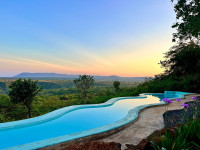
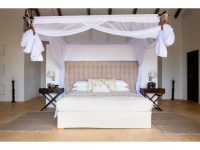
- Mawe Mawe Lodge
- Meals & Drinks:

Day 6
Village & Banana Plantations Walk in Mto wa Mbu
Village & Banana Plantations Walk in Mto wa Mbu
Mto wa Mbu is a village of about 18,000 people. It is a cultural melting pot of 120 different tribes peacefully co-existing in a beautiful bright mix. Here you can see the tribes' traditional houses, visit the local market and sneak a peek at the daily labor routine of the local farmers, artisans, craftsmen and painters. At the banana plantation, you'll be guided through all the varieties of this plant and the multiple ways to use it, from food to building and art materials. The art group will tell you all about the different painting styles while wood craftsmen will share their expertise on the types of local wood and the meanings behind the traditional carvings. These are only a few of the available activities at Mto Wa Mbu, but we definitely suggest topping this experience off with mbege — the traditional banana and millet beer!
- Main Destination:
- Mto Wa Mbu (Town)
- Accommodation:
- Mawe Mawe Lodge
- Meals & Drinks:

Day 7
Walking Along the Ngorongoro Crater Rim
Walking Along the Ngorongoro Crater Rim
Today’s journey takes you from the lowlands up into the Ngorongoro Highlands. After arriving in the Ngorongoro Conservation Area, you’ll stretch your legs with a guided walk along the crater rim. Led by a professional park ranger, this easy 1–2 hour hike follows a flat trail through lush montane forest.
While large animals like elephants and buffalo are rarer here than down in the crater, keep your eyes open for tracks and forest birds — and listen to the bush as it slowly reveals its secrets. At the end of the trail, you’ll be rewarded with a spectacular view over the world’s largest intact volcanic caldera.
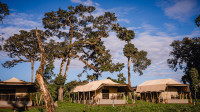
After your walk, you check in at a lodge perched on the edge of the crater. This is your chance to relax, soak in the silence, and enjoy the landscapes around you. At 2,286 meters above sea level, Ngorongoro can get chilly in the morning and evening — bring a warm layer for extra comfort.
- Main Destination:
- Ngorongoro Crater
- Accommodation:
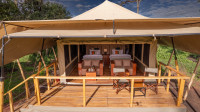
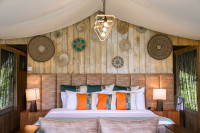
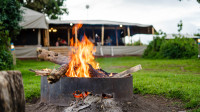
- Ang'ata Ngorongoro Camp
Wildlife in Ngorongoro Crater


- Meals & Drinks:
Day 8
Game Drive in Ngorongoro Crater
Game Drive in Ngorongoro Crater
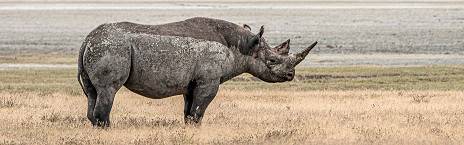
An early start gets you into the crater before the morning light fades. The descent takes around 30 minutes through the forest, with a viewpoint stop at the rim before the caldera floor opens up below. The crater holds one of the highest concentrations of wildlife per square kilometre on the continent —elephant, buffalo, zebra, lion, and a small resident population of black rhino, all within a single enclosed landscape. Cheetahs are present too, though less predictable. The permanent water and grazing keep most animals here year-round, which gives the day a particular reliability. A mid-morning stop at Lake Magadi is worth the pause — hippos surface near the shore, and yellow-billed kites tend to take an interest in any food left unattended. The crater has held UNESCO World Heritage status since 1979.
- Main Destination:
- Ngorongoro Crater
- Accommodation:
- Ang'ata Ngorongoro Camp
- Meals & Drinks:

Day 9
Transfer to Serengeti Plains
Transfer to Serengeti Plains
Few places in Africa concentrate this much wildlife in one landscape. Seronera sits at the heart of the Serengeti, where the river of the same name runs year-round, and the grass stays green long after the surrounding plains have turned dry. Resident lions live here in numbers that anchor the largest population on the continent. Leopards are seen regularly in the yellow-barked acacias along the riverbank, drowsing through the heat of the day in the high branches. Beyond the river, the open plains stretch in every direction: wildebeest, zebra, gazelle, and the predators that follow them. UNESCO World Heritage Site since 1981 — a designation that, in this case, feels like an understatement. There's a reason this landscape has held people's attention for a century, and it tends to make itself clear within the first hour.
- Main Destination:
- Serengeti National Park
- Accommodation:
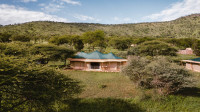
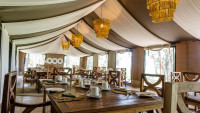
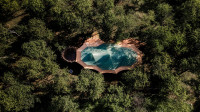
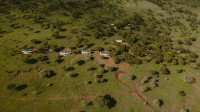
- The Singing Grass Bush Camp
Wildlife in Serengeti NP
- Meals & Drinks:

Day 10
Serengeti National Park
Serengeti National Park
No two days in the Serengeti follow the same pattern. The kopjes — ancient granite outcrops scattered across the Seronera landscape — are worth time on their own: lions use them as resting points through the heat of the day, and the light on the rock in the early hours is good for photography.
Simba Rock, one of the more recognisable formations in Seronera, is said to have inspired a scene in The Lion King — though the landscape itself needs no such reference to hold your attention.
- Main Destination:
- Serengeti National Park
- Accommodation:
- The Singing Grass Bush Camp
- Meals & Drinks:

Day 11
Serengeti National Park
Serengeti National Park
Another day in Seronera covers ground the first didn't reach. The central Serengeti is large enough that no single drive exhausts it, and your guide will move through different sections — following sightings, reading the landscape, adjusting as the day unfolds.
Leopard are regularly seen in the riverine acacias. Serval and caracal are here too, though they require patience and time — which a full day allows for. The search is part of what the Serengeti does best.
- Main Destination:
- Serengeti National Park
- Accommodation:
- The Singing Grass Bush Camp
- Meals & Drinks:

Day 12
Serengeti National Park
Serengeti National Park
A day in Serengeti reveals how perfectly balanced this ancient ecosystem truly is.
The termite mounds that rise from the Serengeti grass are worth paying attention to. Built over decades, they aerate and enrich the soil in ways that shape the vegetation around them — and their height makes them useful. Topi antelope use them as vantage points, standing on top to scan the surrounding plain and mark their presence.
The predator activity shifts through the day in patterns your guide will help you read. Cheetah tend to hunt in the morning, avoiding the heat and the competition that comes later. Lion and hyena become more active as the temperature drops in the late afternoon. Leopard move at dusk, quietly and close to cover. A full day in the Serengeti is long enough to catch more than one of these shifts.
- Main Destination:
- Serengeti National Park
- Accommodation:
- The Singing Grass Bush Camp
- Meals & Drinks:

Day 13
Bush Flight from Serengeti to Ruaha National Park
Bush Flight from Serengeti to Ruaha National Park
The morning begins with a bush flight from the Serengeti to Ruaha — light aircraft, occasionally with a short stop along the way, and a view of the landscape below that the road doesn't give you. If you'd like a game drive on the way to the airstrip, an early breakfast makes that possible. If you'd prefer a relaxed start, there's time for that too. Let your guide know on the day.
Your guide in Ruaha will meet you on arrival, and the drive to the lodge doubles as the first game drive of the park. After lunch and time to settle in, an afternoon or evening drive is there if you want it.
- Main Destination:
- Ruaha National Park
- Accommodation:
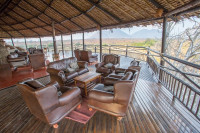
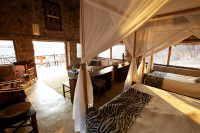
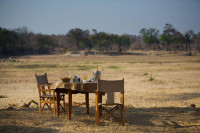
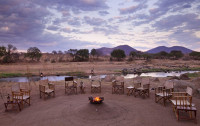
- Ruaha River Lodge
Wildlife in Ruaha NP
- Meals & Drinks:

Day 14
Ruaha National Park
Ruaha National Park
Ruaha is the second-largest national park in Tanzania — large enough that its remoteness from the northern circuit feels earned rather than incidental. Visitor numbers stay low even in high season, and the effect on the wildlife is noticeable. Lions here are famously unbothered: sprawled across roads, indifferent to vehicles that pull up quietly alongside them. It is one of the better parks in Africa to watch them at length.
Elephant, hippo, giraffe, and antelope are reliable from the first day. The park also holds striped hyena and sable antelope— species rare enough in Tanzania that a sighting here carries some weight.
- Main Destination:
- Ruaha National Park
- Accommodation:
- Ruaha River Lodge
- Meals & Drinks:

Day 15
Game Drive in Ruaha National Park
Game Drive in Ruaha National Park
The Great Ruaha River runs through the park and rewards a full morning along its banks. Hippos gather in the backwaters; crocodiles rest on the river islands; the birdlife along the water is dense and varied. Lunch is at a riverside spot chosen by your guide.
The evening brings a night drive —genet, civet, bushbaby and the occasional lion or leopard move through the darkness in ways the daytime doesn't reveal. The park is quiet at night, with few other vehicles, and the sky out here is worth looking up at even when nothing is moving below it.
- Main Destination:
- Ruaha National Park
- Accommodation:
- Ruaha River Lodge
- Meals & Drinks:

Day 16
Ruaha National Park
Ruaha National Park
Ruaha is home to so many antelope species that counting and memorizing their distinguishing features is entertainment of its own. The greater and lesser kudu have as-if chalk-drawn thin stripes across their bodies, and males boast beautiful screw horns. The Sable antelopes come in glistening coal-black coats and horns like two curved sabers. The roan antelopes wear a black mask with white spots around the eyes. Grant's gazelle with their beige coats, white bellies, and lyre-shaped horns are one of the most graceful ungulates you will find in the savanna. Antelopes come in many other exciting varieties. If you're lucky, you might even come across a fawn-colored Liechtenstein's hartebeest that has distinctive back-curved S-shaped horns.
- Main Destination:
- Ruaha National Park
- Accommodation:
- Ruaha River Lodge
- Meals & Drinks:
Day 17
Departure from Ruaha
Departure from Ruaha
After breakfast, your driver will transfer you to the airstrip for your bush flight out of Ruaha. The flight is not included in the package —your manager can arrange it if needed.
- Main Destination:
- No major destination visited
- Accommodation:
- No accommodation (End of tour)
- Meals & Drinks: