
Average Expert Rating
Rating Breakdown
Write a User ReviewWalking, Cycling, Rafting and Crafts, with Wildlife on the Side
Forested, fog-draped mountains in the west, bright green fields of sugarcane in the eastern lowlands, lively cities and great handicrafts – lovely, quirky Eswatini is well off the list of southern African safari destinations, but is well worth the easy detour to visit from either South Africa or Mozambique. Border crossing posts are numerous and generally hassle-free, and the country has an appealing do-it-yourself vibe that is perfect for budget, solo and family travellers. Among Eswatini's attractions: easily-arranged river rafting, hiking and mountain biking; excellent handicrafts that are among the best in the region; and many festivals and other opportunities to experience traditional life in Africa's last remaining absolute monarchy.
Eswatini also packs an impressive amount of wildlife and conservation initiatives into its small borders. However, because its parks are relatively small and often use wildlife enclosures, it would be best to think of the country
For a low key, all-around introduction to southern Africa featuring traditional culture, crafts and scenic terrain with wildlife mixed in, Eswatini is perfect.
Eswatini also packs an impressive amount of wildlife and conservation initiatives into its small borders. However, because its parks are relatively small and often use wildlife enclosures, it would be best to think of the country
Read more
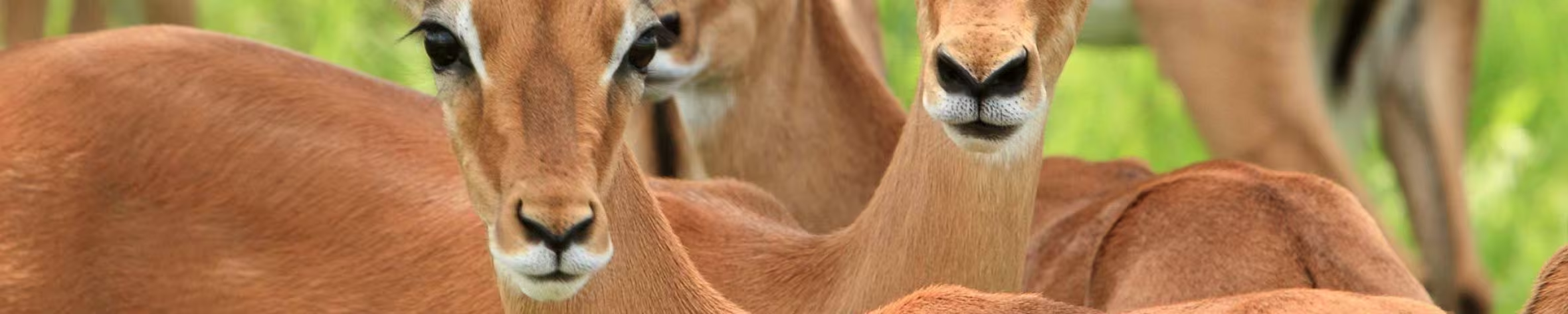
as a place for wildlife observation and encounters, rather than for classic safaris into the wilds. In Hlane Royal National Park you can see elephants, lions, zebras, giraffes, hippos, white rhinos and wildebeest, and try to spot the park's famous vultures. In Mkhaya Game Reserve, black rhinos are the highlight, and you may also be able to catch sight of the beautiful purple-crested turaco, Eswatini's national bird. In Mlilwane Wildlife Sanctuary, walk or cycle around while taking in a landscape dotted with zebras and various antelopes and then sleep in a traditional beehive hut. Eswatini's best parks exist thanks to local conservationist Ted Reilly, who was the driving force behind the creation of Mlilwane and Big Game Parks (Eswatini's wildlife conservation trust). This makes the country a good place to appreciate the positive effects that one person can have on conservation. Eswatini is also something of an insider's tip among keen birders, thanks to its varied habitats, which host 500-plus species.For a low key, all-around introduction to southern Africa featuring traditional culture, crafts and scenic terrain with wildlife mixed in, Eswatini is perfect.

A Scenic Country of Emerald Peaks, Valleys and Waterfalls and Easy Wildlife Reserves To Visit
Covering just over 17,000-sq-km (smaller than Kruger National Park), Eswatini is the smallest country in the southern hemisphere (excluding islands), and Africa’s last absolute monarchy. In 2018, King Mswati III renamed Swaziland the Kingdom of Eswatini (‘place of the Swazi’) to mark 50 years of independence from British rule.
It’s so little, I’ve driven across it in less than a leisurely day, but there are plenty of things to do to keep you busy on a longer visit, from hiking in lush mountain landscapes to wildlife viewing in the parks and reserves. It’s also a good destination for adventurers, with an effective backpackers’ set-up and a number of activities on offer from caving to white-water rafting. The Swazi people are expert craft-makers, producing a wealth of high-quality African curios like pottery, baskets, traditional fabrics, soapstone carvings and beaded jewellery, and there are plenty of souvenir centres and shops to visit too.
Thanks
I’ve always found Eswatini an accessible country to visit and the border crossings with South Africa are quick and easy. None of the varied parks and reserves is more than a two-hour drive away from each other, so it’s easy to visit a few in a relatively short time – ideal for first-time safari-goers. Additionally, given that it’s hemmed in by KwaZulu-Natal to the south and west, Mpumalanga to the north, and Mozambique to the east, a visit here can easily be combined with numerous other attractions in the region, including Kruger.
It’s so little, I’ve driven across it in less than a leisurely day, but there are plenty of things to do to keep you busy on a longer visit, from hiking in lush mountain landscapes to wildlife viewing in the parks and reserves. It’s also a good destination for adventurers, with an effective backpackers’ set-up and a number of activities on offer from caving to white-water rafting. The Swazi people are expert craft-makers, producing a wealth of high-quality African curios like pottery, baskets, traditional fabrics, soapstone carvings and beaded jewellery, and there are plenty of souvenir centres and shops to visit too.
Thanks
Read more
to a handful of pioneering conservationists, there have been effective anti-poaching initiatives and substantial animal restocking, and Eswatini’s game parks are small but rewarding to explore. My top two big game parks are Hlane Royal National Park and Mkhaya Game Reserve (both excellent for elephant and rhino), but I’ve also enjoyed independent driving, as well as walking, horse-riding and cycling, at Mlilwane Wildlife Sanctuary and Mbuluzi Game Reserve – neither has large carnivores so there are opportunities to get out of a vehicle.I’ve always found Eswatini an accessible country to visit and the border crossings with South Africa are quick and easy. None of the varied parks and reserves is more than a two-hour drive away from each other, so it’s easy to visit a few in a relatively short time – ideal for first-time safari-goers. Additionally, given that it’s hemmed in by KwaZulu-Natal to the south and west, Mpumalanga to the north, and Mozambique to the east, a visit here can easily be combined with numerous other attractions in the region, including Kruger.
Conservation and Traditions in Eswatini
Eswatini (formerly Swaziland) is a tiny, landlocked kingdom almost entirely surrounded by South Africa, with only its northeastern corner touching Mozambique. Border formalities are pleasantly relaxed, and because the kingdom lies conveniently on the main overland route between Kruger National Park and KwaZulu-Natal, most visitors pass through as part of a South African holiday. Yet, while it’s easy to simply drive straight across the country, Eswatini rewards those who linger, with far more to see and experience than first impressions suggest.
By the late 1950s, Eswatini was largely depleted of wildlife, but the turnaround since then has been remarkable, thanks primarily to the tireless efforts of conservation pioneer Ted Reilly. Today, several small but rewarding reserves fall under the Big Game Parks organisation. Mlilwane Wildlife Sanctuary, free of dangerous predators (aside from crocodiles), is perfect for unguided walking, horse riding and mountain biking. For a more
While the Big Game Parks reserves offer reasonable wildlife viewing, they can feel slightly tamed. Malolotja Nature Reserve, by contrast, is wonderfully wild and pristine. Its dramatic mountain landscapes make it a top destination for hikers, whether you’re after an easy day walk or a demanding multiday trek.
The Malolotja Canopy Tour offers a different perspective on the reserve’s incredible topography. This thrilling ziplining adventure sends you soaring above forested gorges and cascading streams, with sweeping views of the reserve’s rugged mountains, and was one of the highlights of my last visit. Other adventure activities on offer in Eswatini are rafting, caving, abseiling and canoeing.
Despite its small size, what truly distinguishes Eswatini is a strong sense of tradition. To appreciate this, slow down: browse colourful markets, chat with locals and pick up some crafts. For a deeper cultural experience, try to time your visit with one of the kingdom’s vibrant annual festivals, the best known being the Umhlanga (Reed Dance) in August or September.
By the late 1950s, Eswatini was largely depleted of wildlife, but the turnaround since then has been remarkable, thanks primarily to the tireless efforts of conservation pioneer Ted Reilly. Today, several small but rewarding reserves fall under the Big Game Parks organisation. Mlilwane Wildlife Sanctuary, free of dangerous predators (aside from crocodiles), is perfect for unguided walking, horse riding and mountain biking. For a more
Read more
traditional safari, Hlane Royal National Park and Mkhaya Game Reserve offer better wildlife-viewing experiences. Hlane provides simple, family-friendly accommodation and excellent rhino sightings, while Mkhaya offers a more exclusive experience with a luxury lodge and guided drives and walks. Both reserves are strongholds for rhinos, and approaching these giants on foot is a genuine highlight. Elephants, giraffes and a good mix of antelope species are easily seen, and Hlane has lions – though they are kept in a separate enclosure.While the Big Game Parks reserves offer reasonable wildlife viewing, they can feel slightly tamed. Malolotja Nature Reserve, by contrast, is wonderfully wild and pristine. Its dramatic mountain landscapes make it a top destination for hikers, whether you’re after an easy day walk or a demanding multiday trek.
The Malolotja Canopy Tour offers a different perspective on the reserve’s incredible topography. This thrilling ziplining adventure sends you soaring above forested gorges and cascading streams, with sweeping views of the reserve’s rugged mountains, and was one of the highlights of my last visit. Other adventure activities on offer in Eswatini are rafting, caving, abseiling and canoeing.
Despite its small size, what truly distinguishes Eswatini is a strong sense of tradition. To appreciate this, slow down: browse colourful markets, chat with locals and pick up some crafts. For a deeper cultural experience, try to time your visit with one of the kingdom’s vibrant annual festivals, the best known being the Umhlanga (Reed Dance) in August or September.