

Mapungubwe National Park is a remote Unesco World Heritage Site that extends south from the Limpopo River as it flows along the Zimbabwe and Botswana borders. It is notable for its spectacular boulder- and -strewn scenery and the cultural significance of Mapungubwe Hill, the site of a 13th-century civilization. Wildlife isn’t prolific, but elephant, and various antelope might be seen.
-
 Best Time To Go
- May to September (Winter)
-
 High Season
- None (The park never gets busy)
-
 Size
Size
- 280km² / 108mi²
-
 Altitude
-
511-614m /1,677-2,014ft
 View Photos
 View Photos
+24
Photos
View Photos
+24
Photos
 Open Map
Pros & Cons
- Beautiful wilderness scenery and off-the-beaten-track feel
- Guided tours of an abandoned medieval hilltop city
- Wildlife includes four of the (no buffalo)
- Great birding facilities include a treetop walk and
- Stunning museum and interpretive center
- Rest camp offering self-catering accommodations to visitors
- Guided walks, and available
- Wildlife densities are relatively low
- The remote location makes it difficult to combine with other attractions
- No high-end accommodations available
Wildlife
Mapungubwe combined with the Tuli Block in neighboring Botswana and Zimbabwe is a transfrontier conservation area in which wildlife movement is seasonal or nomadic. Four of the are usually present in Mapungubwe (the exception being buffalo), but only elephant could be termed common. Leopards favor along the Limpopo, while lion and cheetah prefer open country. Look out for giraffe, zebra, , , and .
More about Mapungubwe’s wildlifeScenery
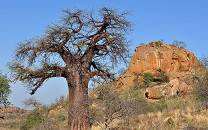
Mapungubwe’s dramatic landscape is dominated by massive sandstone formations that take on a golden hue at sunrise and sunset. The environment is home to a surprising variety of trees, including 20-plus , but it is the enormous that steal the show. Don’t miss the viewpoint over the confluence of the Limpopo and Shashe Rivers: this is the spot where South Africa, Botswana and Zimbabwe all meet.
Activities
A highlight is a guided walking tour of Mapungubwe Hill, which housed an important Iron Age trading center in the 13th century. Before doing this, drop into the superb museum and interpretive center, which places the hill in historical context and houses many artifacts unearthed there (notably a replica of its famous golden rhino statue). can explore the road circuit independently, but guided drives and are available.
Weather & Climate
Mapungubwe gets extremely hot in the middle of summer (October to April), when daytime temperatures can soar to 45°C/113°F. Summer is also the Wet season, though rainfall can be sporadic and rarely lasts a full day. Winter (May to September) coincides with the Dry season and brings clear, warm days followed by cold nights.
More about the weather and climateBest Time To Visit
For the best conditions, try to visit Mapungubwe during the first few months of the dry winter season, which stretches from May to September. By this time, the heat and precipitation of summer (October to April) have passed, but the chilly nights of the later drier months are yet to arrive.
More about the best time to visit