
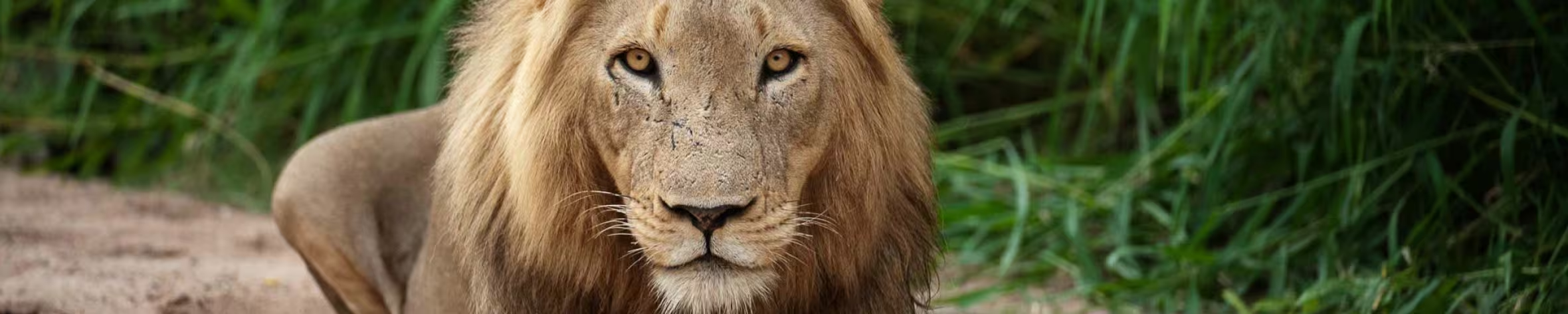
Timbavati Nature Reserve is a vast private conservancy sharing open borders with Kruger National Park. Being part of Greater Kruger, it boasts a high success rate when it comes to seeing all the , leopard included. Bisected by the namesake river, Timbavati is famously associated with , but the likelihood of seeing these rarities is very low.

-
 Best Time To Go
- May to September (Dry season)
-
 High Season
- October to March (It rarely gets crowded)
-
 Size
Size
- 556km² / 215mi²
-
 Altitude
-
341-529m /1,119-1,736ft
 View Photos
 View Photos
+12
Photos
View Photos
+12
Photos
 Open Map
Pros & Cons
- Excellent wildlife viewing with a good chance of spotting all the
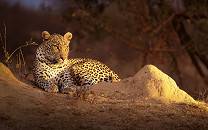
- Leopards are very and relaxed around vehicles
- Guided day and evening in open vehicles
- Part of the immense Greater Kruger ecosystem
- Several lodges and self-catering camps
- A lower density of lodges and less busy than Sabi Sands
- Most lodges and camps offer guided
- tend to emphasize ticking off the Big Five
- sightings are not quite as reliable as in Sabi Sands
Wildlife
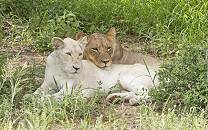
Wildlife viewing is usually excellent. Practically all visitors see elephant, , buffalo, zebra, giraffe, , , , and . Lion, leopard, cheetah and are seen with varying degrees of regularity, and often pass through. were first documented at Timbavati in the 1970s, but while the recessive gene responsible for this unusual coloration remains present in the local population, births are rare.
More about Timbavati’s wildlifeScenery
Timbavati’s main habitats are grassy plains and mixed woodland. In the rainy season, the vegetation tends to be quite thick, but this doesn’t interfere much with wildlife viewing because off-road driving is permitted. The most significant geographic feature in this rather uniform tract of African is the Timbavati River, a tributary of the Olifants that bisects the reserve before crossing into the Kruger National Park.
Activities
The main activity in Timbavati is guided in open vehicles. Two daily drives, one starting in the late afternoon and the other in the early morning, are generally included in accommodation packages offered by the reserve’s lodges and camps. Most also offer guided , often as an extra. Guests are allowed to drive directly between the entrance gate and their lodge, but game drives are forbidden.
Weather & Climate
Cool mornings and warm afternoons characterize the dry winter months (May to September). It can be very cold in the early morning at this time of year, so dress warmly, or you’ll struggle to enjoy the . By contrast, summer (October to April) is hot and humid by day, but temperatures cool down pleasantly in the evening, and afternoon storms are quite a regular occurrence.
More about the weather and climateBest Time To Visit
Timbavati offers impressive wildlife watching throughout the year, but it peaks over winter (May to September), which is also the Dry season. During this time, animals tend to stick close to permanent water sources. Wildlife is usually more dispersed in the wetter months (October to April), but the landscape is attractively green and lush, and bird watching is at its best.
More about the best time to visit