Zanzibar’s caves are among its lesser-known natural attractions. These caves have formed in the island’s base of coral limestone, a soft calcium-rich rock that started life as a reef beneath the sea and was later uplifted
Zanzibar Tour Packages
Read more
to become dry land. They are an important part of Zanzibar’s natural and cultural heritage. Many feature , and other formations, and some are also held sacred by local communities or contain spring-fed freshwater swimming pools.7 of Zanzibar’s Coral Rock Caves
-
Google Maps
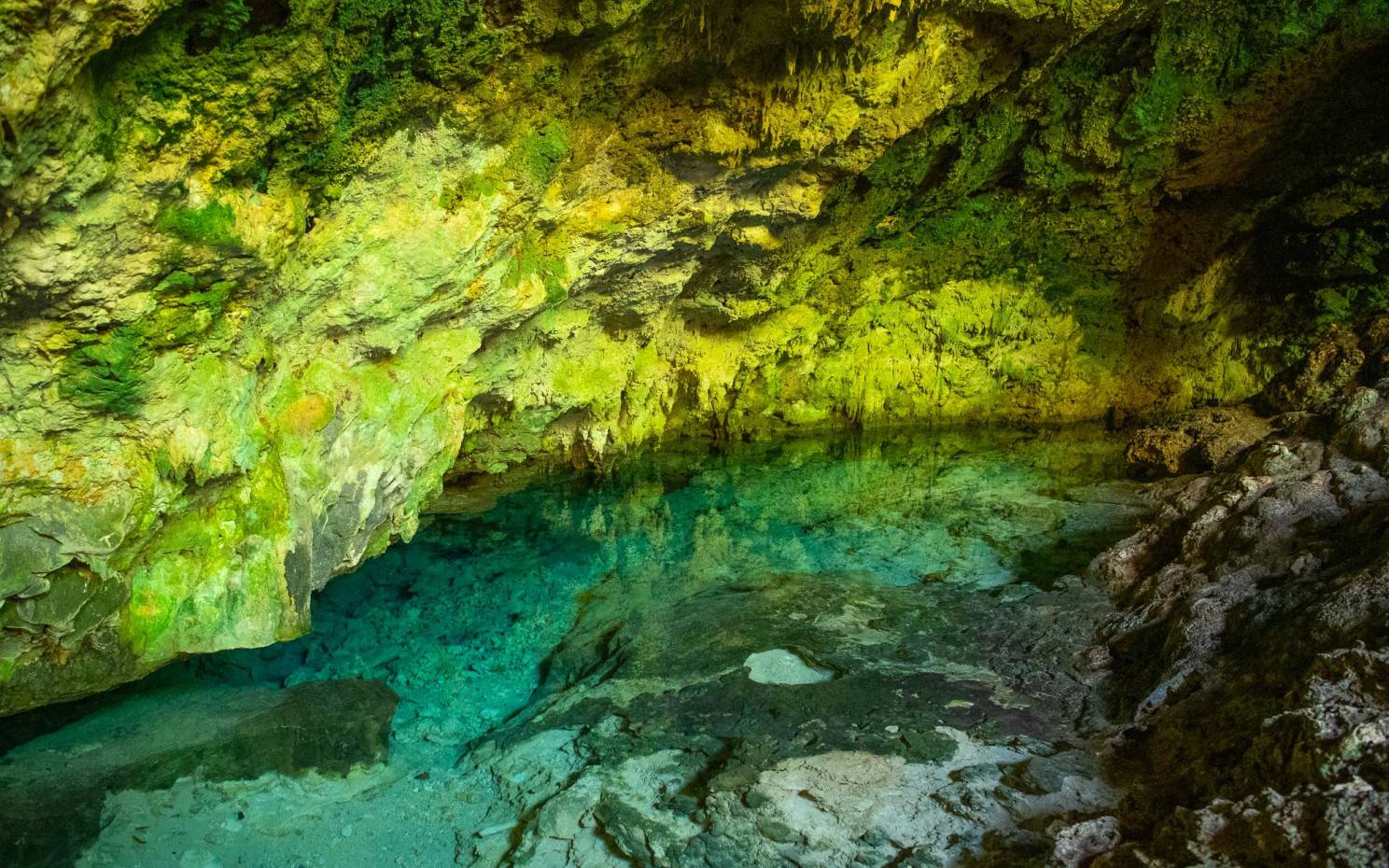
Natural swimming pool Zanzibar Island, Tanzania. Photo by Ariadne van Zandbergen. © All rights reserved 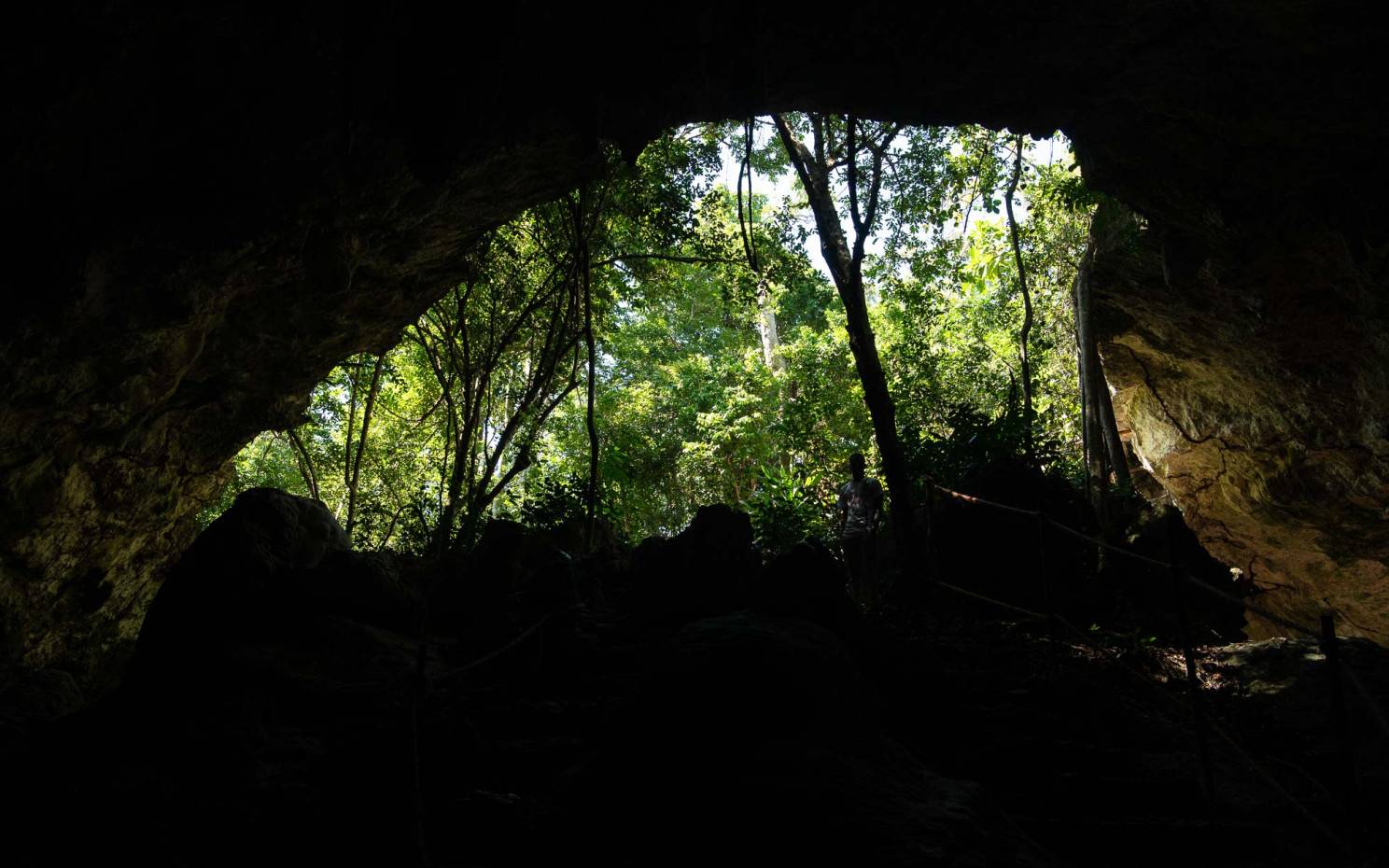
Entrance to Kuza Cave Zanzibar Island, Tanzania. Photo by Ariadne van Zandbergen. © All rights reserved 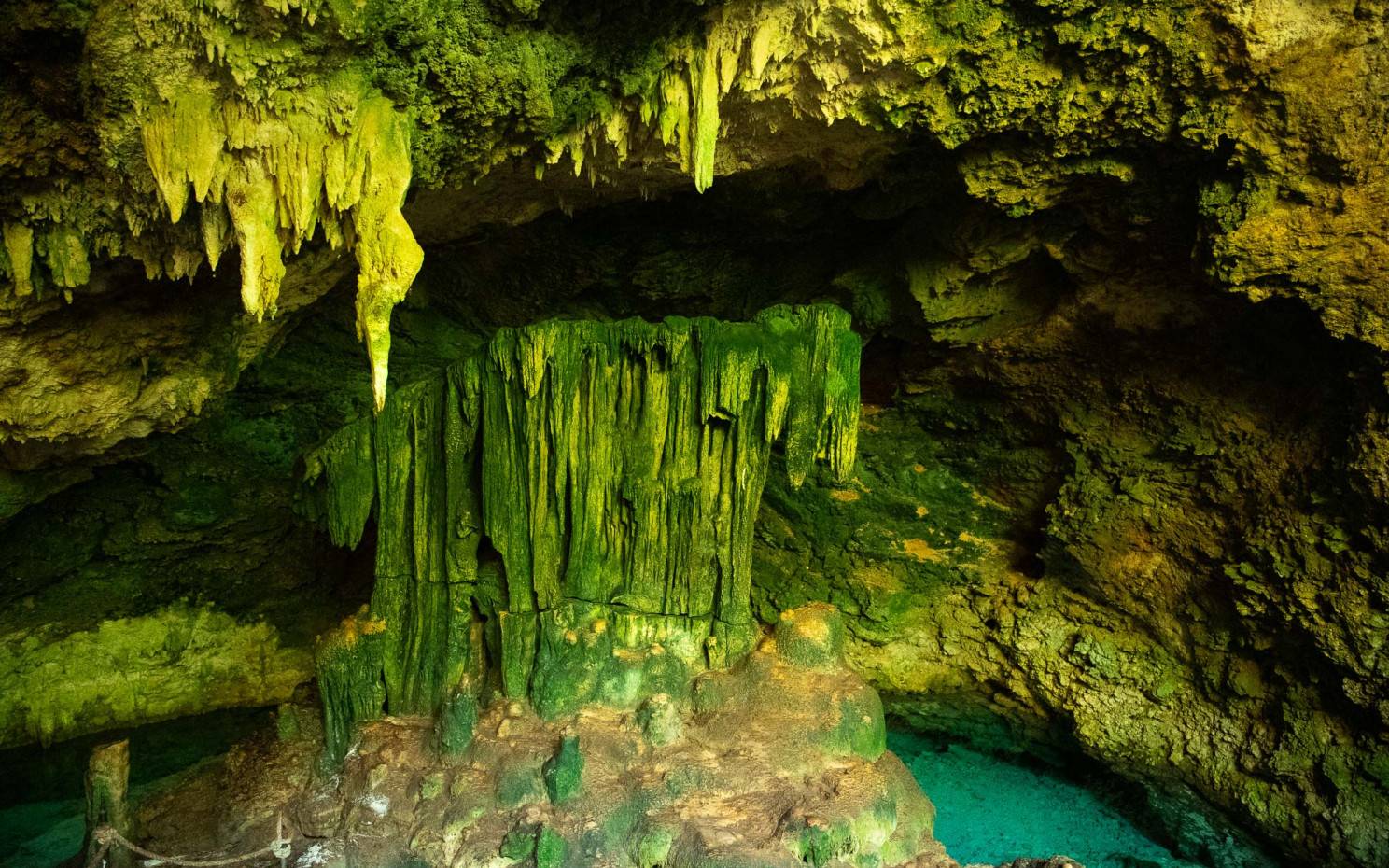
Stalactites and stalagmites Zanzibar Island, Tanzania. Photo by Ariadne van Zandbergen. © All rights reserved 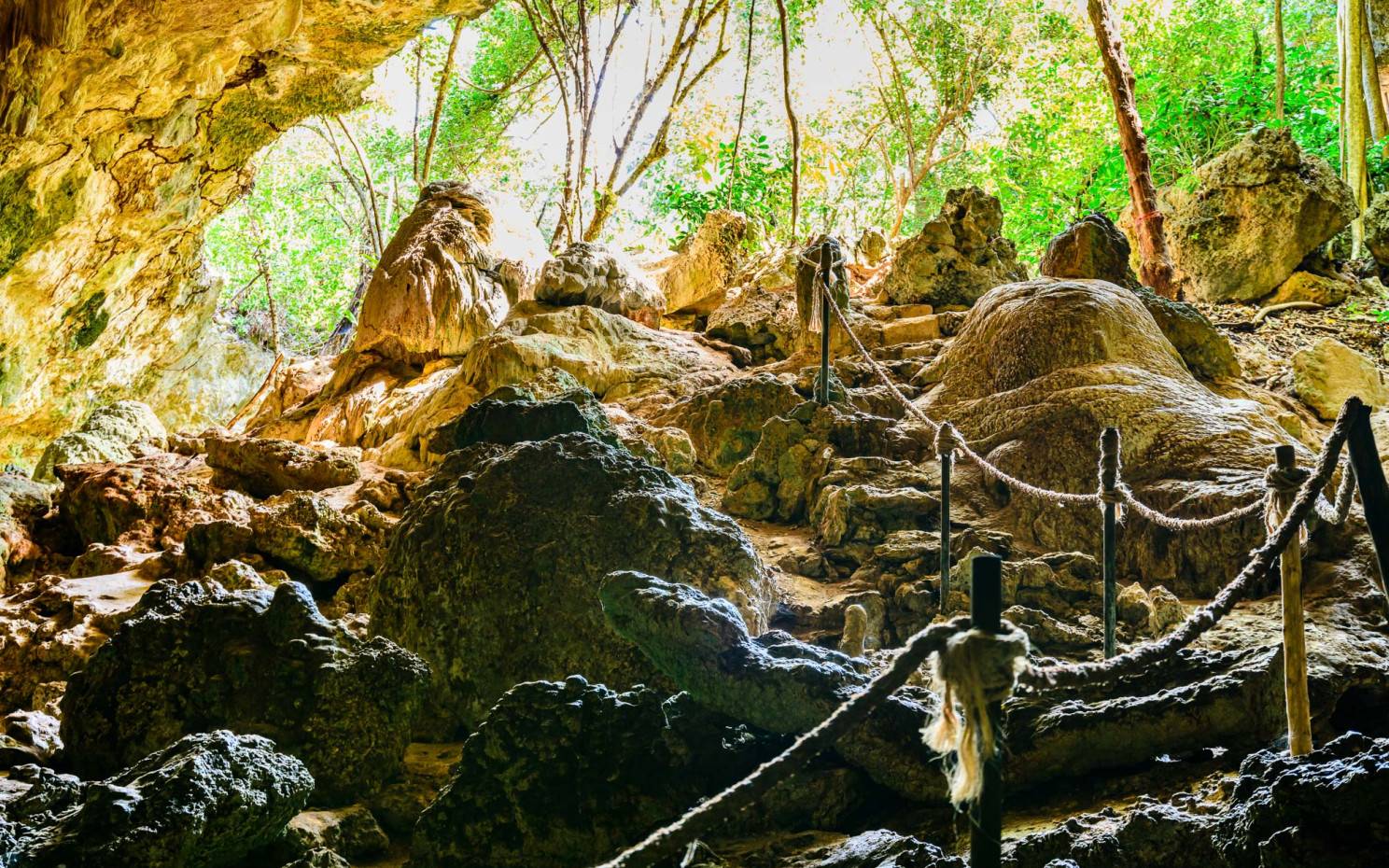
Stairs into the cave Kuza Cave, Tanzania. Photo by igorbondarenko. © All rights reserved 
Resident artist at work Kuza Cave, Tanzania. Photo by Kuza Cave. © All rights reserved 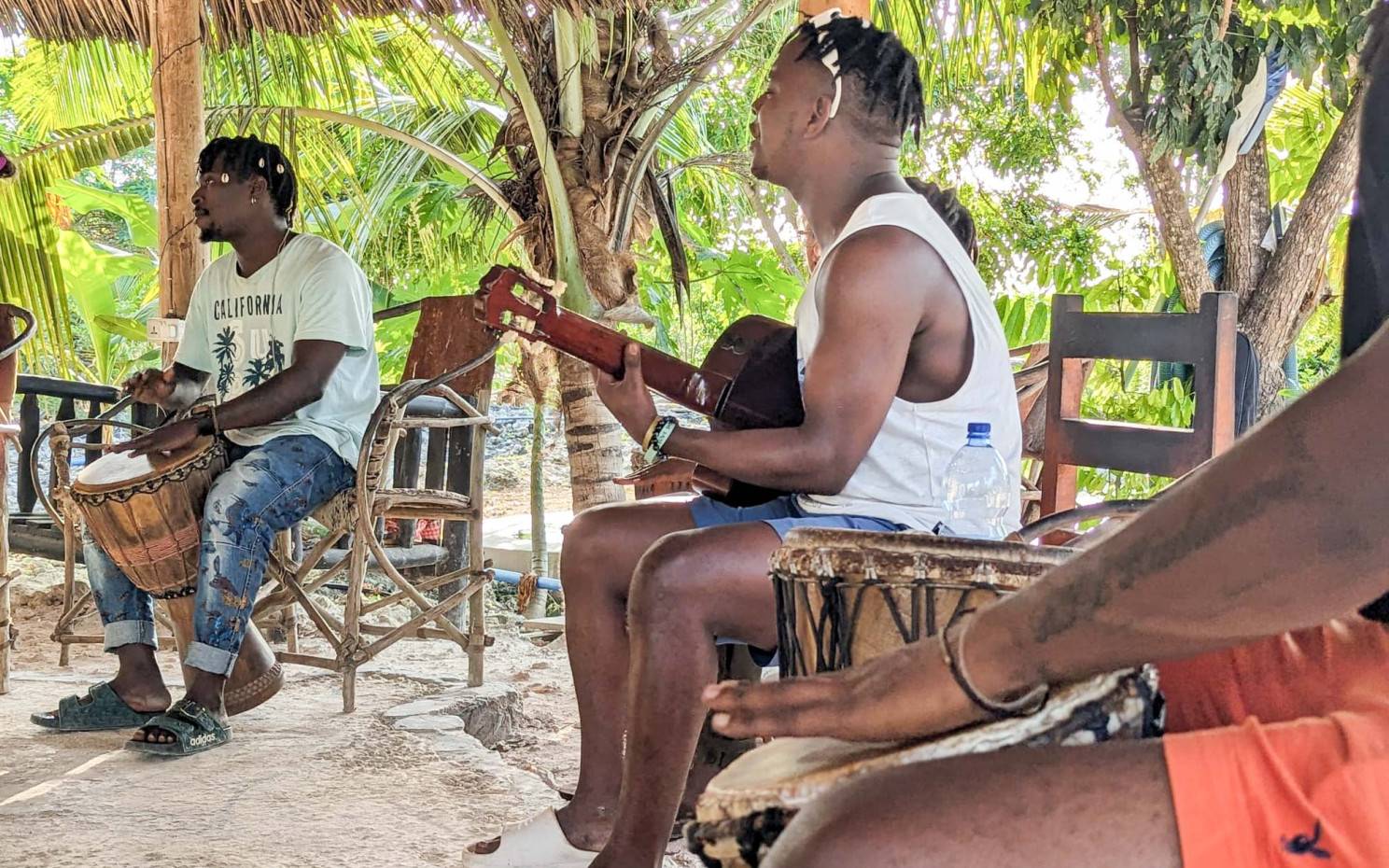
Music workshop Kuza Cave, Tanzania. Photo by Kuza Cave. © All rights reserved 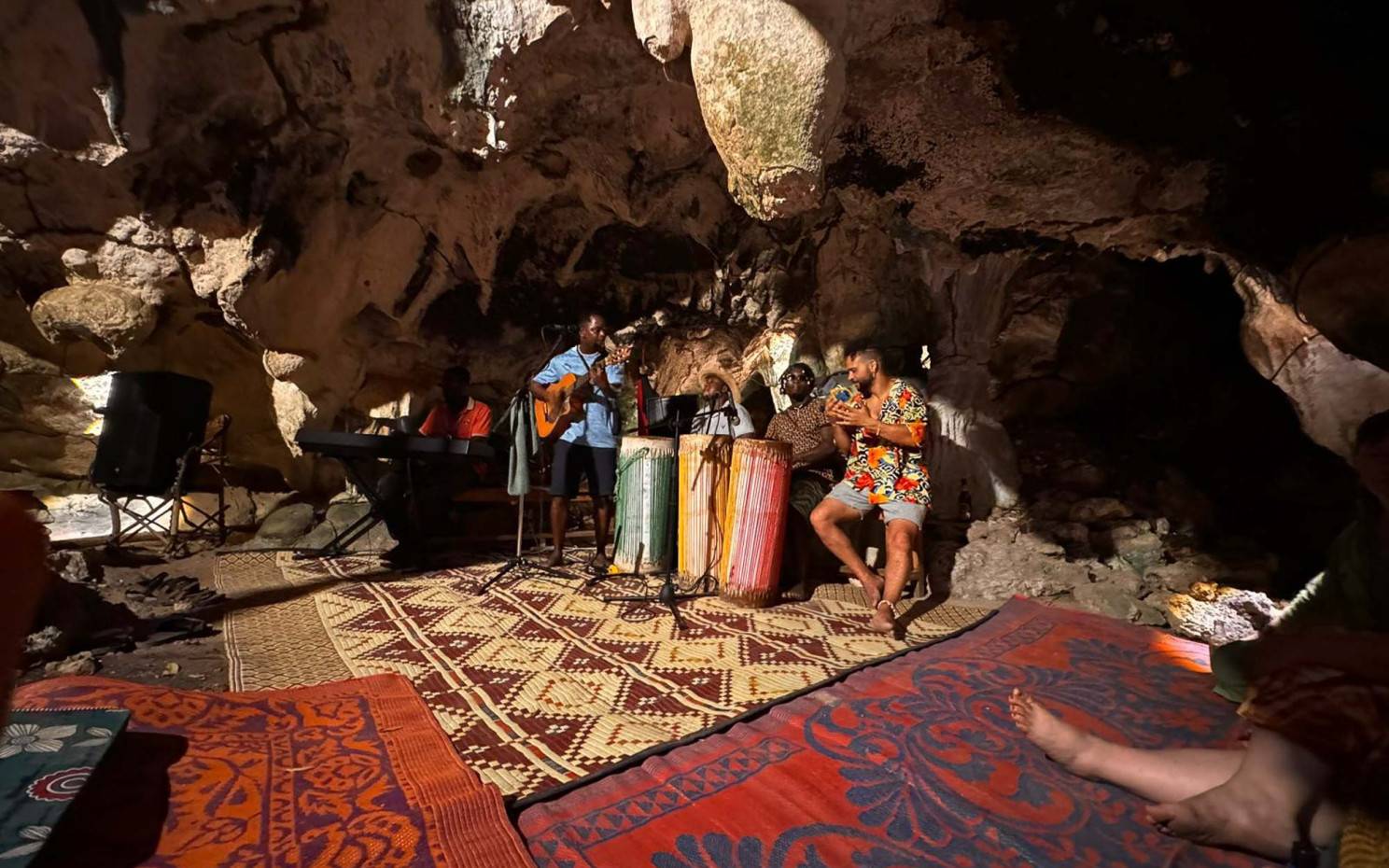
Music in the cave Kuza Cave, Tanzania. Photo by Kuza Cave. © All rights reserved 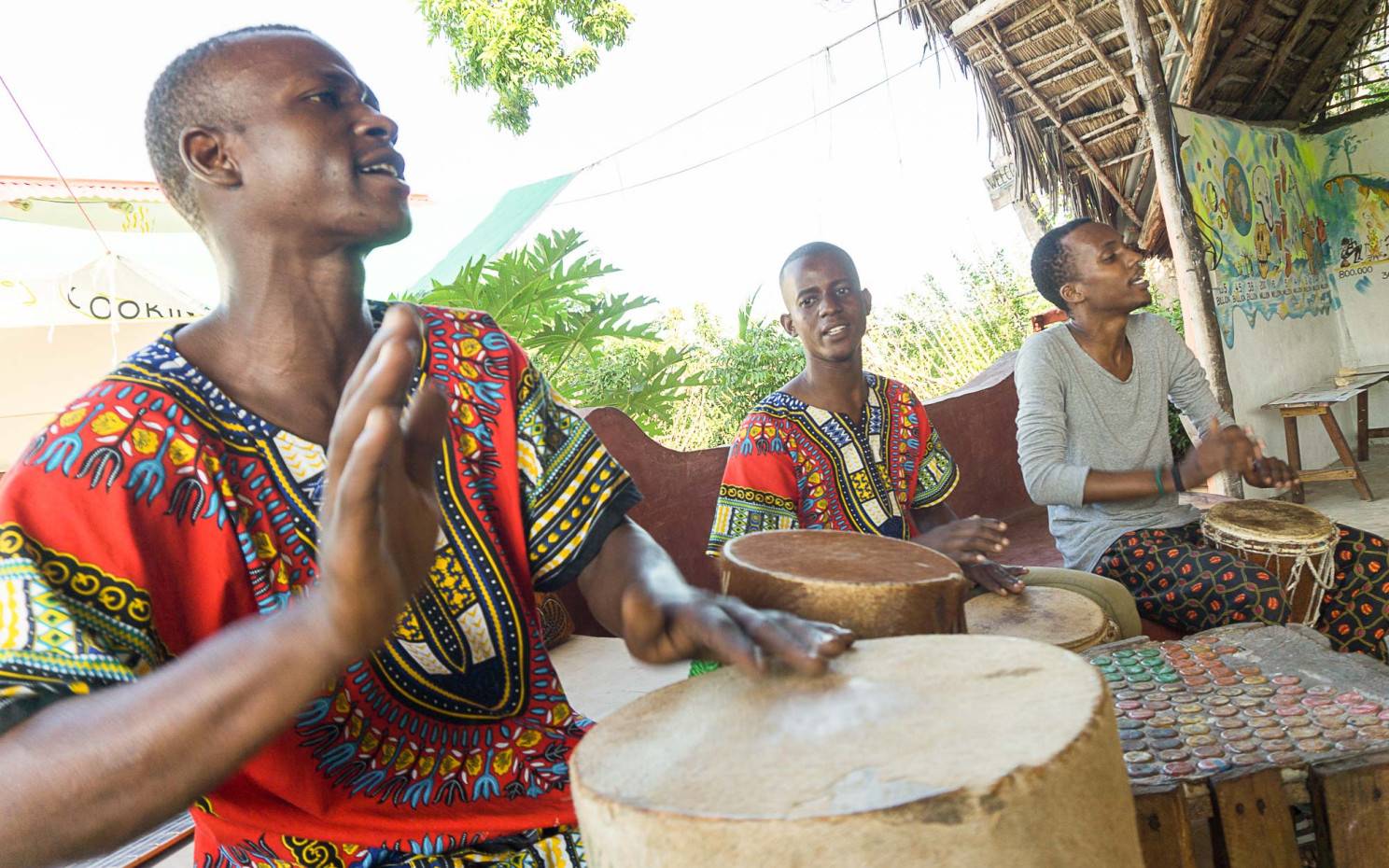
Drumming workshop Kuza Cave, Tanzania. Photo by Kuza Cave. © All rights reserved 
Traditional lunch Kuza Cave, Tanzania. Photo by Kuza Cave. © All rights reserved 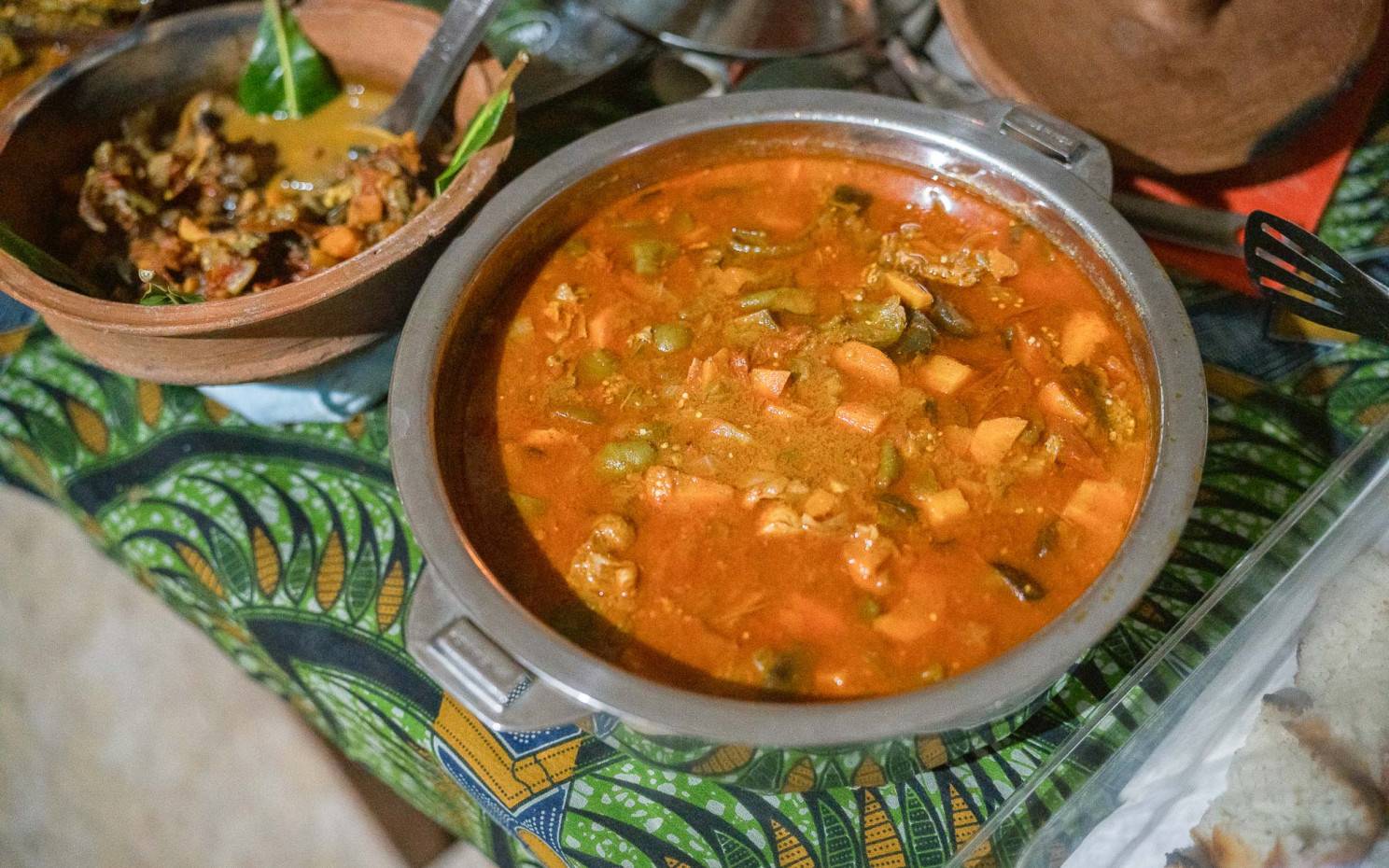
Traditional lunch Kuza Cave, Tanzania. Photo by Kuza Cave. © All rights reserved 1. Kuza Cave
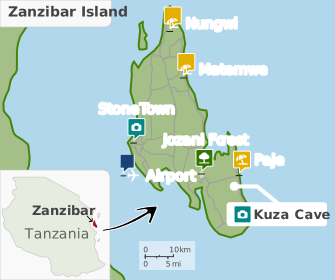
You can swim in this cave near the resort towns of Paje and Jambiani
The most popular cave to visit on Zanzibar is Kuza, which lies a short distance inland of Paje and Jambiani Beaches. This cave is best known for its freshwater pool whose crystal clear water is saidRead more
to have healing powers and is perfect for swimming. Kuza is held sacred by the people of nearby Kibigija village, who run a community project there and offer guided tours explaining its geology and history of human habitation. Other community-based activities on offer include traditional drumming, singing, dancing and cooking lessons. -
Google Maps
Natural swimming pool Maalum Cave, Tanzania. Photo by Maalum Cave. © All rights reserved 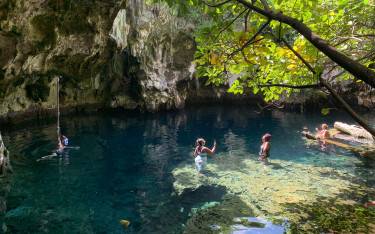
People in the water Maalum Cave, Tanzania. Photo by Ariadne van Zandbergen. © All rights reserved 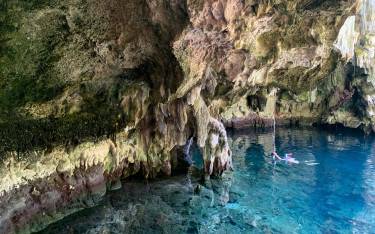
Person swimming in clear water Maalum Cave, Tanzania. Photo by Ariadne van Zandbergen. © All rights reserved 2. Maalum Cave
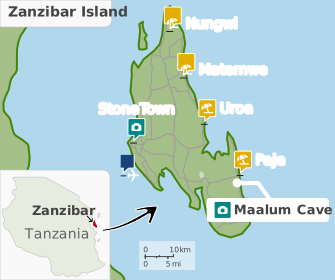
Swim then enjoy a massage or spa treatment at jungle-lined Maalum
Rivaling nearby Kuza as the top attraction of its type on Zanzibar, Maalum Cave is a massive coral filled with impossibly clear turquoise water. Situated on the outskirts of Paje, this 6m-/20ft-deep natural pool retainsRead more
an exclusive feel thanks to the limit of 20 swimmers during any given 90-minute time slot (for which reason booking is highly recommended). And while the inviting freshwater pool is the focal point of Maalum, this sustainably minded private and community collaboration also incorporates a forest spa, a shady open-air restaurant and a shop selling skincare products crafted from locally farmed seaweed. -
Google Maps
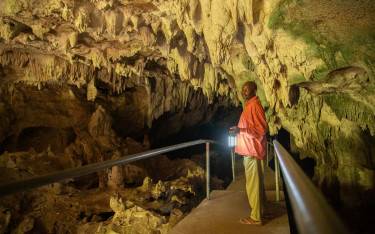
Guide leading the way into the cave Zanzibar Island, Tanzania. Photo by Ariadne van Zandbergen. © All rights reserved 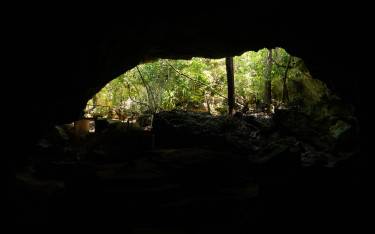
Entrance to the cave Kiwengwa Caves, Tanzania. Photo by Ariadne van Zandbergen. © All rights reserved 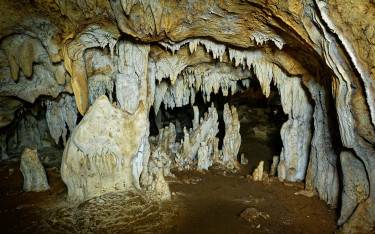
Stalagmites and stalactites Kiwengwa Caves, Tanzania. Photo by Martin Pelanek. © All rights reserved 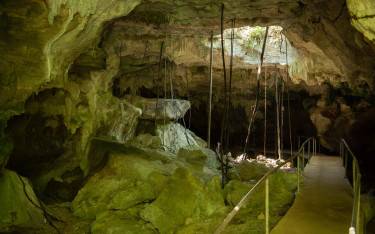
Kiwengwa Caves Kiwengwa Caves, Tanzania. Photo by Ariadne van Zandbergen. © All rights reserved 3. Kiwengwa Caves
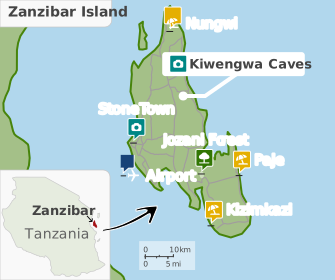
These mysterious caves lie in the dense jungle of Kiwengwa-Pongwe Forest Reserve
One of the most underrated attractions in northeast Zanzibar is Kiwengwa Caves, which lie just 3km/2mi inland of the popular resort town of the same name. Once an important site for ancestral worship, the cavern comprisesRead more
two chambers known locally as Mpango ya Mchekene (Caves of the Hawk). With a strong flashlight and a mandatory guide, you can walk about 200m/650ft into the longer cavern, which has some impressive and as well as a large bat colony. The shorter cavern features an open that lights up the tangled root systems that hang from the ceiling.Kiwengwa Caves are the highlight of a reserve that protects one of Zanzibar’s largest remaining areas of . Known as Kiwengwa-Pongwe Forest Reserve, it is home to a variety of monkeys (notably the ), plenty of colorful butterflies, and more than 50 bird species including and . -
Google Maps
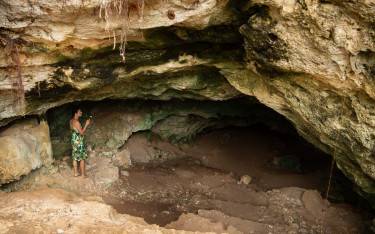
Visitor in the cave Nungwi, Tanzania. Photo by Ariadne van Zandbergen. © All rights reserved 4. Tazari Twin Caves
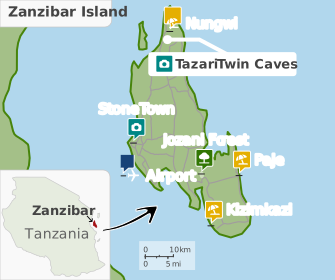
This pair of caves is easily visited from the resort towns of Nungwi and Kendwa
Locals will tell you that the Tazari Caves lay unknown (or forgotten) until as recently as 2013, when they were ‘discovered’ by a villager out collecting stones to build his house. However, ceramic remains found inRead more
the larger cavern suggest that it was inhabited during the 11th or 12th centuries. The cave is also said to have been a hiding place used by Omani slave traders in the 19th century.Whatever their history, the beautiful and well-ventilated twin caves at Tazari are well worth a visit. Guided tours take 45 minutes and require solid walking shoes. On the way, you will pass glittering crystalline rock outcrops and natural sculptures that variously resemble an elephant, a shark and a giant snail. There are plenty of bats in the caves and some old pottery relics too. -
Google Maps
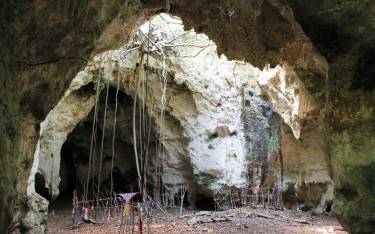
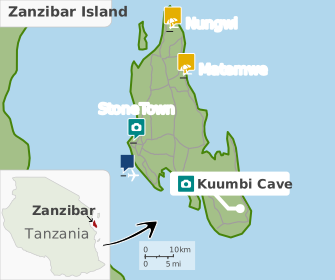
Kuumbi Cave Kuumbi Cave, Tanzania. Photo by Ceri Shipton. © All rights reserved 5. Kuumbi Cave
There are many interesting fossils in this -like cave near Jambiani
Although it is less well known than nearby Kuza, Kuumbi ranks among Zanzibar’s most interesting caves from an archaeological perspective. As suggested by its name Pango la Kuumbi (literally ‘Cave of Creation’), this large andRead more
well-lit cavern has a very long history of habitation. Indeed, the oldest evidence of people living in Kuumbi comprises bone tools and shell beads dating back almost 20,000 years. Other finds include a 12,000-year-old human skeleton buried beneath a cairn (a pile of stones often used as a grave marker), and pottery shards dating to before 900 CE.Kuumbi lies about 3km/2mi inland of the resort town of Jambiani, and it is easily visited from there. But bear in mind that it doubles as a traditional shrine where local villagers still come to make offerings and perform healing rituals, so visitors are advised to dress and behave respectfully. -
Google Maps
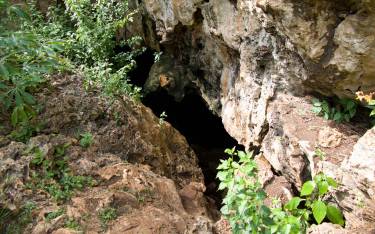
Fukuchani Cave Fukuchani, Tanzania. Photo by luciezr. © All rights reserved 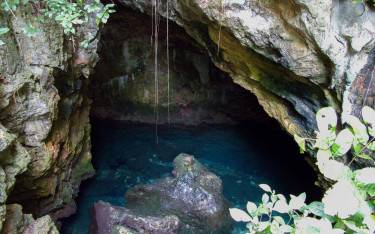
Fukuchani Cave Fukuchani, Tanzania. Photo by luciezr. © All rights reserved 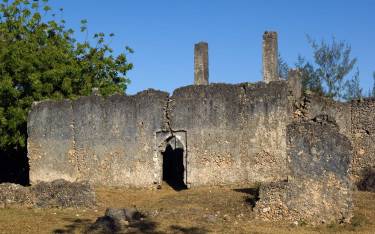
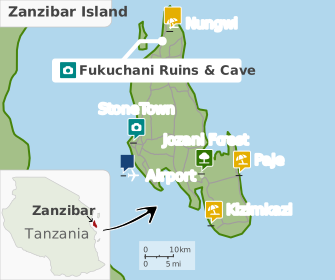
Fukuchani Ruins Nungwi, Tanzania. Photo by Ariadne van Zandbergen. © All rights reserved 6. Fukuchani Ruins & Cave
This coastal cave south of Kendwa stands close to an impressive 16th-century ruin
Easily visited en route to (or as a day trip from) Kendwa or Nungwi, Fukuchani is a quiet village set on Zanzibar’s northwest coast opposite Tumbatu Island. It is also the site of an impressiveRead more
large coral cavern that contains a deep, clear freshwater pool that is ideal for swimming and snorkeling. Close to the cave stand the substantial ruins of a large fortified 16th-century building known locally as the Portuguese House, although its arched architecture suggests the builders were Swahili or Arabian. -
Google Maps
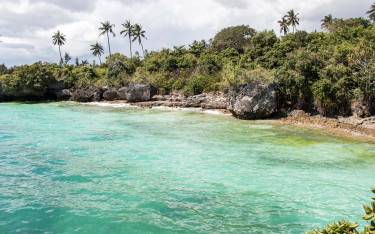
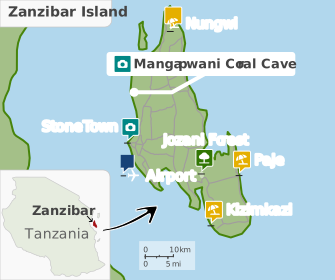
Mangapwani Beach Mangapwani Beach, Tanzania. Photo by UlangaTz. © All rights reserved 7. Mangapwani Coral Cave
This coral cavern on the west coast has a pool of fresh water at its base
Mangapwani, on the west coast of Zanzibar, about 20km/12mi north of Stone Town, is the site of two very different caves. The more beautiful is a natural coral cavern that contains some interesting formations andRead more
a spring-fed freshwater swimming pool. The other is a hand-carved chamber used to hide enslaved people after the abolition of the slave trade in 1873. Arguably a greater attraction than either of these caves is Mangapwani Beach, an unspoiled series of sandy coves and tall coral outcrops.