Guide to Visiting Chobe National Park – All You Need To Know
 By Anthony Ham
 Anthony is a renowned Africa expert and author of the Lonely Planet guide to Botswana and Namibia.
Chobe National Park in Botswana is one of my favorite parks in all of Africa. Why? Because it feels like everything you could possibly want on safari is here within the park’s boundaries: large wildlife numbers, lots of predators, and varied habitats that range from semi-arid to green and abundant. Some of my best-ever wildlife encounters were here (in Savuti and along Chobe Riverfront), I love the camps of the Linyanti Marshes, and Nogatsaa/Tchinga always takes me back to a time when safaris carried a real sense of wilderness and a wild sense of discovery, before tourists arrived in numbers. And I am nowhere happier on safari than when I’m driving around Chobe, ready for that big pride of lions or soulful elephant family to cross my path.
What Makes Chobe National Park Special?
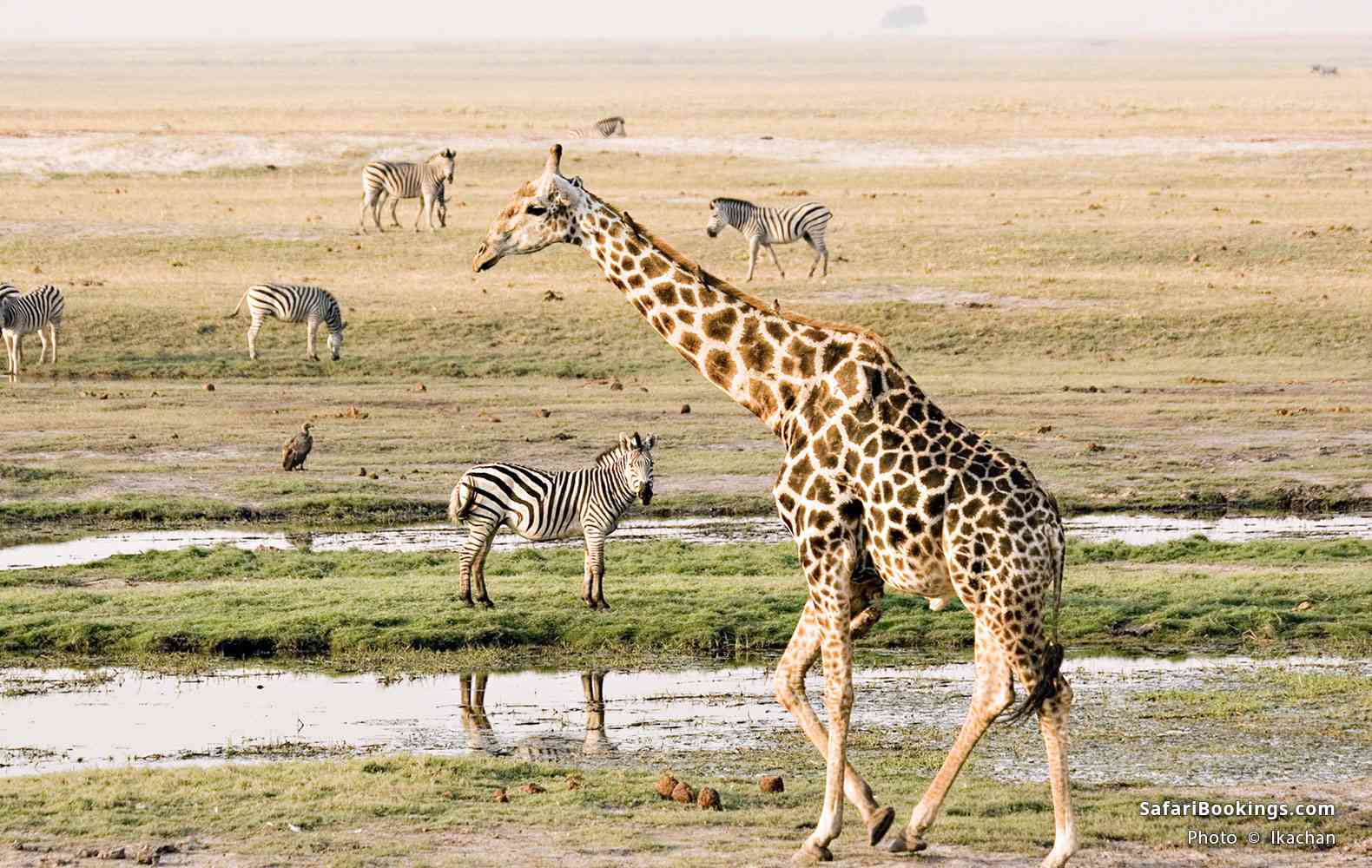 Southern giraffe and plains zebras in Chobe National Park
Chobe National Park feels … wild. Apart from the Riverbank that can get quite busy, the rest of the park is like a wilderness, where I always feel very small when compared to the giants: the elephants, the big rocky outcrops, the horizons. When those filming wildlife documentaries want to film lions and leopards, they very often choose Savuti – it’s that sort of place. This is where I saw my biggest pride of lions: a family of 23 out on the Savuti Marsh. In one of the campsites, a curious elephant stuck his trunk inside my tent flap. And not far from the main Savuti airstrip, we found a den of the cutest-possible African wild dog pups guarded by a watchful pack.
But it’s also the sheer size of Chobe that I love. I have driven for hours and seen only a handful of other vehicles – there aren’t many places in Africa where that degree of solitude is still possible. And yet, the starting point of this adventure is so easy to reach.
And then there’s the wildlife. Chobe stands at the crossroads of many different ecosystems, and has many more within its boundaries. The variety is incredible, meaning the range of species, including many that can be difficult to see elsewhere, is fantastic, from dryland specialists to those that love the water. Apart from the big prizes like elephant, lion, leopard, buffalo, African wild dog, cheetah, wildebeest, giraffe and zebra, you can see puku, greater kudu, roan antelope, sable antelope and eland, not to mention the Chobe subspecies of bushbuck, red lechwe, Selous’ mongoose, serval and wild cat.
What Are the Main Areas of Chobe National Park?
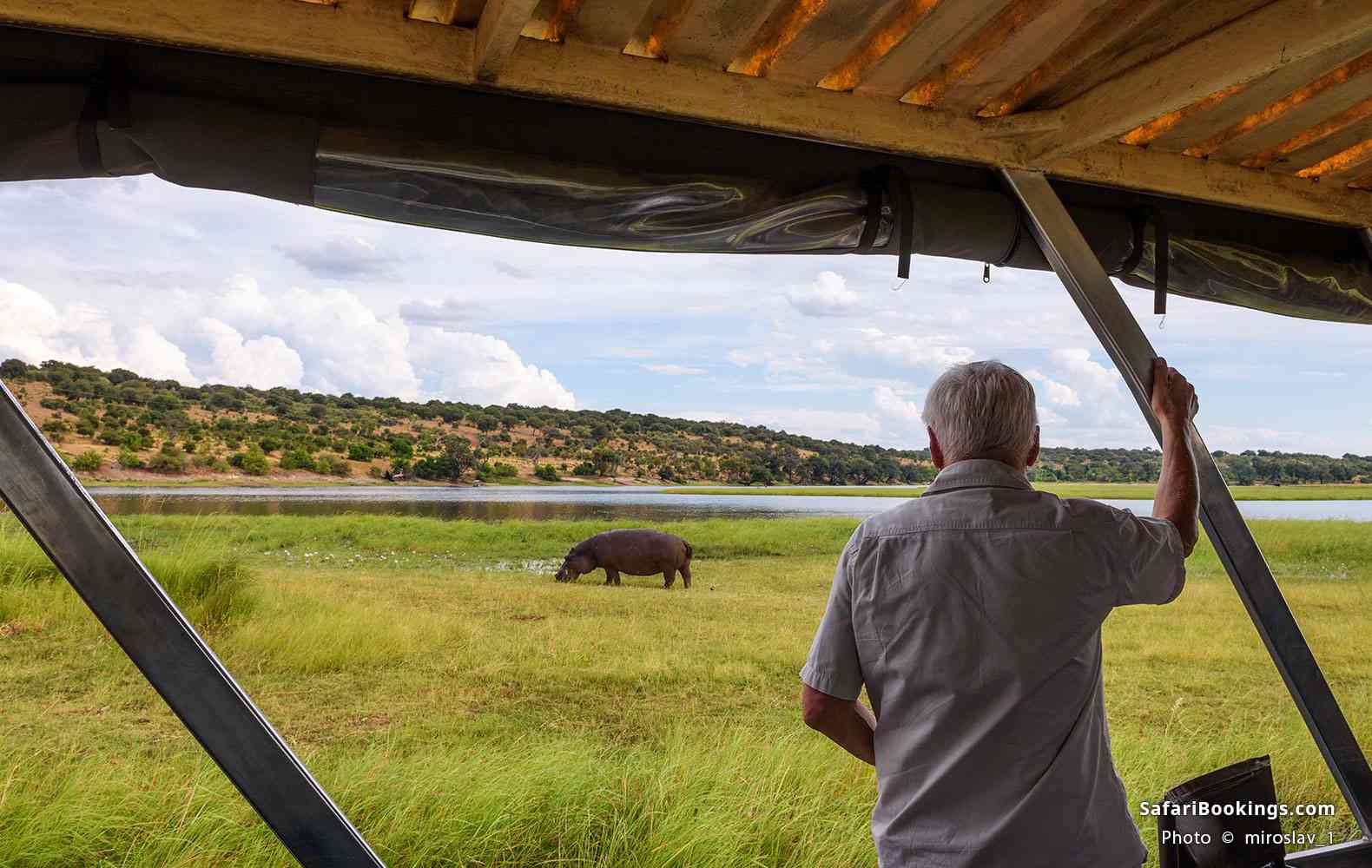 Safari-goer viewing a hippo in Chobe National Park
The two best-known areas of Chobe are Savuti (sometimes spelled Savute) and Chobe Riverfront. These two regions are where the overwhelming number of visitors spend their time in the park. Their quieter alter egos can be found in Nogatsaa/Tchinga, a vast area of the park that very few travelers see and has very few places to stay, or the Linyanti Marshes, which are sometimes inaccessible due to poor track conditions.
Much as I love Nogatsaa/Tchinga and Linyanti Marshes, they wouldn’t be my first choice, especially if I were visiting Chobe for the first time. They are, for me, an add-on to the main event, which would be Savuti. Visit Chobe Riverfront, too, but only at the beginning or end of your trip and only for a morning and/or afternoon game drive.
The Riverfront is a short, intense burst of wildlife action, but it covers only a small area and – for me at least – the crowds can take away a little from the experience, especially in high season. One or two visits are usually enough. If I’m able to stay overnight and inside the park, then that is preferable. The Chobe park authorities also sometimes place restrictions on self-drivers visiting Chobe Riverfront at the best times – if they won’t let me be there around dawn or dusk, I would prefer to head for Savuti.
From the River
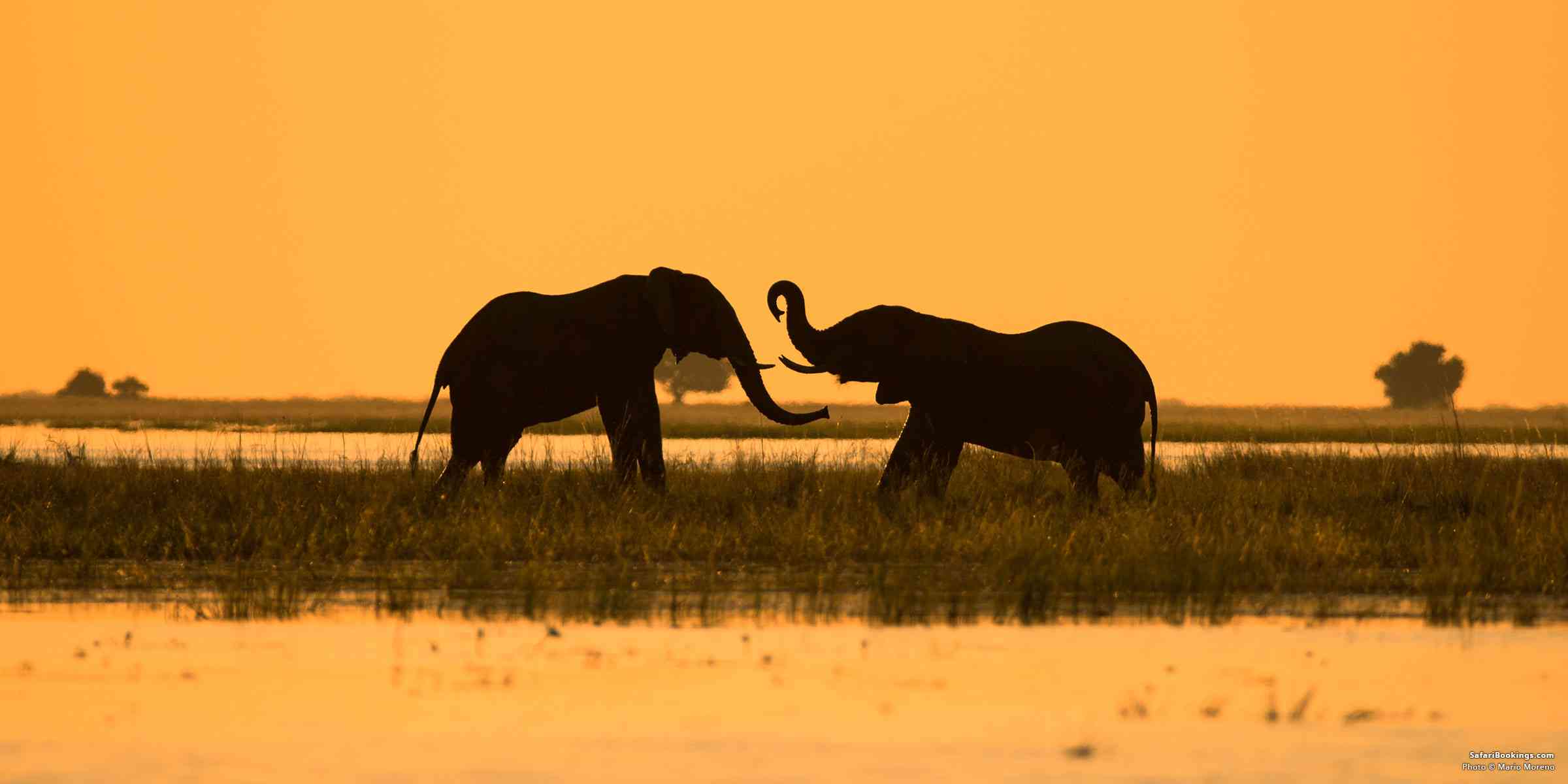
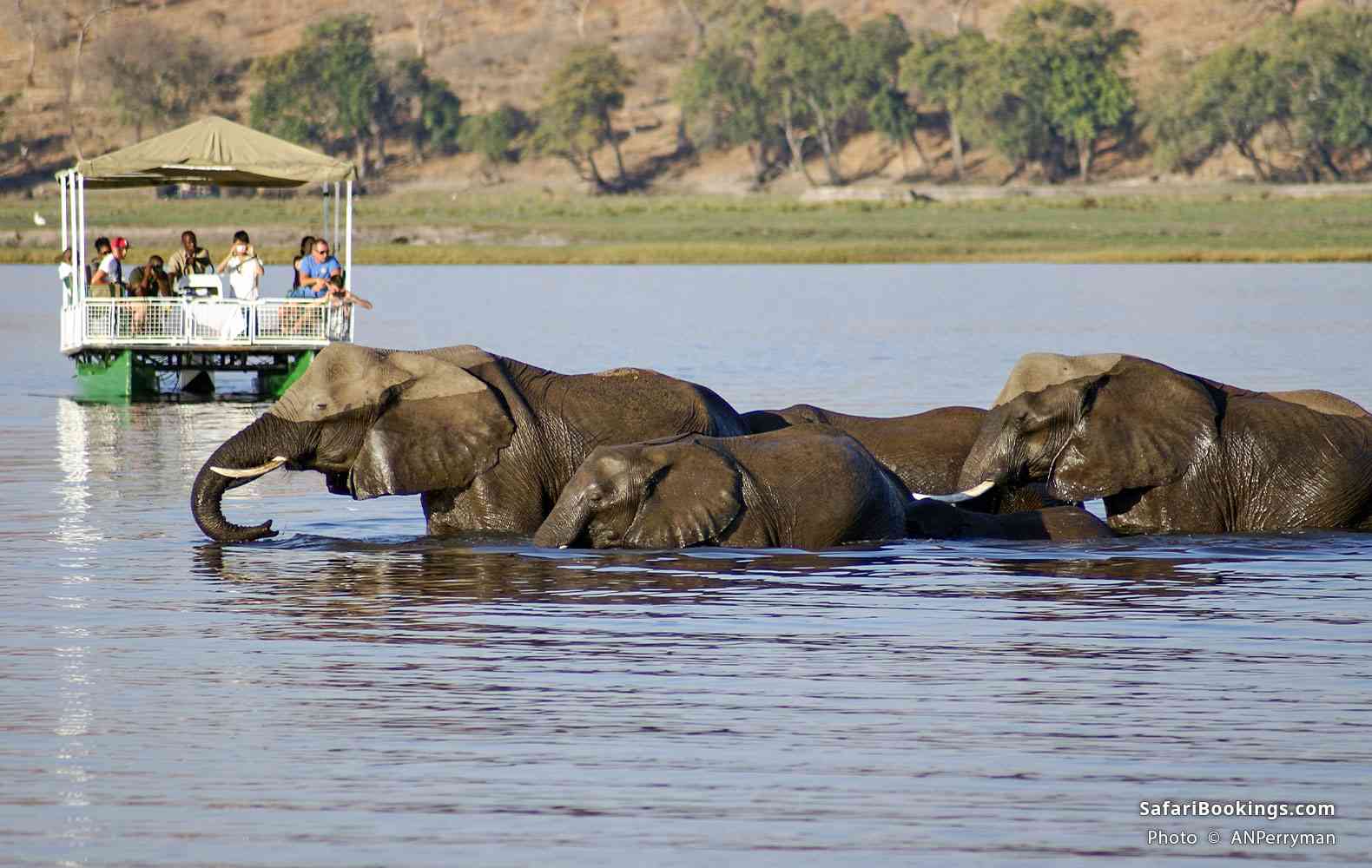 Elephants crossing the Chobe River in front of a tour boat
The close geographical combination of Kasane, the Chobe River and the Chobe Riverfront section of the national park makes for some thrilling possibilities. That’s because only in a handful of African parks can you go on a proper boat safari and see amazing wildlife from out on the water.
Most boats set out from Kasane and onto the river and its expansive floodplains. It’s especially popular with birders. But you’ll also see hippos and crocs along the way and, when you pull up alongside the Riverfront – a long, narrow stretch of open shoreline – you’ll see elephants wading out into the shallows, which extend a long way from shore. And, of course, there’s an excellent chance that you might see any of the Riverfront’s land-based wildlife as it moves along the shore.
While everyone should go on a boat trip along the river, it’s ultimately not the best way to see the wildlife that stays on land and only comes down to the water’s edge to drink. Partly that’s because the boats can’t get too close in due to the shallow waters, so you won’t be able to get closer than a few hundred meters offshore. But I’ve also been there when the safari vehicles on land are so numerous that they block the views of animals on land for those in a boat out on the river, except when the animals are drinking. By all means, go on a boat, but understand its limitations and combine it with a trip in a 4WD vehicle on land.
I’ve done a couple of boat trips from Kasane, and I’m so glad I did. But I’m not sure I’d do any more. Take one trip at sunset – perhaps on the day of your arrival while you’re recovering from the trip to Kasane, or at the end of your trip while waiting for your flight out. But if you don’t have much time, I’d rather be on the road in Chobe Riverfront and then on to Savuti.
Along the Riverbank
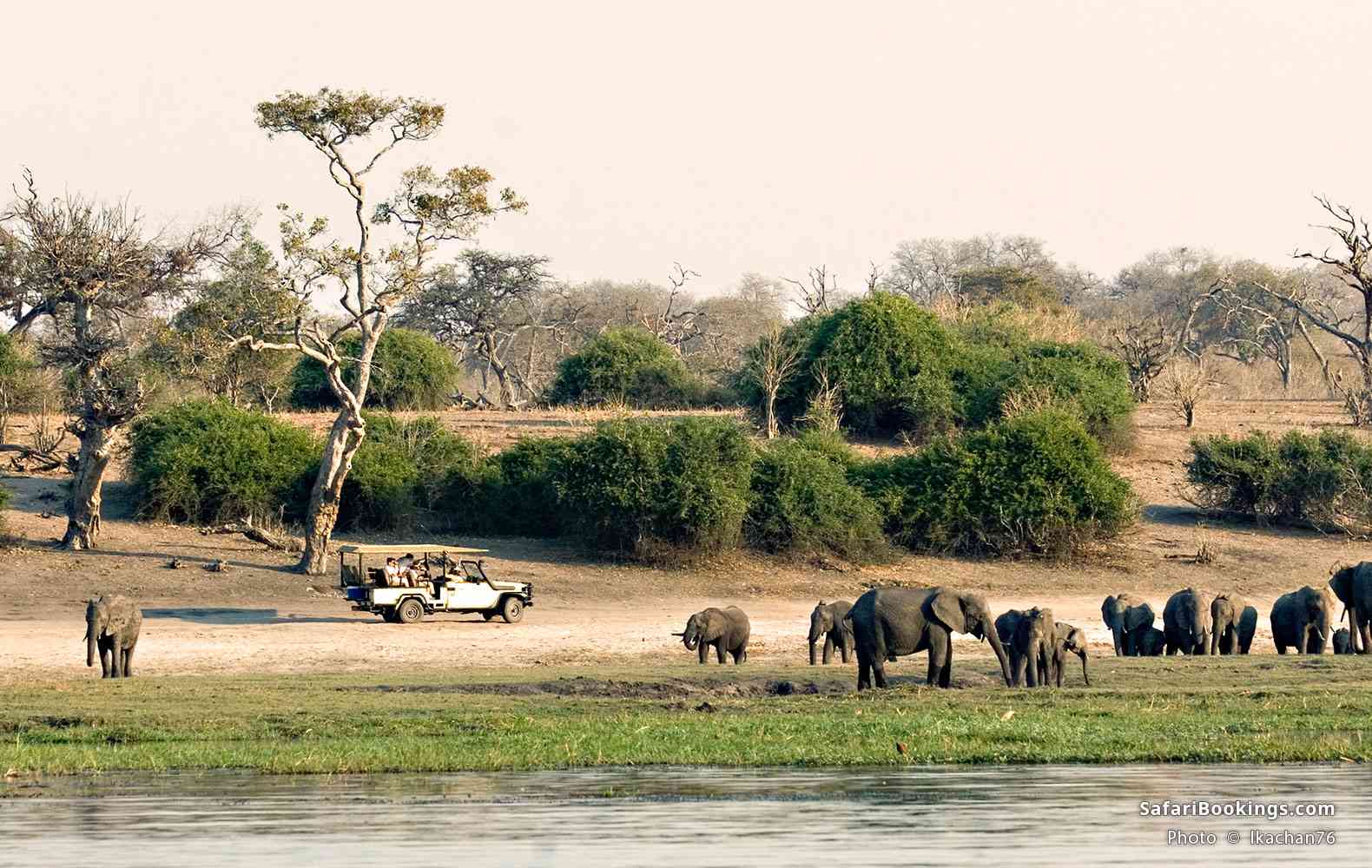 Safari vehicle and elephants on the Chobe Riverfront
If I could design a place to see wildlife, it would look something like Chobe Riverfront – it’s no surprise that it is so popular. During the Dry Season, the Chobe Riverfront is the only source of water for animals for hundreds of miles of wildlife-filled territory. That means that all species come down to drink here at some point: elephants, great herds of buffalo, lions and more. And because the Riverfront is an open, sandy patch of riverbank, the animals are easy to see and there’s enough space for vehicles as well.
One of my best-ever days on safari was spent here, sitting and watching as a group of lionesses and cubs fed upon an elephant carcass bathed in the golden light of sunset. When one of the lionesses got bored, she stalked and hunted a warthog. Other elephants passed and seemed to pay their respects to their fallen colleague before walking out into the river to drink.
However, because it is so easy to reach from Kasane, it also gets overcrowded. This means that in high season the Riverfront can get too crowded for my liking.
Into the Wilderness
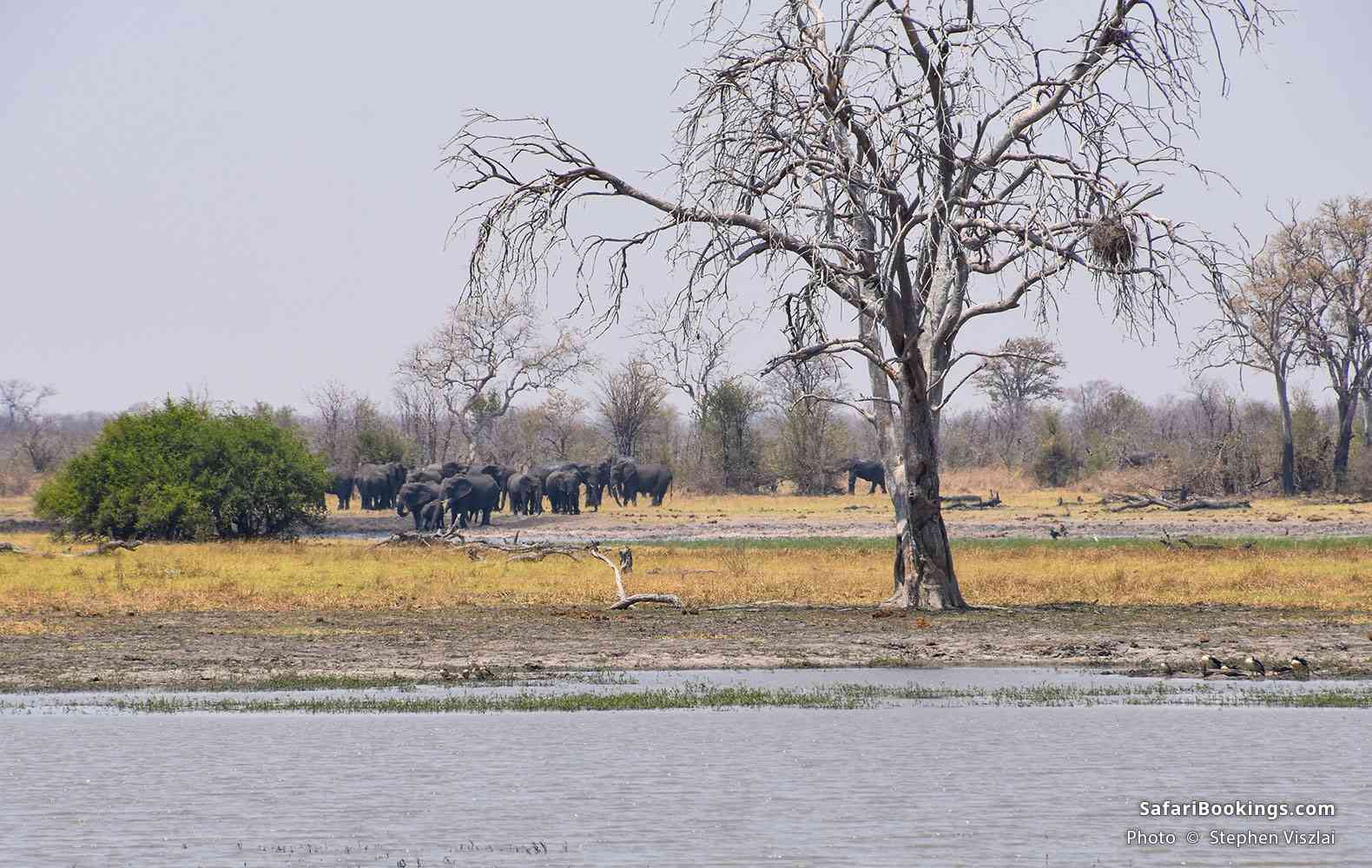 A herd of elephants drinking at Nogatsaa Pans
You just don’t find places like Nogatsaa/Tchinga very often in Africa these days. And if you look at a map, you’ll know what I mean. Unlike elsewhere in Chobe, very few trails cross Nogatsaa/Tchinga, a landscape of mopane woodlands and clay pans. When driving through this area, I’m always reminded of the old days of going on safari. It feels raw, like you never quite know what you’re going to find. And when you find something special, you’ll probably have it all to yourself. There aren’t many places to stay in this vast area, and because it lies south of the main Kasane–Savuti track, hardly anyone takes the detour. It can be difficult to see wildlife, but you can also strike it rich. My enduring memory of driving here is suddenly finding myself surrounded by elephants, who appeared like magic out of the bush.
On another occasion, as I came around a bend, I came upon a family of elephants, including some very young calves. The herd’s matriarch trumpeted and all the adult females gathered in a tight huddle facing me, with the babies protected in the middle. That is exactly the kind of encounter that seems possible in Nogatsaa/Tchinga.
One downside of a visit here is that you’ll need to be self-sufficient. Either travel in a convoy or with at least two vehicles, or carry a satellite phone with you (and the telephone numbers of those who can come and help you in case of emergency or vehicle breakdown).
Savuti – Home of the Wild
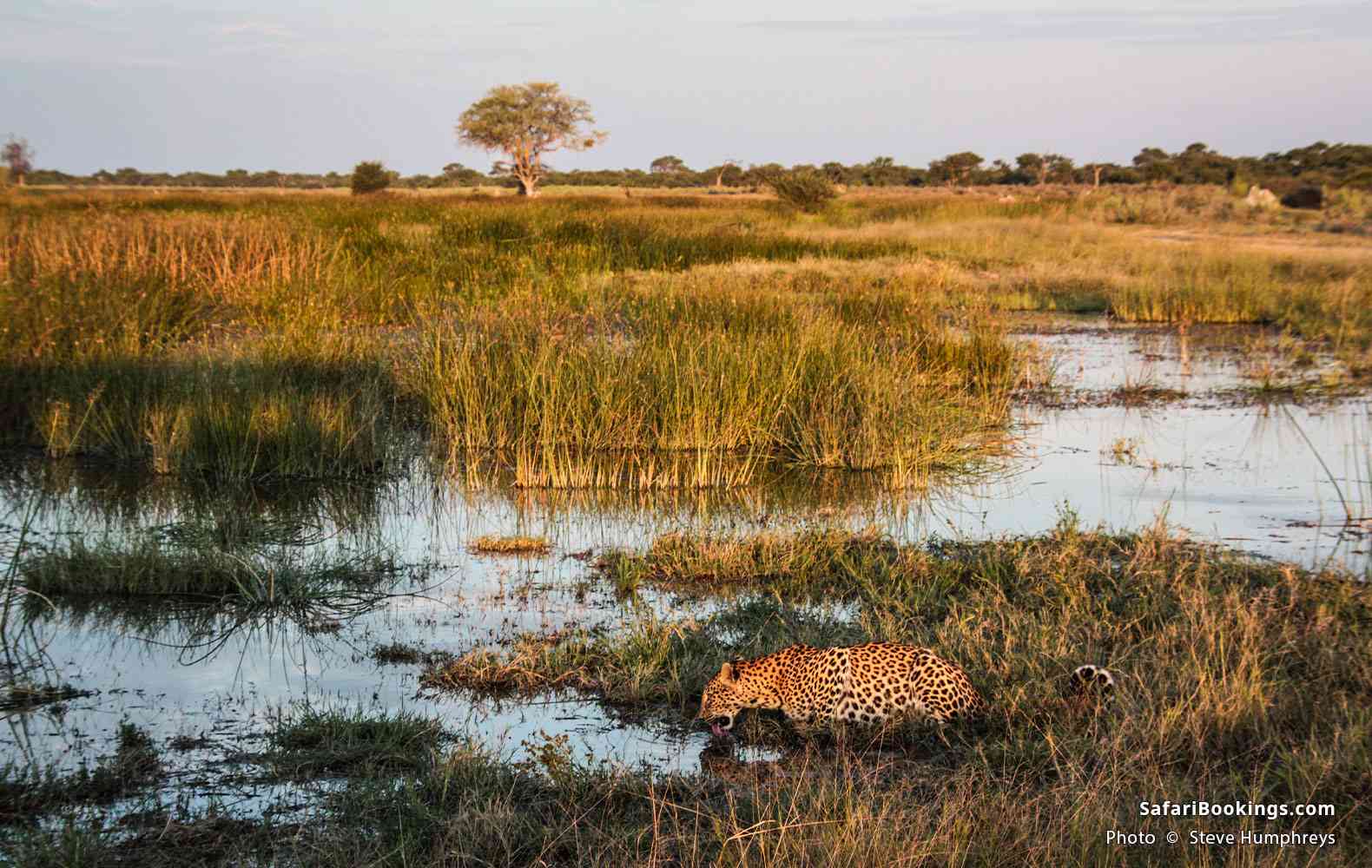 Leopard drinking in the Savuti region
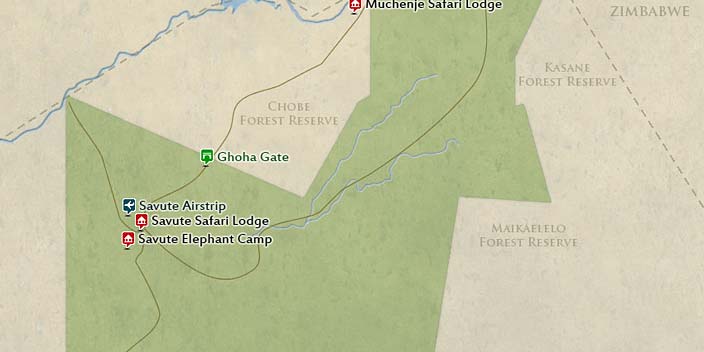
You could build a national park that only had Savuti in it and it would still be one of southern Africa’s best parks. That’s because it has everything: a seasonal water channel (the Savuti Channel) and swampland (the Savuti Marsh); salt pans and waterholes; rocky outcrops rising abruptly from the plains, including some with millennia-old rock art; and great baobabs and golden grasslands. Each of these environments provides the perfect refuge for large herds of prey species (zebra, impala and giraffe, for example) and predators (especially lion, leopard and African wild dog); Savuti is one of the best places in southern Africa to see these three predators. But if there is an iconic presence in Savuti, it is the elephant – at the waterholes, or even, as I once saw, high on one of Savuti’s rocky outcrops.
What I also love about Savuti is the accommodations. There’s everything from luxury lodges and tented camps to rustic mobile safari camps that pack up and move every few days, and a simple campsite for self-drivers. There aren’t too many of them to feel crowded, but just enough to make a stirring Savuti adventure possible.
The Linyanti Marshes
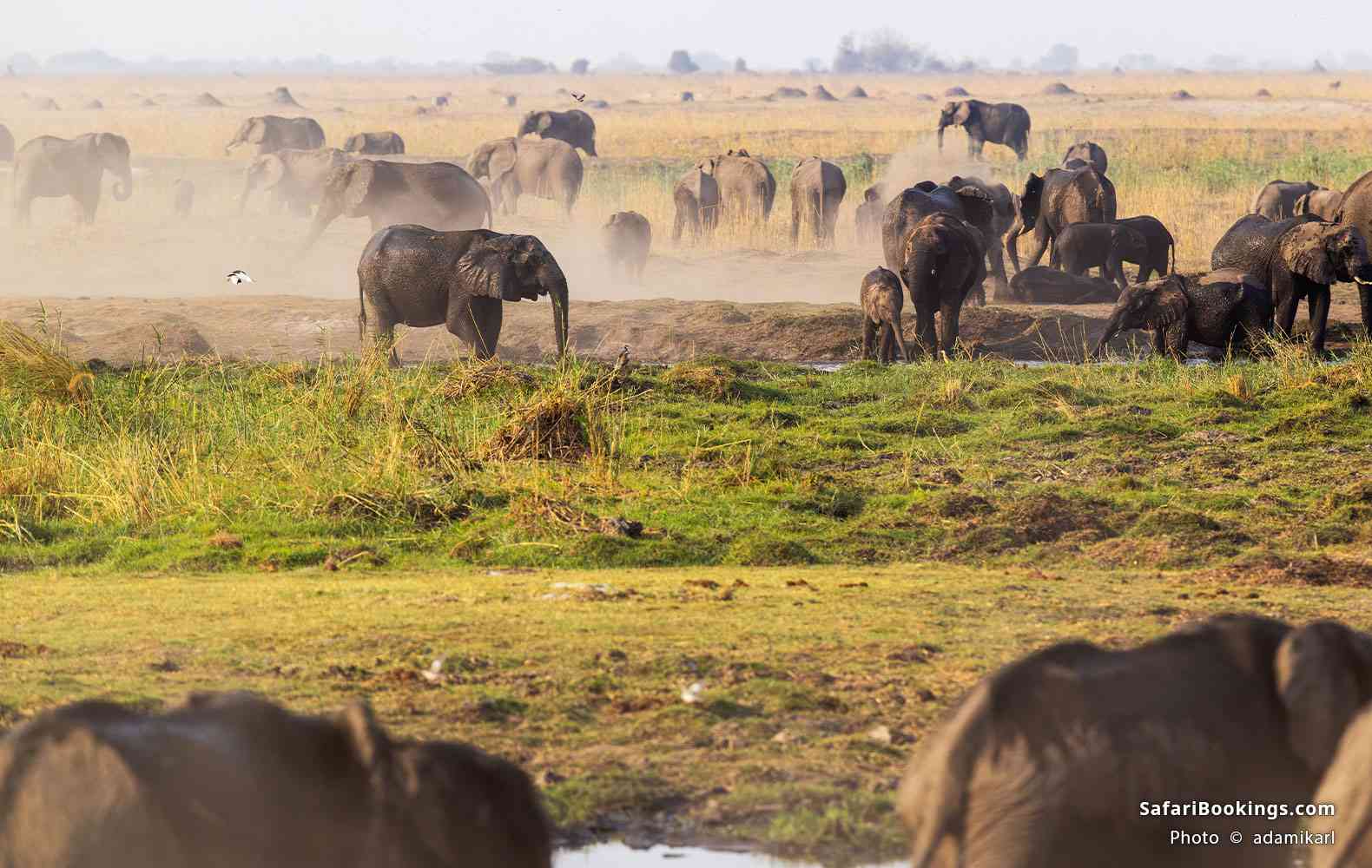 A large group of African bush elephants on a dusty plain in Linyanti
The contrast between Savuti and the Linyanti Marshes couldn’t be greater. Savuti is a world-famous safari home of dry-country wildlife, while Linyanti is a realm of greens and blues, of bodies of water and their fertile fringes. Linyanti is the sort of place where, even when you’re on dry land, water is the dominant presence. It has a handful of campsites and luxury tented camps right on the shores of rivers and lagoons, places that make for incredible wildlife experiences and beautiful retreats from the world and its noise.
But seeing wildlife in the Linyanti area (there is another area of the Okavango Delta that is also, confusingly, called Linyanti) can be highly seasonal. During the April-to-October Dry Season, the wildlife here can be incredible. This is when elephants migrate through the Linyanti Marshes and other wildlife is abundant, from lechwe to land-based predators like lions. This is also when the Linyanti Marshes’ reputation as one of the best places in Africa to see African wild dogs seems most true.
I’ve also visited in March and into April, and I saw hardly any animals – an African wild cat, some warthogs, a handful of zebra and impala. The only lions I saw were away from the marshes, near where Linyanti meets Savuti. And not a single elephant, a species for which Linyanti Marshes can, at other times, be rightly famous.
If you’re visiting Chobe during the wetter months, I would probably skip Linyanti – there’s just not enough wildlife. Then again, the luxury lodges here are fantastic to relax in any time of year.
Self-drive Versus Tour
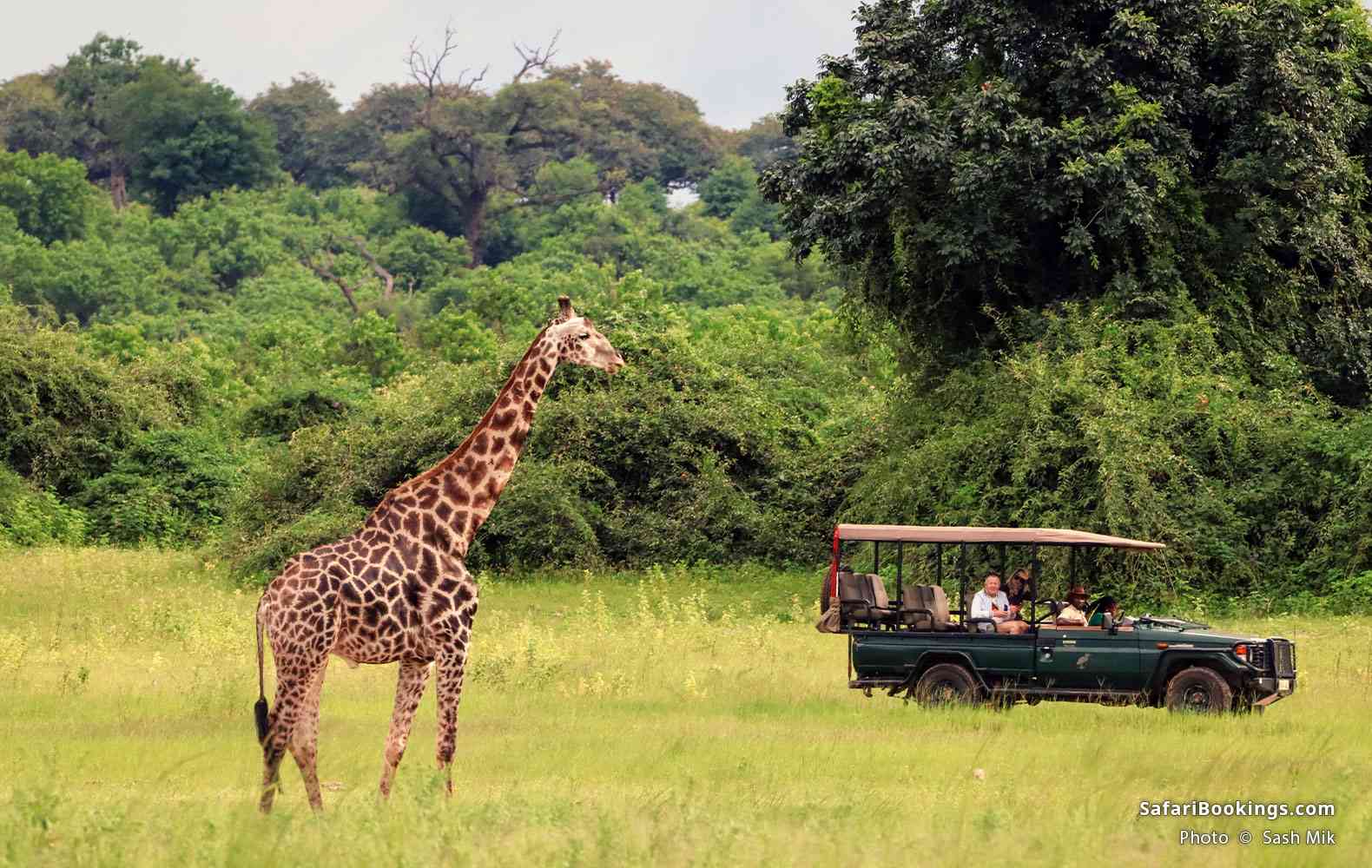 Travelers viewing a giraffe in Chobe National Park
Chobe is wonderfully well set up for self-drive safaris. Everywhere in the park is accessible by 4WD vehicle (although parts of Linyanti Marshes can be impassable after heavy rains), and the choice of trails is excellent – both paper and GPS maps are widely available and reliable. There are also campsites catering to budget travelers.
I’ve experienced all three types of tour and accommodations: self-drive, mobile camps and luxury tented camps. And I find it impossible to choose between them! Each is a fabulous safari experience.
The self-drive safari is all about independence; about the freedom to go when and where you want. The only downside is that it may not be for those who aren’t confident driving in remote conditions where sand or water can present challenges. The mobile camp takes you back to the old days when well-provisioned safaris moved through the landscape, changing location with the seasons and to follow the wildlife. But then again, the luxury safari camps are the high point of many a modern-day Botswana safari.
When Should I Visit?
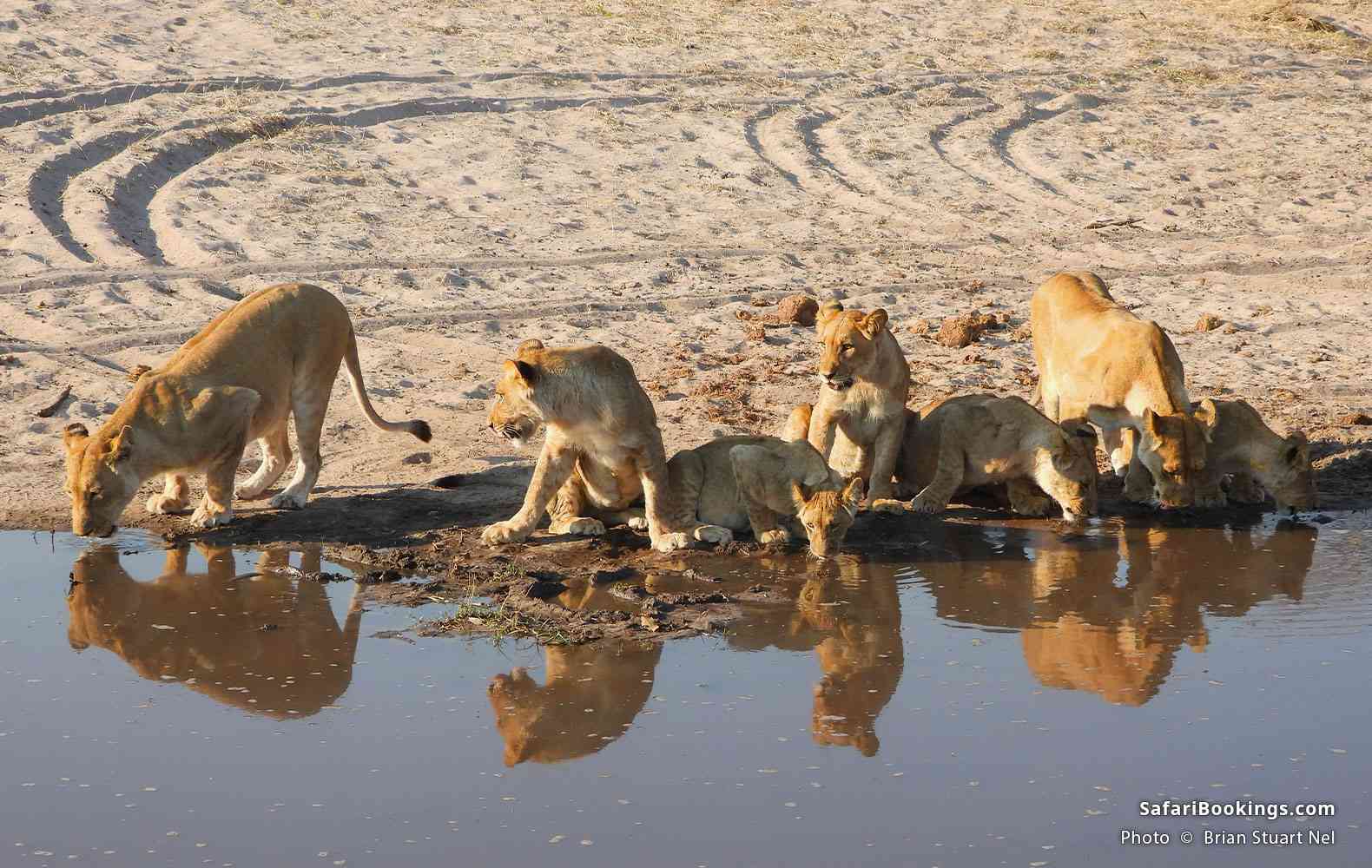 A pride of lions drinking from a waterhole in Chobe National Park
For seven months of the year, from April to October, Chobe is at its best. Given that four of those months (July to October) are the most expensive and busiest months of high season, then April to June begin to look especially good.
Again, there are some seasonal nuances. October can be really hot in Savuti, sometimes uncomfortably so, but it’s also when wildlife is most drawn to water and easiest to find.
November to March can be much quieter in Savuti, but it’s oppressively hot, rains are possible and wildlife can be more difficult to find. Another downside, apart from much-reduced wildlife numbers in Linyanti Marshes, is that animals don’t need the Chobe River quite so much. That’s because the waterholes are full across the park, so wildlife-spotting at Chobe Riverfront is not at its best. Then again, it’s a terrific time to be around the Savuti Marsh, and large numbers of baby animals mean predators are never far away.
The best weather – clear skies, mild temperatures – is between May and August.
Where is Chobe National Park and How Do I Get There?
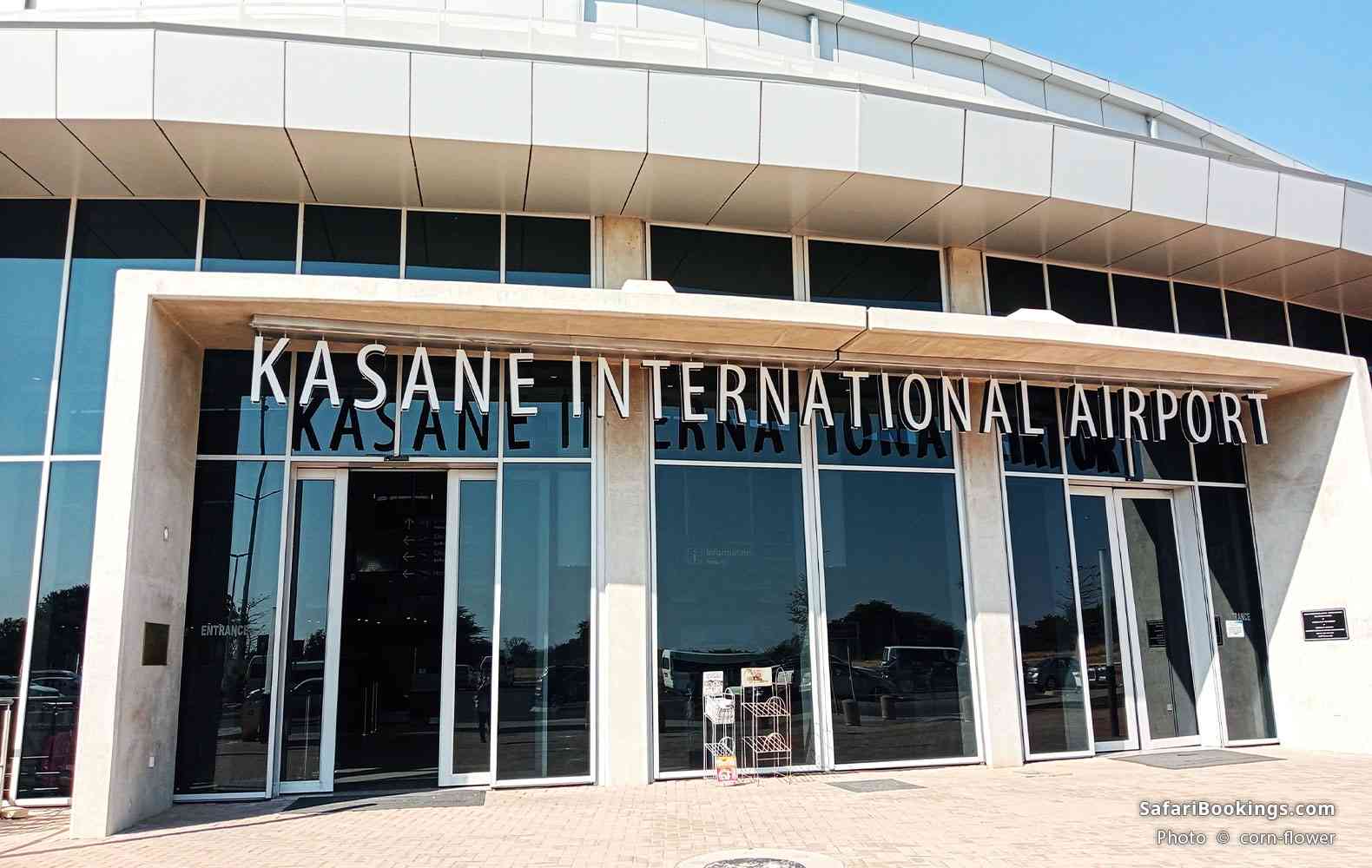 Kasane International Airport
Chobe National Park is in the far northeastern corner of Botswana, just a few miles from where four countries – Botswana, Namibia, Zambia and Zimbabwe – come together. Look at a map and you’ll see what I mean.
The closest town to Chobe is Kasane. The Chobe River runs right past the town, along the boundary of the park, and the Chobe Riverfront area of the park is less than an hour’s drive from the center of town.
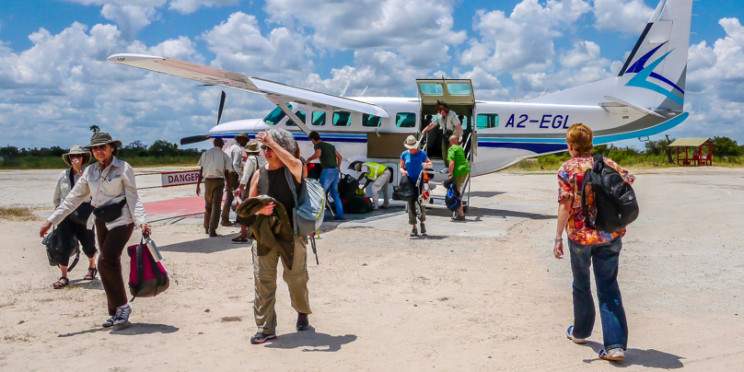
Lots of international flights from across East and southern Africa arrive in Kasane, although there aren’t quite as many choices as there are to Maun in Botswana’s northwest, which is the gateway to the Okavango Delta. Dozens of small planes leave Kasane’s airport every day to fly into the airstrips of Savuti and Linyanti, and even further into the Okavango Delta.
How I’d Structure a Chobe Trip
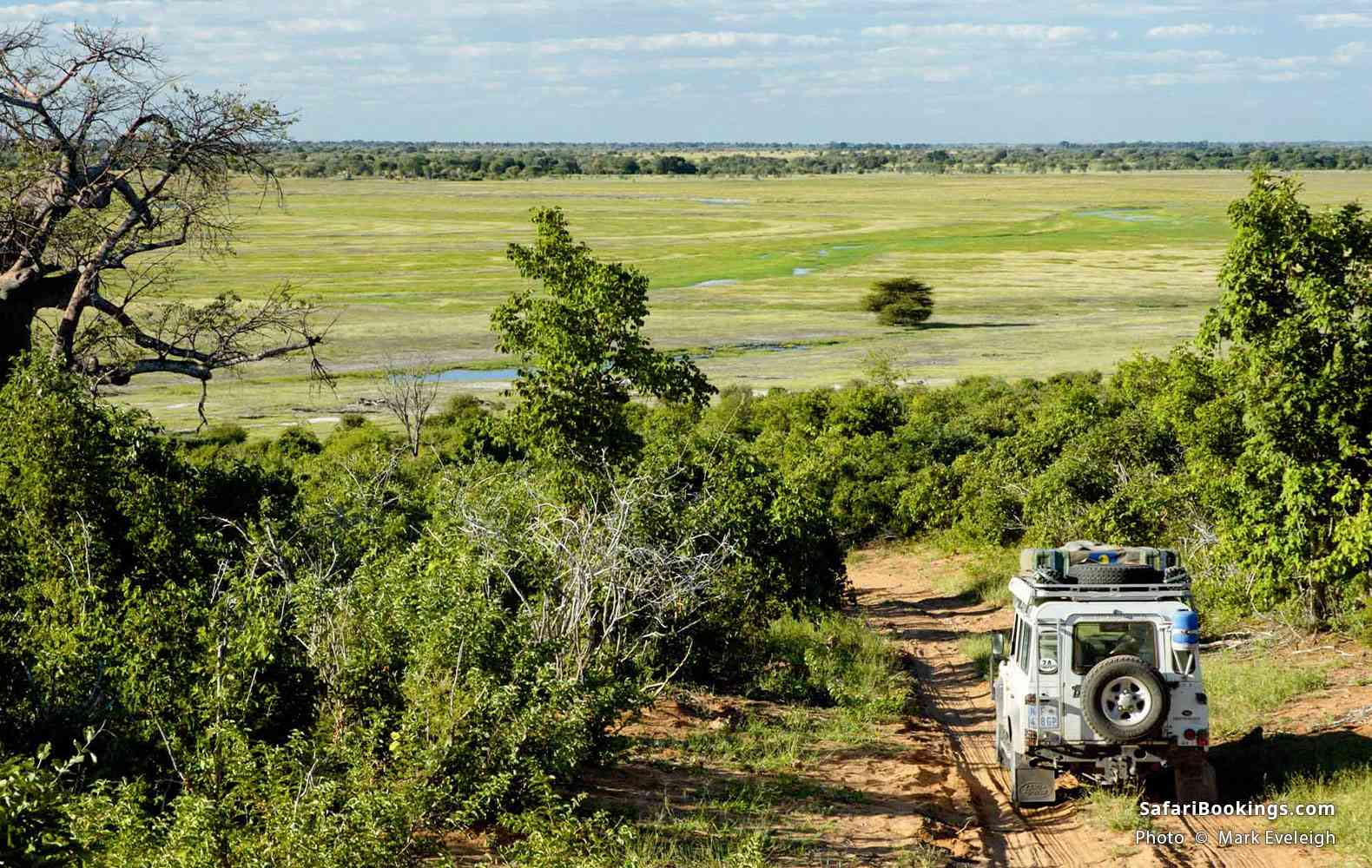 Safari vehicle beside the Chobe floodplains
My starting point with any safari to Chobe National Park is always a sunset self-drive game drive to Chobe Riverfront, and then I build the rest of my time around Savuti. The drive from Kasane to Savuti is very much a part of the adventure: you’ll cross part of the national park on a paved road, then the number of vehicles dries up, and don’t be surprised if an elephant and its herd cross the road in front of you. If I could have a week in Savuti, I would spend a night in a mobile camp – I especially love how &Beyond Savute Under Canvas does its mobile camps – followed by three nights in Camp Savuti, and then three days and nights self-driving.
For the latter, there’s so much to fill my days, from the Savuti Marsh down south to rocky outcrops like Gobabis Hill or the shores of the Savuti Channel. I never quite understand why more game drives don’t head out into the plains west of the airstrip – this is where I found my African wild dog den.
It would depend on the time of year, but if I had extra time, I would probably head up towards Linyanti Marshes, where King’s Pool Camp is one of my favorite places to stay in southern Africa. Three days by the water in the spectacular suites is my ideal African getaway.
Want To Visit Chobe?
Click on the button below to compare Chobe tours offered by top-rated tour operators.
By Anthony Ham Anthony is a renowned Africa expert and author of the Lonely Planet guide to Botswana and Namibia.
More About This Author



 Subscribe to our newsletter
 Follow us on Instagram
Safari Tours to Botswana
-
![7-Day Land, River and Falls Safari]()
7-Day Land, River and Falls Safari
$3,270 to $4,515 pp (USD)
Botswana & Zimbabwe: Private tour
Mid-range Lodge & Tented CampYou Visit: Maun (Start), Moremi GR (Okavango Delta), Chobe Riverfront (Chobe NP), Victoria Falls, Victoria Falls Airport (End)

Indigo Safaris
4.9/5 – 236 Reviews

-
![10-Day Botswana Highlights All Inclusive]()
10-Day Botswana Highlights All Inclusive
$3,670 to $6,356 pp (USD)
Botswana: Private tour
Mid-range Lodge & Tented CampYou Visit: Maun (Start), Okavango Delta, Moremi GR (Okavango Delta), Kazuma FR, Kasane Airport (End)
African Family Safaris
5.0/5 – 30 Reviews
-
![6-Day Delta Discovery]()
6-Day Delta Discovery
$4,541 to $7,484 pp (USD)
Botswana: Private tourLuxuryLodge & Tented Camp
You Visit: Maun (Start), Moremi GR (Okavango Delta), Okavango Delta, Maun (End)
Safari Online
5.0/5 – 146 Reviews