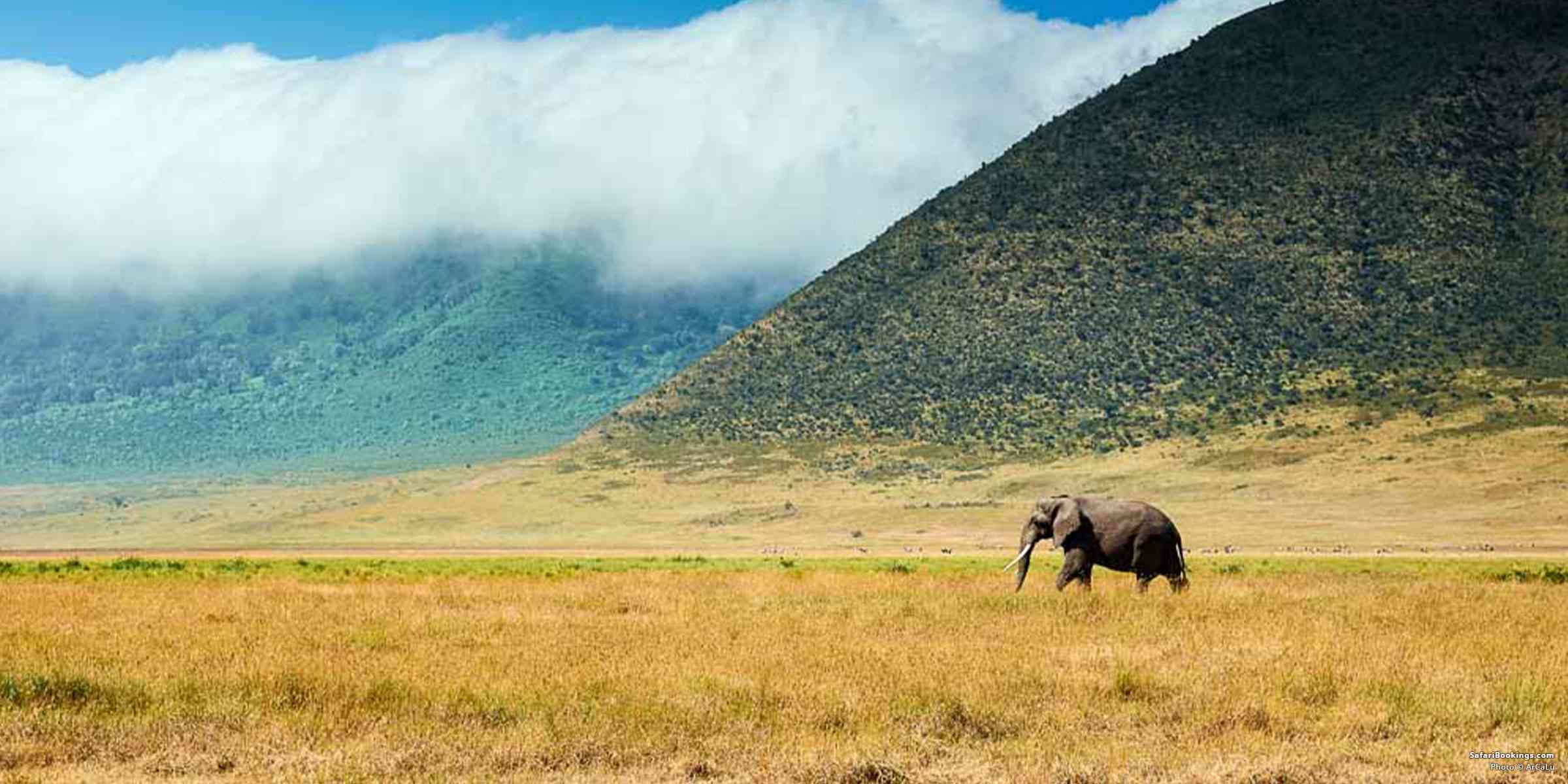
Guide to Visiting Ngorongoro Crater – All You Need To Know
 By Anthony Ham
 Anthony is a renowned Africa expert and author of the Lonely Planet guidebook to Tanzania.
There’s nowhere on Earth quite like Ngorongoro in Tanzania, nowhere that captures that coming together of iconic natural beauty and an exceptional wildlife experience. Descending down into this ancient volcanic caldera at dawn can feel like returning to the Earth’s first morning, to a lost, green world of wildlife roaming free without people. With its populations of lion and black rhino, elephant and flamingo, zebra and spotted hyena, all set against the backdrop of steep volcano walls, dense forest and a salt lake shimmering to the horizon, 260km²/100mi² Ngorongoro Crater is quite simply one of the best days you can have on safari.
Why Should I Visit Ngorongoro Crater?
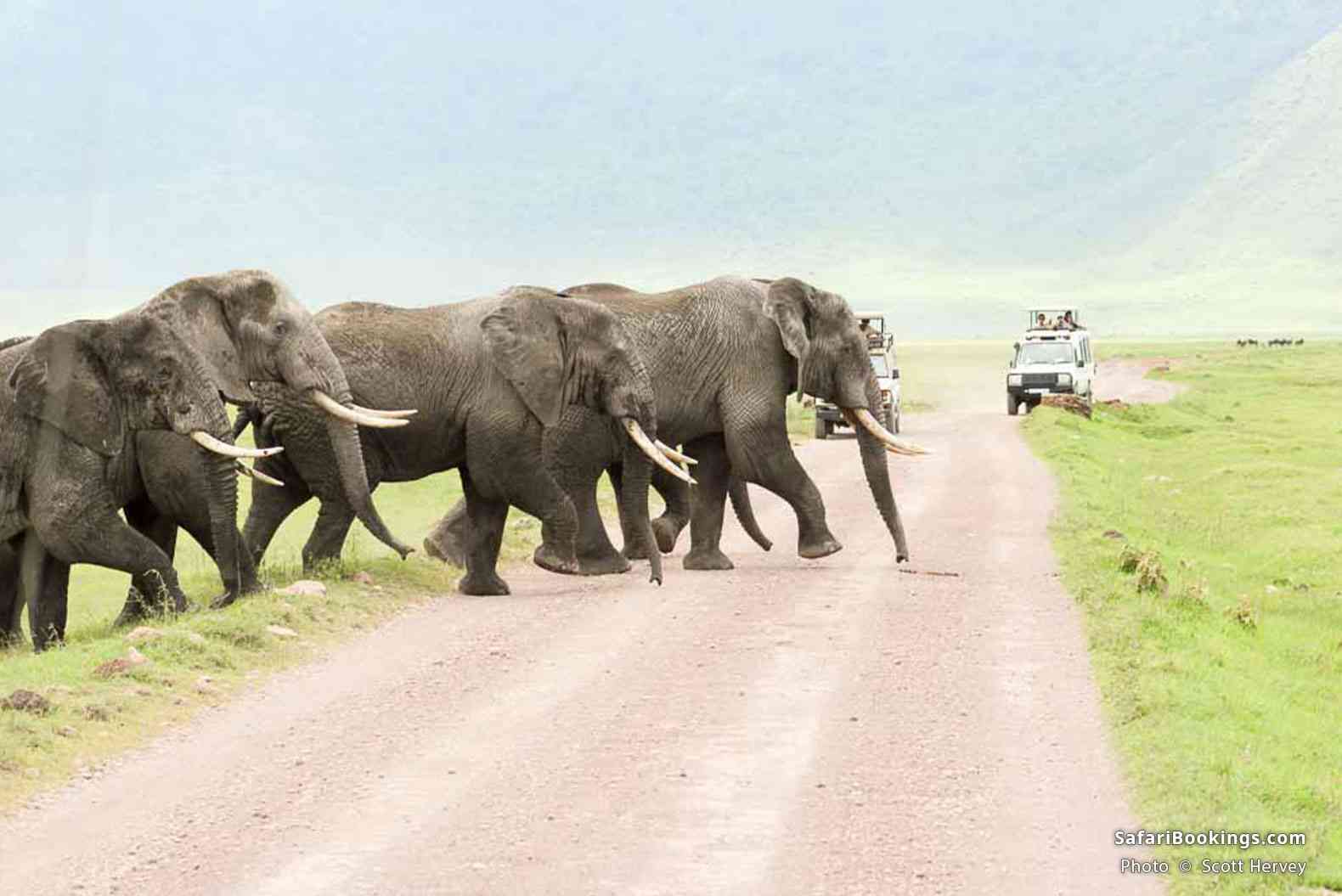 Elephants crossing the road in front of safari vehicles in Ngorongoro Crater
Ngorongoro has a special kind of magic. Other destinations have superb landscapes, and some of these even have outstanding wildlife. But the unusual nature of Ngorongoro Crater – an enclosed world inside a volcano where wildlife thrives – adds an entirely different dimension. Although the wildlife you’ll see is completely wild, most species in Ngorongoro live out their lives within a defined and easy-to-explore area, ensuring that sightings of most of the crater’s wildlife are almost guaranteed.
In this vast natural amphitheater – the caldera’s steep walls are between 400m/1,300ft and 600m/1,970ft high, and the crater floor is around 19km/11.8mi across – of astonishing natural beauty, those sightings have the potential to be among the highlights of any lifetime spent on safari. This is a place where the eternal dance between predator and predator, and between predator and prey, is everywhere on show, where every day lions and hyenas stalk wildebeest, buffalo and zebra, then go to war over the results. And it is a place where elephants move like cloud shadows through Lerai Forest, where hippos rule Hippo Pool.
In a world where human settlements increasingly crowd Africa’s wild spaces, Ngorongoro Crater is like the safaris of old. Every night, it empties of people and its wild animals are left in peace, free from the complications of a shared land. Also, for the black rhinos, Ngorongoro is a precious refuge from a world intent on their destruction.
Where Is Ngorongoro Crater Located?
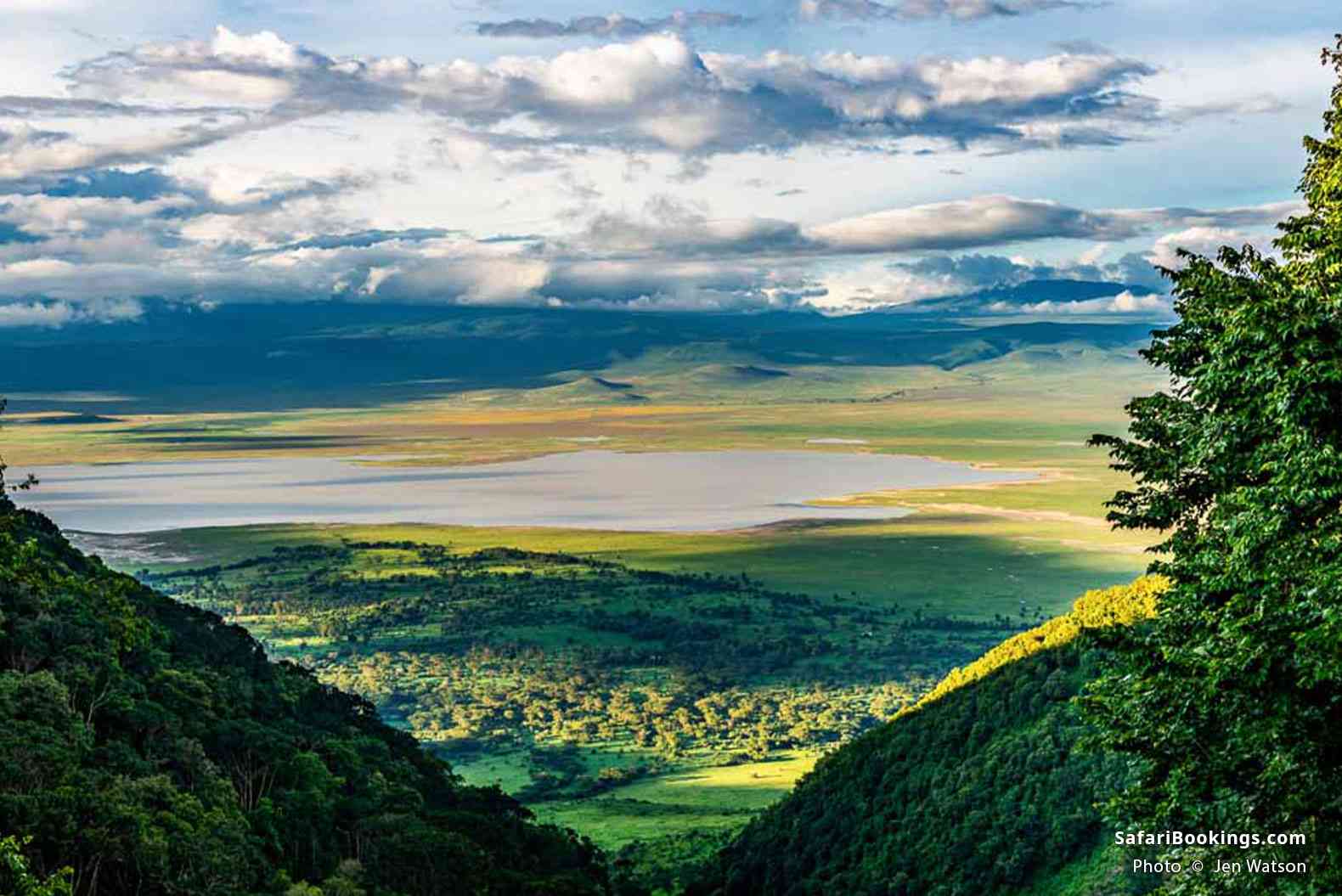 View over the crater floor from the rim
Ngorongoro Crater has another irresistible appeal: its location. It lies in northern Tanzania, in an area known as the Crater Highlands, which consists of a series of volcanoes and their calderas (collapsed volcanoes). These high mountains came into being during the geological upheaval that saw Africa’s Great Rift Valley form and threaten to tear the continent apart. Much of these highlands, including Ngorongoro Crater, belong to the 8,292km²/3,202mi² Ngorongoro Conservation Area, which is jointly administered by the Tanzanian government in an uneasy alliance with local Maasai communities.
Ngorongoro Crater also lies along Tanzania’s Northern safari circuit, which begins in the northern city of Arusha and is the most popular safari route for travelers to Tanzania. Positioned between Lake Manyara and Serengeti National Parks, it slots nicely into well-traveled safari routes. Put simply, it couldn’t be easier to visit.
How Do I Get to Ngorongoro Crater?
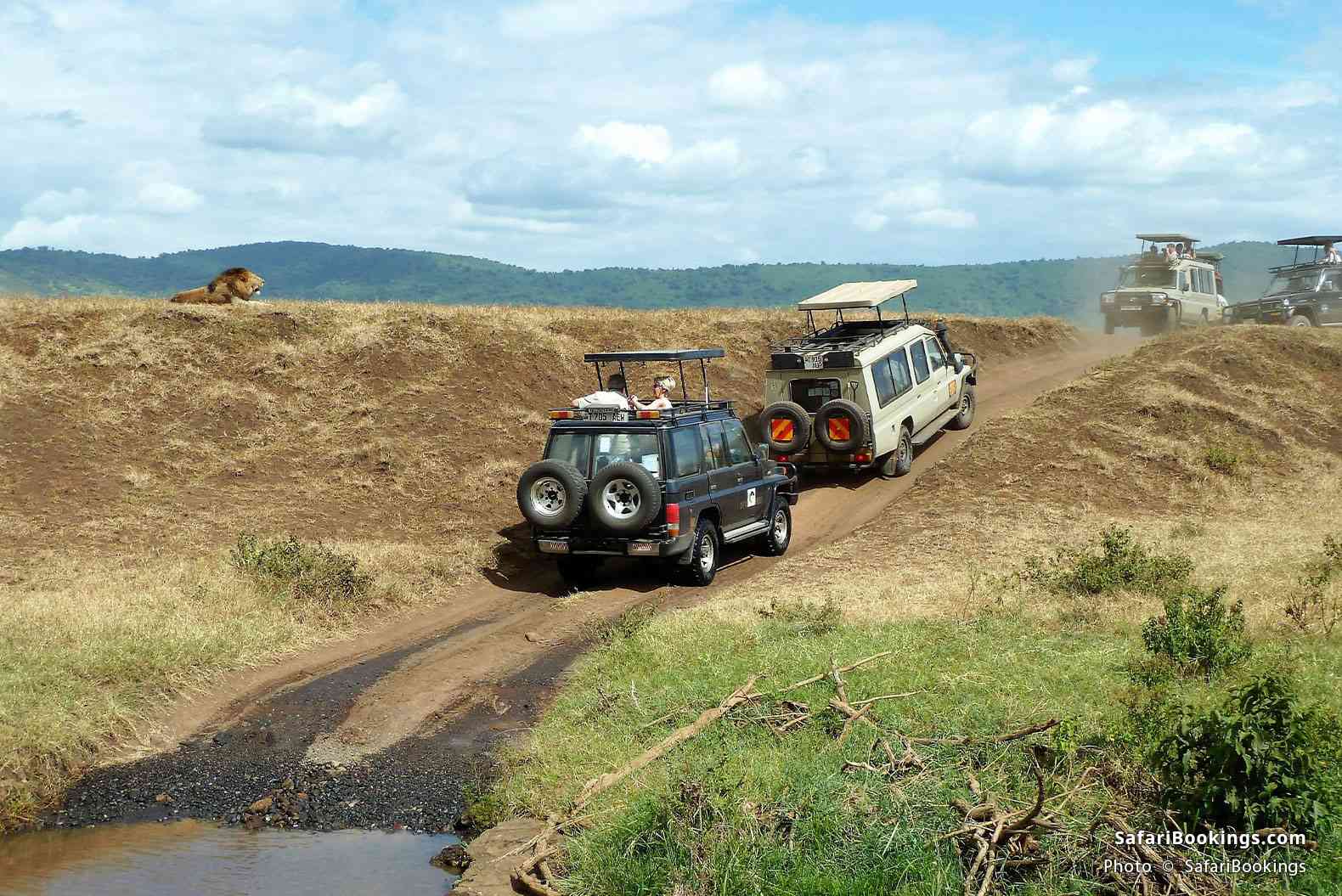 Vehicles crossing the Ngorongoro Crater rim
Most travelers fly into Arusha’s Kilimanjaro International Airport (JRO). Ngorongoro is a roughly three-hour drive (180km/112mi) along a paved road from Arusha, and most travelers visit as part of a trip along Tanzania’s Northern safari circuit. It’s also possible to fly from Arusha’s smaller Arusha Airport (ARK) to one of the airstrips inside Serengeti National Park and then drive (or fly) to Ngorongoro from there.
How Do I Get Around Ngorongoro Crater?
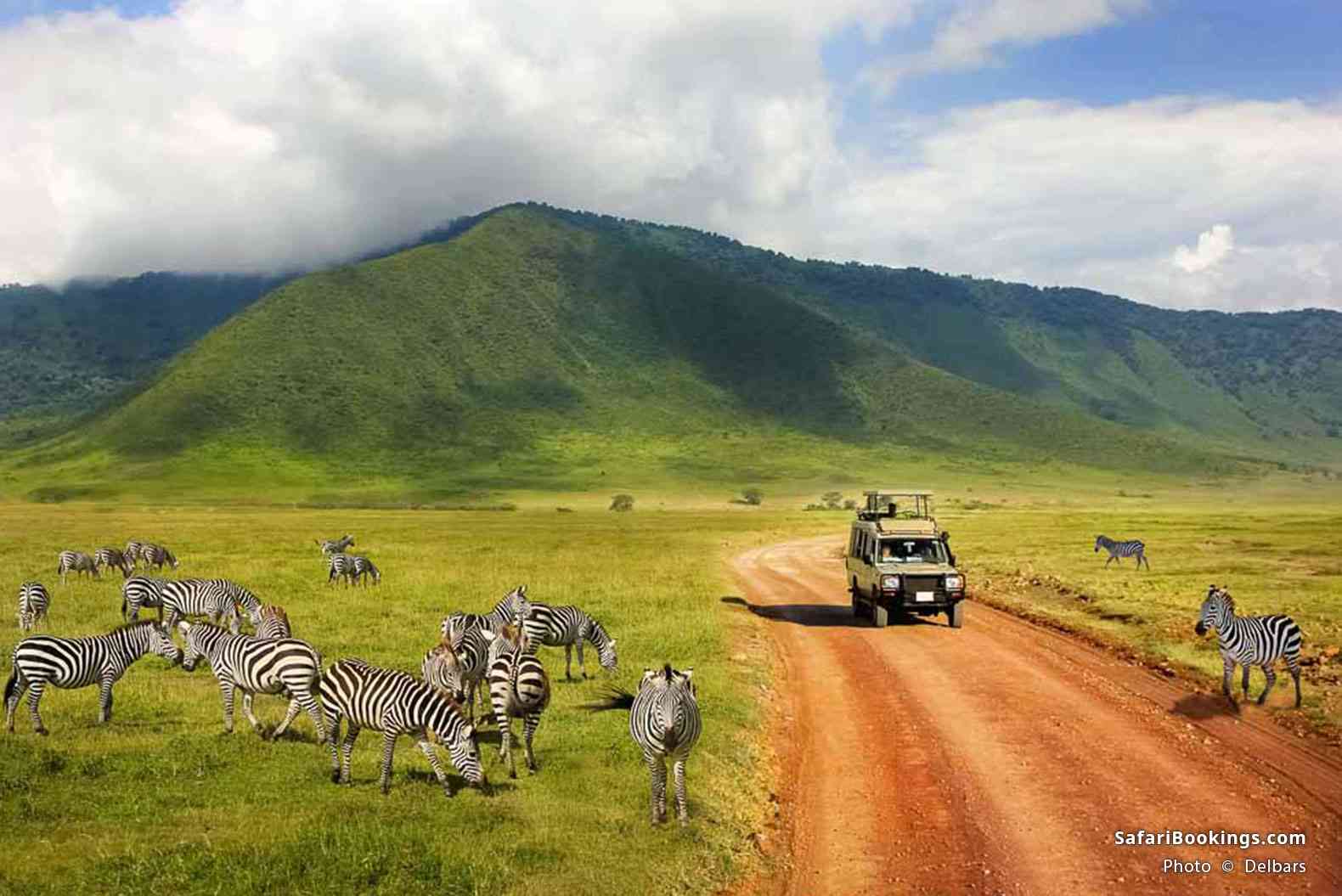 Safari vehicle surrounded by plains zebra in Ngorongoro Crater
Once at Ngorongoro, there are two main areas, and both are essential to the experience of visiting. For both, there is no meaningful public transport – you’ll need your own wheels or you’ll need to join a tour.
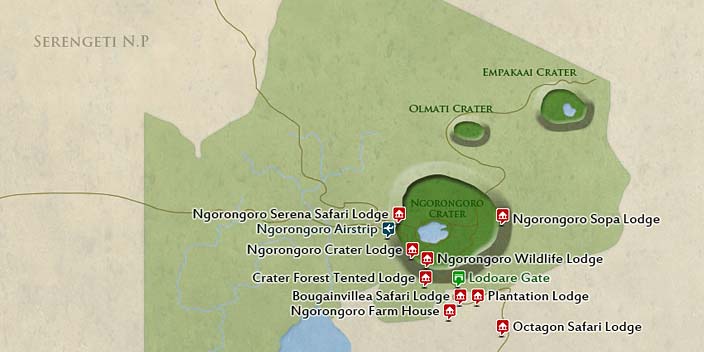
The crater rim lies along the road between Lake Manyara National Park (or the provincial town of Karatu) and Serengeti National Park. After entering the Ngorongoro Conservation Area, upon paying conservation and park fees through Loduare Gate – most travelers reach Ngorongoro along this road – you drive through a steep paved road that spirals through a dense tangle of high-altitude rainforest. Where the road reaches the summit, the landscape suddenly opens out at the crater viewpoint with its fabulous views down into the crater. The crater rim is also where you find hotels, tented camps, government campsites and Maasai villages. Although the crater rim has its share of wildlife, including buffalo and leopard, the presence of people means that most animals remain hidden.
The crater floor is another world altogether – no accommodations, no Maasai villages. Most mornings, a bank of clouds rises from the crater and up over the rim, like waves breaking on an ocean shore. Every morning at around the same time, right around sunrise, safari vehicles take the narrow dirt roads down into the crater to begin their day of exploration. Most stop for lunch close to Hippo Pool, and around midafternoon most vehicles are climbing their way back up to the rim. By nightfall, Ngorongoro’s crater floor has again emptied of people and fallen quiet.
What Wildlife Can I Expect To See?
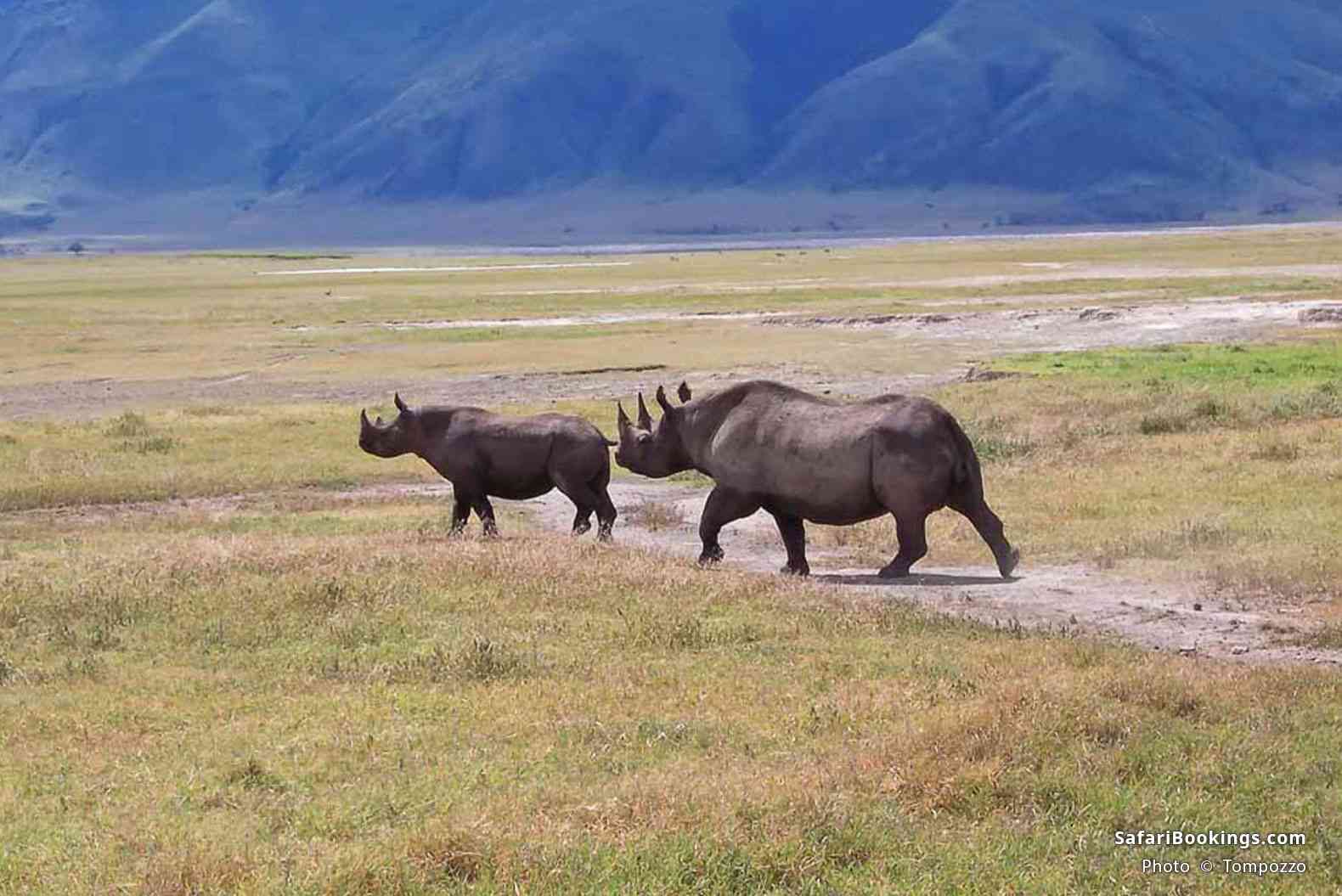 Black rhino with young in Ngorongoro Crater
Sightings of spotted hyena, wildebeest, buffalo, zebra and hippo are all mainstays of any safari day down in the crater. Ngorongoro Crater also has the world’s densest concentrations of lions in Africa, it’s the easiest place in Tanzania to see black rhinos, and among the healthy elephant numbers are numerous old bulls with massive tusks. With leopard also a possibility, Ngorongoro Crater is arguably the best place in Tanzania to see the Big Five (lion, leopard, elephant, buffalo and rhino).
Beyond these signature species, the crater also allows you to tick off a number of species that may be difficult to see elsewhere. Black-backed jackal is common here, as it is in many East African parks, but sightings of the lesser-known golden jackal are also possible. Bat-eared foxes and serval are two other crater prizes that always bring great pleasure to those who see them.
Birding is another Ngorongoro Crater highlight, with more than 500 species recorded here (including up on the rim). The largest tally of bird species occurs when migratory species are present, which equates to around half the year – most arrive from Europe and North Africa around November and remain until their departure in April. Pink flamingos are routinely seen in the crater’s Lake Magadi – their dense clusters of pink against the salty-white lake surface are distinctive standouts of the view from the crater rim on a fine day. With patience and a good set of binoculars, you’ll also see ducks, herons, storks and waders around the lake shore. Out on the grasslands, look for ostrich, grey crowned crane, kori bustard, secretary bird and rosy-throated longclaw.
When Is the Best Time To Visit?
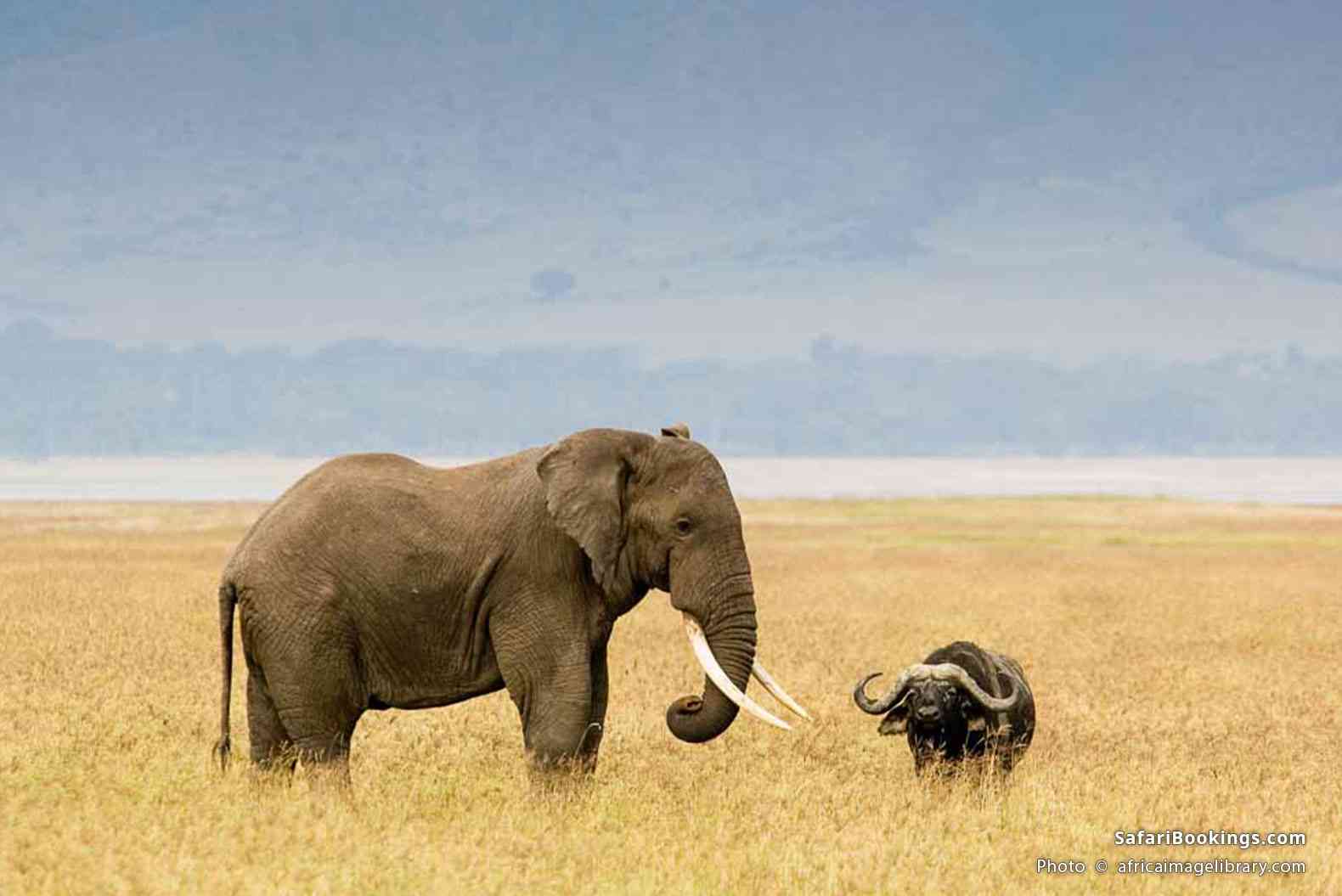 Elephant with a buffalo in Ngorongoro Crater
There is no bad time to visit Ngorongoro, although the experience does vary with the seasons.
The most popular time to visit is June to October, which coincides with peak safari season across northern Tanzania. Although the crater is usually busy with safari vehicles at this time and accommodations prices are at their highest, it’s a wonderful time to be here. One reason for this is that the grass tends to be shorter in this, the Dry season, which makes it easier to see animals. At this time of year, you’re also more likely to enjoy the crater under clear skies. Remember, however, that the crater rim ranges between 2,200m/7,200ft and 2,400m/7,900ft above sea level and nights up on the crater rim (and early mornings down on the crater floor) can be bitterly cold.
Although rain is more likely than at other times, there are advantages to visiting Ngorongoro from November to May. At this time, the landscape is usually cast in brilliant shades of green, and this is easily the best time for birding with a full list of migratory species in residence. Visitor numbers (and accommodations prices) also tend to be lower, especially in the low-season months of April and May.
Do I Need To Take a Tour To Visit Ngorongoro Crater?
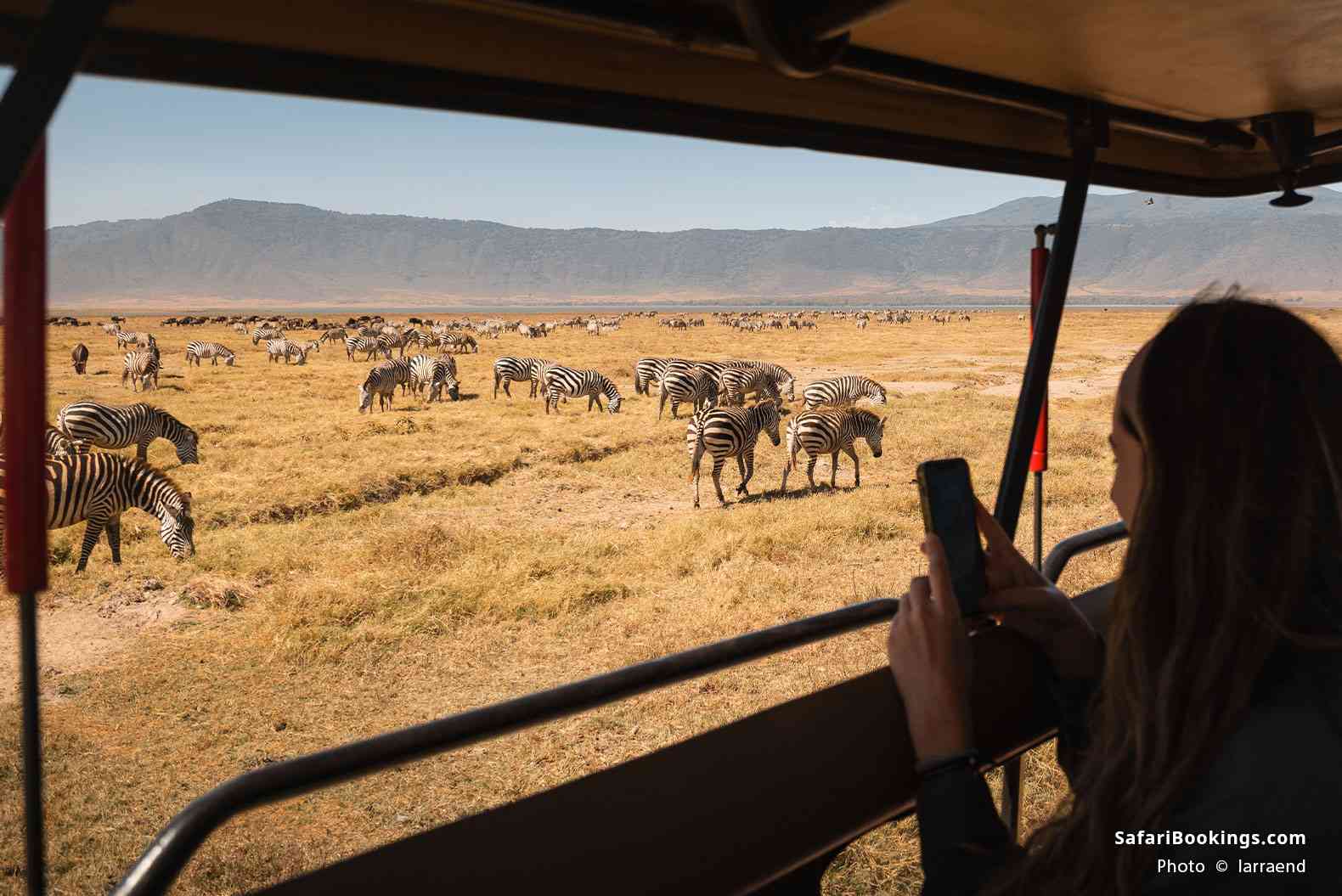 Traveler taking pictures of zebras grazing in the Ngorongoro Crater
Although most visitors visit Ngorongoro Crater as part of a tour along Tanzania’s Northern safari circuit, it’s not a requirement of visiting. Plenty of independent travelers – either on self-drive safaris or in a rented safari vehicle with driver – visit Ngorongoro Crater, albeit with one exception: to descend into the crater, you must be accompanied by an accredited guide. If you’re on an organized tour, your tour company will make the necessary arrangements for a guide. If you’re self-driving, you may need to arrange to be accompanied by a guide at the Ngorongoro Conservation Area gate the day before.
How Many Days Should I Stay?
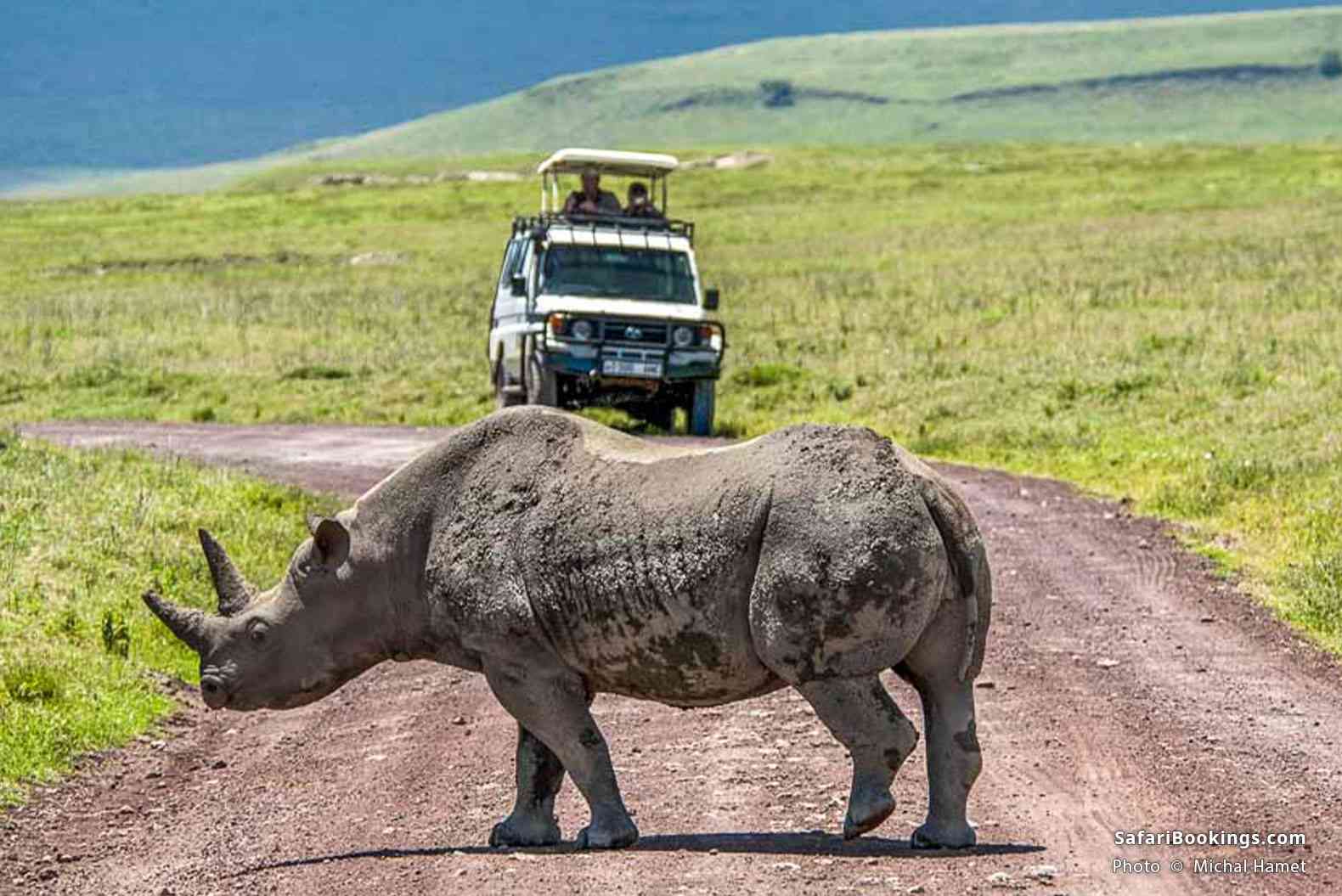 Black rhino on the road in front of a safari vehicle in Ngorongoro Crater
Most travelers arrive in Ngorongoro the day before they plan to visit the crater. This is ideal because it puts you in an excellent position to visit the crater early the next morning. In theory, you’re allowed six hours down in the crater, although this is rarely enforced and most vehicles stay down for closer to seven or eight hours. Upon returning to the crater rim, depending on the time, you can either sleep another night up on the rim, or continue on toward the Serengeti – and other attractions such as Ndutu and Olduvai (Oldupai) Gorge – or Lake Manyara.
Given the high cost of visiting the crater floor, most travelers only spend one day down in the crater. Other than cost, there is no reason you can’t visit on a second or even third day.
Is Ngorongoro Crater Safe To Visit?
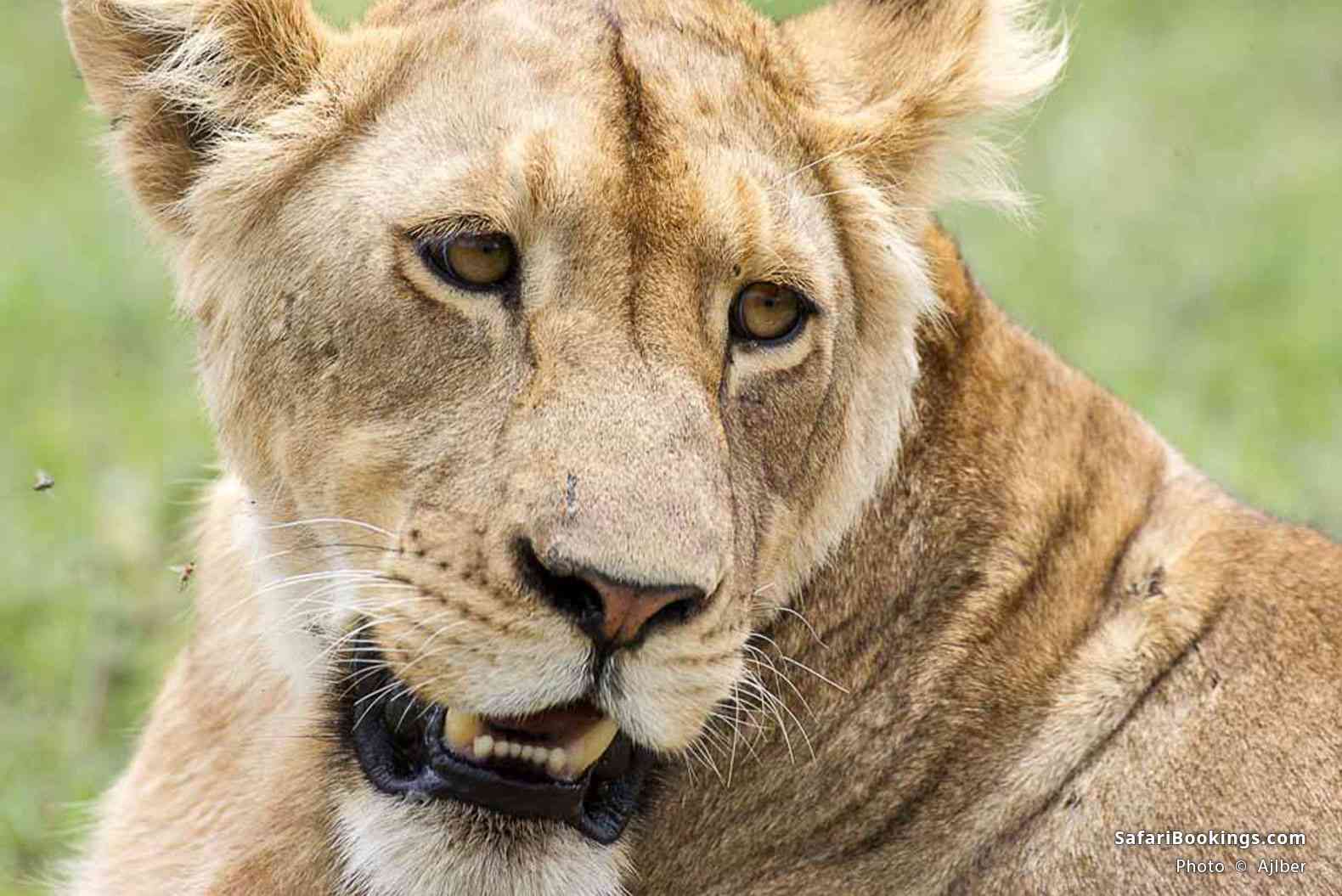 Lioness in Ngorongoro Crater
Ngorongoro Crater is a safe destination. Crime is almost nonexistent and provided that you follow the instructions of your guide at all times and remain in your vehicles while on the crater floor you have nothing to fear from the wildlife in the crater. The elephants here are accustomed to safari vehicles and generally relaxed in their presence.
You are allowed out of your vehicle at Hippo Pool (a popular lunch spot), but be wary at the Hippo Pool of straying too close to the water’s edge, where hippos lurk. And keep your eyes on the sky – brazen black kites are known to swoop down to pluck people’s lunches from their hands.
Even if mosquitoes have been a problem elsewhere on your trip, Ngorongoro’s altitude and cooler temperatures make this the one place where you can relax and where you shouldn’t need to use mosquito repellent.
How Can I Avoid the Crowds in Ngorongoro Crater?
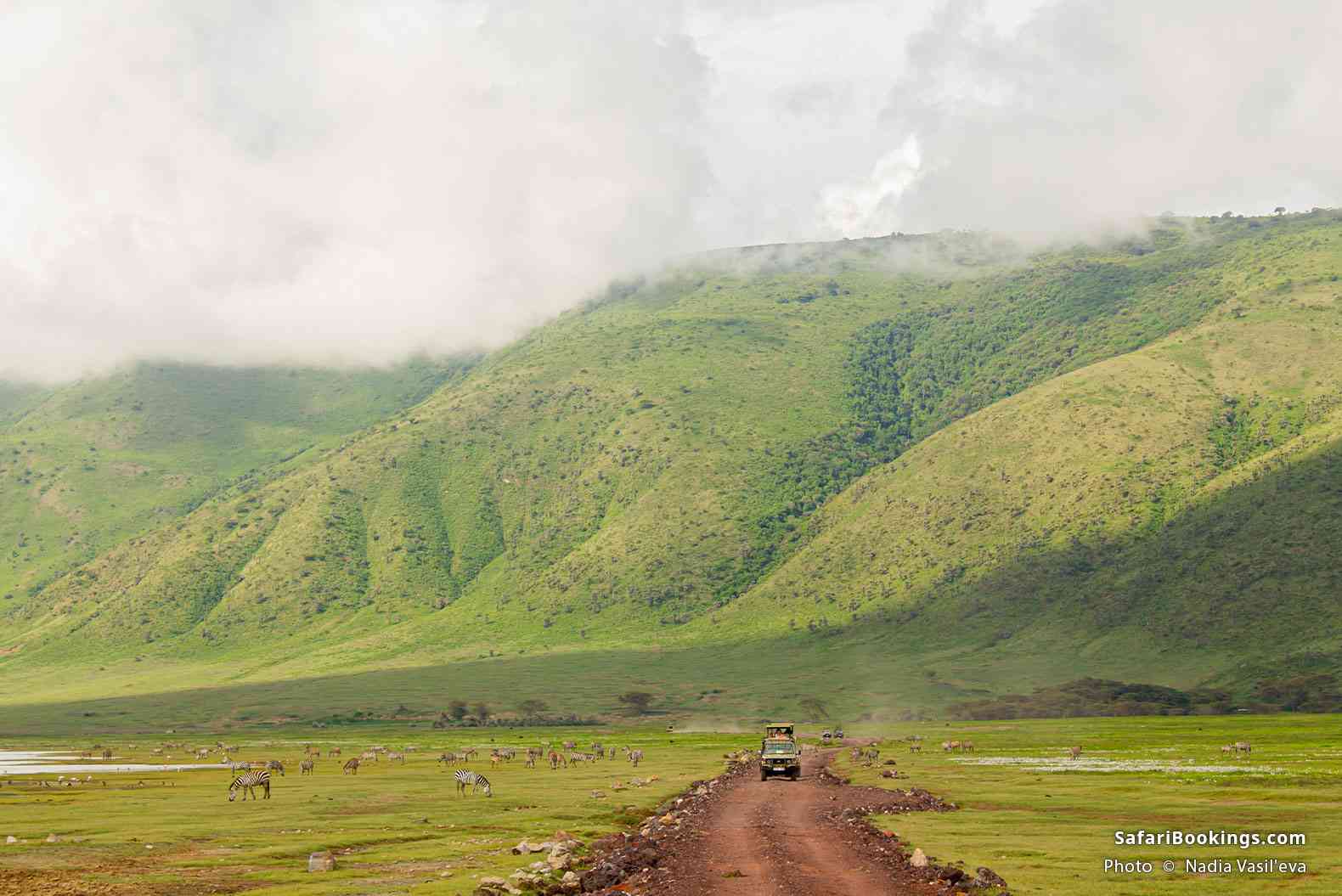 Vehicle driving past zebras in Ngorongoro Crater
For much of the year, Ngorongoro is crowded with safari vehicles and there is little you can do to avoid them. Getting up super early and being first in the queue to drive down to the crater floor will give you something of a head start ahead of other vehicles. There is something special about being the first to arrive on the crater floor on any given day. But after an hour at most, that advantage will have disappeared.
Visiting during the low season, especially in April and May, is another possibility. Although you run the risk of encountering rainy conditions, visitor numbers are generally lower.
For all that, although sightings of lions and rhinos can be crowded with vehicles, the crater rarely feels crowded at other times. Most of those down in the crater on the day you visit will be staying in one of the hotels or camps up on the crater rim. Given that there are only a limited number of accommodations, numbers on busy days may be lower than you might imagine.
What Are the Best Places To Stay?
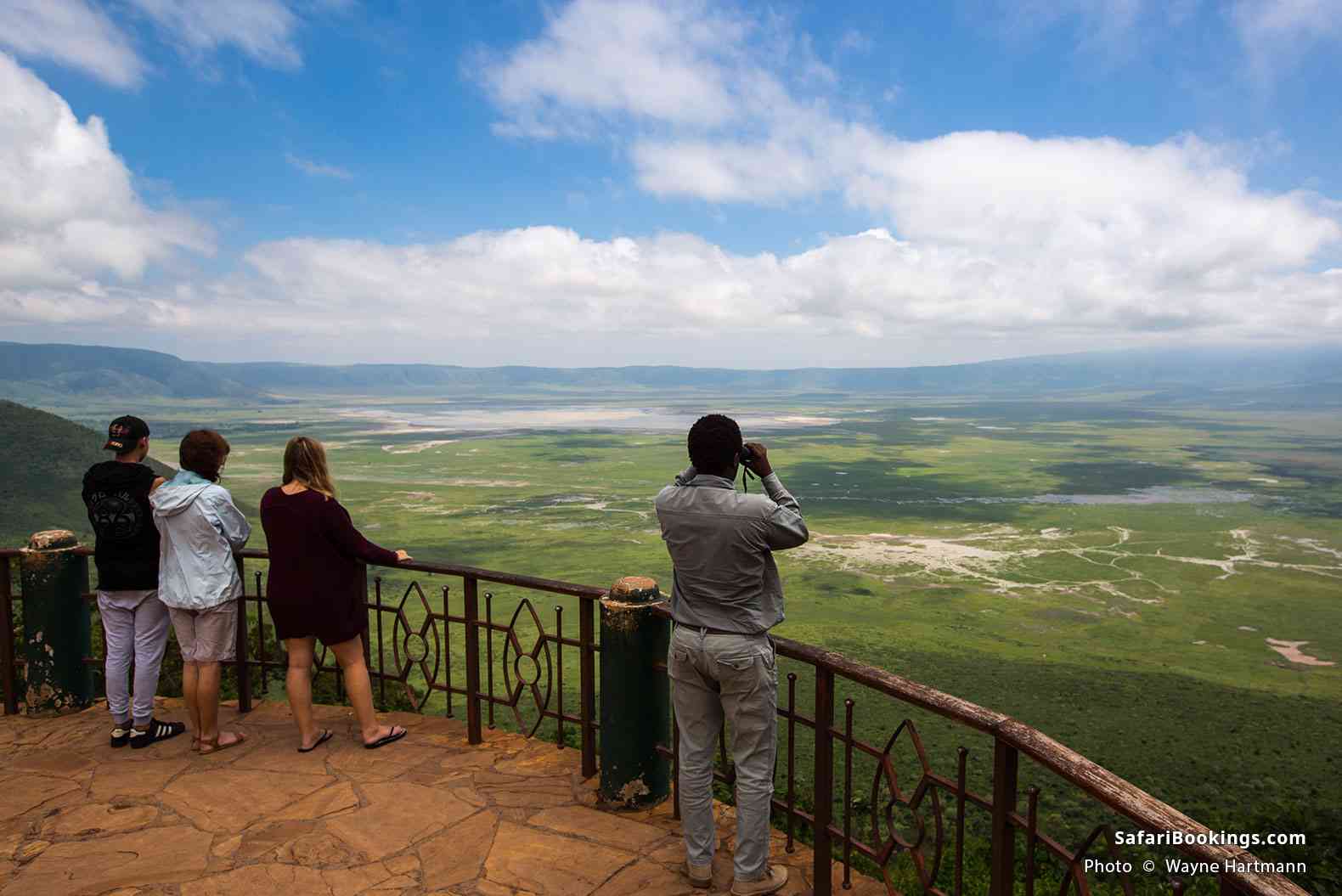 Travelers looking over the Ngorongoro Crater from a lodge terrace
There are some fabulous five-star accommodations along the crater rim, and many of these have uninterrupted views across the crater. This combination of luxury and views is among the best anywhere in East Africa. Budget accommodations are scarce, although there are campsites, mobile campsites, and one or two options a little back from the crater rim where prices tend to be lower.
Another (cheaper) option is staying in Karatu, but if visiting Ngorongoro from there, you’ll have to set out very early to reach the gate when it opens at sunrise. It also means you won’t descend until an hour later than those vehicles who started the day up on the crater rim.
What Facilities Are at Ngorongoro Crater?
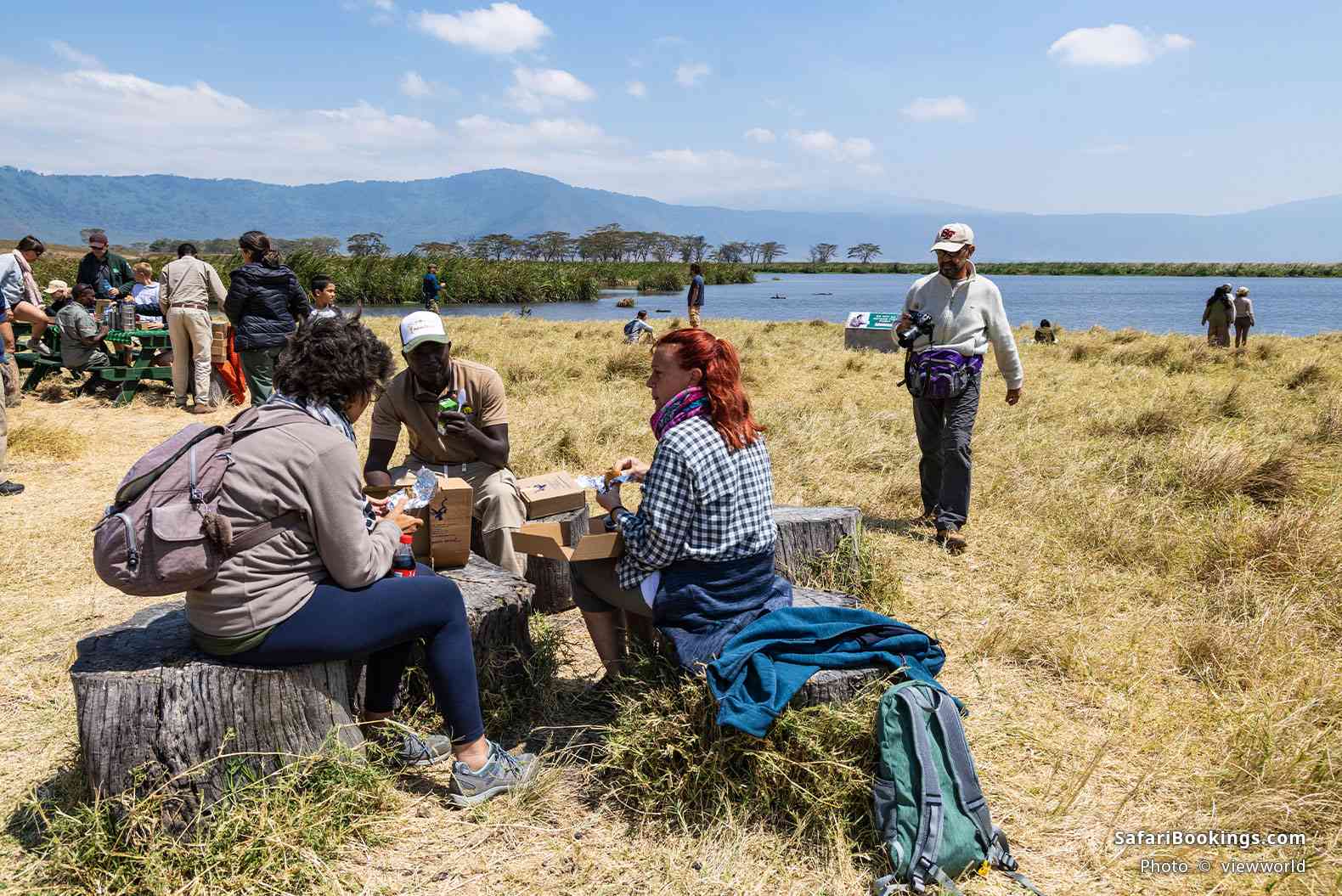 Lunch during a safari in the Ngorongoro Crater
Down in the crater, the only facilities are the simple toilets at Hippo Pool, where most visitors stop for a picnic lunch.
Elsewhere, there are public toilets at Loduare Gate and other Ngorongoro Conservation Area entry points. And there is a small handful of extremely basic stores selling warm soft drinks, local cigarettes and stale biscuits up on the crater rim. For other supplies, stock up in Karatu. Otherwise, the only facilities are in the lodges and camps.
There is a filling station at the Ngorongoro Conservation Area headquarters, just back from the crater rim.
Otherwise, fill up in Karatu (16km/10mi from Loduare Gate). From the crater to the entrance to the Serengeti (where there is a filling station) is close to 196km/122mi. The nearest ATM or currency exchange office is in Karatu.
What Are the Costs of Visiting Ngorongoro Crater?
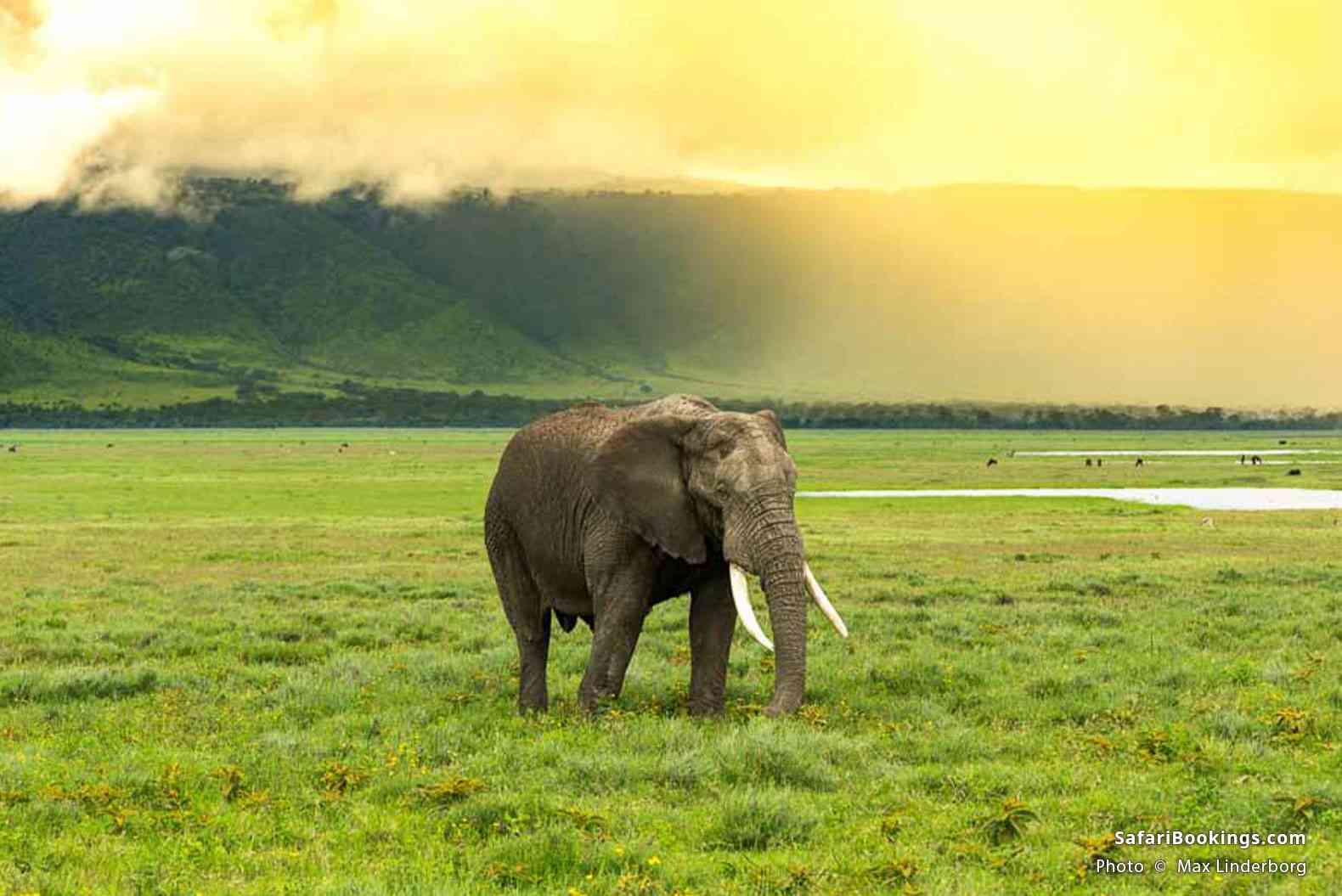 Elephant bull walking in the Ngorongoro Crater
A visit to Ngorongoro Crater isn’t cheap, and there are four main costs specific to Ngorongoro (in addition to the cost of your overall tour or rental vehicle and accommodations). If traveling on a tour, always check which of the following additional expenses are included in the cost of your safari.
Want To Visit Ngorongoro Crater?
Click on the button below to compare Ngorongoro tours offered by top-rated tour operators.
By Anthony Ham Anthony is a renowned Africa expert and author of the Lonely Planet guidebook to Tanzania.
More About This Author

 Subscribe to our newsletter
 Follow us on Instagram
Safari Tours to Tanzania
-
![4-Day Serengeti , Ngorongoro and Materuni Waterfalls]()
4-Day Serengeti , Ngorongoro and Materuni Waterfalls
$767 pp (USD)
Tanzania: Shared tour (max 7 people per vehicle)BudgetCamping
You Visit: Arusha (Start), Serengeti NP, Ngorongoro Crater, Materuni Waterfalls (Highlight), Arusha (End)

Go Serengeti African Tours
4.9/5 – 651 Reviews

-
![3-Day Serengeti National Park & Ngorongoro Best Safari]()
3-Day Serengeti National Park & Ngorongoro Best Safari
$1,331 pp (USD)
Tanzania: Private tour
Mid-range Lodge & Tented CampYou Visit: Arusha (Start), Serengeti NP, Ngorongoro Crater, Arusha (End)
Serengeti Silence
5.0/5 – 147 Reviews
-
![9-Day Unique Honeymoon Safari & Zanzibar Beach Vacation]()
9-Day Unique Honeymoon Safari & Zanzibar Beach Vacation
$3,656 to $4,016 pp (USD)
Tanzania: Private tourLuxuryLodge & Tented Camp
You Visit: Arusha (Start), Tarangire NP, Lake Manyara NP, Ngorongoro Crater, Serengeti NP, Nungwi (Zanzibar), Zanzibar Airport (End)
African Big Cats Safaris
5.0/5 – 728 Reviews