Guide to Visiting Tarangire National Park – All You Need To Know
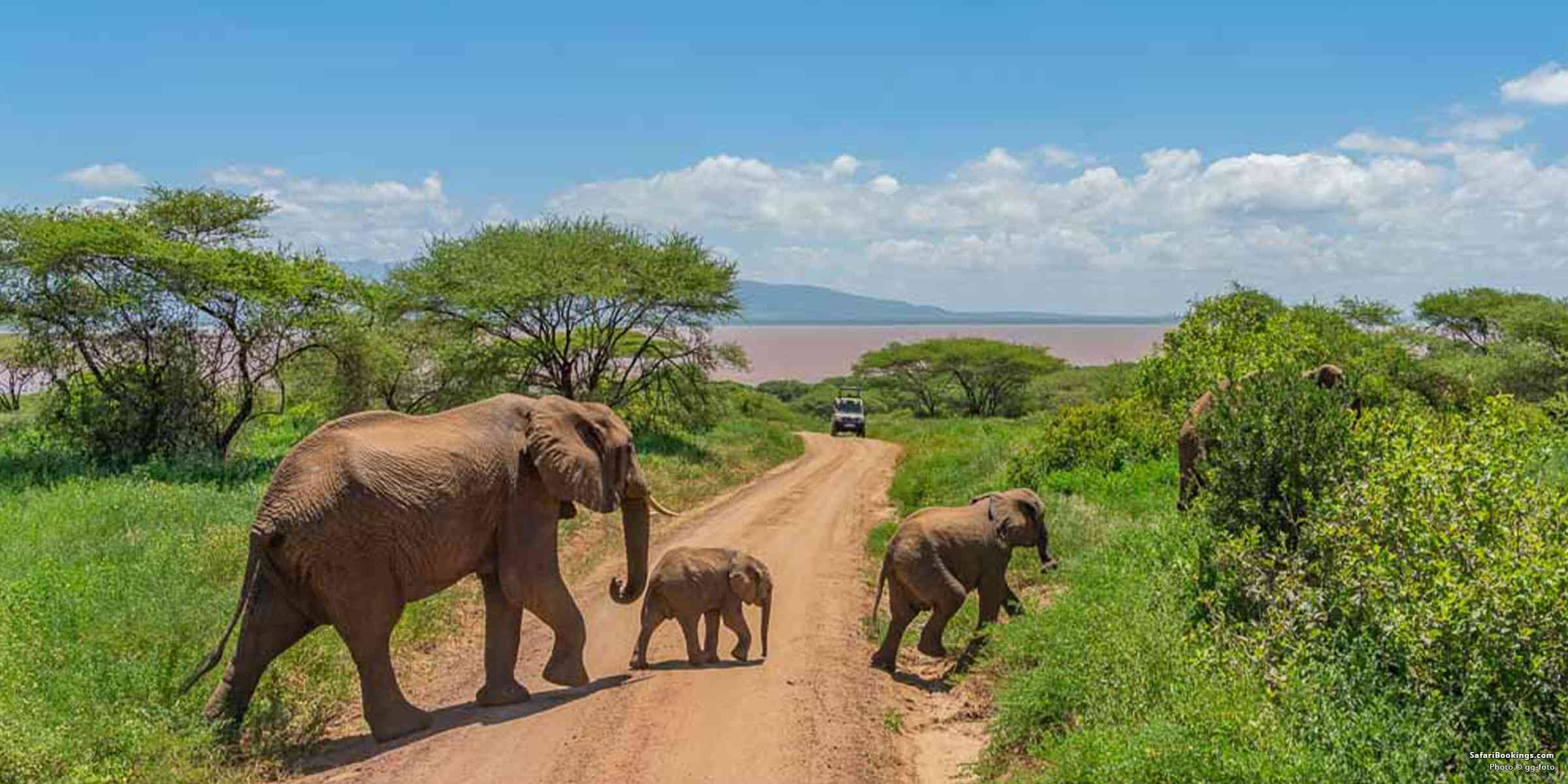
Tarangire National Park is the least publicized of the four main conservation areas that comprise Tanzania’s peerless Northern safari circuit. But while it lacks the spectacular scenery of Ngorongoro Crater, the migratory herds that sweep through Serengeti National Park, or the tree-climbing lions associated with Lake Manyara National Park, Tarangire is a thoroughly worthwhile addition to any safari. Among other things, this 2,850km²/1,100mi² park provides some of the best elephant viewing anywhere in East Africa. It is also notable for its giant baobab trees, healthy big cat populations and exceptional birdlife.
Why Should I Visit Tarangire National Park?
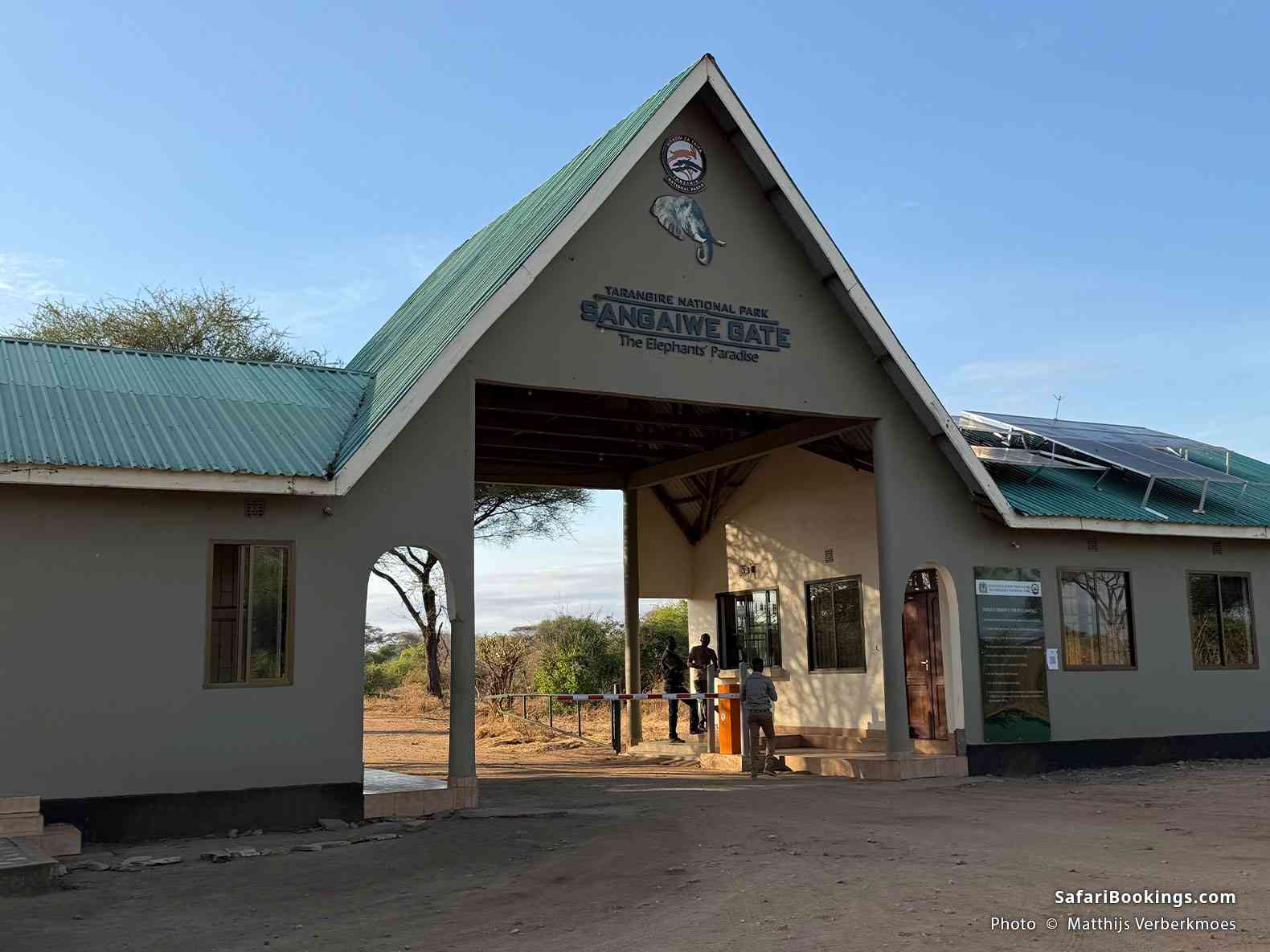 Sangaiwe Gate
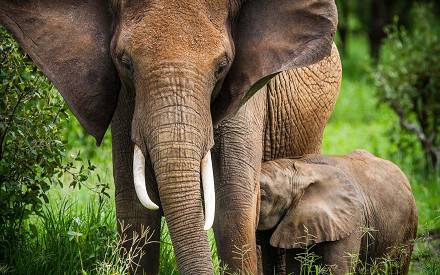
Tarangire is a great all-round safari destination, whether visited on its own or as part of a safari covering other parks on the Northern circuit. It is the best place to get close to elephants – lots and lots of them! – in northern Tanzania. It is also home to a good variety of other safari favorites, including lion, leopard, cheetah, buffalo, giraffe, zebra, wildebeest and warthog.
For those with limited funds or time, Tarangire’s proximity to Arusha and relatively low entrance fee makes it worth considering as an alternative to Serengeti National Park and/or Ngorongoro Crater. It is also widely regarded as the most rewarding safari destination in northern Tanzania for those who want to combine wildlife viewing with bird watching.
What Wildlife Can I Expect To See?
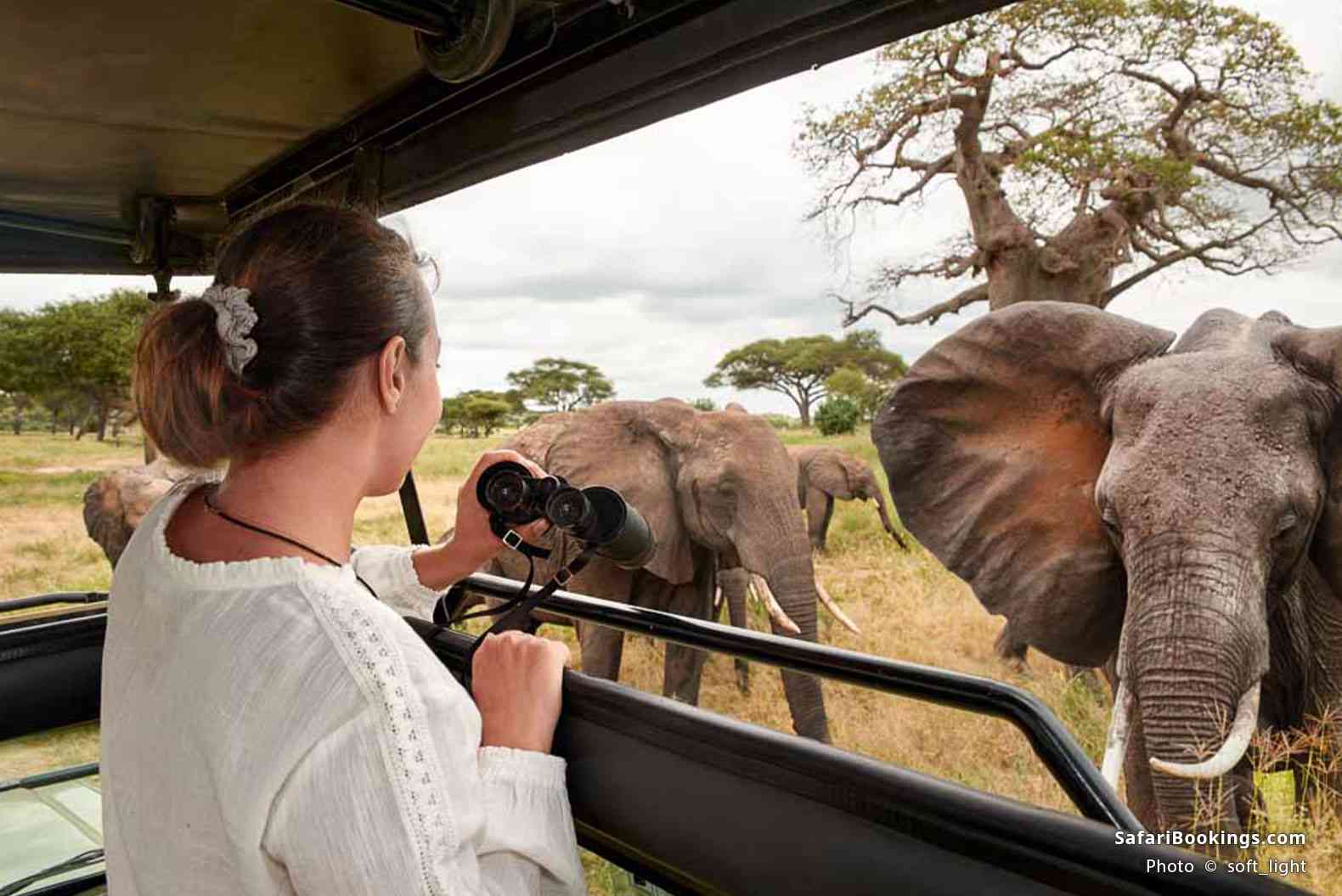 Watching elephants from a safari vehicle
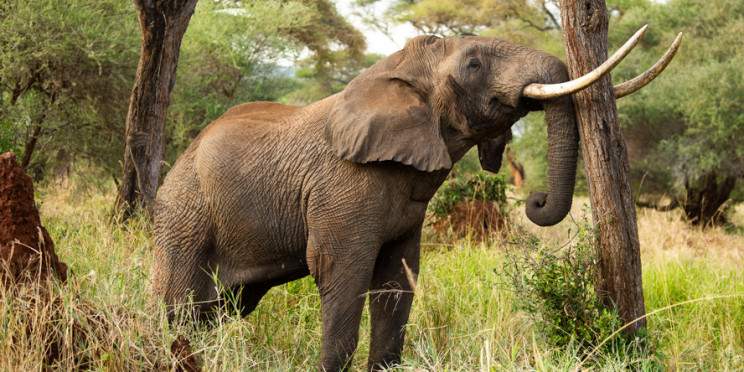
One thing you can be confident of seeing is elephants. It is quite possible to encounter several hundred individuals over the course of one game drive, especially along riverside road circuits. When it comes to large carnivores, Tarangire is not as rewarding as Ngorongoro and Serengeti, but it does support a healthy lion population. Leopard, cheetah and spotted hyena are all seen from time to time. You might also come across bands of dwarf mongooses close to the termite hills where they live in communal burrows.
Common wildlife seen by practically all visitors includes buffalo, giraffe, plains zebra, wildebeest, impala and warthog. More localized dry-country antelope associated with Tarangire include fringe-eared oryx, gerenuk, eland and lesser kudu, but none could be considered common. Tarangire hosts an exciting variety of birds, with more than 500 species recorded. Birds of prey are particularly well represented. Other noticeable birds include Von der Decken’s hornbill, bare-faced go-away-bird, red-and-yellow barbet, superb starling and white-headed buffalo-weaver. It is also a good place to see two species unique to Tanzania: the yellow-collared lovebird and ashy starling.
Where Is Tarangire National Park Located?
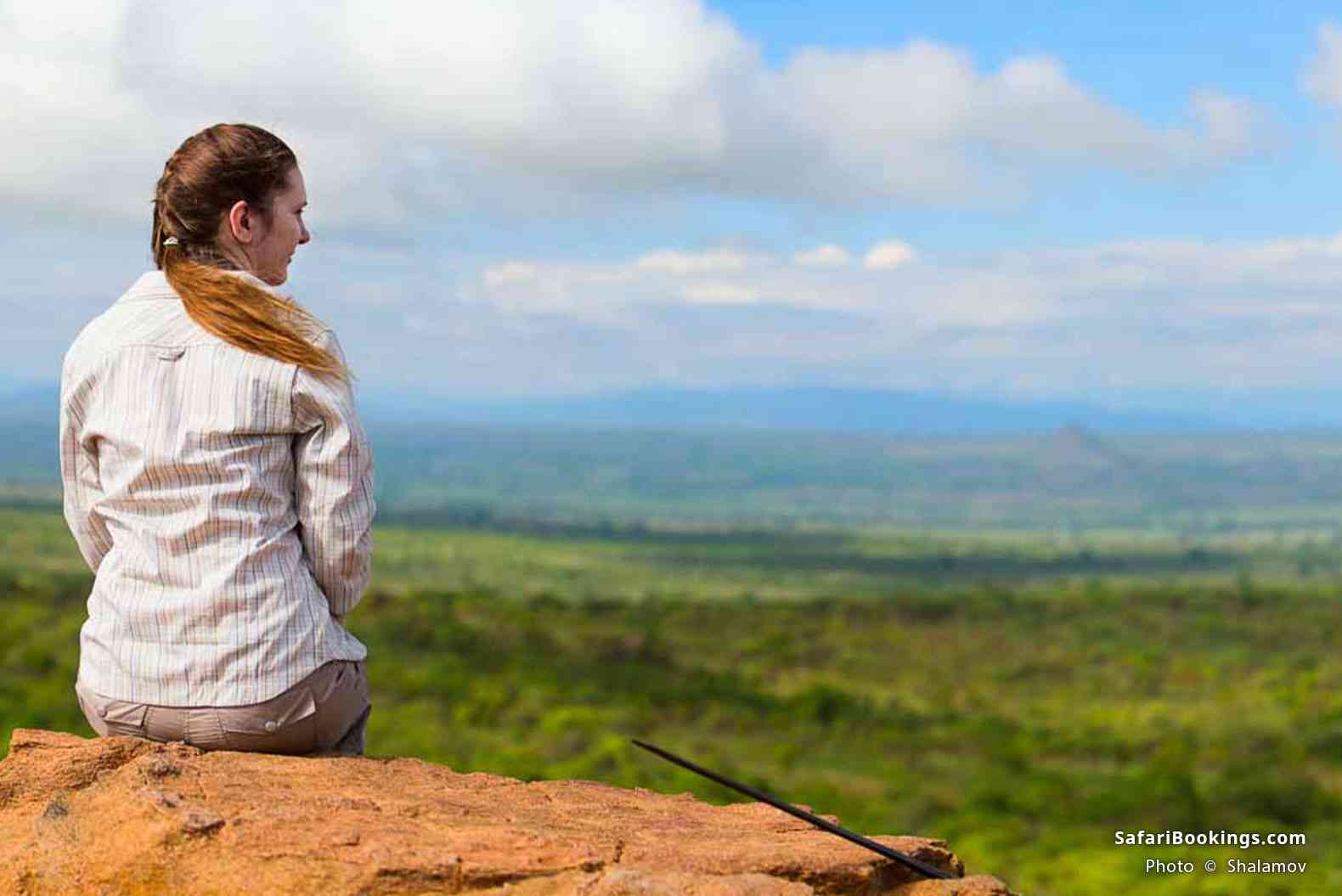 Traveler looking over the savannah
Tarangire National Park lies in the northeast of Tanzania. It is 107km/66mi southwest of Arusha, the main gateway town to the Northern safari circuit. Named after the Tarangire River, it forms part of a vast tract of semi-arid scrubland known as the Maasai Steppe after the pastoralist Maasai people who inhabit the area.
Tarangire lies at the core of a 20,000km²/7,722mi² migratory ecosystem that is bounded to the west by the cliffs of the Rift Valley rising above Lake Manyara. Although it has no significant ecological overlap with the better-known and more westerly migratory ecosystem focused on the Serengeti and Ngorongoro, both areas form part of Tanzania’s Northern circuit and are often combined in safari itineraries.
How Do I Get to Tarangire National Park?
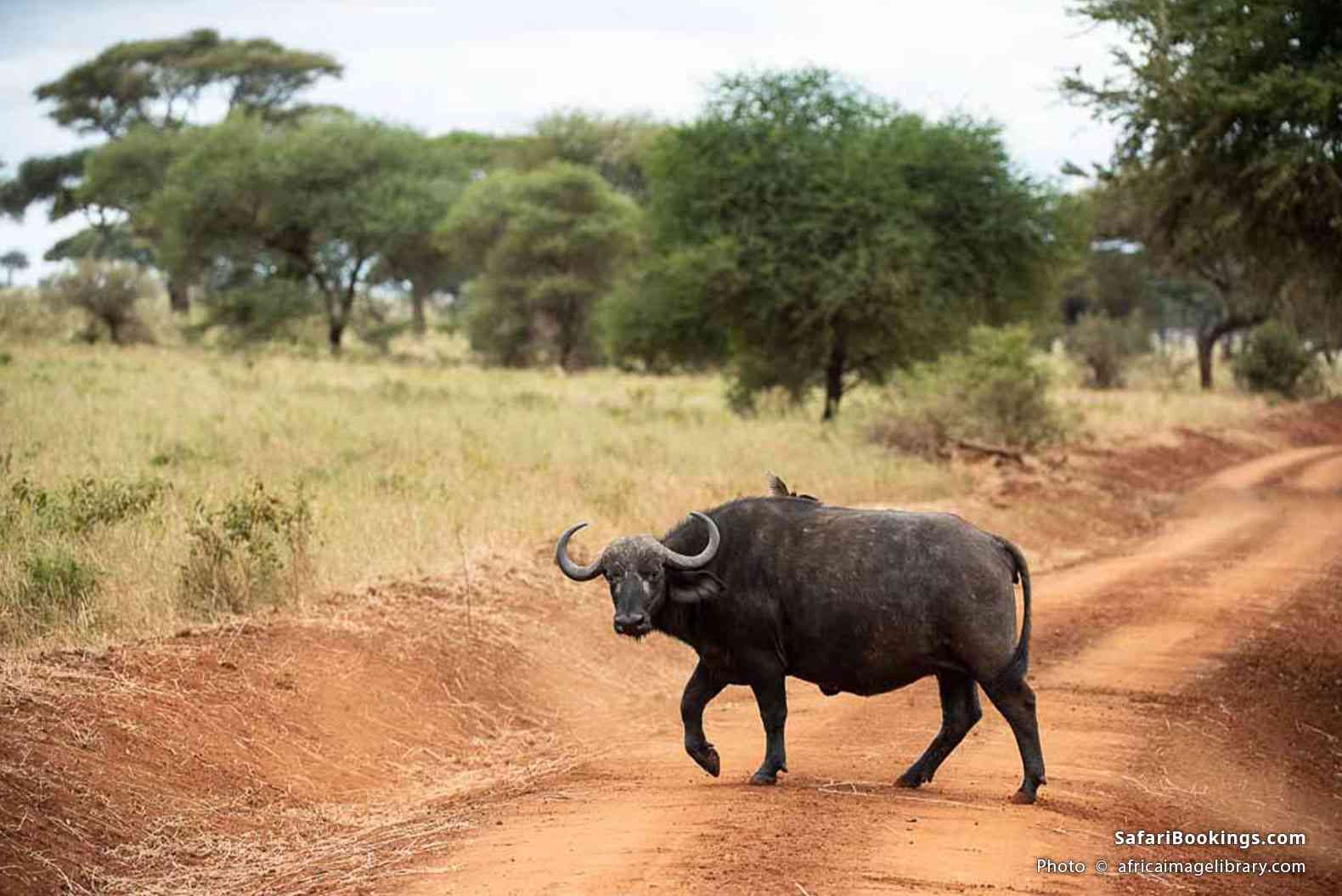 Buffalo crossing the road
Arusha, the safari capital of Tanzania and gateway to Tarangire, is serviced by two airports. Arusha Airport (ARK) lies near the town center and handles domestic flights only, while Kilimanjaro International Airport (JRO), 50km/31mi farther east, is serviced by several international carriers. Regular flights connect Arusha to Tarangire, but they are close enough to each other that most visitors travel by road, either directly or on a more extended safari through northern Tanzania.
The drive from Arusha takes around two hours, following the A104 toward Dodoma southwest for 100km/62mi to Kwa Kuchinia, then turning left onto a bumpier 7km/4mi road to the main entrance gate. The majority of visitors do this as part of an organized guided safari, but it is possible to self-drive. The surfaced road as far as Kwa Kuchinia can be covered in any car, but beyond that a 4WD vehicle is recommended.
Can Tarangire National Park Be Combined With Other Parks?
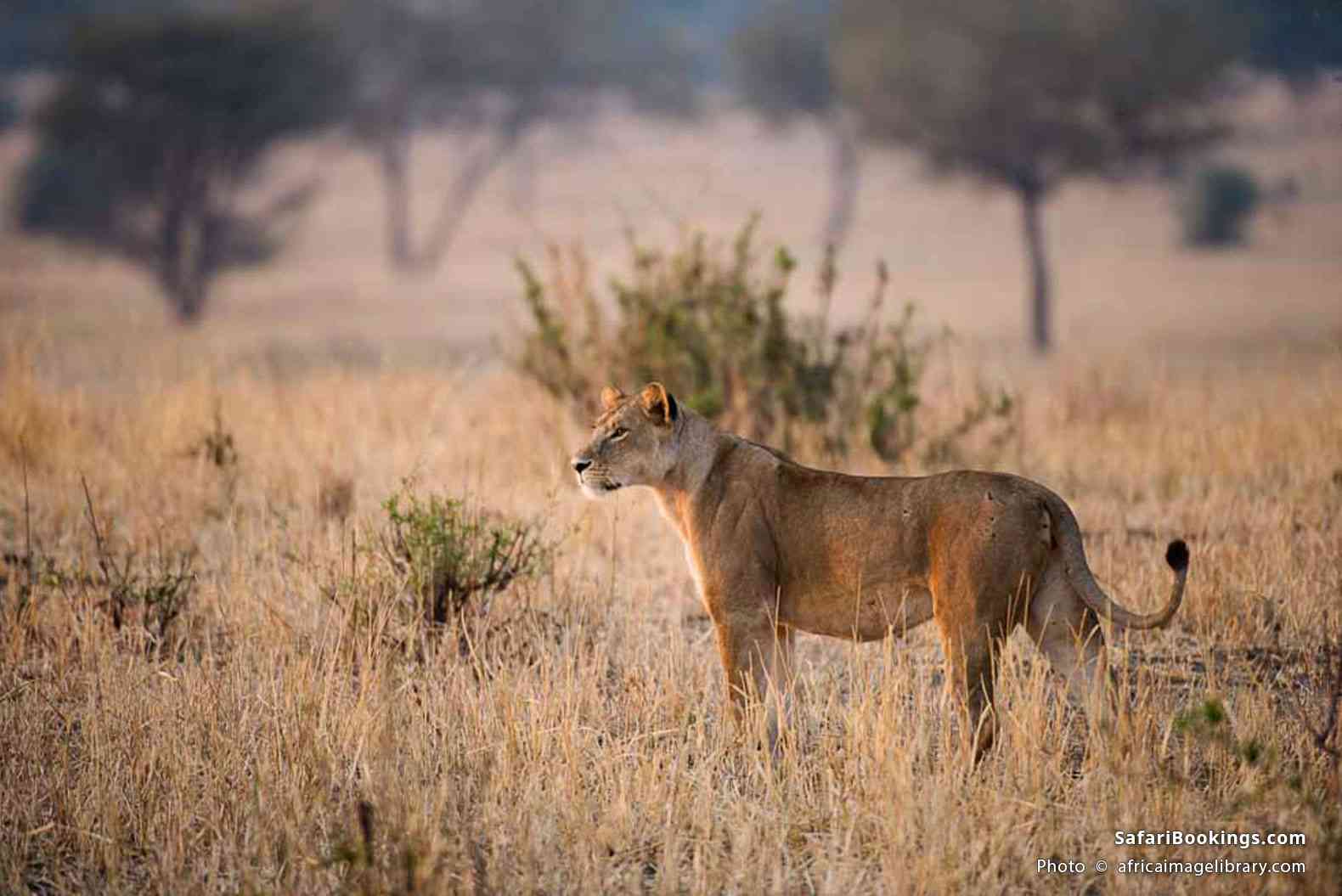 Lioness in yellow grass
Most definitely. In fact, while it is possible to visit Tarangire on its own, it’s far more common to include it on a multi-destination safari covering Tanzania’s Northern circuit. Closest to Tarangire is Lake Manyara National Park, which protects a scenic stretch of the Rift Valley floor known for its tree-climbing lions and abundant waterbirds. The two parks are easily visited together on a short (two- or three-day) safari. On a short safari, Tarangire is also easily visited in combination with Ngorongoro Crater. This is the world’s largest intact volcanic crater and home to staggering concentrations of wildlife.
Most longer safaris incorporating Tarangire will include a few days in Serengeti National Park. This is arguably the world’s best all-round safari destination, famed for its annual wildebeest migration and high densities of all three African big cats (lion, leopard and cheetah). Other wildlife hot spots that can be visited in combination with Tarangire include the lushly forested Arusha National Park on the eastern slopes of Mt Meru, and the remote and little-visited Mkomazi National Park, which is the best place in Tanzania to see rhinos.
When Is the Best Time To Visit?
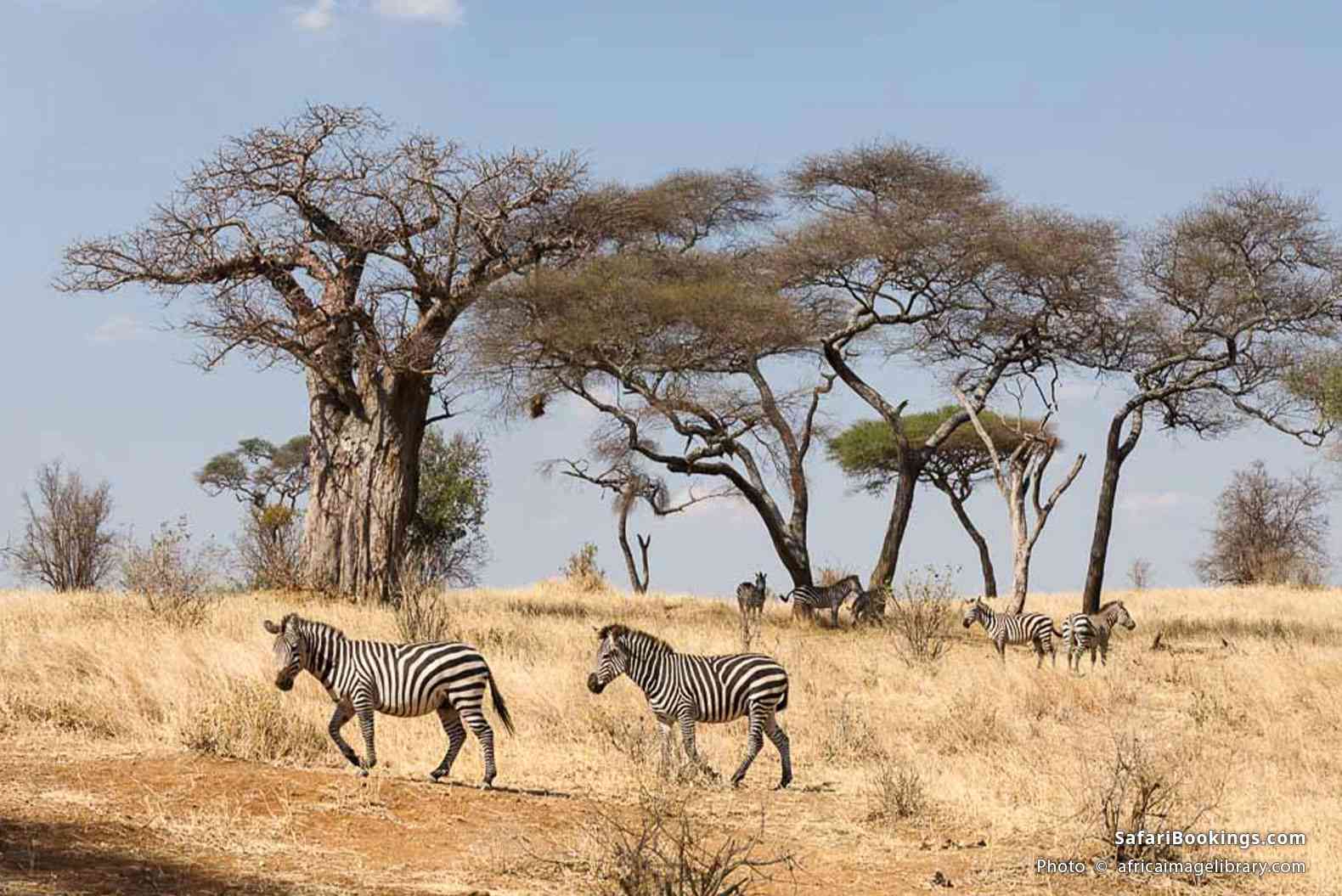 Plains zebras in the bush
Tarangire is worth visiting year-round. For general wildlife viewing, the best months are July to November. During this drier time of year, large herds of wildlife migrate into the park from surrounding areas to drink at the Tarangire River, which is the only reliable source of water for miles around. The thinned-out bush also makes it easier to spot animals.
Tarangire has plenty to offer at other times. Whenever you visit, you can expect to see large numbers of elephants. Lions and other carnivores tend to be resident in the park year-round rather than migratory visitors. The scenery is greener and most attractive over the rainy season (November to May), which is when the rich birdlife is boosted by colorful migrant species. It’s also worth noting that Tarangire is generally least busy over March to May, so it feels wilder at that time of year, and many lodges offer seasonal discounts.
When planning a Tarangire visit, you might also consider seasonal factors elsewhere on Tanzania’s Northern circuit, particularly for Serengeti National Park, which is the main focus of most safaris in the region.
How Do I Get Around in Tarangire National Park?
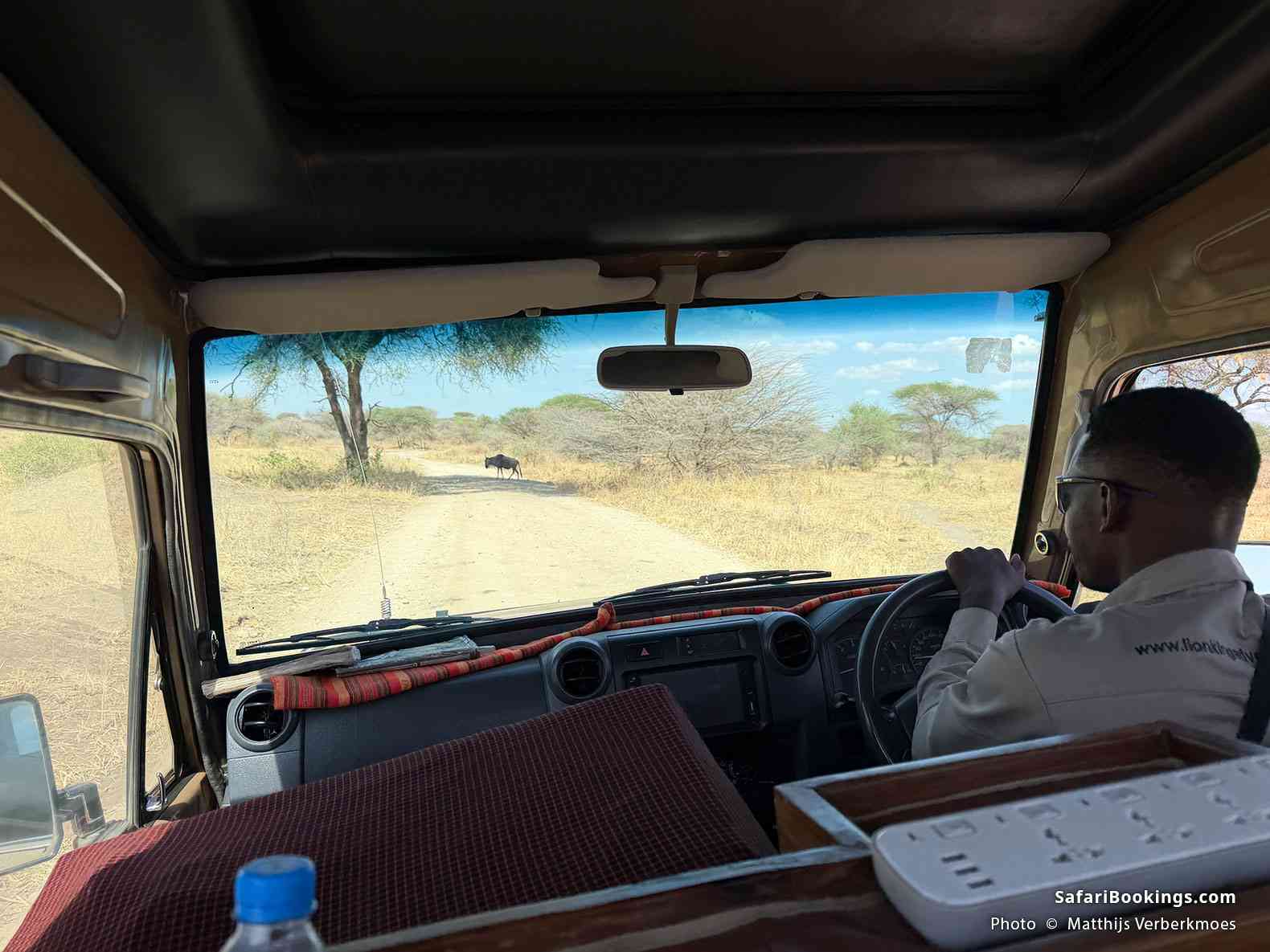 On a game drive in the park
Roads within Tarangire are unsurfaced and can be in poor condition, especially after rain, so a high-clearance 4WD vehicle is required. People visiting on a guided road safari from Arusha usually do game drives with the vehicle and driver they arrived with. By contrast, those staying at smaller all-inclusive camps and lodges generally do game drives with a guide from the property (who will typically know the park far better than a guide from town). Self-drivers will need to conduct their own game drives. Some private lodges and camps offer guided bush walks.
How Many Days Should I Stay?
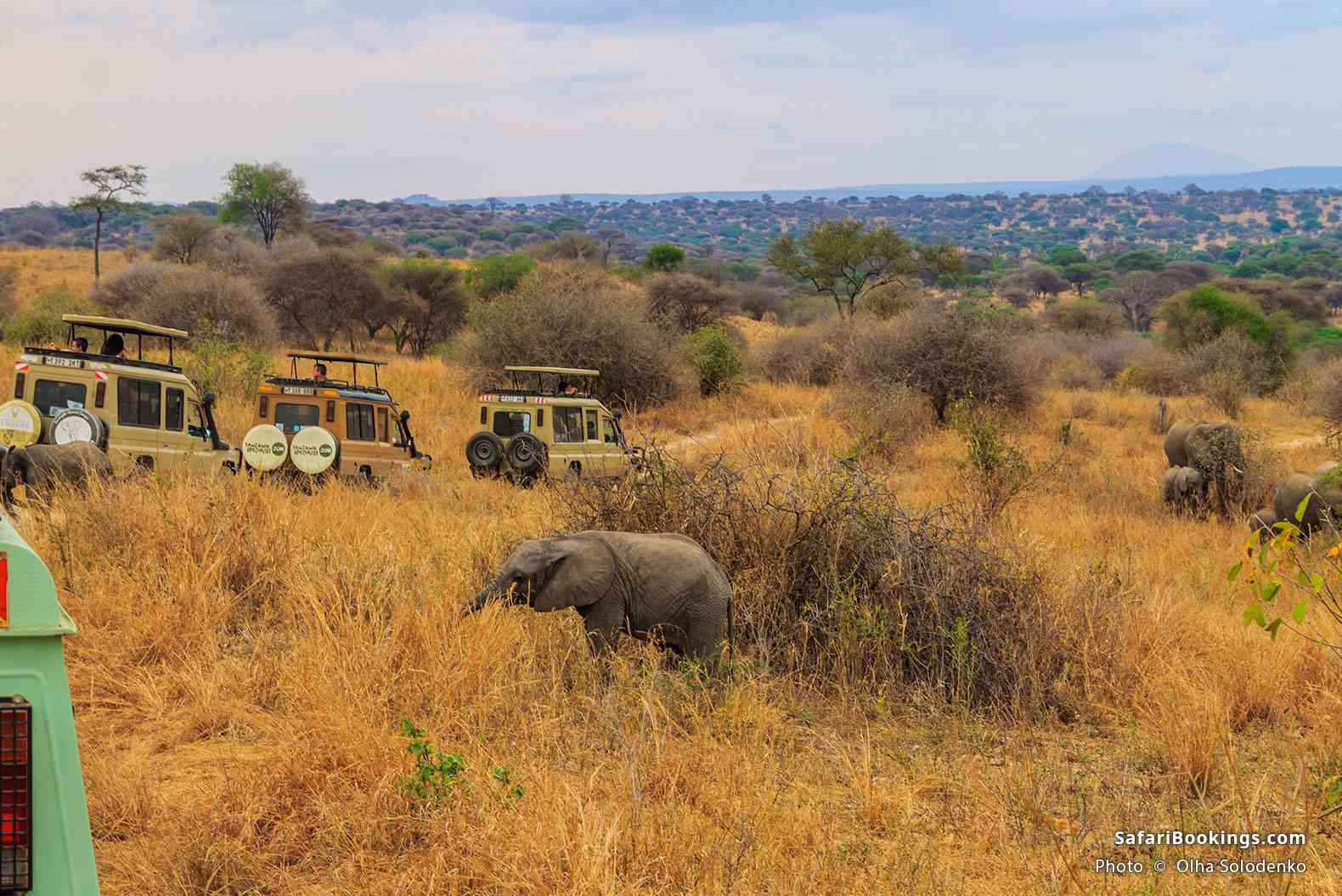 Safari vehicles and elephants
Many operators visit Tarangire on a quick day safari en route between Arusha and other parts of Tanzania’s Northern circuit, arriving in the late morning and leaving after lunch. This makes sense given the park’s main wildlife attraction is its large elephant herds, which typically gather along the Tarangire River in the midday heat. But it also means that the main riverside road circuit gets quite congested with tourist traffic at this time of day, which can be off-putting.
It’s far more satisfactory to spend at least one night in Tarangire, or at least to stay close enough that you can also enjoy game drives in the quieter late afternoon or early morning hours. A two- or three-night stay would be even better, allowing plenty of time to explore the more remote roads running south from the main riverside circuit. If your time on safari is limited, however, this might come at the expense of spending longer in Serengeti National Park.
Is the Park Safe To Visit?
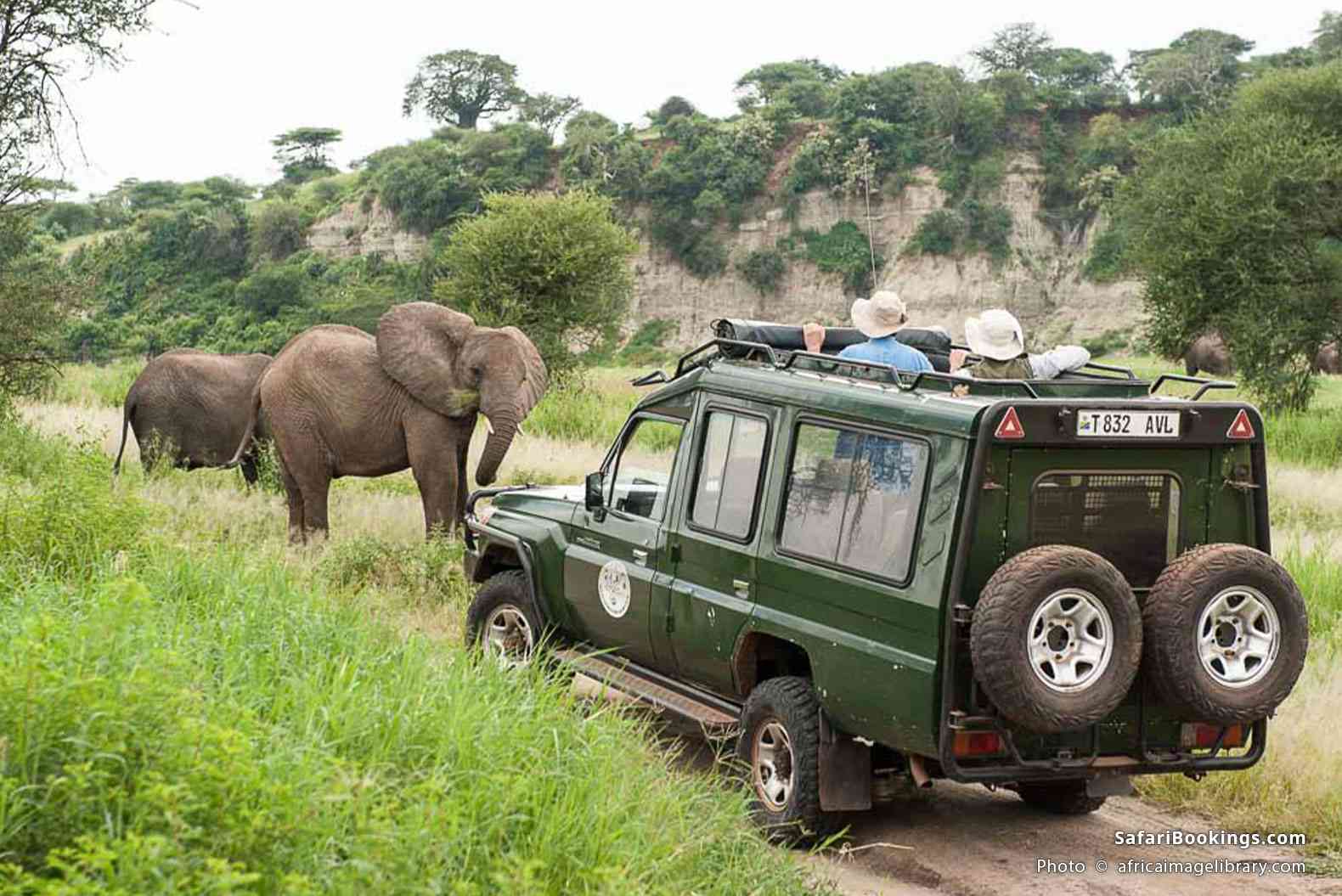 Safari-goers watching elephants from their vehicle
Tarangire, like other national parks in Tanzania, is widely regarded to be safe. If you visit as part of an organized safari, or book an upmarket lodge package inclusive of road transfers (as most people do), you’ll be in the hands of an experienced driver and/or guide throughout your visit.
It is safe to self-drive in Tarangire, bearing in mind that internal roads require a high-clearance 4WD vehicle and you’ll need to navigate yourself. You may also have to fix punctures or deal with other minor breakdowns. If you do self-drive, make sure you have a working local SIM card or eSIM loaded with data and airtime.
Wildlife generally poses little risk to people on game drives. The only possible exception is elephants, which are generally very relaxed around vehicles in Tarangire, but should always be treated with respect, especially if they seem agitated. If you go on a guided walking safari or bush walk, it is important to follow your guide’s instructions.
Tarangire lies in a malaria zone. It is advisable to take antimalarial drugs, cover your skin at night and carry mosquito repellent.
What Are the Best Places To Stay?
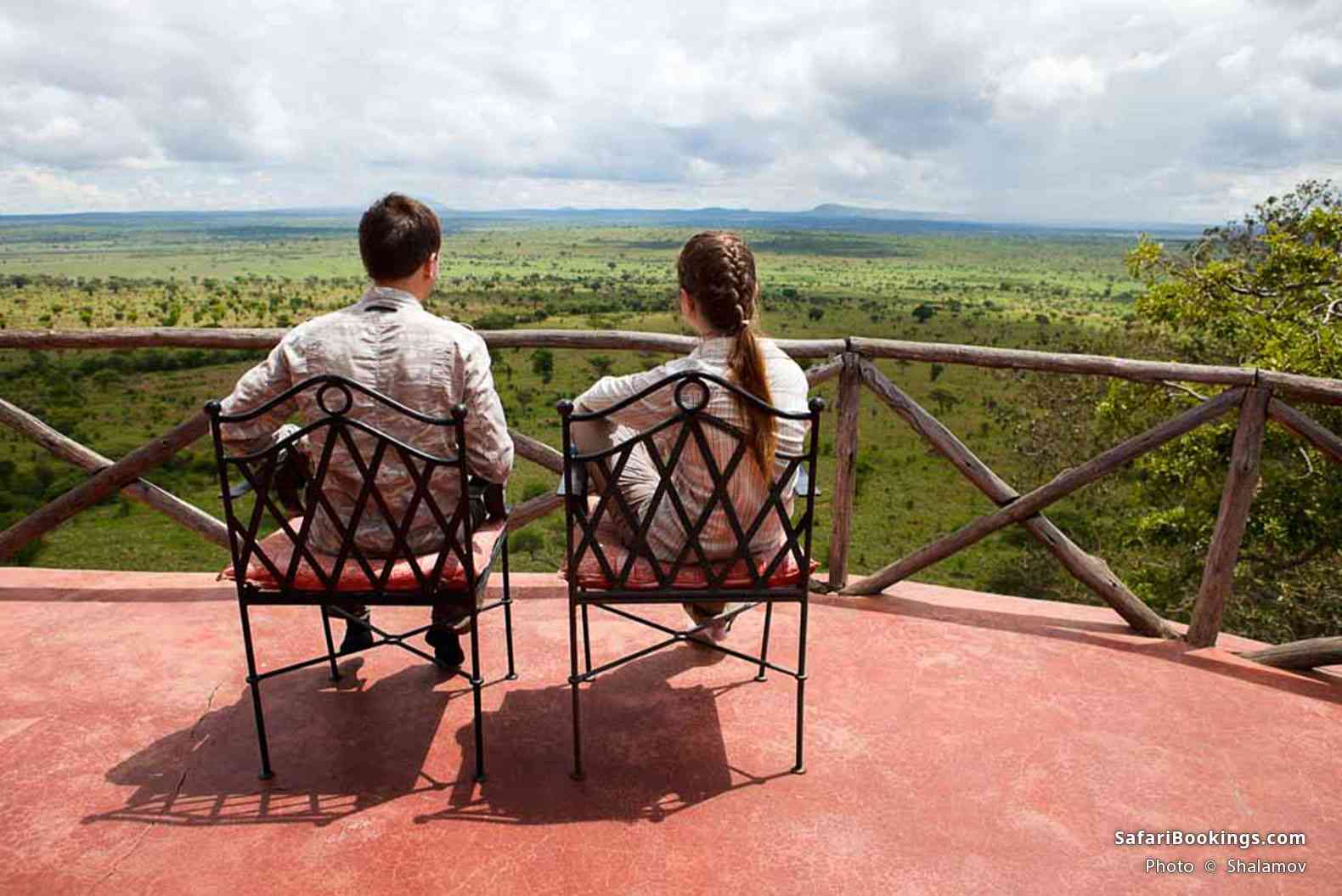 Observation deck at a lodge
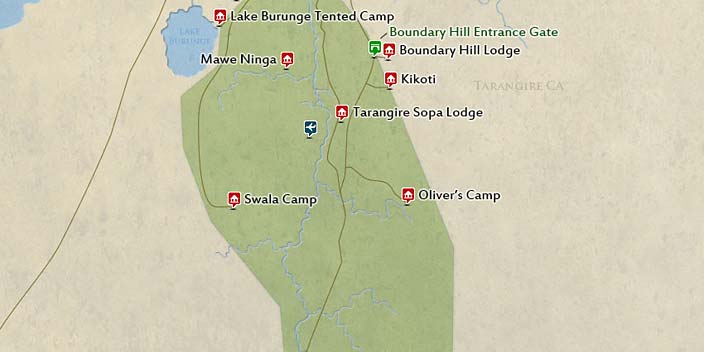
Tarangire is serviced by a great selection of lodges, camps and campsites. If possible, pick a lodge or camp inside the park, so that you get to experience it overnight and are well positioned for early morning and late-afternoon game drives. Options within the park include two very good medium-large lodges and a scattering of smaller luxury bush camps offering all-inclusive packages. There are also several campsites.
Plenty of luxury, mid-range and budget accommodations stand just outside the park boundaries. These places tend to be cheaper than properties of similar standard inside the park, but they offer a less immersive experience and are less convenient for game drives. Many people visiting Tarangire on a day safari leave in the midafternoon to stay at a lodge or hotel close to Lake Manyara National Park or near the small town of Karatu below Ngorongoro Crater.
What Facilities Are There?
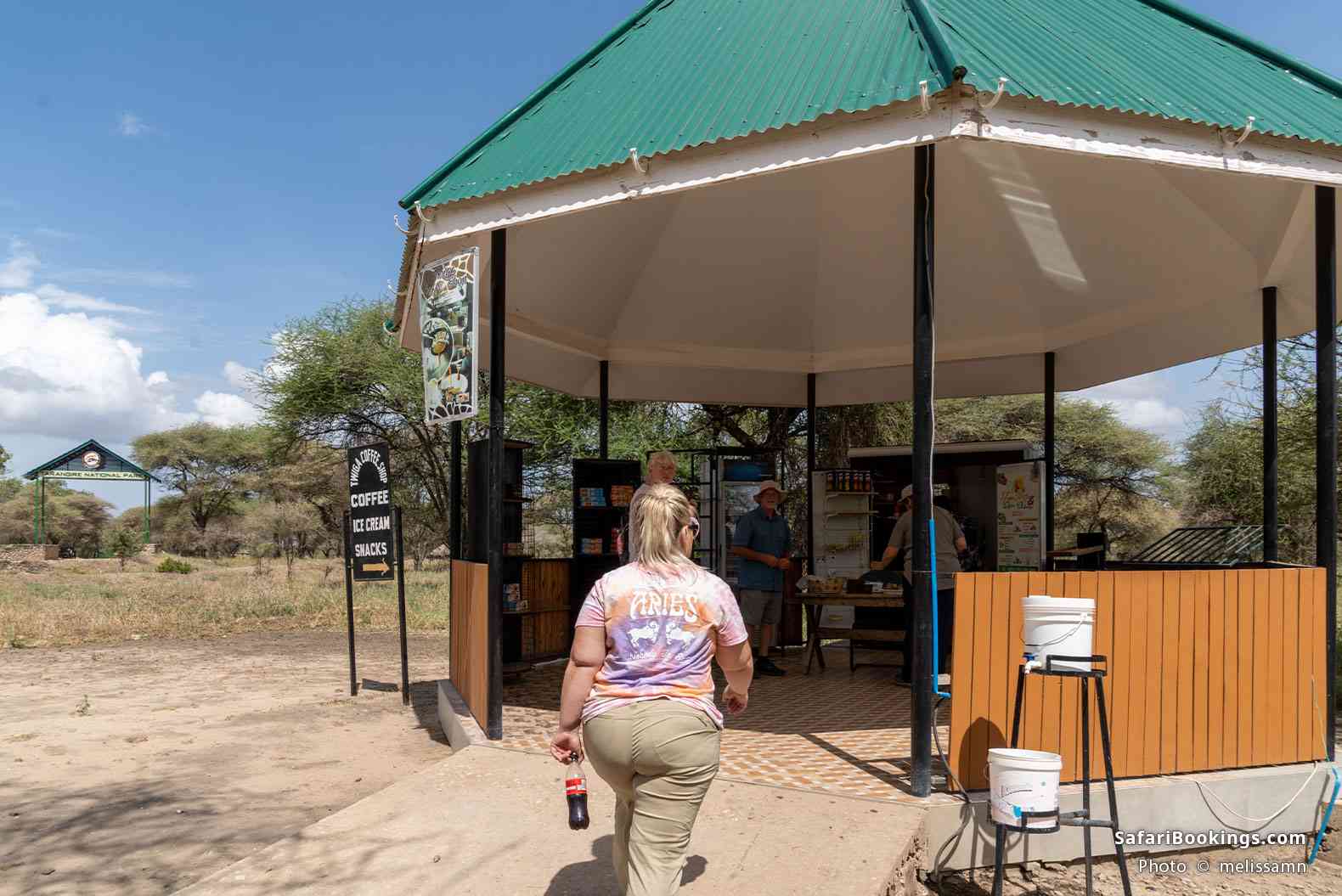 A small coffee shop hut outside the park entrance
Aside from the internal road network and a selection of private lodges and camps, facilities are limited. A notable exception is Matete Picnic Site, which lies 14km/9mi from the main entrance gate and has an ablution block and outdoor seating. Matete gets very busy with day visitors at lunch, but it’s worth checking out at any time for the spectacular clifftop location above an elephant crossing point on the Tarangire River. A great place to stop for a hot lunch is the welcoming Tarangire Safari Lodge, which lies 9km/6mi from the entrance gate and also stands high above the river.
What Are the Costs for Visiting Tarangire National Park?
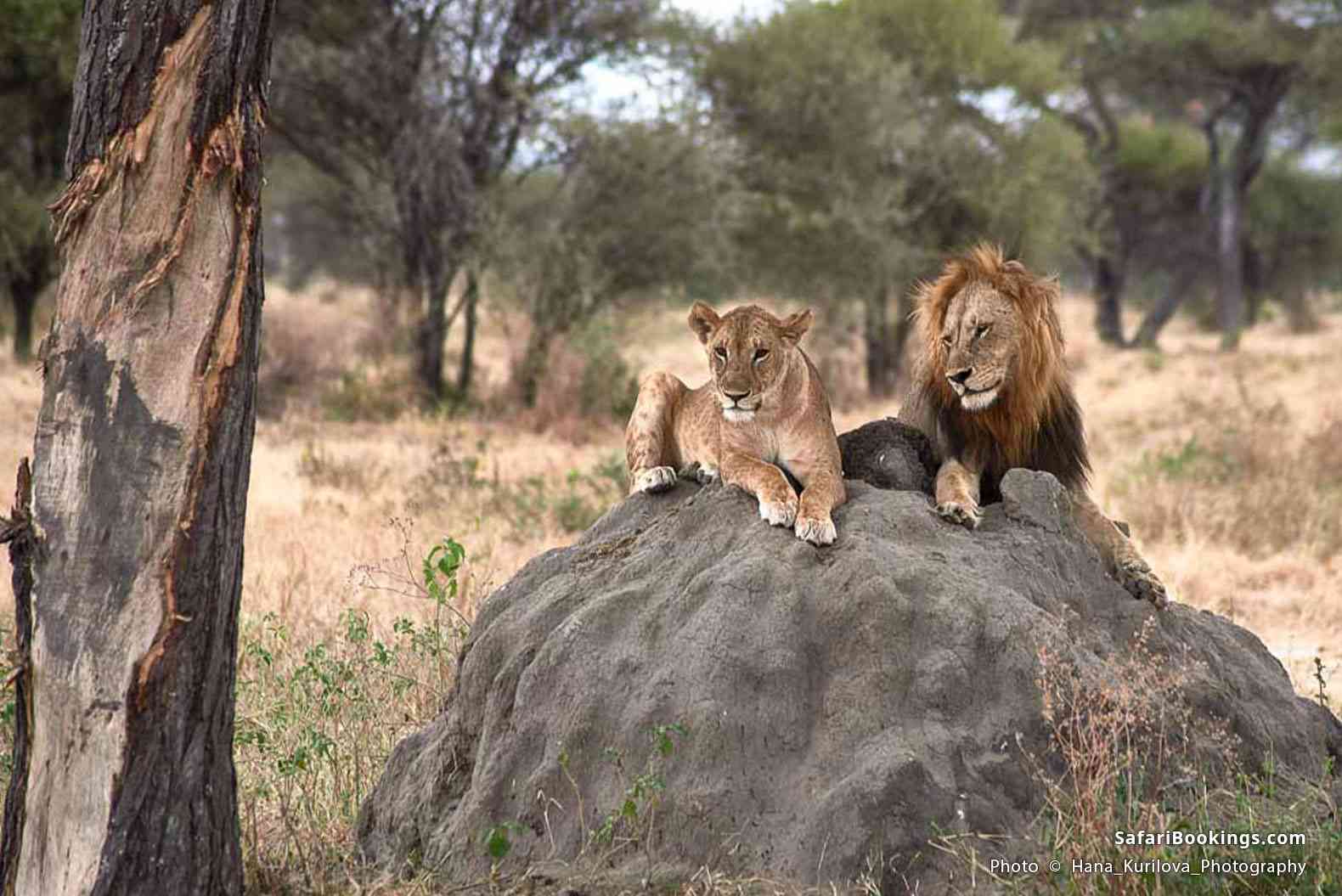 Lions sitting on a termite mound
The cheapest way to see Tarangire is to book a one-day safari out of Arusha. This typically costs US$200 to US$300 per person and ensures you are there when elephant action along the river peaks in the midday heat.
It is more normal and satisfying, however, to spend longer in Tarangire. This might involve visiting this park on its own over two or three days, or booking an extended safari (anything from two to 14 days) that also includes other destinations on Tanzania’s Northern circuit. Either way, expect camping safaris or those using budget accommodations to start at US$200 to US$300 per person per day. Luxury safaris start at around US$400 to US$500 per person per day, while those using ultra-exclusive or super-luxurious lodges might be considerably more expensive.
Want To Visit Tarangire?
Click on the button below to compare Tarangire tours offered by top-rated tour operators.
 By Philip Briggs
 Philip is a renowned Africa expert and author of the Bradt guidebook to Tanzania.
More About This Author

 Subscribe to our newsletter
 Follow us on Instagram
Safari Tours to Tanzania
-
![4-Day Private Lodge Safari Tanzania – the Wild Side]()
4-Day Private Lodge Safari Tanzania – the Wild Side
$1,699 to $1,749 pp (USD)
Tanzania: Private tour
Mid-range Lodge & Tented CampYou Visit: Arusha (Start), Tarangire NP, Serengeti NP, Ngorongoro Crater, Arusha (End)

Go Serengeti African Tours
4.9/5 – 686 Reviews

-
![6-Day Highlights of Tanzania Mid-Range Safari]()
6-Day Highlights of Tanzania Mid-Range Safari
$2,405 to $2,525 pp (USD)
Tanzania: Private tour
Mid-range Lodge & Tented CampYou Visit: Arusha (Start), Tarangire NP, Serengeti NP, Ngorongoro Crater, Lake Manyara NP, Arusha (End)
Lion King Adventures
5.0/5 – 1,644 Reviews
-
![11-Day Tanzanian Safari with Zanzibar Extension]()
11-Day Tanzanian Safari with Zanzibar Extension
$5,366 to $5,918 pp (USD)
Tanzania: Private tour
Mid-range Lodge & Tented CampYou Visit: Arusha (Start), Tarangire NP, Lake Manyara NP, Serengeti NP, Ngorongoro Crater, Lake Eyasi, Zanzibar (End)
Soul of Tanzania
5.0/5 – 559 Reviews