Guide to Visiting the Okavango Delta – All You Need To Know
 By Anthony Ham
 Anthony is a renowned Africa expert and author of the Lonely Planet guide to Botswana and Namibia.
If I could choose one place to go on safari, it would have to be the Okavango Delta in Botswana. This is a world that never looks the same from one year to the next. It is almost as if each time I visit, the world has been created afresh. It is one of the Earth’s last wilderness areas, where epic populations of wildlife survive and where human populations exist very much in nature’s shadow.
Whenever I am here on safari, I can’t help but feel that – wherever I go, across a very large area – that I am immersed in the African wild. And there are so many ways to explore – by air, by wooden canoe (pirogue), by 4WD vehicle, on foot – that every day here has its own kind of safari magic.
How Is the Okavango Delta Created Every Year?
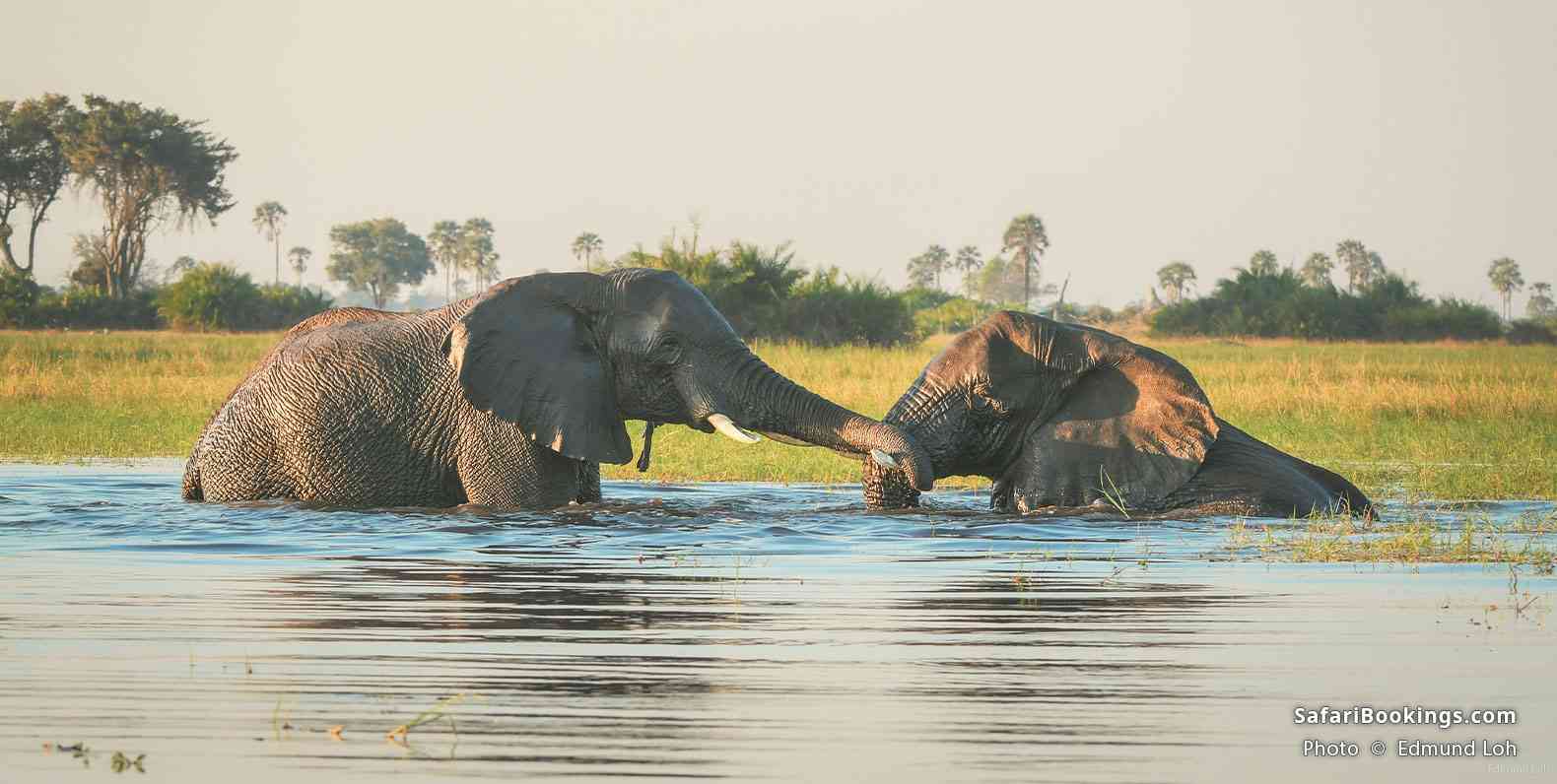 Elephants playing in the floodwaters of Okavango Delta
Every year in January, it begins to rain in the highlands of Angola. That may seem like a long way from the Okavango, but it’s an essential part of the story of the world’s largest inland delta. Slowly over the months that follow, the waters inch their way down toward Botswana. In years of poor rains, it can be a trickle. In years of abundance, it becomes an unstoppable flood.
When these waters reach Botswana, usually around March, they gather momentum as they funnel down through the narrow Okavango Panhandle. Upon their release from the panhandle’s confines and out onto the plains of the northern Kalahari Desert, they spread out, creating islands and channels as they go. Every year is different. But there are some things that are always the same – Okavango blues and greens meet Kalahari yellows, and the Okavango’s incredible wildlife finds a way to survive, moving to higher ground, adjusting the size of their territories, taking advantage of new opportunities.
Where Is the Okavango Delta and How Do I Get There?
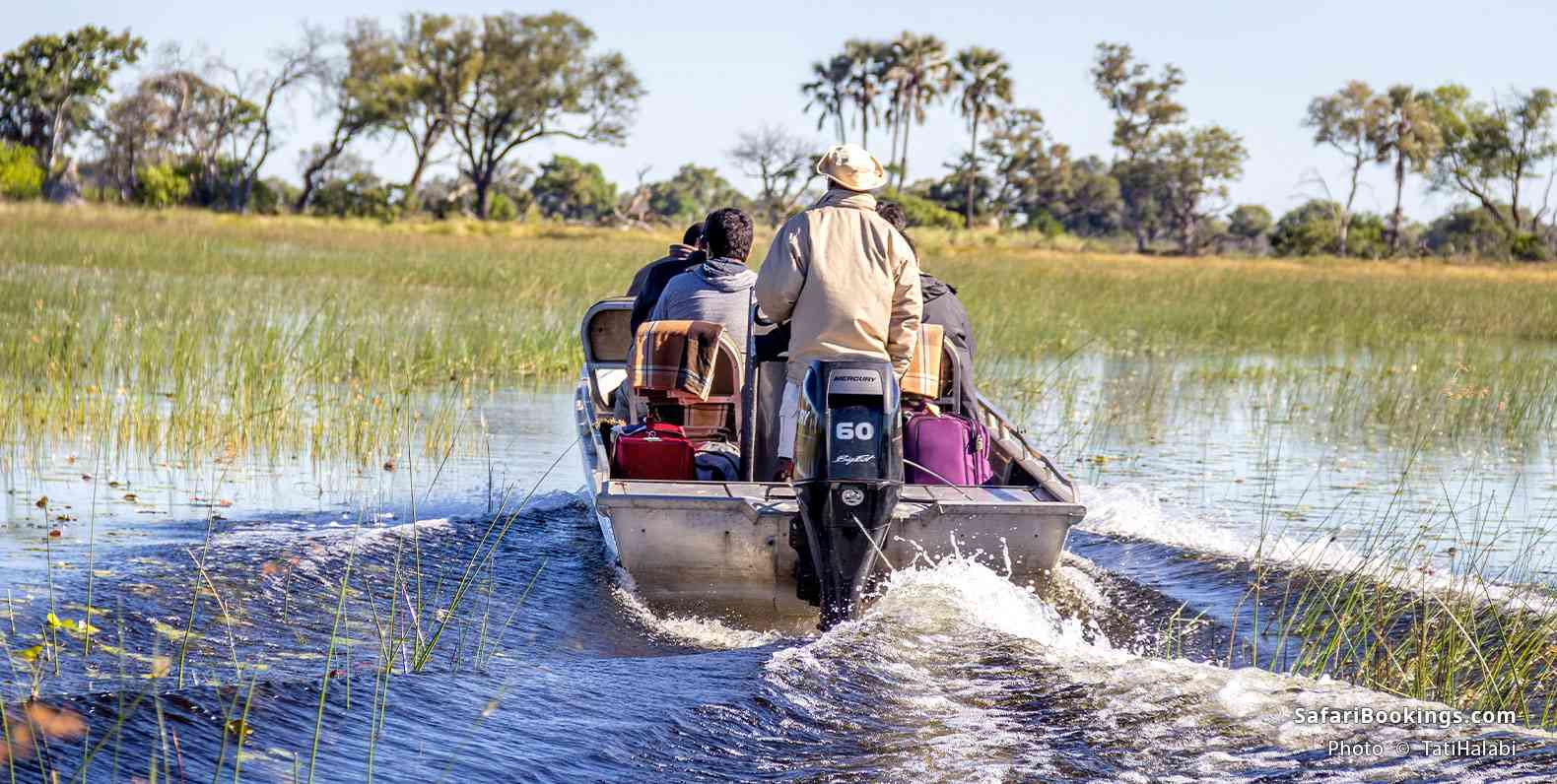 Motorboat crossing a flooded channel in the Okavango Delta
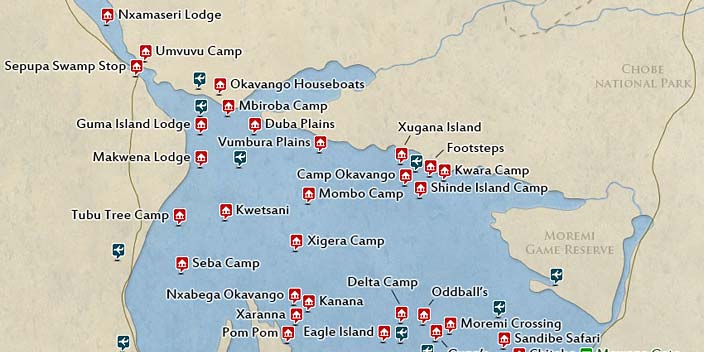
If you look at a map of Africa, the Okavango Delta looks like a claw grabbing at the northwestern corner of Botswana, close to where Botswana meets Namibia, Angola and Zambia.
The closest airport to the Okavango Delta is Maun, which is far and away the main gateway town with dozens of small planes flying out into the far corners of the Delta. You can also fly into Kasane, from where there are also flights out into the Okavango, although if you’re driving, it’s a much longer drive and you’ll need to cross Chobe National Park before reaching the Delta.
Although Gaborone is Botswana’s capital city, it’s a long way from the Okavango Delta. As a result, flights (from South Africa or other African countries) are more plentiful and usually cheaper to Maun or Kasane.
What Are the Main Areas of the Okavango Delta?
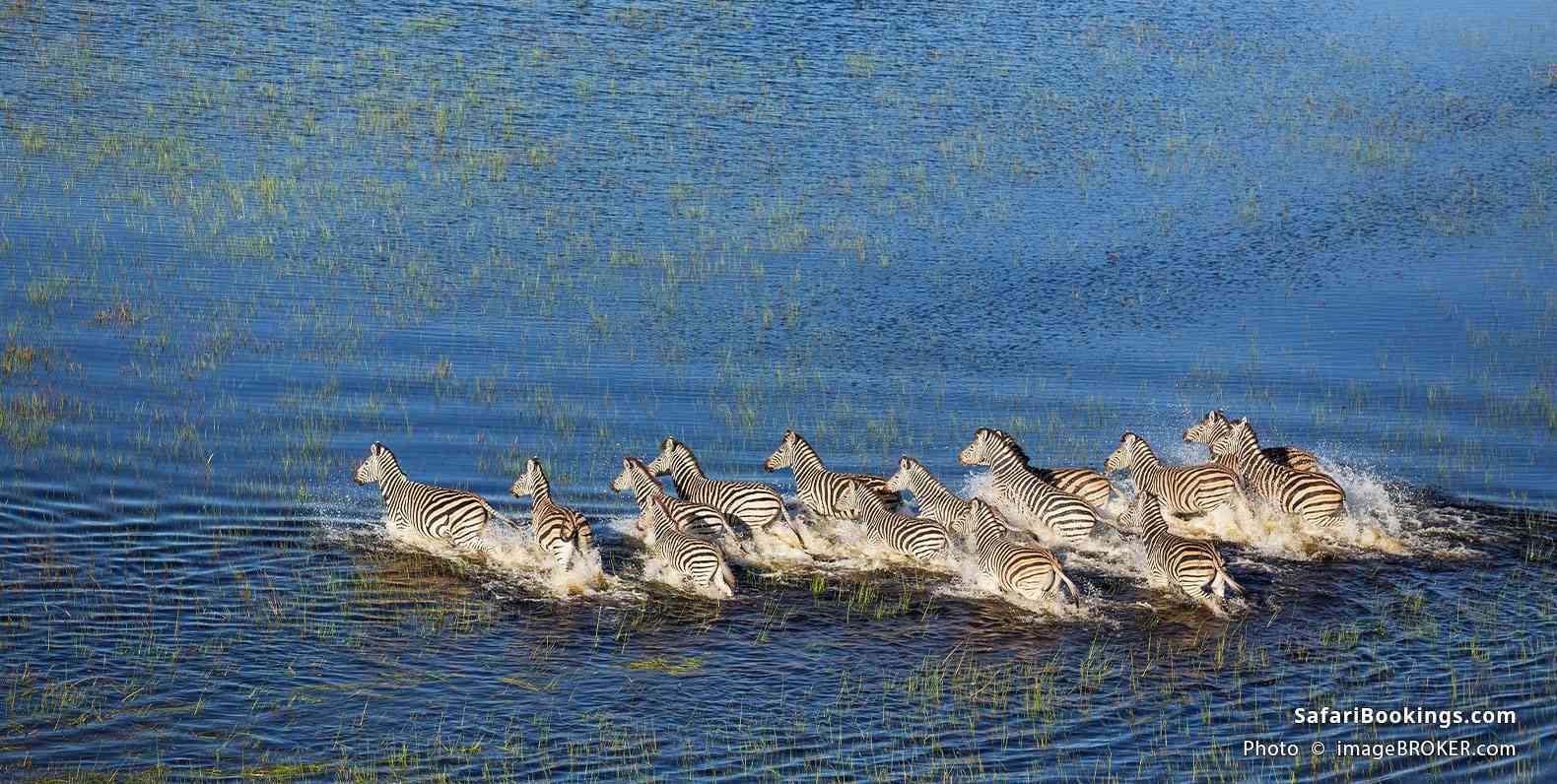 Zebras crossing a flooded plain in the Okavango Delta.
The Okavango Delta is made up of dozens of private or community concessions. Most are leased by safari companies, usually with a lodge or two deep within the territory. They are extremely exclusive, and are only accessible (including by their staff!) by small plane. But if you can experience even a small number of nights in such a place, you’ll have the safari experience of a lifetime.
Other areas of the Delta are more accessible. Moremi Game Reserve, which is the only officially protected area anywhere in the Delta, is partly accessible by 4WD track, partly by plane. This is the area where most self-drivers spend most of their time, especially in the wildlife-rich areas near Third Bridge or the bird-filled Xakanaka Lagoon. Also increasingly popular, and an area I especially love, is the Khwai Concession, which also has great wildlife and a mix of different camps, including both high-end camps and some simpler campsites.
There are also some areas closer to Maun that are used by budget safari operators and are accessible by 4WD track. Some can be outstanding, but your closeness to town means that the sense of wilderness (and sometimes the wildlife) is less powerful than elsewhere. If you can afford to go elsewhere, do so. But if it’s all you can afford, my philosophy is that you’ll still get an incredible taste of what the Delta can offer and you should absolutely say yes to a visit here.
Although it is not technically a part of the Delta, the Okavango Panhandle, northwest of Maun, is best known for its fishing and bird watching. There are fewer accommodations choices and the crowds tend to be smaller, and you won’t see anywhere near the same numbers of mammals as you do elsewhere. But there is more of a chance to visit a local village – these include Shakawe, Seronga, Nxamasere, and Mohembo – so a visit here is certainly worth considering as part of an overall Okavango package.
Unless funds are limited, I would skip both the panhandle and the areas close to Maun, especially if this is your first visit to the Delta. I’ve spent considerable time in both, and each time I’ve spent my time wishing I was somewhere else in the Delta.
Why Is the Okavango Delta Famous for Its Wildlife?
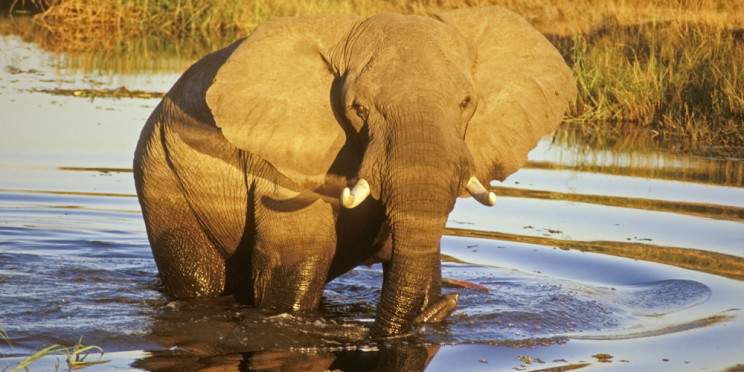
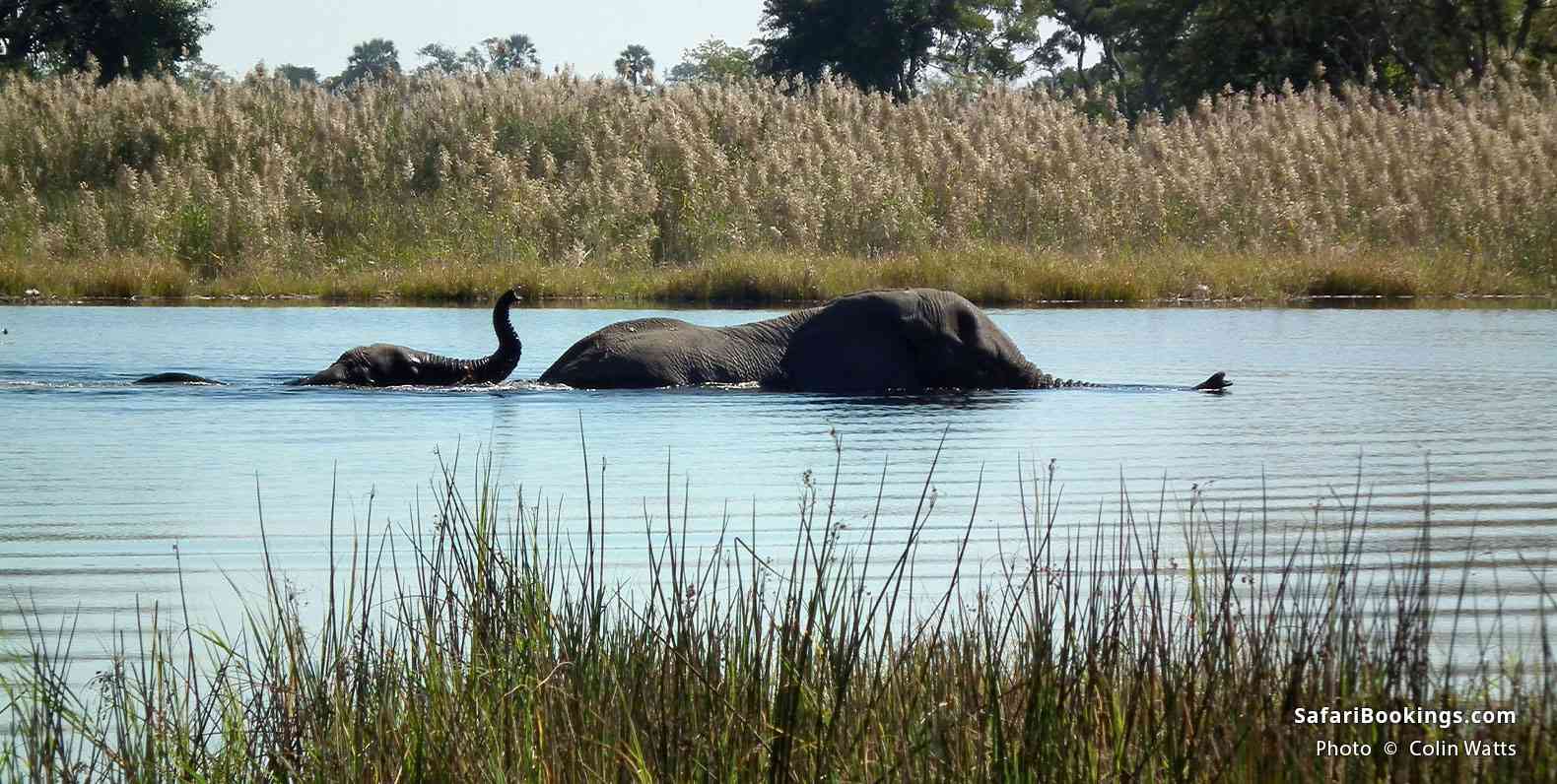 Elephants wading through the Okavango Delta
Southern Africa was once filled with some of the largest concentrations of wildlife in Africa. Not many places like that are left. But the Okavango Delta is one of them. And because of the landscapes, it’s also a place of incredible beauty in which to watch wildlife.
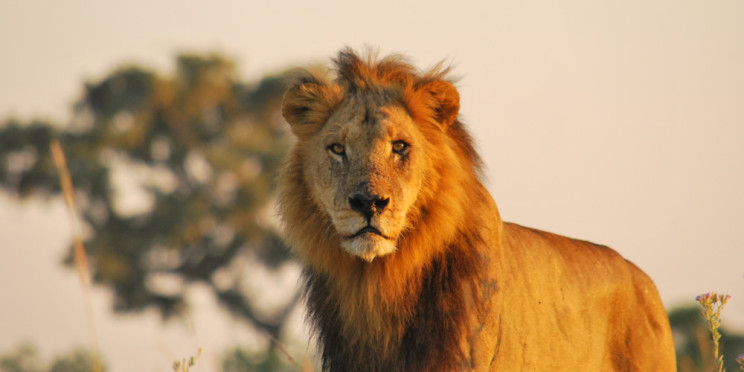
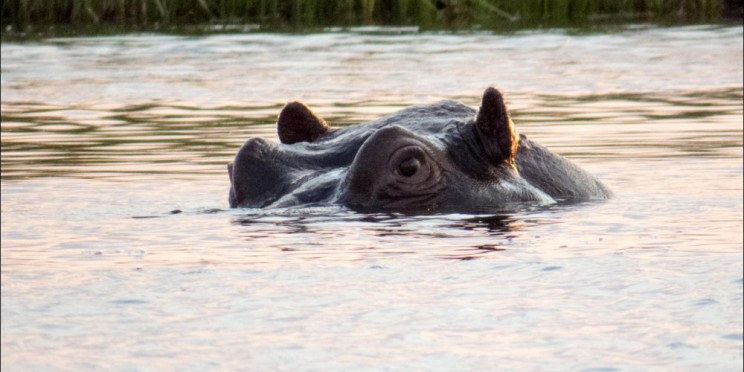
Elephant and buffalo are everywhere, but you can also see giraffe, hippo, zebra and wildebeest in great numbers. Rhino is also present in Moremi Game Reserve, and sightings are increasing with each passing year. And the Delta is fantastic for predators, including all of Africa’s big cats (lion, leopard and cheetah), plus African wild dogs. On one incredible day in the superb Chitabe Concession, I saw 15 lions resting around a series of termite mounds, a leopard in an old ebony tree, a cheetah mother with four subadult cubs, and a pack of 23 African wild dogs streaming across the landscape while hunting. Such days are rare, but the Delta is one place where days like this are possible. Other Delta specialties include red lechwe, sitatunga, tsessebe, sable and roan.
The Earth From Above
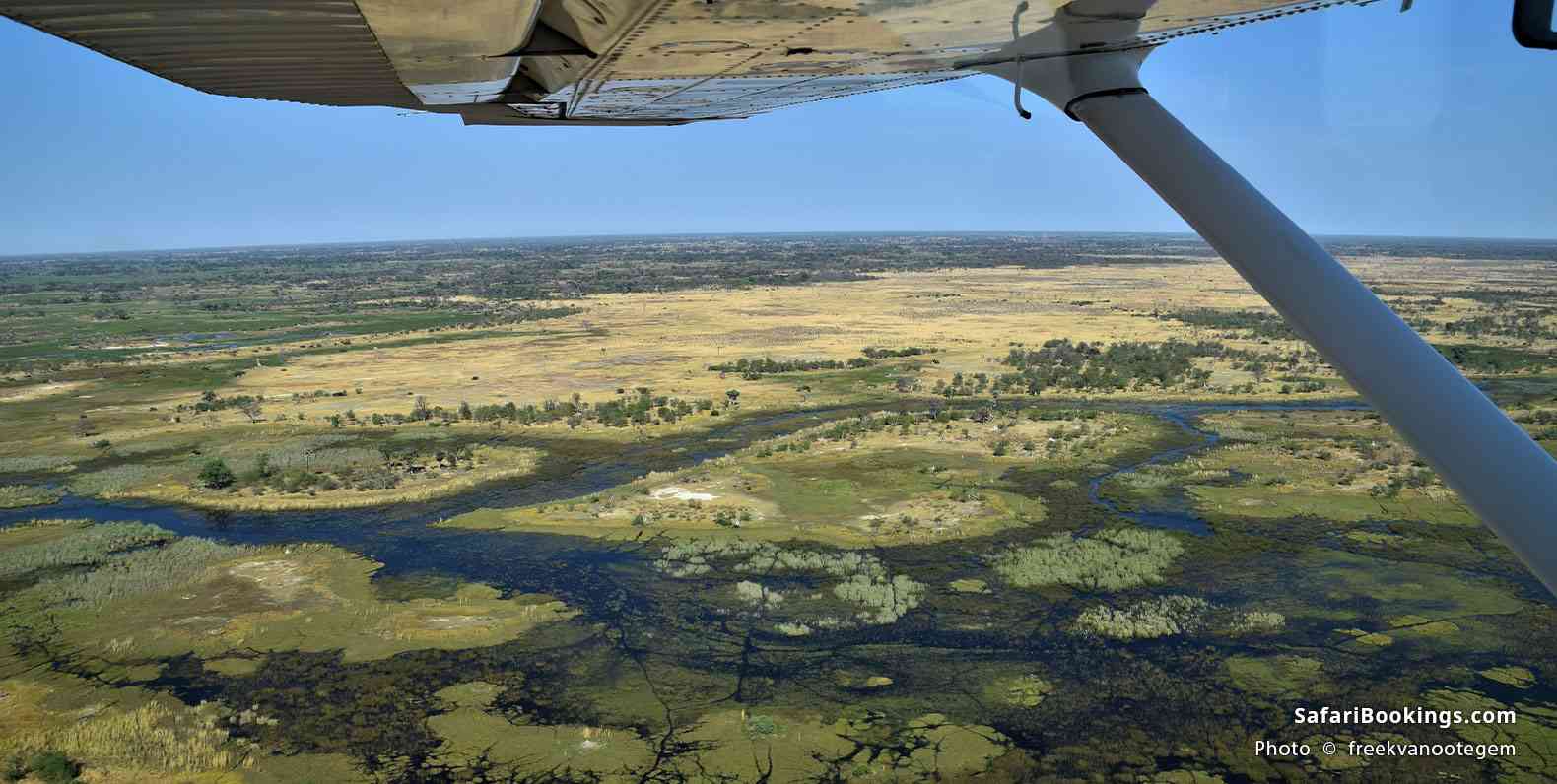 An aerial view of the Okavango Delta
For many of us, the first experience of the Okavango is from the air, either on a scenic flight or when flying into a remote tented camp deep in the Delta. Although it can depend on the year, many of the more exclusive camps can be reached in no other way. In some cases, you’ll even fly into an isolated air strip, and then take a boat transfer to your accommodations!
Before you land, watch as the Delta unfurls down below. The views are incredible, of virgin lakes and ancient waterways in the deepest shades of blue, fringed with the candy-bright greens of the reed beds where hippos and crocodiles lurk, appearing as logs from above. In places, there are ebony forests and stands of palm trees. Elsewhere grasslands are alive with vast herds of buffalo to the far horizon. Connecting it all are ancient pathways, left by elephant matriarchs leading their family herds out of the desert and to the safety of higher ground. From up here, even elephants and giraffes appear dwarfed by the sheer scale of the Delta. If you’re lucky, you might see a pride of lions watch you pass above, barely lifting their heads from their resting place in an island’s shade. From up here, you understand the scale and cinematic beauty of this remarkable place.
Driving Between the Islands
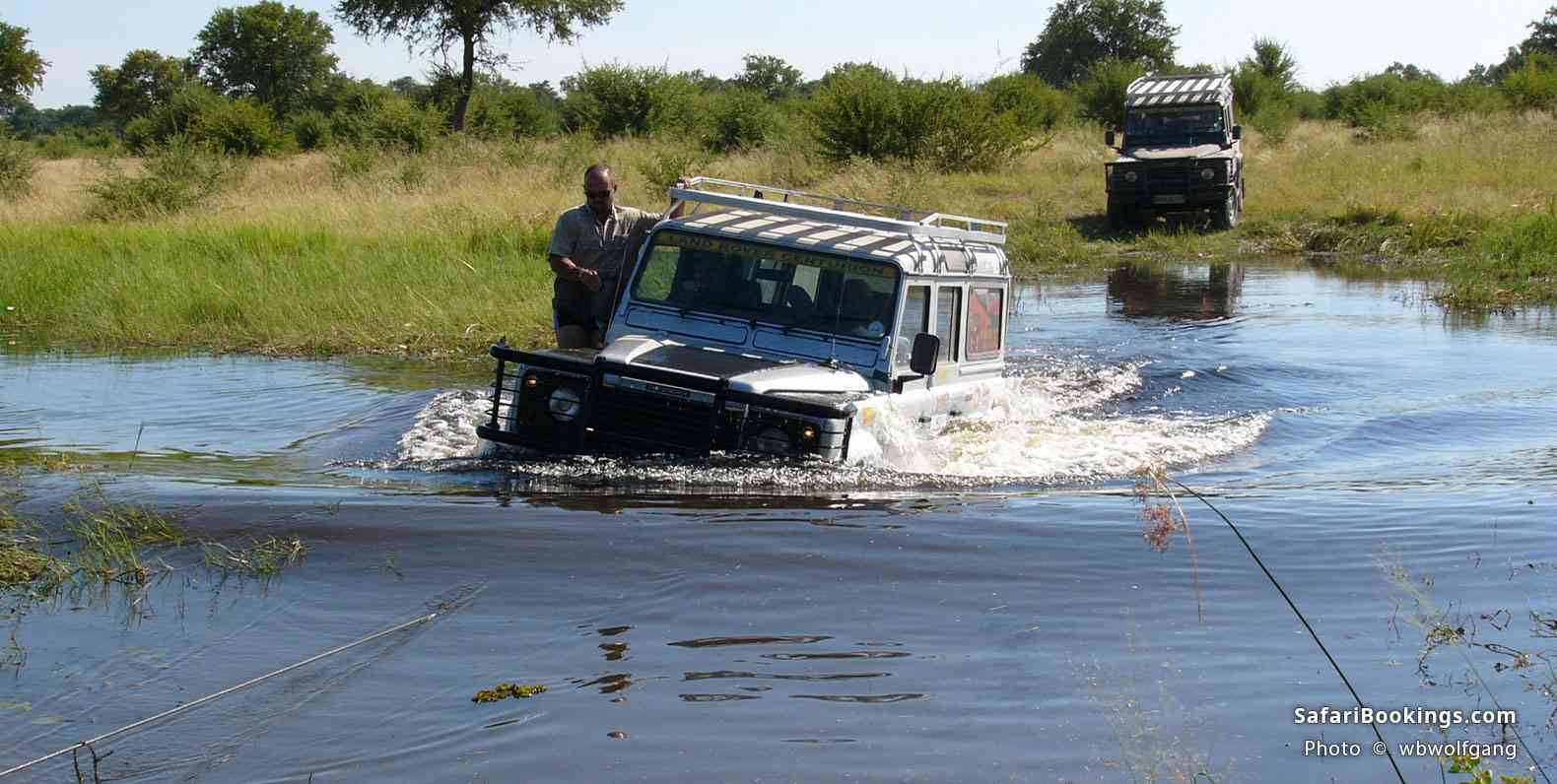 A guide navigates a flooded track in the Delta
The ancient pathways left by migrating elephants and other restless species of the Delta are not the only routes through the Okavango. Despite the apparent dominance of water, hundreds of kilometers of 4WD tracks connect the islands and follow the shores of channels and lagoons. Occasional ‘bridges’ – little more than slightly elevated planks across a swamp – offer a helping hand; there may be a traffic jam if a family of lions has decided to cross (great photo opp!) or simply falls asleep halfway across. If it’s the latter, it’s nature’s way of telling you to slow down, a reminder that you are not in charge here. Take a deep breath and let the story unfold. The Okavango Delta cannot be hurried.
More often, as you drive around the Delta – either on a self-drive safari or on a game drive operated by your safari operator or tented camp – two tire tracks will run to the water’s edge, then continue on the other side, inviting you to follow, to cross the water. In such moments, last year’s maps may be of little use. Deciding whether to cross only adds to the excitement.
Exploring the Delta in a 4WD vehicle is usually the best way to see wildlife. Most of the Delta’s animals prefer dry land, although they may cross the water from time to time. There are, of course, some exceptions, such as hippo and crocodile, as well as unusual antelope species such as the lechwe or semi-aquatic sitatunga. A 4WD vehicle also allows you to go farther than any other mode of transport. This is the best way to see a maximum amount of the region in the shortest time frame.
There are, of course, some downsides to getting around in this way. There are some areas where trails cannot reach. This is especially true when water levels are high, meaning that large areas of the Delta may be off-limits. Also, if you’re inexperienced driving in these conditions, having to drive across water whose depth you don’t know can be a little scary, and even dangerous; even those of us experienced in such places can find some of the water crossings to be more than a little intimidating. And driving a 4WD is far from environmentally friendly, adding carbon emissions and engine noise to the natural world we all adore.
Make a 4WD a part of your toolkit for discovering the Okavango Delta, rather than the only way to get around.
Taking to the Water
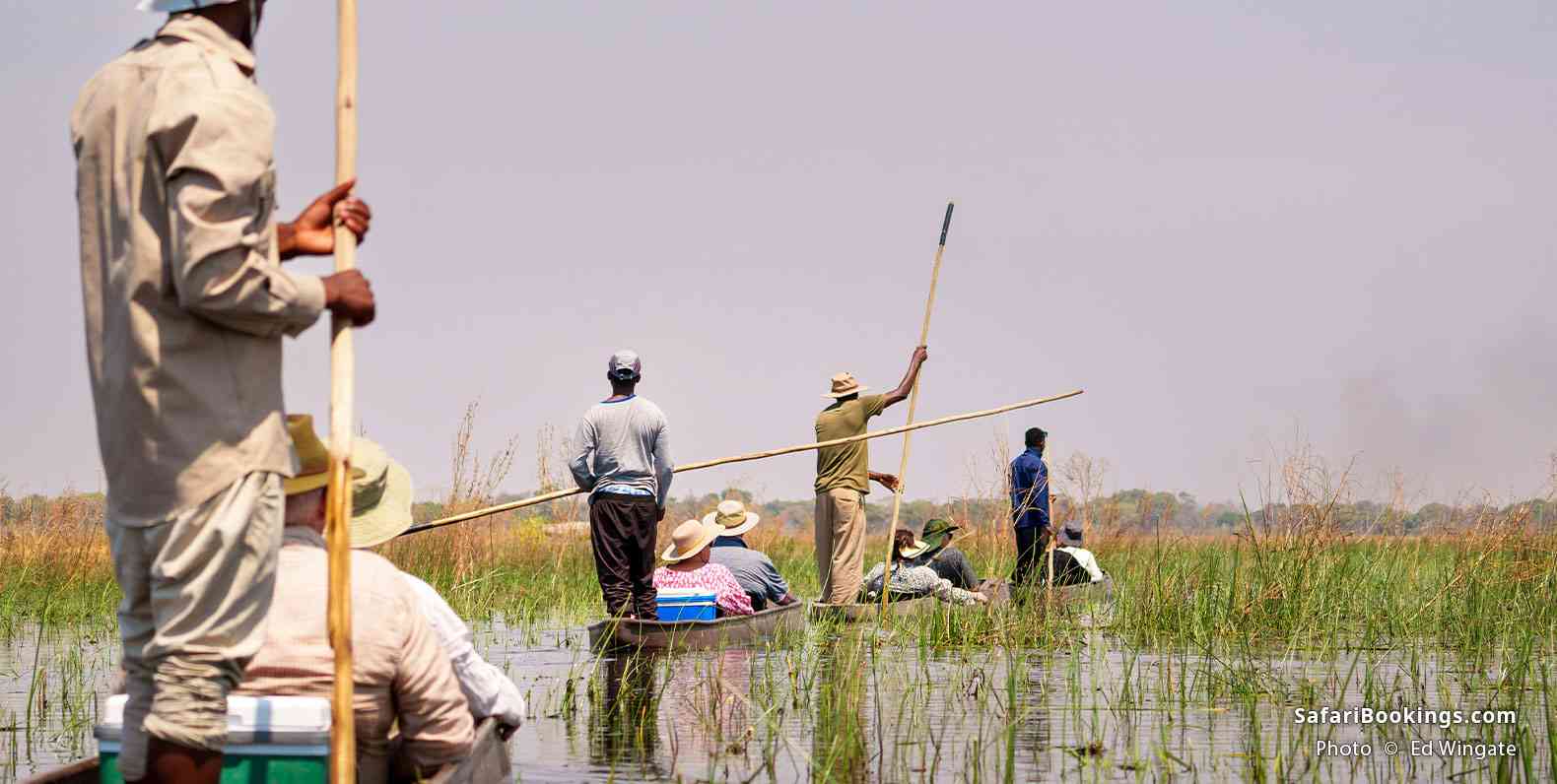 Guides pole tourists through the Okavango Delta
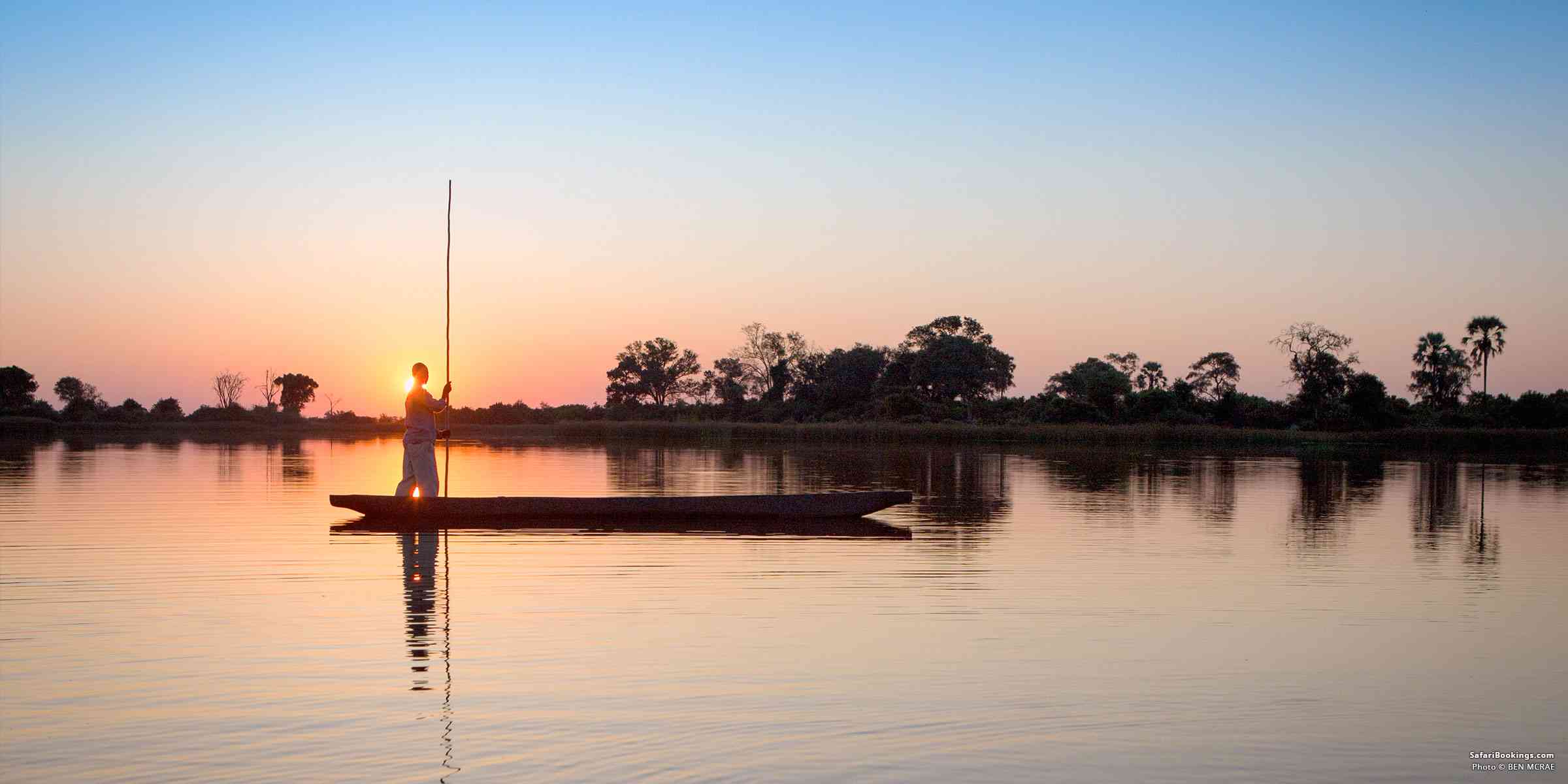
The classic Okavango Delta experience is sitting in a mokoro (a traditional wooden canoe used by local people to fish and to otherwise get around). Waters here are shallow, and you’ll move through the channels slowly, poled (rather like a Venetian gondola) by a traditional poler from a local community.
There are many advantages to getting around in a mokoro. For a start, it really is the best way to feel close to nature in this special place – you move slowly through the landscape, with a soundtrack of birdsong and animal calls instead of motor noise, accompanied by the quiet slap of a wooden pole on the water. This is an especially wonderful way to go bird watching. You can approach areas filled with birds that you can’t reach in a car, and you’ll do so without scaring away the very species you’ve come so far to see. The much-sought-after Pel’s fishing-owl is one species that is very often best seen from the water.
It is also true that by employing a traditional poler from a Delta community, you are providing income to local people who may not have the necessary qualifications to work as guides or drivers or in the lodges and tented camps.
Despite all of these benefits, only getting around by mokoro would not be our choice. The wonder of moving slowly can mean that you get to know one area intimately and well, but it also limits how much of the Delta you can explore. It’s also not always the best way to see wildlife. While in a mokoro, I have seen an elephant swim across a water channel right in front of the canoe – careful of the waves! – and a lechwe launch into the water nearby to try and escape a chasing lion. But more often, wildlife sightings from a canoe are far less frequent than they are from a 4WD.
I love the experience of seeing the Delta from a mokoro, but I certainly wouldn’t want it to be the only way I went looking for wildlife. If I had three early mornings and late afternoons to decide what to do, I’d probably choose three or four 4WD game drives, one or two mokoro trips, and a walking safari. In other words, don’t skip the mokoro, but also don’t make it the centerpiece of your safari, especially if seeing lots of wildlife is your priority.
And one final thing. Traveling in a mokoro is highly dependent on water levels. When channels dry up, there may be nowhere to go. The same can be true when water levels are too high – if the poler can’t touch the riverbed with his pole, there is no way to move or steer. If the mokoro is high on your list of must-dos in the Delta – as it should be – check with your accommodations or tour operator before deciding on when to visit.
Under the Night Sky
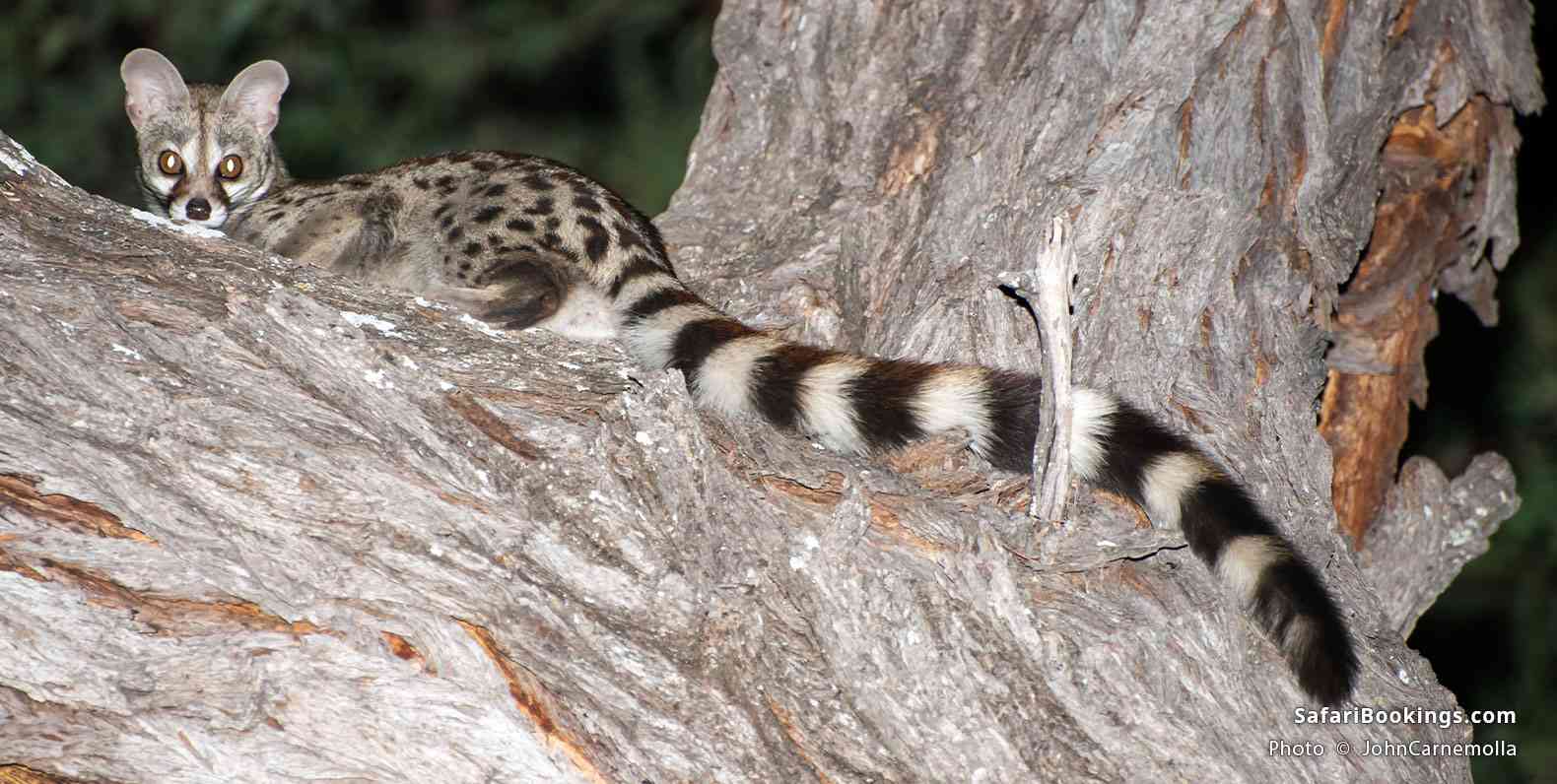 Large-spotted genet sitting on a tree in Savuti
Most people come for the wildlife and landscapes. But many – me included – always leave spellbound by the night sky. In this world without towns, nights are silent and dark and filled with wonder. The stars are astonishing – the Milky Way, the shooting stars! And in the silence of the African night, you might just get to enjoy my favorite of all safari experiences: lying awake at night and listening to the night sounds of Botswana. If you’re really lucky, a lion might even roar right outside your tent.
The other precious nighttime experience you might enjoy is the night game drive. In many of Africa’s national parks and other protected areas, driving after dark is not permitted. But large swathes of the Okavango are pure wilderness, and safari guides and drivers can take you out after dark using animal-friendly spotlights. This makes possible an entirely different cast of creatures – bush babies, aardvarks, honey badgers, owls, even lions out on the hunt as white-eyed antelope mill around nervously, aware of danger but blind to its approach.
Africa Beneath Your Feet
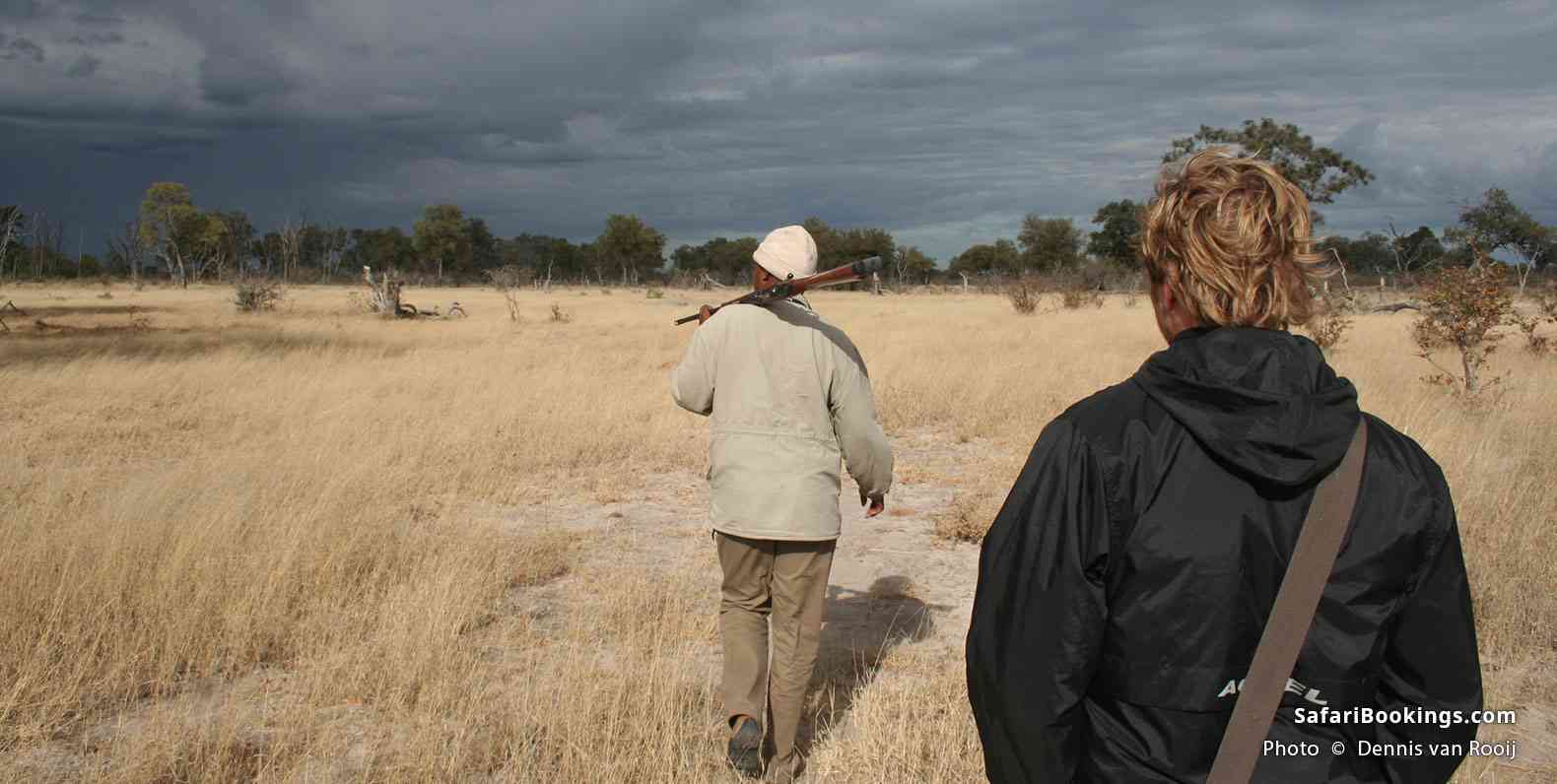 An armed guide leads a walking safari
As with night drives, so, too, for walking safaris. Because much of the Okavango has no official protection or government regulations that restrict your movement, exploring on foot is possible. There is no better way to feel close to nature than walking through a landscape where lions and leopards and elephants are never far away. It really does make you more aware of your surroundings and the animals that might be nearby. Yes, you’ll be walking with an expert, armed guide who will make sure that you stay safe. But there is something thrilling and terrifying all at once about walking in the footprints – literally – of those same lions, leopards and elephants.
One time I was walking in the Delta with my guide and we passed a tree without seeing anything. As we kept going, a lion ran out and away from under the tree. For the briefest moments I felt as if I were part of the African food chain. Then I just felt terribly alive and excited at what had just happened, and what was possible out here.
I’ve Heard the Okavango Delta Is Expensive. Is This True?
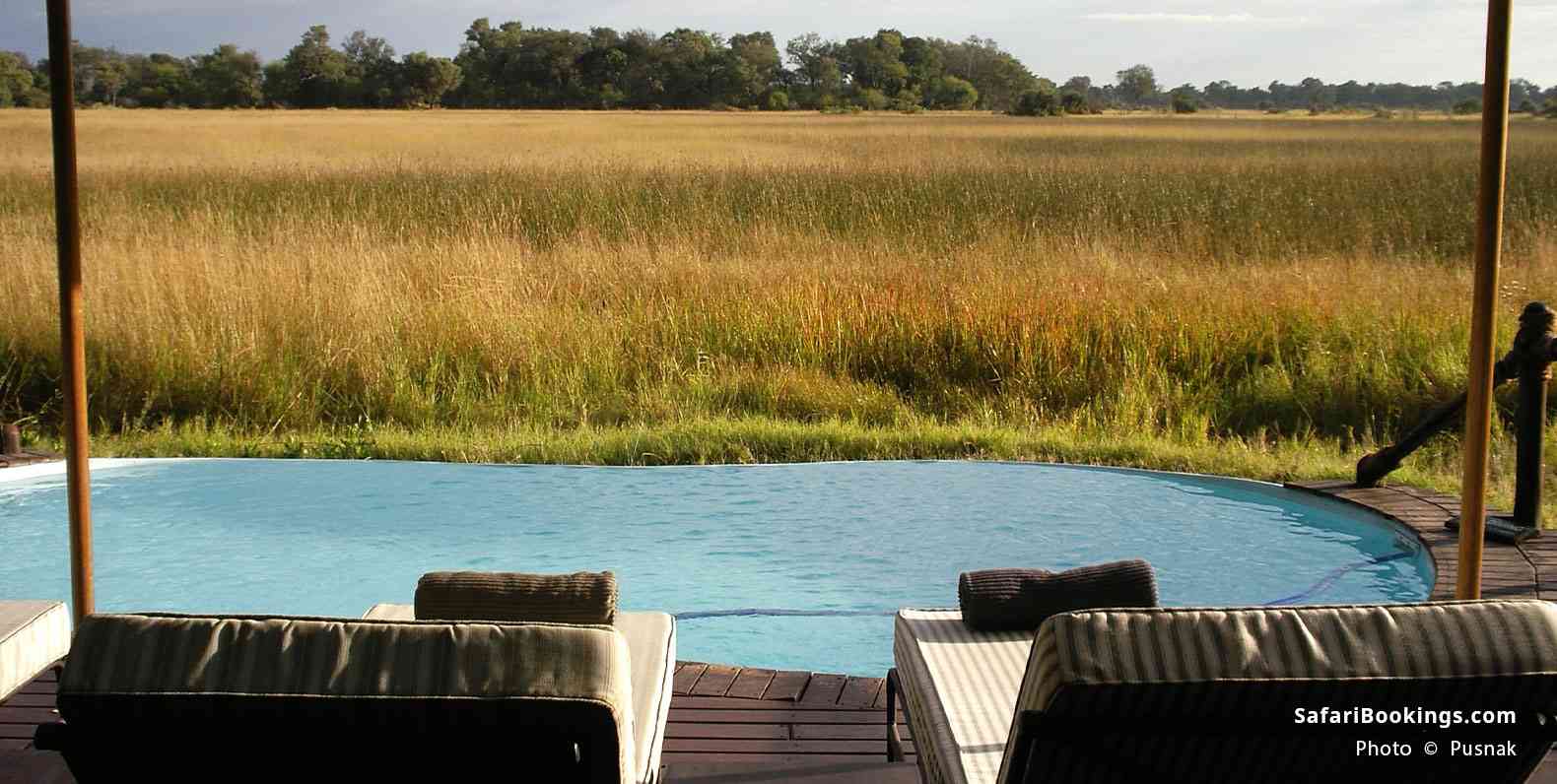 Pool overlooking the Okavango Delta at sunset
It can be. Prices can, of course, be sky high in those luxury lodges and tented camps that can only be reached by plane. Apart from the staggering levels of luxury, you’re also paying for the isolation, with everything (from building materials to staff transport to food and other supplies) having to be flown in.
High safari prices in the Okavango Delta, and more broadly in Botswana, are not only dictated by geography. For decades, Botswana has tried to maintain a high-cost, low-density tourism footprint, and it has been wonderfully effective in avoiding the worst impacts of mass or overtourism. Yes, each traveler pays more, but the overall impact has been more sustainable and, for those who can afford it, more enjoyable. After all, who wouldn’t prefer to experience each wildlife sighting with only one or two other vehicles around, instead of jostling for space amid a convoy of safari cars.
Despite all of this, it remains possible to enjoy the Delta on a tighter budget. Lots of safari operators in Maun offer safaris into southern areas of the Delta by vehicle (thereby saving money on getting there) and with much simpler campsites to sleep in. You can also – my favorite – go on a self-drive safari. If you drive your own vehicle, you’ll pay more for transport, but your vehicle is also your accommodations and camping fees are low. In your own vehicle you can still reach significant areas of the region, including much of Moremi Game Reserve and Khwai Concession.
When Should I Visit?
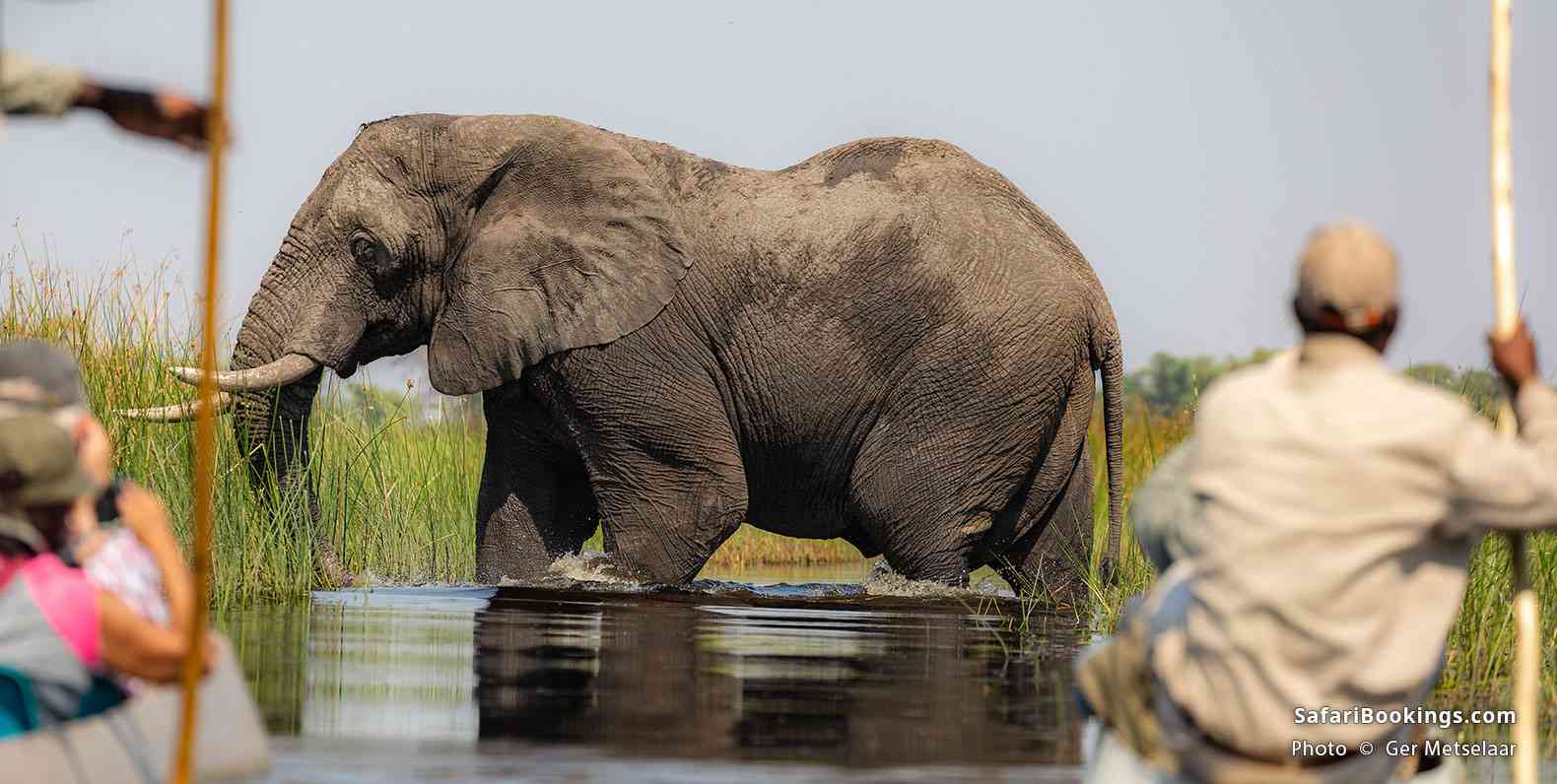 Elephant crossing a channel ahead of a mokoro
I have visited the Okavango in all seasons and there really is no bad time to come here, but there are some seasonal differences. If your top priority is seeing wildlife, then July to October is best; this is also high season and remember that October can be very hot. For birding, it’s November to April, when migratory bird species are here.
Another thing to factor in is that from December to March, which are the months of highest rainfall, some lodges and tented camps close, especially from around the middle of January. And finally, even though there’s plenty of rainfall around, water levels are determined more by flooding than they are by the rains – from January to March in particular, water levels are simply too low.
How I’d Structure a Trip
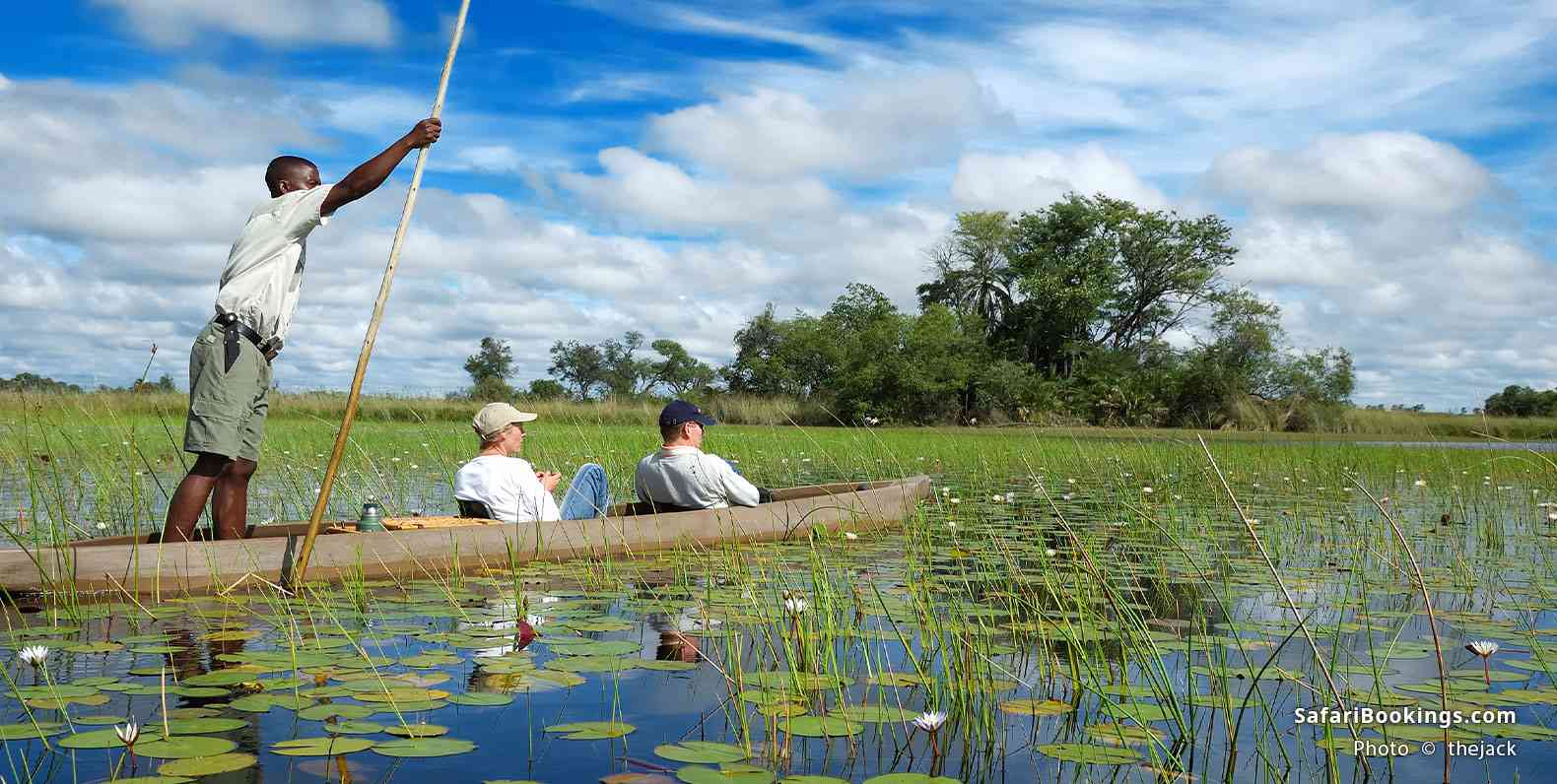 Guide poling tourists through the Okavango Delta
Spend as long as you can in the Okavango Delta. If you can only do one thing and only have three or four days (and if money is no object), I would try to make the budget stretch to a fly-in safari to one or two lodges deep in the Delta. There are so many choices, but the Chitabe Concession or Qorokwe Concession, run by Wilderness Safaris, has been a favorite of mine for a long time. Also, I could spend all of my Delta days in the greatest happiness in any of the camps operated by &Beyond (Sandibe Okavango Safari Lodge or Nxabega Okavango Tented Camp) or Great Plains Conservation (Selinda Camp, Duba Plains Camp or Zarafa Camp).
But if you have a week, I would aim for three or four days on the fly-in safari, plus the remaining three or four days on a self-drive safari, with a day in and around Khwai Concession, and the rest of the time exploring Moremi Game Reserve.
If for whatever reason I can’t do the fly-in safari, I always take a scenic flight out of Maun. Everyone should see the Okavango Delta from above at least once in their lives. And one tip: if I can afford it, I always choose the helicopter over the airplane, because it’s better for photos.
One final thing. It’s not always possible, but my ideal amount of time to be exploring the Delta is 10 days to two weeks. If I have that long, I would, depending on my budget, spend five or six days on the fly-in safari, and four or five on a self-drive safari.
Want To Visit Okavango Delta?
Click on the button below to compare Okavango Delta tours offered by top-rated tour operators.
By Anthony Ham Anthony is a renowned Africa expert and author of the Lonely Planet guide to Botswana and Namibia.
More About This Author


 Subscribe to our newsletter
 Follow us on Instagram
Safari Tours to Botswana
-

10-Day Botswana Okavango and Chobe Mobile Expedition
$4,556 to $5,569 pp (USD)
Botswana: Private tourBudgetCamping
You Visit: Maun (Start), Moremi GR (Okavango Delta), Khwai Concession (Okavango Delta), Savuti (Chobe NP), Maun (End)
Kingfisher Safaris
5.0/5 – 75 Reviews

-
4-Day Okavango Delta Safari with Moremi Crossing
$2,775 to $3,880 pp (USD)
Botswana: Private tour
Mid-range Tented Bush CampYou Visit: Maun (Start), Moremi GR (Okavango Delta), Maun (End)
Indigo Safaris
4.8/5 – 236 Reviews
-
![8-Day Wilderness Voyage]()
8-Day Wilderness Voyage
$3,684 to $5,456 pp (USD)
Botswana & Zimbabwe: Private tourLuxuryLodge & Tented Camp
You Visit: Victoria Falls (Start), Okavango Delta, Khwai Concession (Okavango Delta), Maun Airport (End)
Safari Online
5.0/5 – 145 Reviews