
Average Expert Rating
Rating Breakdown
Write a User ReviewIdyllic Beaches & Recovering Parks
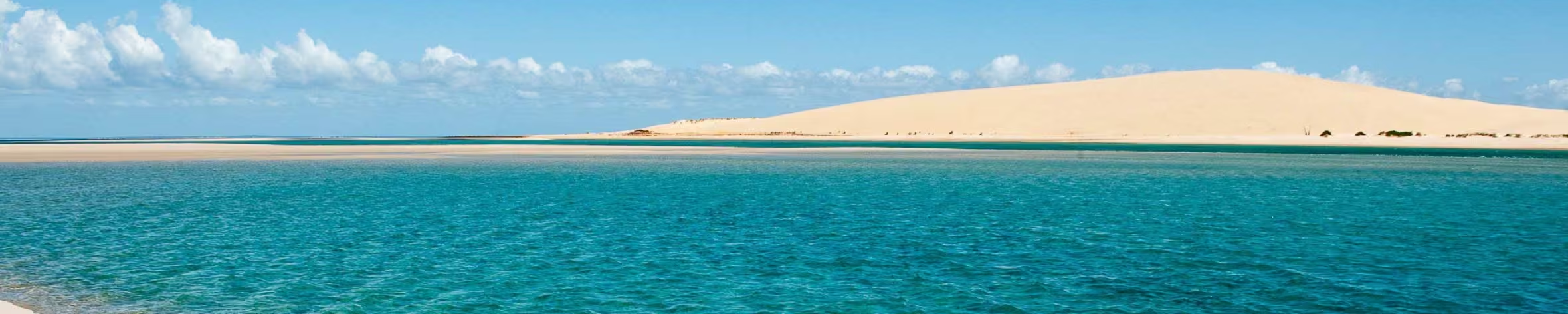
Mozambique has some of the most beautiful beaches in Africa. Yet, its 2,500km coastline is remarkably unspoiled and undeveloped. Most tourism is confined to its islands: Bazaruto in the south and the Quirimbas in the north. Both archipelagos are renowned for their luxury lodges and fantastic diving opportunities.
Compared to many other countries in the region, Mozambique doesn’t have a lot to offer in terms of safaris, but there are a few gems. Maputo National Park offers a unique ‘beach and bush’ experience; the marine-wildlife viewing is out of this world, but the main reason for the reserve’s creation was to protect southern Africa’s last-remaining coastal elephant population. Gorongosa National Park is perhaps Mozambique’s hottest safari destination. Once known as the Serengeti of southern Africa, it is on a strong path to being worthy of this nickname once again. As the park has received higher protection, animals are coming back and the growing lion population
The Great Limpopo Transfrontier Conservation Area (GLTFCA) is currently undergoing a lot of development as well. This 100,000km2 Peace Park protects Kruger in South Africa, Gonarezhou in Zimbabwe and Limpopo, Banhine and Zinave National Parks in Mozambique. Zinave, in particular, is rapidly becoming a worthwhile safari destination. In recent years, thousands of animals have been translocated here and subsequently lions have turned up on their own account. Its proximity to Vilanculos and the popular Bazaruto Archipelago makes this exciting new Big Five destination a great addition to a Mozambique beach holiday.
Compared to many other countries in the region, Mozambique doesn’t have a lot to offer in terms of safaris, but there are a few gems. Maputo National Park offers a unique ‘beach and bush’ experience; the marine-wildlife viewing is out of this world, but the main reason for the reserve’s creation was to protect southern Africa’s last-remaining coastal elephant population. Gorongosa National Park is perhaps Mozambique’s hottest safari destination. Once known as the Serengeti of southern Africa, it is on a strong path to being worthy of this nickname once again. As the park has received higher protection, animals are coming back and the growing lion population
Read more
is a good indication of a recovering ecosystem.The Great Limpopo Transfrontier Conservation Area (GLTFCA) is currently undergoing a lot of development as well. This 100,000km2 Peace Park protects Kruger in South Africa, Gonarezhou in Zimbabwe and Limpopo, Banhine and Zinave National Parks in Mozambique. Zinave, in particular, is rapidly becoming a worthwhile safari destination. In recent years, thousands of animals have been translocated here and subsequently lions have turned up on their own account. Its proximity to Vilanculos and the popular Bazaruto Archipelago makes this exciting new Big Five destination a great addition to a Mozambique beach holiday.

Bordered by the Indian Ocean Which Is Dotted With Tropical Islands Offering Beach Holidays and Burgeoning Game-Viewing
Mozambique’s 2,500-km-long sunny coastline features stunning white-sand beaches backed by swaying palms, and world-class coral reefs primed for swimming, diving, snorkelling and sunset sailing on traditional white-sailed dhows. It’s also well known for its super-friendly people and delicious food – think succulent prawns, piri-piri chicken, soft Portuguese rolls, and fresh cashew nuts and fruit straight from the trees.
Highlights include two clusters of postcard-perfect islands with their exclusive resorts – the six-island Bazaruto Archipelago off the coastal town of Vilankulo, and the 32-island Quirimbas Archipelago near the Tanzanian border. Then there’s the cheaper Inhambane region, loved by South African families, fishers and campers; here Tofo and Barra beaches are my favourites, where humpback whales, dolphins and nesting turtles might become potential company. I also recommend mangrove-covered Ibo Island and the coral-rock Island of Mozambique (Ilha de Moçambique)
Despite the coastline owning the spotlight, Mozambique’s national parks are rebounding thanks to greater protection and conservation initiatives like the restocking of large mammals. The two most accessible are: the beautiful Gorongosa, which is now home to elephant, lion, hippo, buffalo, crocodile, and numerous antelope (it’s famous for its big herds of waterbuck and sable); and Maputo National Park, with elephant, crocodile and hippo, and it’s also been restocked with zebra, giraffe and antelope such as impala and kudu, which have mostly come from Eswatini (formerly Swaziland).
Mozambique is one of my most-liked African countries and I’ve visited many, many times, both as a tour leader and on self-drive trips – the most epic being several weeks largely following the coast from Vilankulo all the way north into Tanzania. I’ve also crossed from Kruger National Park into Limpopo National Park. But you don’t have to be that adventurous, with flights landing at Maputo, Vilankulo, Inhambane and Pemba. Resorts can easily be combined with South Africa’s Kruger or reserves in KwaZulu-Natal, and hopefully as its parks improve further, a bush-and-beach safari will become viable in just Mozambique.
Highlights include two clusters of postcard-perfect islands with their exclusive resorts – the six-island Bazaruto Archipelago off the coastal town of Vilankulo, and the 32-island Quirimbas Archipelago near the Tanzanian border. Then there’s the cheaper Inhambane region, loved by South African families, fishers and campers; here Tofo and Barra beaches are my favourites, where humpback whales, dolphins and nesting turtles might become potential company. I also recommend mangrove-covered Ibo Island and the coral-rock Island of Mozambique (Ilha de Moçambique)
Read more
for their atmospheric, crumbling Portuguese colonial-era architecture, and there are excellent restaurants and good-standard hotels in the fast-developing capital Maputo.Despite the coastline owning the spotlight, Mozambique’s national parks are rebounding thanks to greater protection and conservation initiatives like the restocking of large mammals. The two most accessible are: the beautiful Gorongosa, which is now home to elephant, lion, hippo, buffalo, crocodile, and numerous antelope (it’s famous for its big herds of waterbuck and sable); and Maputo National Park, with elephant, crocodile and hippo, and it’s also been restocked with zebra, giraffe and antelope such as impala and kudu, which have mostly come from Eswatini (formerly Swaziland).
Mozambique is one of my most-liked African countries and I’ve visited many, many times, both as a tour leader and on self-drive trips – the most epic being several weeks largely following the coast from Vilankulo all the way north into Tanzania. I’ve also crossed from Kruger National Park into Limpopo National Park. But you don’t have to be that adventurous, with flights landing at Maputo, Vilankulo, Inhambane and Pemba. Resorts can easily be combined with South Africa’s Kruger or reserves in KwaZulu-Natal, and hopefully as its parks improve further, a bush-and-beach safari will become viable in just Mozambique.
Beautiful Beaches and Off-beat Safaris
Every time Mozambique seems to be on the upswing, new challenges arise. In recent years, these have included instability in the far north and election-related upheavals further south. While these result in unfavourable press, there is still so much good about Mozambique – a country that has long been one of my favourites.
The coastline is magnificent, and made even more alluring by islands like Ilha de Moçambique, where people go about their daily lives against a backdrop that seems to have come straight out of the 17th century. Mozambique’s blend of African and Portuguese influences – best seen in its towns, literature, poetry and music – is another draw. And then there is the wildlife, although this often requires a more creative approach.
My favourite safari park – and the country’s only ‘classic’ safari destination – is Gorongosa, where you can spot animals in a beautiful setting, generally with few other visitors around, and learn about
The Mozambican coast is home to sea turtles, dugongs, beautiful corals and more, and you can dive and snorkel with whale sharks and manta rays. This makes a marine-focused safari in the Bazaruto Archipelago, for example, an excellent and generally more accessible alternative to terrestrial wildlife safaris.
The coastline is magnificent, and made even more alluring by islands like Ilha de Moçambique, where people go about their daily lives against a backdrop that seems to have come straight out of the 17th century. Mozambique’s blend of African and Portuguese influences – best seen in its towns, literature, poetry and music – is another draw. And then there is the wildlife, although this often requires a more creative approach.
My favourite safari park – and the country’s only ‘classic’ safari destination – is Gorongosa, where you can spot animals in a beautiful setting, generally with few other visitors around, and learn about
Read more
local community conservation initiatives. In the far south, Maputo National Park protects a lovely section of coastline as well as a healthy population of elephants.The Mozambican coast is home to sea turtles, dugongs, beautiful corals and more, and you can dive and snorkel with whale sharks and manta rays. This makes a marine-focused safari in the Bazaruto Archipelago, for example, an excellent and generally more accessible alternative to terrestrial wildlife safaris.
Beaches, History … and a Bit of Safari
Mozambique is first, second and third a beach nirvana, fourth an area of historic interest, and maybe fifth or sixth a safari destination. Running all the way north from Ponta do Ouro (on the border with South Africa) to the mighty Ruvuma River (bordering Tanzania), the country’s 2,500km of Indian Ocean frontage is studded with palm-lined tropical beaches as attractive to sunbathers and swimmers as they are to snorkellers, divers and game fishers. The country also boasts a few compelling old ports, most notably Ilha do Moçambique, which served as the Portuguese capital from 1530 to 1898, and is one of the most atmospheric historic towns anywhere in southern Africa. By contrast, the country’s main potential safari destinations either suffered heavy losses to poaching during the years of civil war, or remain largely undeveloped. That said, the refurbished Gorongosa National Park is well worth a visit, and has the long-term potential to become as important an attraction as it was in the