
Average Expert Rating
Rating Breakdown
Write a User ReviewJane Goodall’s Chimpanzees
Read more
I would probably choose Mahale over Gombe simply because of its scenic beauty and sense of isolation. But really there’s not a lot to choose between the two.
Jane Goodall’s Chimp Reserve
Read more
of monkey – red-tailed, blue and red colobus, the latter frequently hunted by chimps – and a checklist of 287 bird species including fish eagle, palm-nut vulture and Peter’s twinspot, all of which frequent the camp.Jane Goodall’s Land of Primates
As always, we were allowed to spend an hour with the chimpanzees. Our guides were generous with the timing, only starting the clock once we had unobstructed views after relocating the animals. The females spent their time grooming one another while the youngsters tumbled, climbed and played nearby.
Their grooming behaviour is a fascinating
Read more
example of animal culture. In Mahale Mountains National Park, the other major chimpanzee-tracking destination on Lake Tanganyika, chimpanzees commonly perform the Grooming Handclasp, in which grooming partners clasp each other's hands overhead. In Gombe, however, grooming partners typically hold onto nearby branches instead, illustrating how neighbouring chimpanzee communities can develop distinct cultural traditions.There are no roads in Gombe and access is exclusively by boat. The journey from Kigoma takes about 1½ hours. During our two-night stay we tracked chimpanzees on the afternoon of our arrival and again the following morning. We could have trekked again before returning to Kigoma on our final day, but chose to head off straight after breakfast due to time constraints.
Other worthwhile activities include a short hike to a picturesque waterfall and a visit to Jane Goodall's former research station.
Beyond the chimpanzees, we saw plenty of red colobus monkeys and olive baboons. The baboons have also been the subject of long-term research and are exceptionally habituated, making them endlessly entertaining to watch while relaxing around camp.
Afternoons were spent swimming in the crystal-clear waters of Lake Tanganyika, with jungle-clad mountains rising steeply behind the white-sand beach—a wonderfully relaxing way to end each day after time spent in the forest.
A unique park to see the chimpanzees made famous by primatologist Jane Goodall
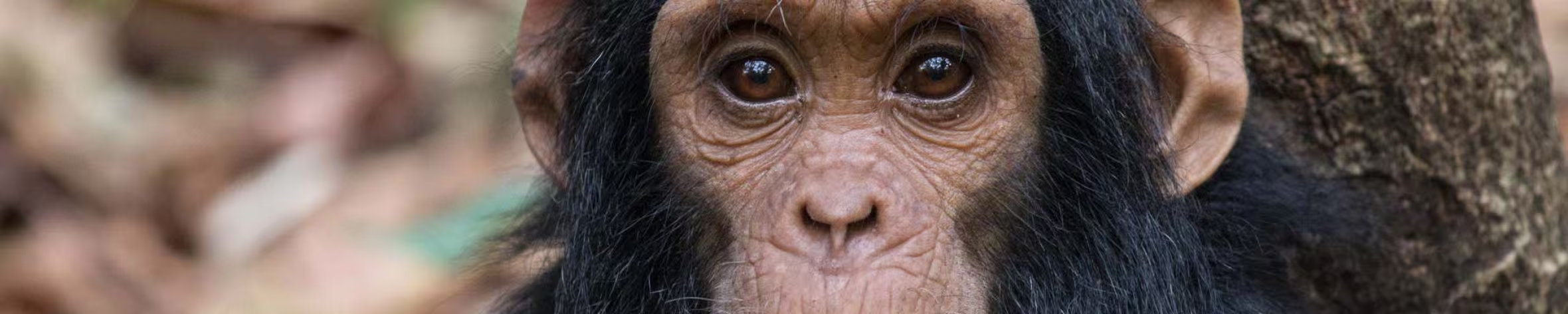
Gombe is a fragile strip of chimpanzee habitat straddling the steep river valleys and tropical rainforest on Lake Tanganyika. Trekking to see chimpanzees here is a remarkable experience; although sightings are not guaranteed, they are habituated to humans, the guides usually know where to find them, and no scientific expertise is needed to recognise their distinctive pants, hoots and screams. Besides chimpanzees, other primates include a troop of ‘beach-combing’ olive baboons, and red-tailed and vervet monkeys. I found the lake itself enchanting – we sat on the beach at sunset and watched the lanterns of hundreds of small wooden boats bobbing on the lake like a sprawling city. Gombe is not easy to get to – it’s a bumpy and arduous boat ride from Kigoma – and only appeals to those with a keen interest in primates, but is one of the few places in the world to see chimps in the wild.
Meet the chimpanzees in Jane Goodall’s old stomping ground.
Gombe sits on Lake Tanganyika and the only way to reach it is