

 Google Maps


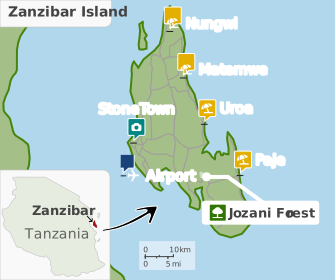
Jozani is Zanzibar’s largest remaining forest and the most accessible part of the 50km²/19mi² Jozani-Chwaka Bay National Park. The island’s only national park, it lies in the southeast close to several popular resort villages. Guided walks
Read more
in Jozani offer a great opportunity to get close to the striking , an monkey that is to the island. Other wildlife at Jozani includes , forest birds such and , and the tiny and antelope.-
1
Arrive at the Forest-fringed Reception Area
Jozani Forest signboard Guided walks start at the park reception, which stands alongside a surfaced road connecting Stone Town to Paje and Jambiani. Entrance fees must be paid here (if you’re on a tour, your guide should handle this).Read more
You will then be allocated a forest guide who will provide a bit of background information and brief you on the rules for monkey viewing before you set off. If you need a bite or drink before the walk, there’s a well-priced canteen and restaurant. This is also a good place to look for , which often lurk around the car park and are relaxed enough for easy photography. -
2
Head Into a Century-old Mahogany Plantation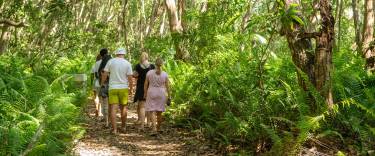
People walking in Jozani Forest The guided trail starts in a plantation of , a hardwood tree traditionally used to make furniture. The mahoganies were planted in the 1920s, originally for timber, but because they are to Zanzibar itRead more
has been made illegal to chop them down. The canopies of these giant trees shade an undergrowth of dense ferns, which are used locally as a medicine to give strength to pregnant women. You’ll see plenty of colorful butterflies, while occasional bursts of birdsong break through the white noise of . Troops of pass through sometimes to eat mahogany leaves. -
3
Track Zanzibar Red Colobuses in the Indigenous Forest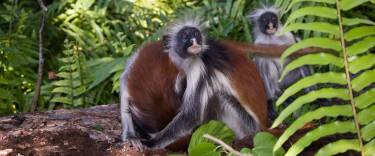
Troop of Zanzibar red colobus Jozani Forest, Tanzania. Photo by Ariadne van Zandbergen. © All rights reserved 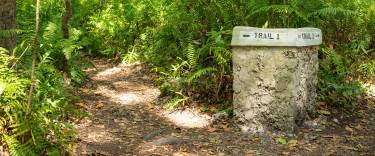
Forest trails Jozani Forest, Tanzania. Photo by Ariadne van Zandbergen. © All rights reserved 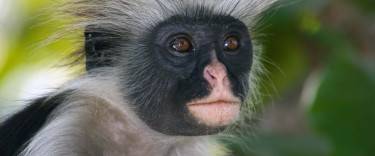
Zanzibar red colobus Jozani Forest, Tanzania. Photo by Ariadne van Zandbergen. © All rights reserved 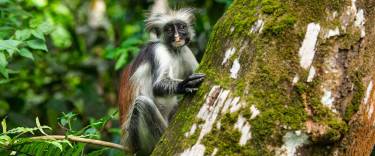
Zanzibar red colobus Jozani Forest, Tanzania. Photo by Ariadne van Zandbergen. © All rights reserved 
Zanzibar red colobus Jozani Forest, Tanzania. Photo by Ariadne van Zandbergen. © All rights reserved 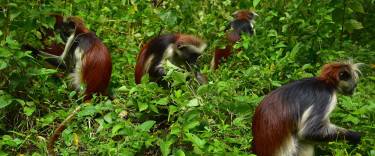
Troop of Zanzibar red colobus Jozani Forest, Tanzania. Photo by Perekrestov. © All rights reserved 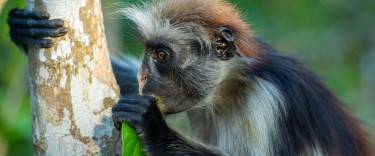
Zanzibar red colobus Jozani Forest, Tanzania. Photo by Ariadne van Zandbergen. © All rights reserved A highlight of your walk through Jozani will be heading deep into the tangled natural forest to look for the . They are often found hanging around fruiting trees – wild guavas are aRead more
favorite – and the guides are skilled at locating them. They are very beautiful monkeys, with a reddish-brown coat and pale underparts. The males are distinguished by a long and rather unkempt fringe. The troops that live close to the headquarters are very to visitors, so you can watch them almost as if no people were present.Engaging as it is to watch a troop of Zanzibar red colobus feed, groom and leap between trees, it is sobering to realize that these handsome acrobats are listed among the world’s most monkeys. Back in 2004, when Jozani-Chwaka Bay National Park was created, some estimates placed the island-wide population at fewer than 2,000 individuals. Fortunately, conservation efforts and translocations to other wooded areas on Zanzibar have helped increase the population to between 15,000 and 20,000 animals. This work has been largely funded by tourist revenue from the national park. -
4
Explore a Coastal Mangrove Forest on a Wooden Boardwalk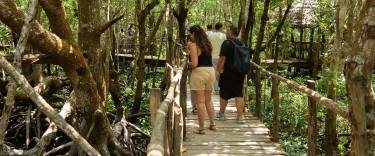
Mangrove boardwalk Jozani Forest, Tanzania. Photo by Ariadne van Zandbergen. © All rights reserved 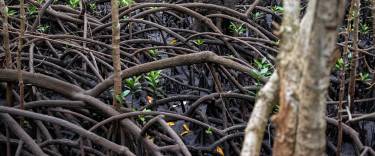
Mangrove tree roots Jozani Forest, Tanzania. Photo by Prokop Harazim. © All rights reserved 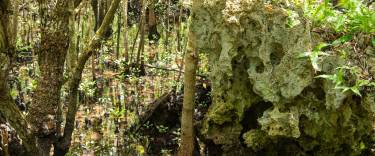
Mangroves growing between coral rocks Jozani Forest, Tanzania. Photo by Ariadne van Zandbergen. © All rights reserved 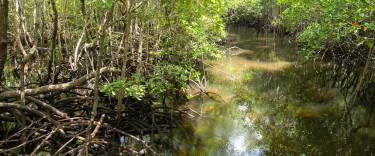
Mangroves Jozani Forest, Tanzania. Photo by Ariadne van Zandbergen. © All rights reserved 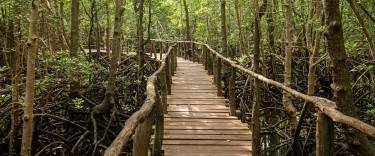
Mangrove boardwalk Jozani Forest, Tanzania. Photo by Dr. Kacie Crisp. © All rights reserved 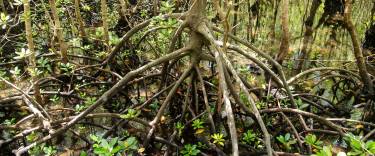
Mangroves Jozani Forest, Tanzania. Photo by Ariadne van Zandbergen. © All rights reserved When you’ve had your fill of monkey viewing, you can walk or drive along a 2km/1.2mi track that leads from the park reception to the mangrove boardwalk. This circular wooden walkway leads through a swampy tidalRead more
habitat dominated by hardy evergreen trees known as . These trees are notable for their high level of salt tolerance and their unusual aerial roots, which are fully exposed at low tide. Mangrove swamps are considered to be a key ecosystem for slowing down climate change. Recent studies show that they can capture and store up to 10 times more carbon dioxide than regular forests.The mangroves are home to some interesting wildlife. Most bizarre is the , an amphibious fish that spends more than half its time on land and propels itself across the sticky mud using modified pectoral fins. are also commonly seen scurrying around. Birds include the brilliant aquamarine and the peculiar . The black heron is also known as the umbrella bird because it raises its wings to form a shady canopy to attract the fish it feeds on.


How To Get to Jozani Forest

Jozani Forest lies 40km/25mi southeast of Stone Town along a surfaced road that continues eastward for 15km/9mi to Paje. The drive takes about 1 hour. Most people visit the forest on an all-inclusive guided day tour,
Read more
which can be organized through any resort hotel or local operator on Zanzibar. It is also possible to self-drive to Jozani. Or you can get there using public transportation between Stone Town and Paje, which runs right past the reception.Best Time To Visit Jozani Forest

The best time to visit Zanzibar is during the Dry seasons (January to February and June to October) and Jozani Forest is no exception. That said, if you visit at another time of year, it is
Read more
still perfectly possible to do a guided walk in Jozani, but ideally not when it is raining, so check the weather forecast first.Jozani opens at 7:30 AM, and the perfect time to visit is as soon as possible after that. Early morning is the coolest time for walking in the forest and also when wildlife tends to be most active. An early arrival also means you’ll avoid the main influx of day tours, which builds up from 9 AM onward.Nearby Attractions

The vast majority of visitors to Jozani Forest are content to do the 2-hour walk described above. However, it is also possible to do the longer Wangwani Wetland Trail, which covers 14km/9mi and usually takes about