Guide to Visiting Serengeti National Park – All You Need To Know
 By Philip Briggs
 Philip is a renowned Africa expert and author of the DK Eyewitness guide to Kenya and Bradt guide to Tanzania.
Serengeti National Park is the focus of most safaris to Tanzania. Renowned as the setting of a mind-boggling migration involving millions of wildebeest, zebras and gazelles, this vast Unesco World Heritage Site is also notable for its high densities of lions and other large predators. Tourist activity is concentrated around Seronera and, more seasonally, the southern plains and northern Mara River region. Other areas such as the Western Corridor and Lobo Hills retain an off-the-beaten-track feel outside of peak migration periods.
Why Should I Visit Serengeti National Park?
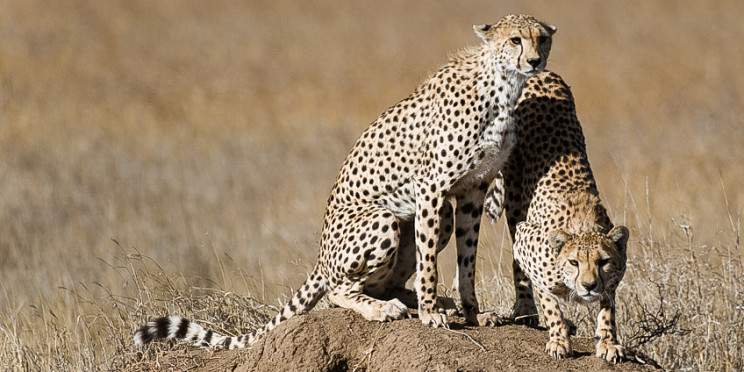
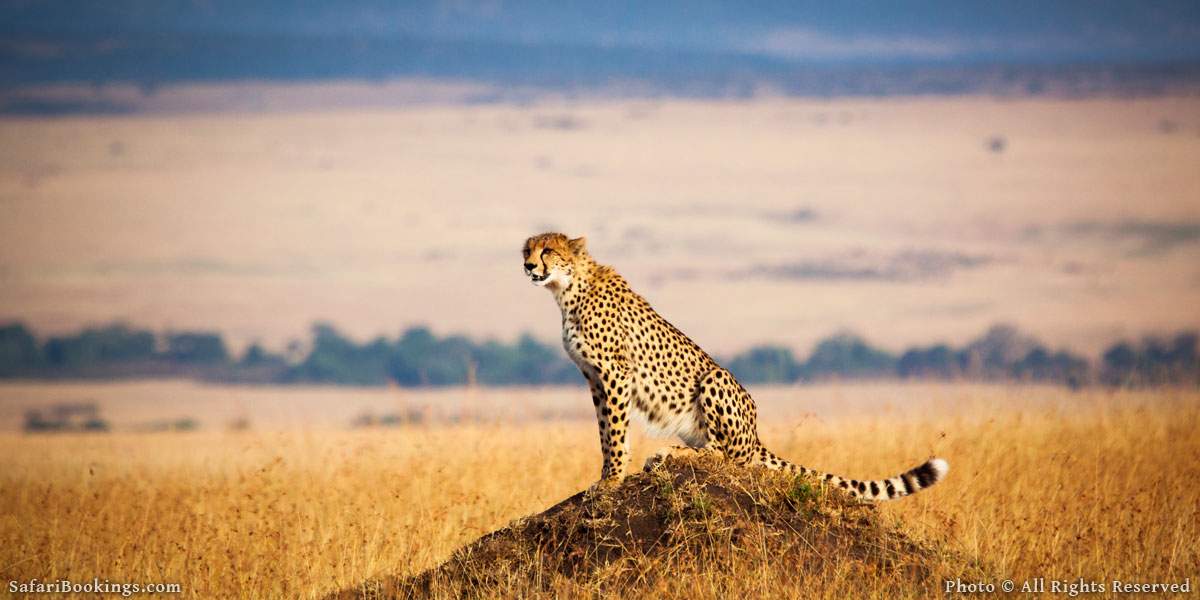 Cheetah on a termite mound on the Serengeti plains
The Serengeti’s wildebeest migration is one of the world’s greatest wildlife spectacles and justifiably sits high on many travel bucket lists. But even without the migration, this immense park would rank as one of Africa’s finest safari destinations. When it comes to wildlife diversity and large mammal densities, Serengeti is comparable to the bordering Masai Mara National Reserve in Kenya, but it covers an area that is roughly 10 times larger and is generally far less crowded.
The endless plains of the Serengeti, dotted with clusters of granite hills known as koppies, offer a liberating sense of space. Reflected in the original Maasai name Siringit (‘the land that runs on forever’), the vastness of this landscape is as much a feature of the park as the wildlife. It is particularly striking when viewed from above on an early morning balloon safari.
Where Is Serengeti National Park Located?
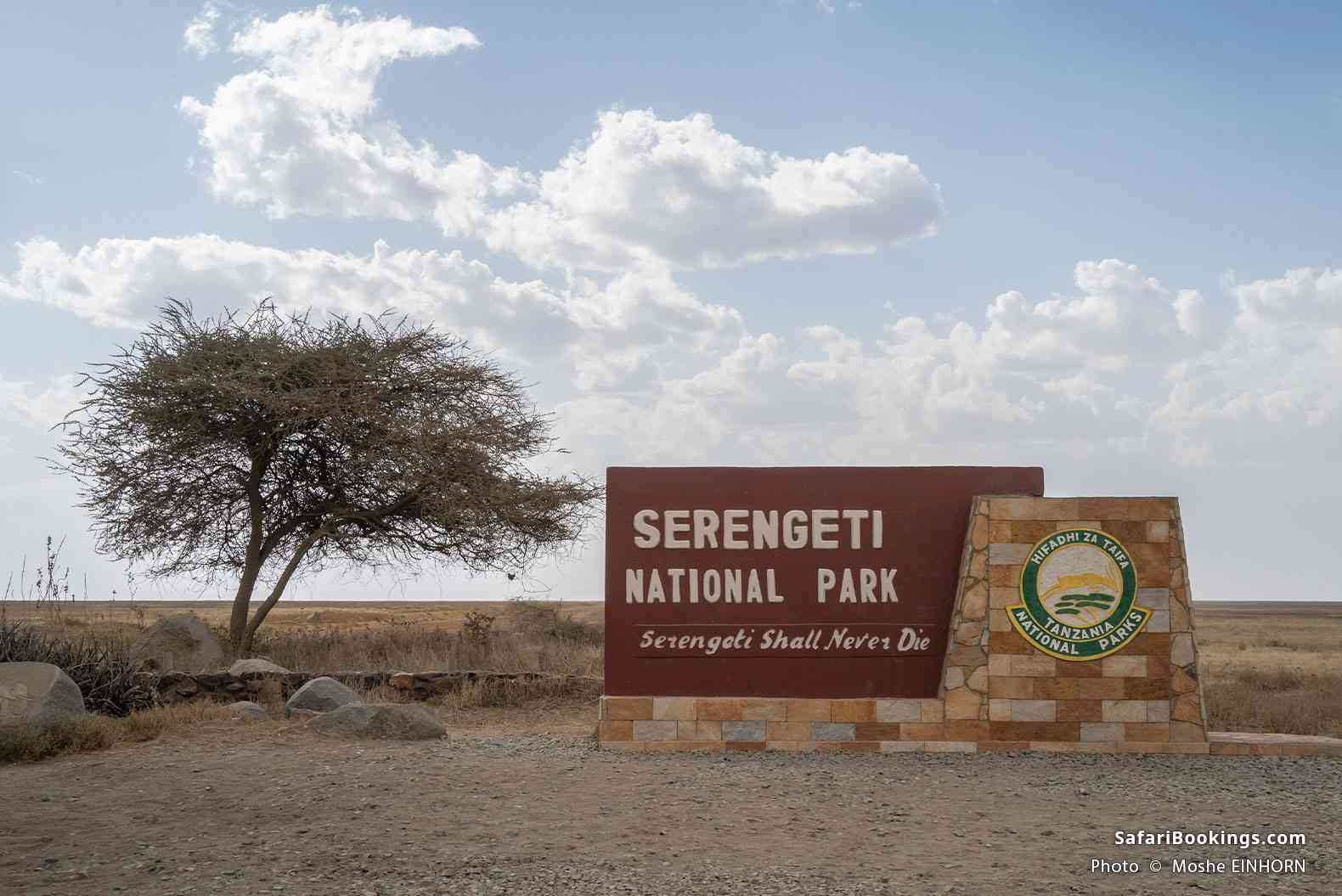 Park entrance sign
Serengeti National Park is in the far north of Tanzania, where it sits on a grassy plateau flanked by the Rift Valley to the east and the Lake Victoria Basin to the west. One of East Africa’s largest parks, it covers 14,763km²/5,700mi² and lies at the core of the much larger cross-border Serengeti-Mara ecosystem. This unfenced migratory ecosystem also includes the Ngorongoro Conservation Area, Loliondo Game Controlled Area, Grumeti and Maswa Game Reserves, and Kenya’s Masai Mara National Reserve.
Serengeti’s Western Corridor extends to within a few kilometers of Lake Victoria, Africa’s largest freshwater body. The Lake Victoria port of Mwanza, which stands 135km/84mi west of Ndabaka Gate, is the closest city to the park. However, the main urban gateway for Serengeti safaris is Arusha, 250km/155mi southeast of Naabi Hill Gate.
What Is the Timing of the Great Migration Through Serengeti National Park?
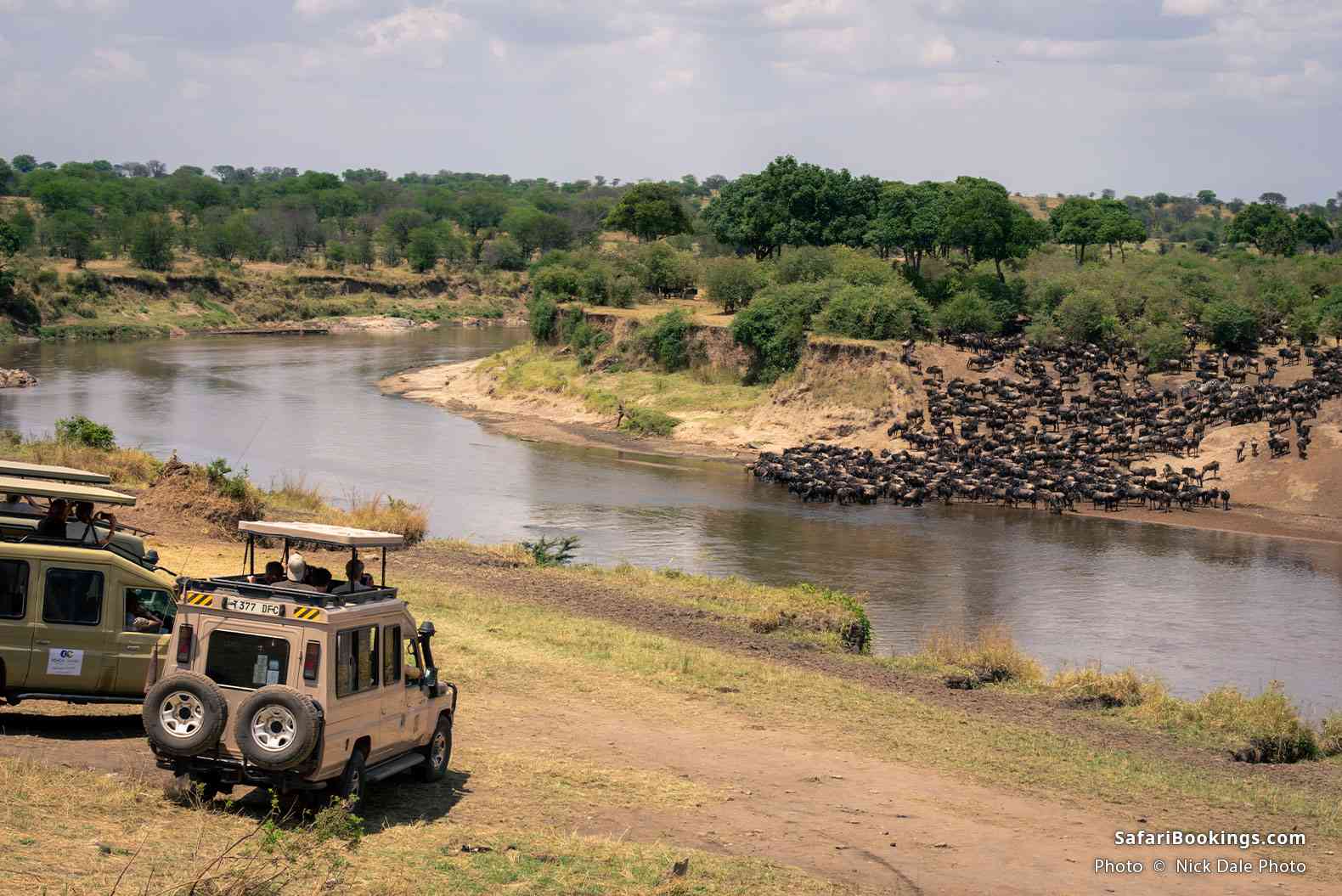 Safari vehicles watching a wildebeest river crossing
The migration of at least 2 million wildebeest and other animals through the Serengeti is one of the world’s greatest wildlife spectacles. It follows a fairly predictable and roughly clockwise route that varies slightly each year, depending on rainfall. The longest phase usually runs from December to April, when large herds disperse into the short-grass plains of the Serengeti–Ngorongoro border area. These southern plains are the setting for the calving season, which takes place over January and February, and sometimes sees thousands of newborn wildebeest drop in one day.
From late April to early June, the wildebeest gather on the southern plains in preparation for the main northward march. They usually amass in the Western Corridor during June, before crossing the Grumeti River, where many fall victim to crocodiles. Continuing north, the wildebeest reach the Mara River in August, then disperse into an area of rolling plains spanning the Northern Serengeti and Kenya’s Masai Mara. Dramatic crossings of the Mara River occur in unpredictable bursts on both sides of the border through to October, when the wildebeest start drifting south to the short-grass plains bordering Ngorongoro.
What Other Wildlife Can I Expect To See?
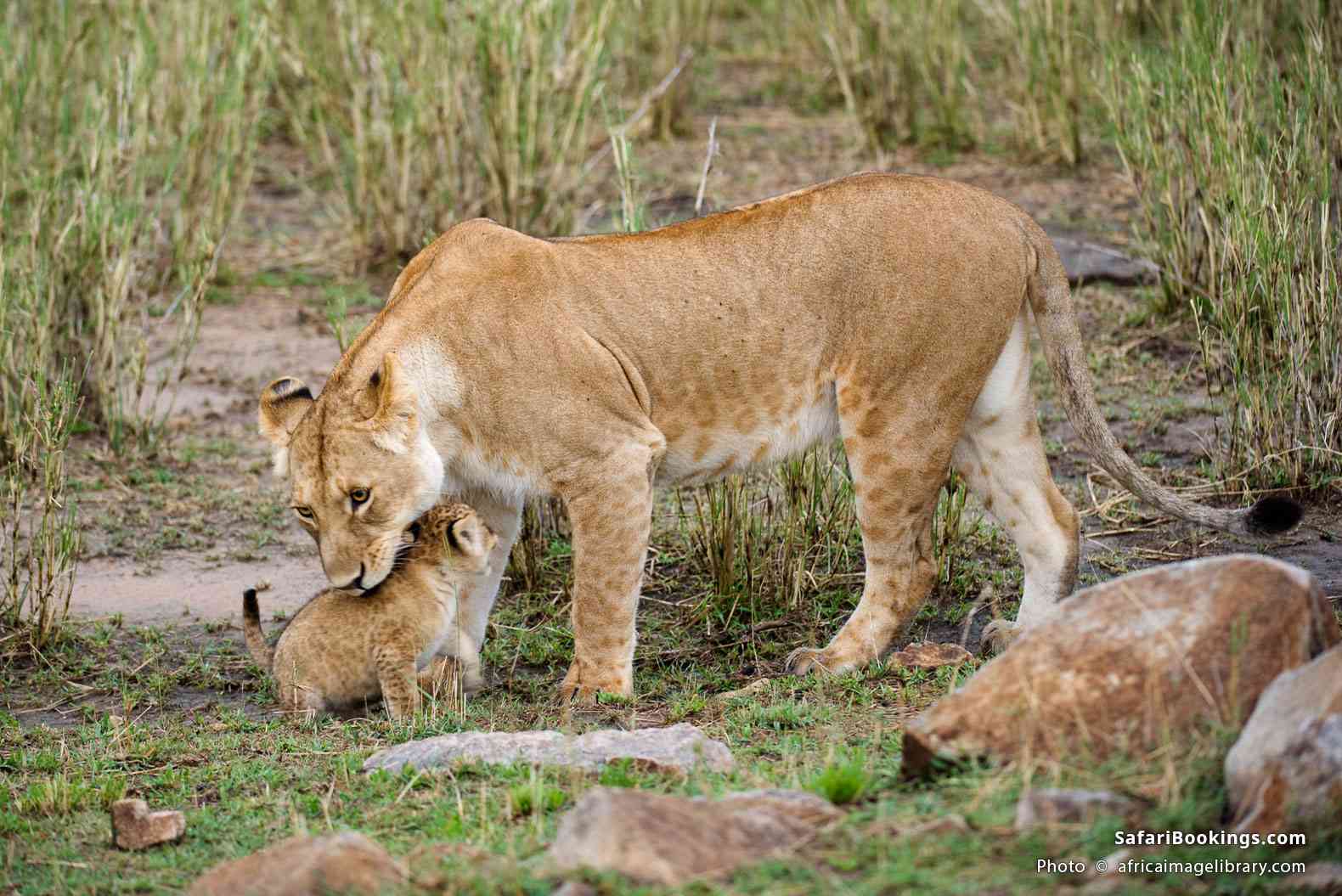 Lioness with cub
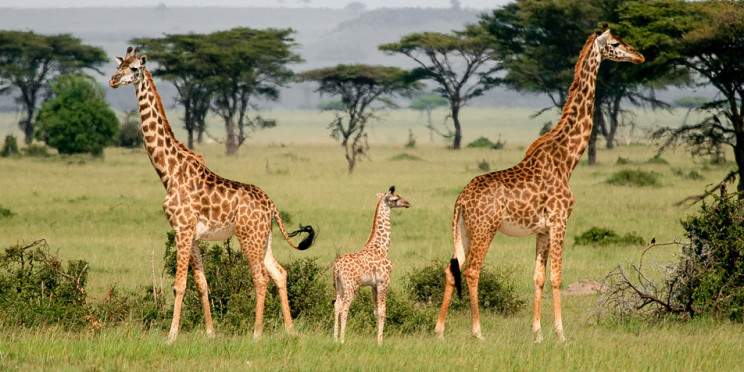
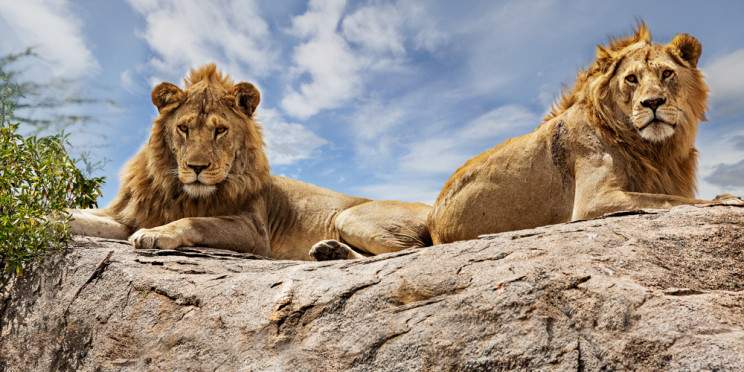
Serengeti offers exceptional carnivore viewing. In some areas, it’s not unusual to encounter lions three or four times during a game drive. Over a few days in the park, you’re also likely to see cheetah, leopard, spotted hyena, black-backed jackal and possibly bat-eared fox and serval. Other common wildlife includes elephant, buffalo, giraffe, zebra, warthog, Thomson’s gazelle, Grant’s gazelle, impala and eland. Black rhinos are largely confined to the Moru Kopjes (in the south of the park) and seldom encountered; they are more often seen in Ngorongoro Crater or Mkomazi National Park. An isolated population of patas monkey inhabits the Western Corridor, along with the striking black-and-white colobus monkey.
The Serengeti is an exceptional bird-watching destination with more than 500 species recorded. Three very localized Tanzanian endemics, namely grey-breasted spurfowl, Fischer’s lovebird and rufous-tailed weaver, are quite common in the Southern Serengeti. Birds of prey are well represented throughout the park, and it’s a prime location for large ground dwellers such as common ostrich, secretary bird, southern ground hornbill and kori bustard.
How Do I Get to Serengeti National Park?
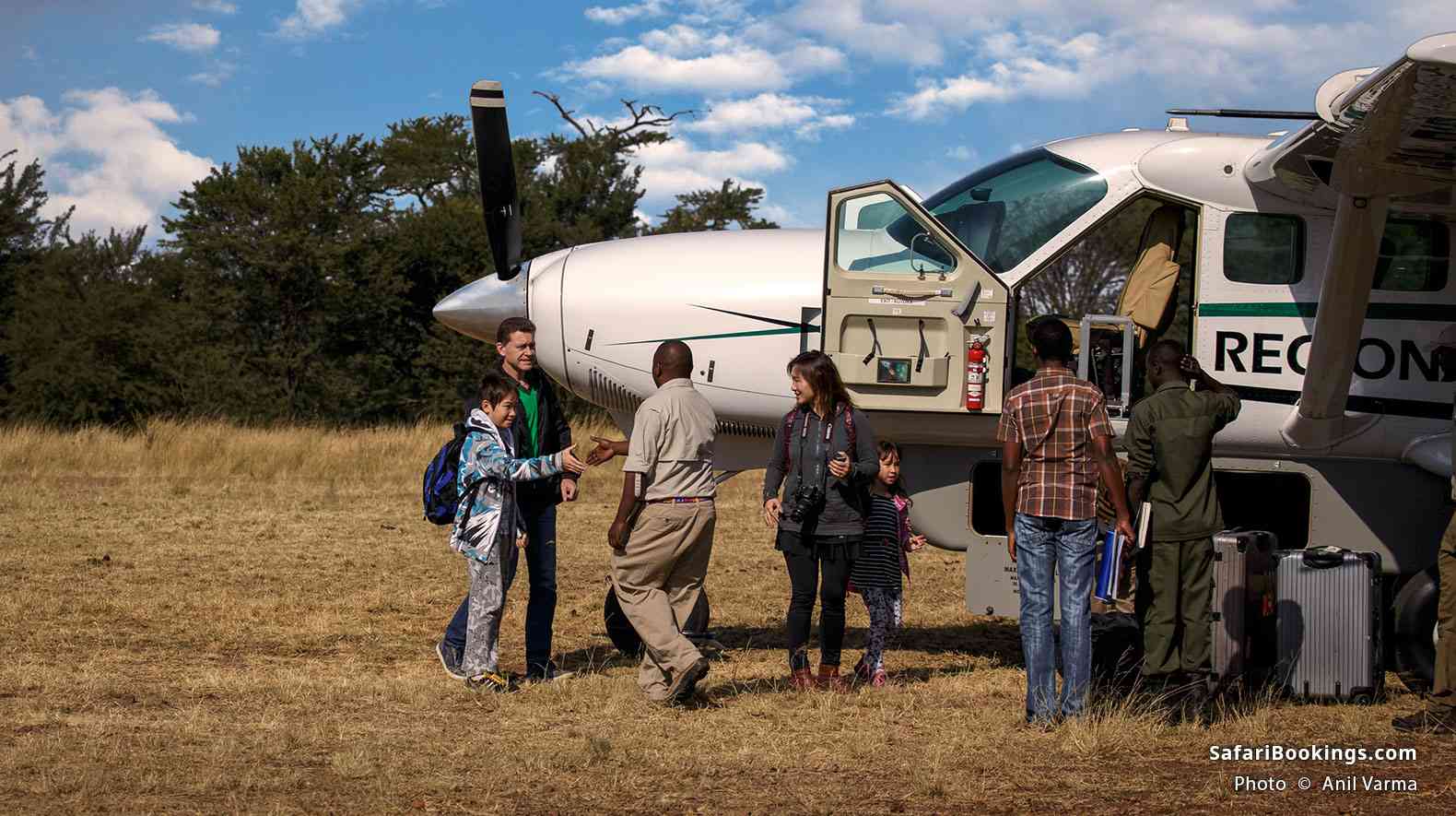 Disembarking a small plane at the Kogatende Airstrip
The main starting point for Serengeti safaris is Arusha, a pleasant green city known as the safari capital of Tanzania. Overseas visitors usually fly into Kilimanjaro International Airport (JRO), 50km/31mi east of Arusha, then join an organized road or fly-in safari. Self-drive is also possible with a solid 4x4 vehicle and suitable experience.
The drive from Arusha to Serengeti’s Naabi Hill Gate breaks down into two parts. The 150km/93mi surfaced road between Arusha and the Ngorongoro Conservation Area typically takes three to four hours, with the option of overnight stops to visit Tarangire and/or Lake Manyara National Parks. The 100km/62mi stretch from Ngorongoro to Naabi Hill is unsurfaced and heavily corrugated; you might get through in four hours but it will probably seem longer.
Daily scheduled flights connect suburban Arusha Airport (ARK) to several airstrips in Serengeti National Park. The most widely used of these airstrips are Seronera (south-central), Kogatende (north), Ndutu (southeast) and Grumeti (west). There are also flights to all other destinations along Tanzania’s Northern safari circuit. Flying is more comfortable and efficient than driving, but relatively costly, and you’ll miss out on the wild scenery en route. A good compromise would be to drive from Arusha to Serengeti then fly back. Another option is to drive as far as Ngorongoro then continue by air.
Can Serengeti National Park Be Combined With Other Parks?
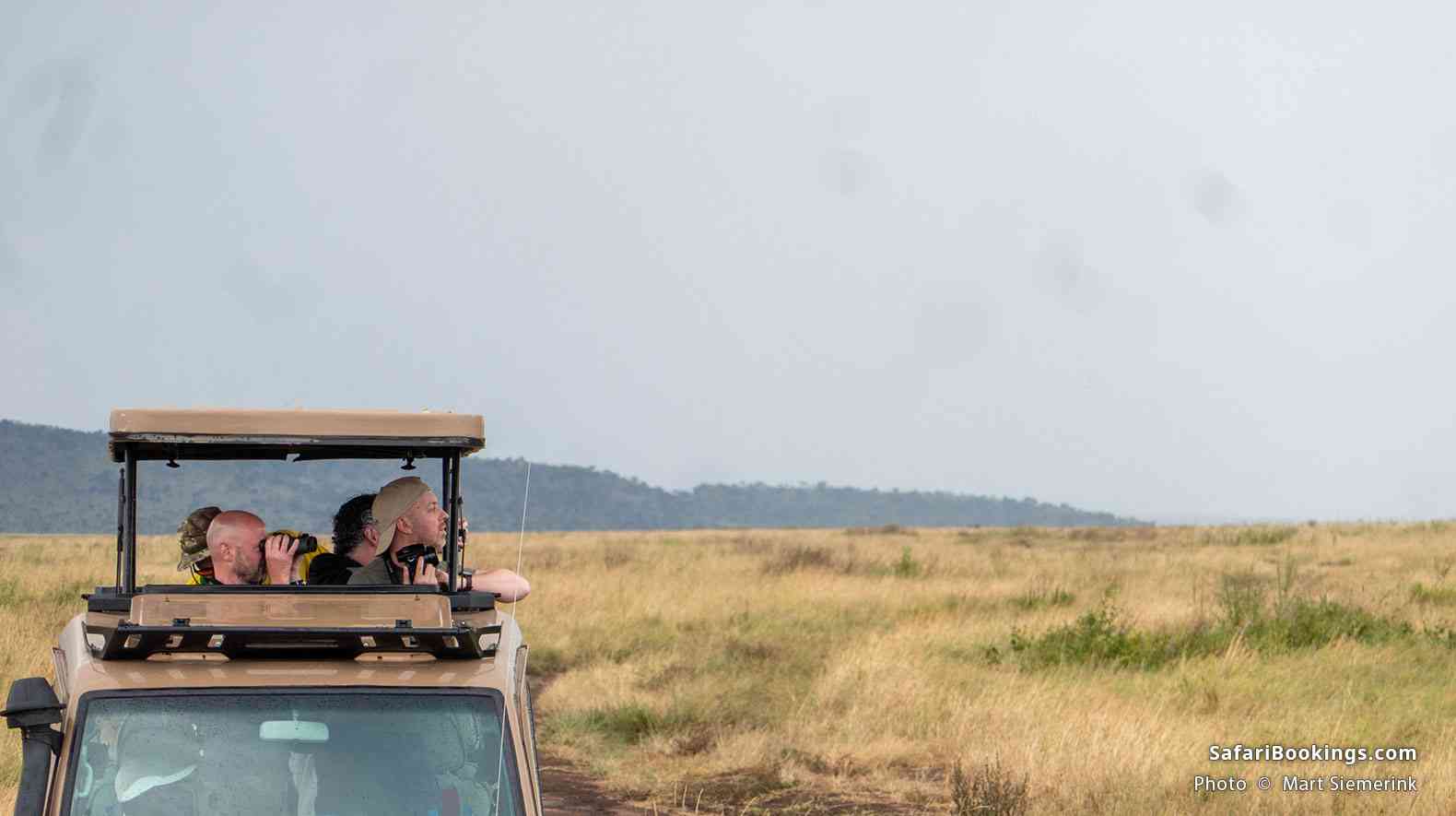 Viewing wildlife from a pop-up-roof safari vehicle in the Serengeti
Yes. Serengeti forms part of Tanzania’s well-established Northern safari circuit and is most often visited in combination with other parks. Many road safaris coming from Arusha descend into Ngorongoro Crater, an immense volcanic caldera whose floor hosts staggering concentrations of wildlife. The road from Arusha also passes Lake Manyara National Park, which is famed for its magnificent Rift Valley setting, abundant birdlife and occasional tree-climbing lions. Many Serengeti safaris also include a game drive or overnight stay at Tarangire National Park, where large elephant herds roam a rugged landscape dominated by baobab trees.
Several lesser-known add-ons are also possible. Scenic Arusha National Park protects the forested slopes of Mt Meru and a scattering of lakes, craters and waterfalls. Southeast of Arusha, a fenced sanctuary in remote Mkomazi National Park is the best place in Tanzania to see black rhinos. In Lake Victoria, Rubondo Island National Park is home to a semi-habituated population of introduced chimpanzees.
When Is the Best Time To Visit?
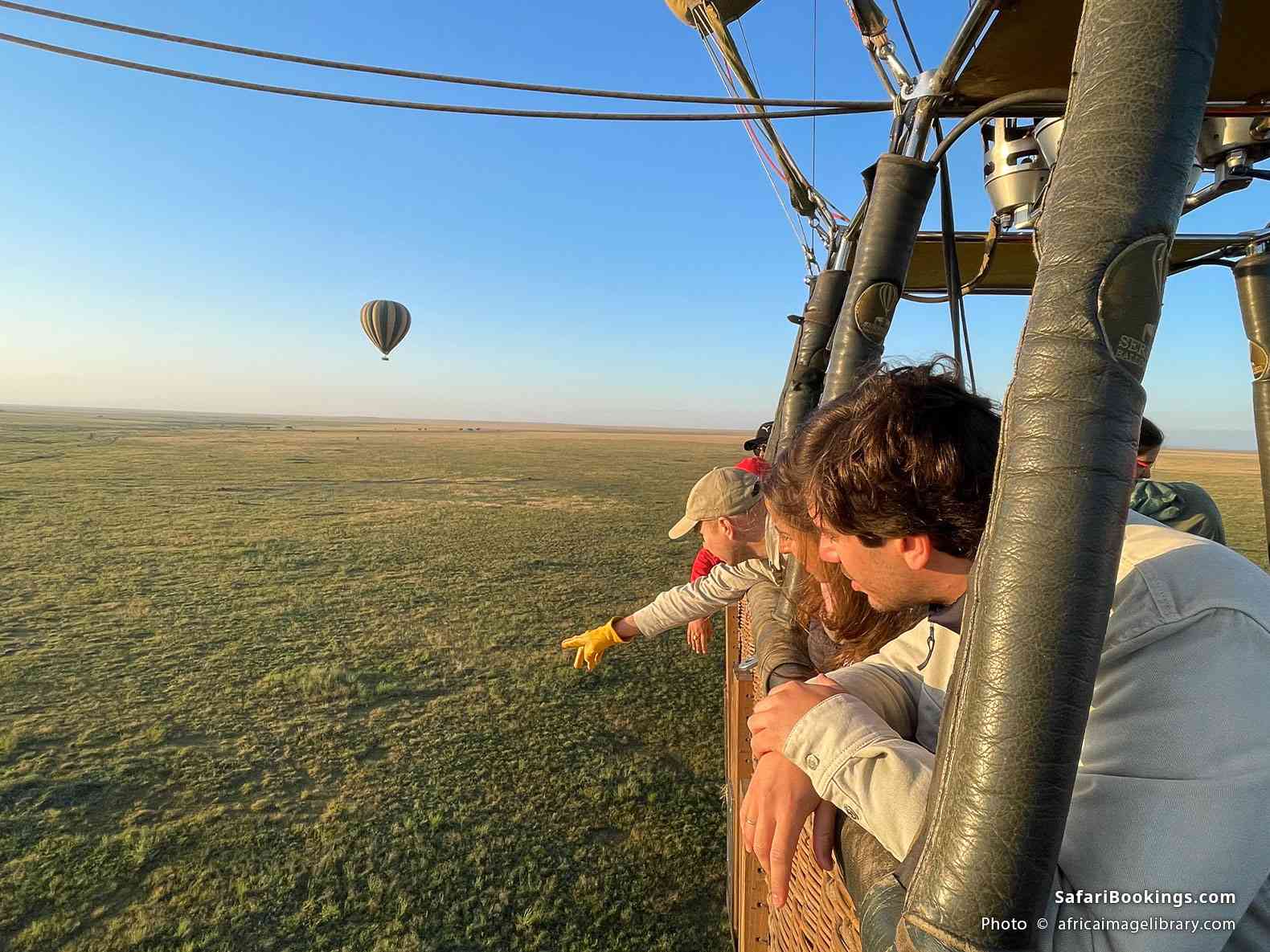 Enjoying a hot-air balloon safari over the Serengeti plains
There’s no bad time to visit the Serengeti. Wildlife is always prolific and every season has its merits. Climatically, the main long rains from March to May are most challenging. However, many regular visitors agree this is a wonderful time to be in the Serengeti, with green landscapes, lower tourist numbers and seasonal discounts at lodges and camps.
To see large wildebeest herds, you need to align your itinerary with the migration. From roughly December to May, herds are typically spread across the Southern Serengeti; in June and July they tend to move into the Western Corridor; from August to October they are usually found in the Northern Serengeti; and in November they shift through transitional areas such as Lobo. Migration highlights include the calving season in January and February and the Mara River crossings in August and September. Be aware that following the migration also means following seasonal tourist concentrations.
How Do I Get Around in Serengeti National Park?
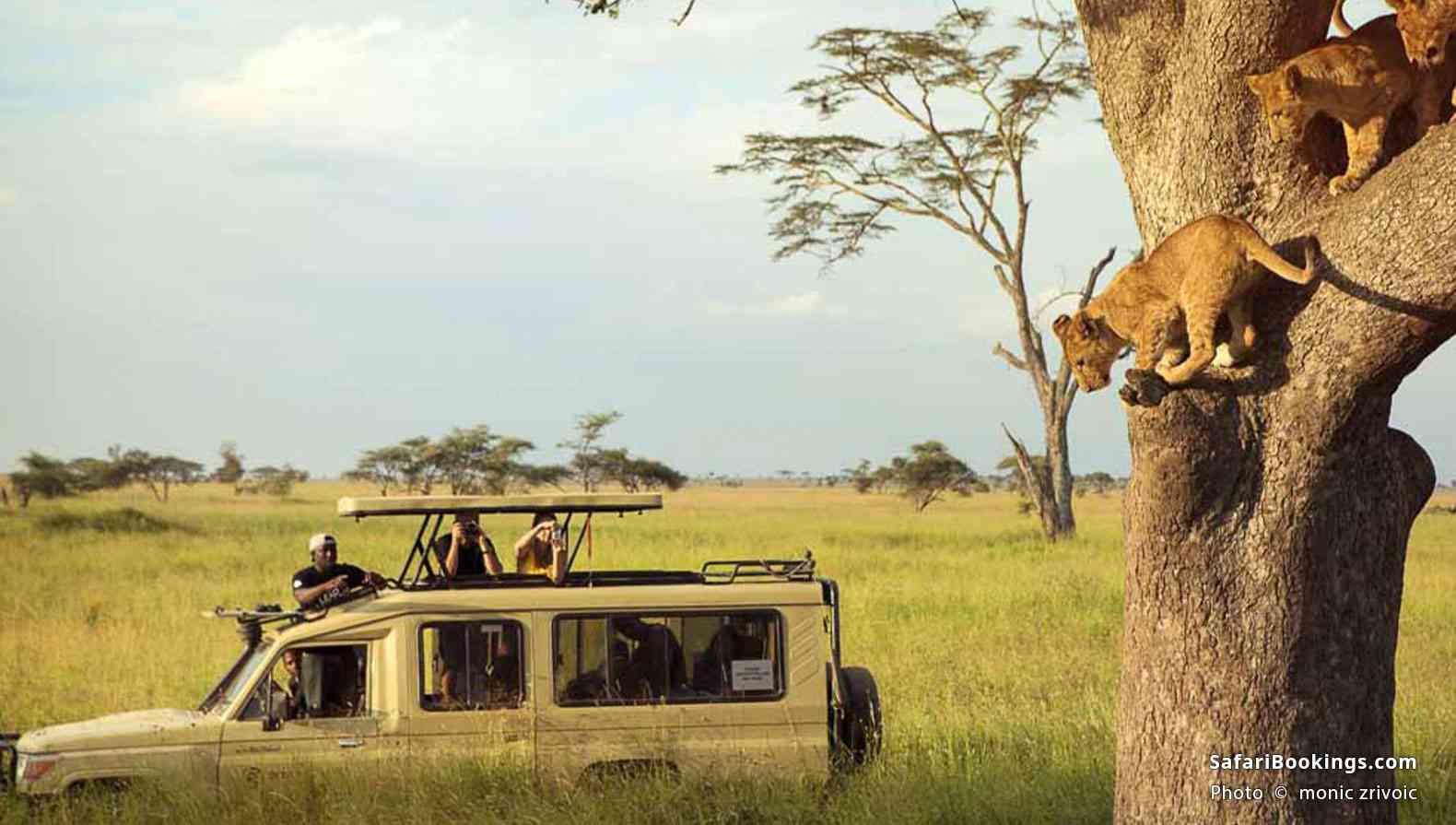 Safari vehicle watching lion cubs in a tree
However you get to the Serengeti, it is usually explored in a high-clearance 4x4 vehicle. This is because internal main roads are unsurfaced and often heavily corrugated, while minor roads and tracks can be rough and seasonally muddy. If you book onto a guided road safari, you will probably do game drives with the vehicle and driver you arrived with. If you fly into a smaller all-inclusive camp or lodge, you’ll be driven by a resident guide. Self-drivers must conduct their own game drives. Early morning balloon safaris offer a different and rather thrilling aerial perspective over the park.
How Many Days Should I Stay?
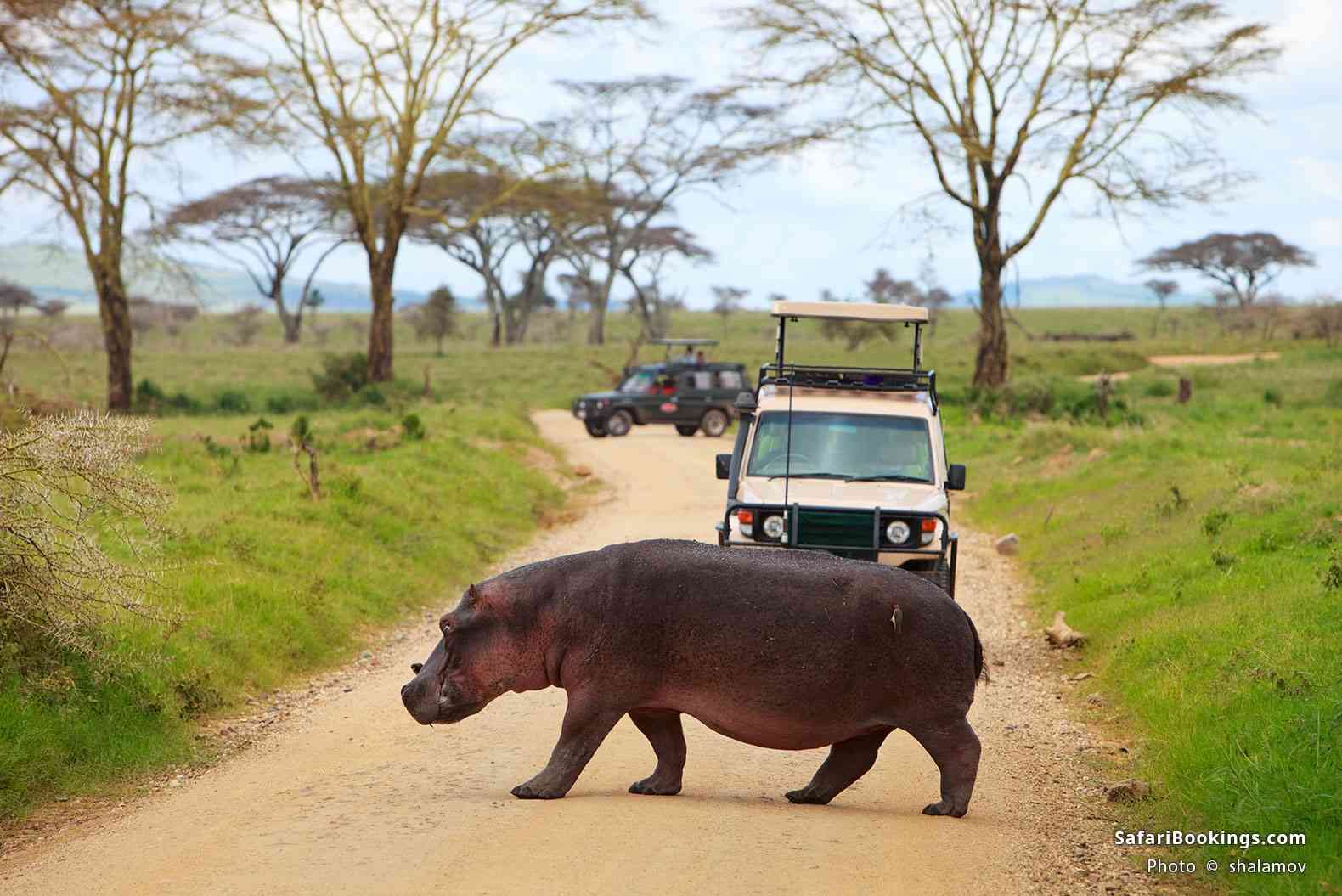 Hippo crossing the road in front of safari vehicles
There’s no definitive answer. Depending on your budget, interest level and available time, anything from three to five days in Serengeti National Park would be typical. Because the park is quite difficult and costly to reach, anything less than a three-day safari (which gives you two nights in the park) would be frustratingly short. On the other hand, many visitors feel like they’ve seen all they need to see after five days, which would typically be split between two lodges or camps in different areas.
However, the Serengeti is an enormous place. Dedicated safari enthusiasts, especially those with a strong interest in photography or birds, could easily spend 10 days exploring its different corners. It’s also worth noting that many people visit the Serengeti as part of a longer four- to eight-day safari that includes time in Ngorongoro, Tarangire and/or Lake Manyara.
Is the Park Safe To Visit?
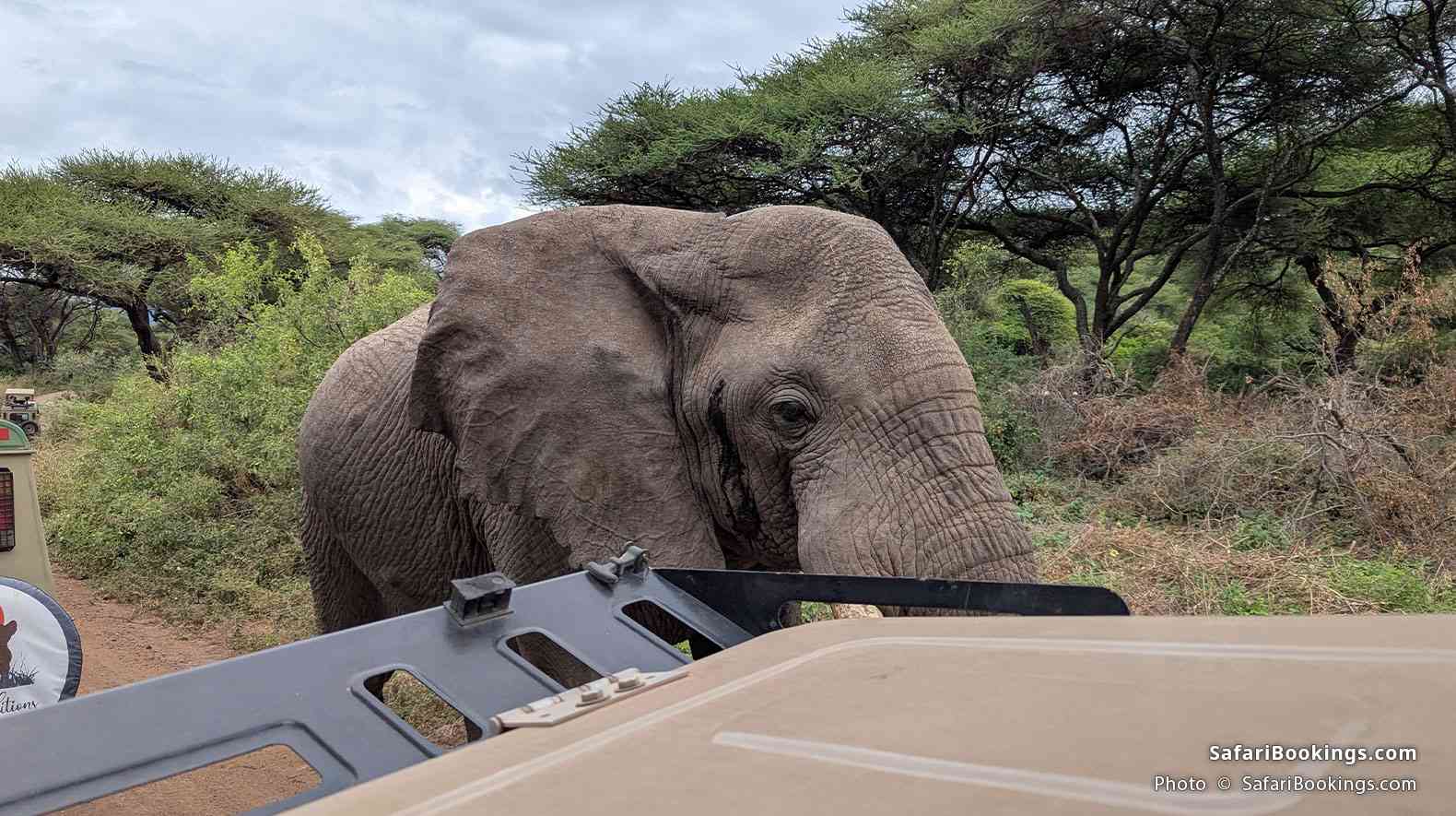 Elephant walking close to a safari vehicle
Serengeti National Park, like other established safari destinations in Tanzania, is widely regarded as safe to visit. This is especially true on an organized safari, because you will be taken care of by an experienced local driver and/or guide throughout your visit.
Self-driving in the Serengeti is generally safe, assuming you travel in a high-clearance 4x4 vehicle and have experience driving in potentially challenging conditions. Self-drivers should have good navigational skills, as there is virtually no signage within the park and maps are not always accurate or up-to-date. They should also be prepared to deal with punctures or mechanical issues. A local SIM card or eSIM loaded with data and airtime is highly recommended.
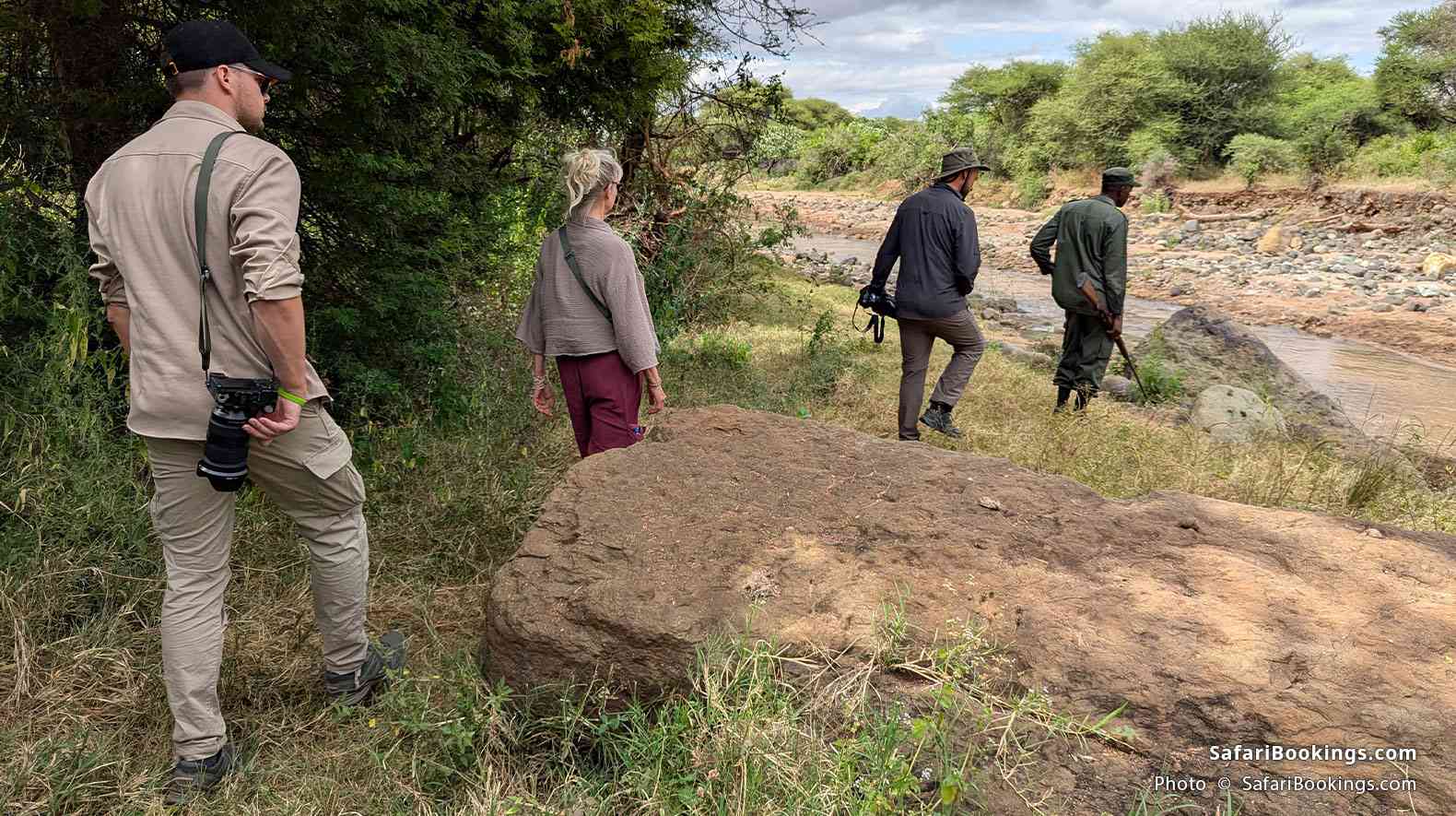 Safari-goers following the guide on a walking safari
You have little to fear from wildlife on game drives, though it pays to be cautious around elephants and to treat them with respect, especially if they seem agitated. Don’t disembark from your car except at entrance gates, lodges and other designated places. If you go on a bush walk, always follow your guide’s instructions.
Antimalarial drugs and mosquito repellent are recommended for the Serengeti.
How Can I Avoid the Crowds in Serengeti National Park?
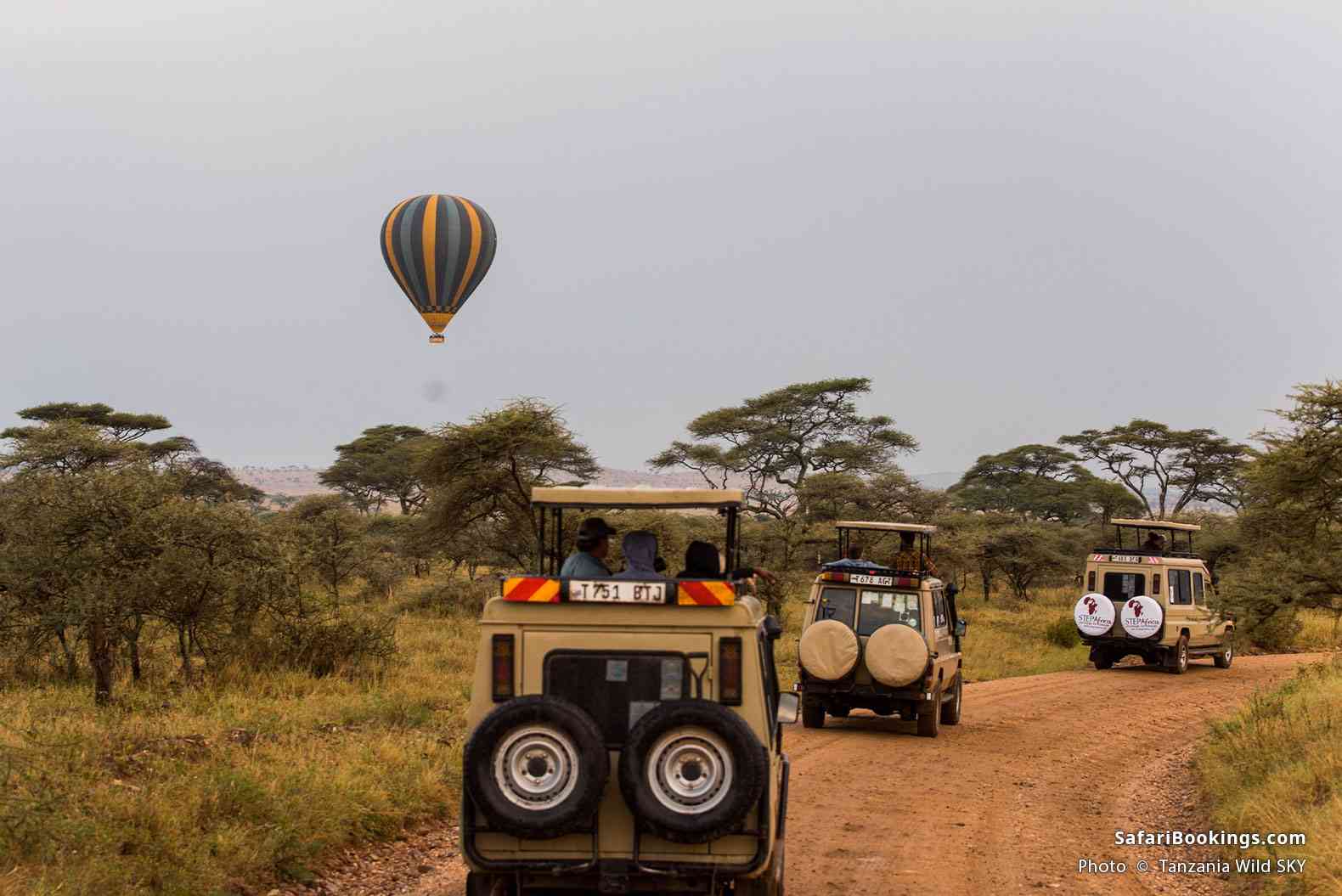 Safari vehicles and a hot-air balloon in the Serengeti
The Serengeti is a vast place and it doesn’t usually experience the kind of crowding associated with Kenya’s neighboring Masai Mara National Reserve. There are two exceptions to this. The first is Seronera and its immediate surroundings, where sightings of big cats (lion, leopard and cheetah) routinely attract a chaotic convoy of 4x4 vehicles. The other is whichever part of the park is currently hosting the wildebeest migration. For this reason, the best way to avoid crowds is to limit your time in the Seronera area, and to split your nights between somewhere close to the migration and somewhere more unseasonal.
If avoiding the crowds is a priority, an excellent time to visit is April or May. This is the low season due to the relatively high rainfall. In addition to being quieter, it is a pretty time of year and large wildebeest herds roam the south and southwest. If you visit at a busier time, be aware that vehicle numbers start to build from 7:30 AM onward, once most lodges have finished breakfast service. So head out as early as possible – game drives are permitted from 6 AM – with a packed breakfast to enjoy a magical time of day when carnivores are still active and the post-dawn light tends to be stunning.
What Are the Best Places To Stay?
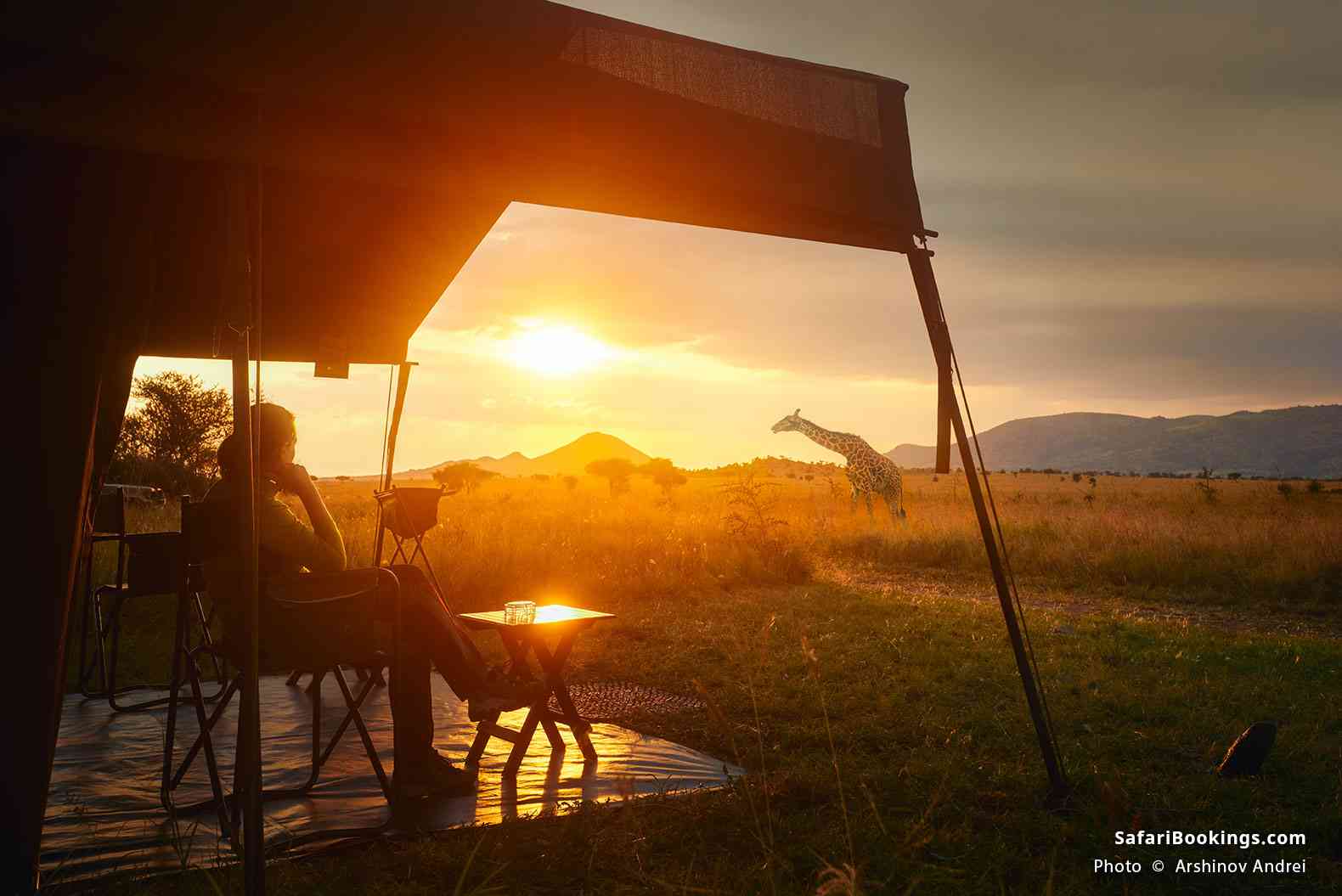 Giraffe walking past a safari tent at sunset
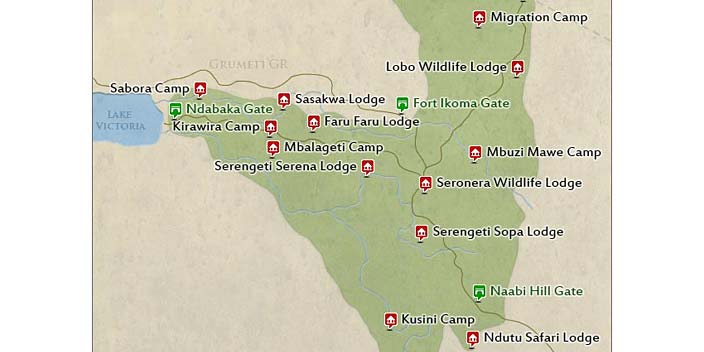
There is no shortage of accommodations in Serengeti National Park. Roughly 50 permanent properties are supplemented by a couple of dozen mobile camps that relocate seasonally to follow the wildebeest migration. Many of these overnight facilities are clustered in south-central Serengeti around Seronera. This area is renowned for its excellent big cat viewing, but also experiences relatively high visitor volumes.
The majority of permanent properties in the Serengeti are small, characterful luxury bush camps that offer all-inclusive packages to fly-in visitors. There are also a few larger and more mainstream lodges providing comfortable hotel-like accommodations. Budget options inside the park are extremely limited and largely restricted to the national parks rest house at Seronera and a few public campsites. Because Serengeti is almost entirely surrounded by other conservation areas, there is little opportunity to base yourself outside the park for day visits, except on the Lake Victoria side, where a few options exist.
What Facilities Are There?
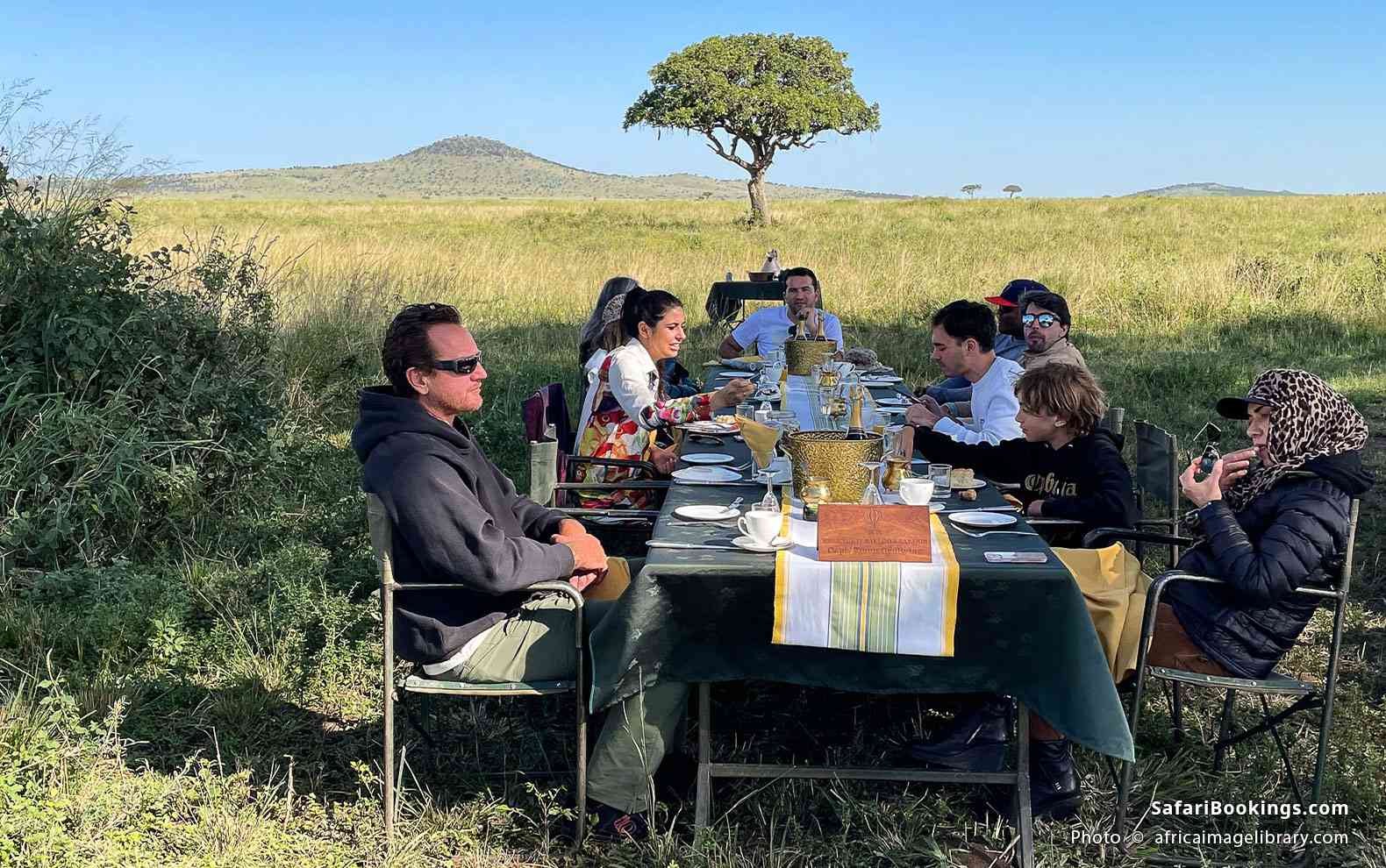 Champagne breakfast after a hot-air balloon safari
There are very few facilities outside of the lodges and camps. The main exception is at Seronera, where a low-key visitor center incorporates a small coffee shop, picnic area and site museum, as well as an elevated wooden walkway leading through an informative open-air display. If you’re self-driving or self-catering, the service area at Seronera has a filling station, a bar and a couple of small grocery shops with limited supplies. The only other facilities are public toilets at the entrance gates and the network of airstrips used for scheduled and charter flights.
What Are the Costs for Visiting Serengeti National Park?
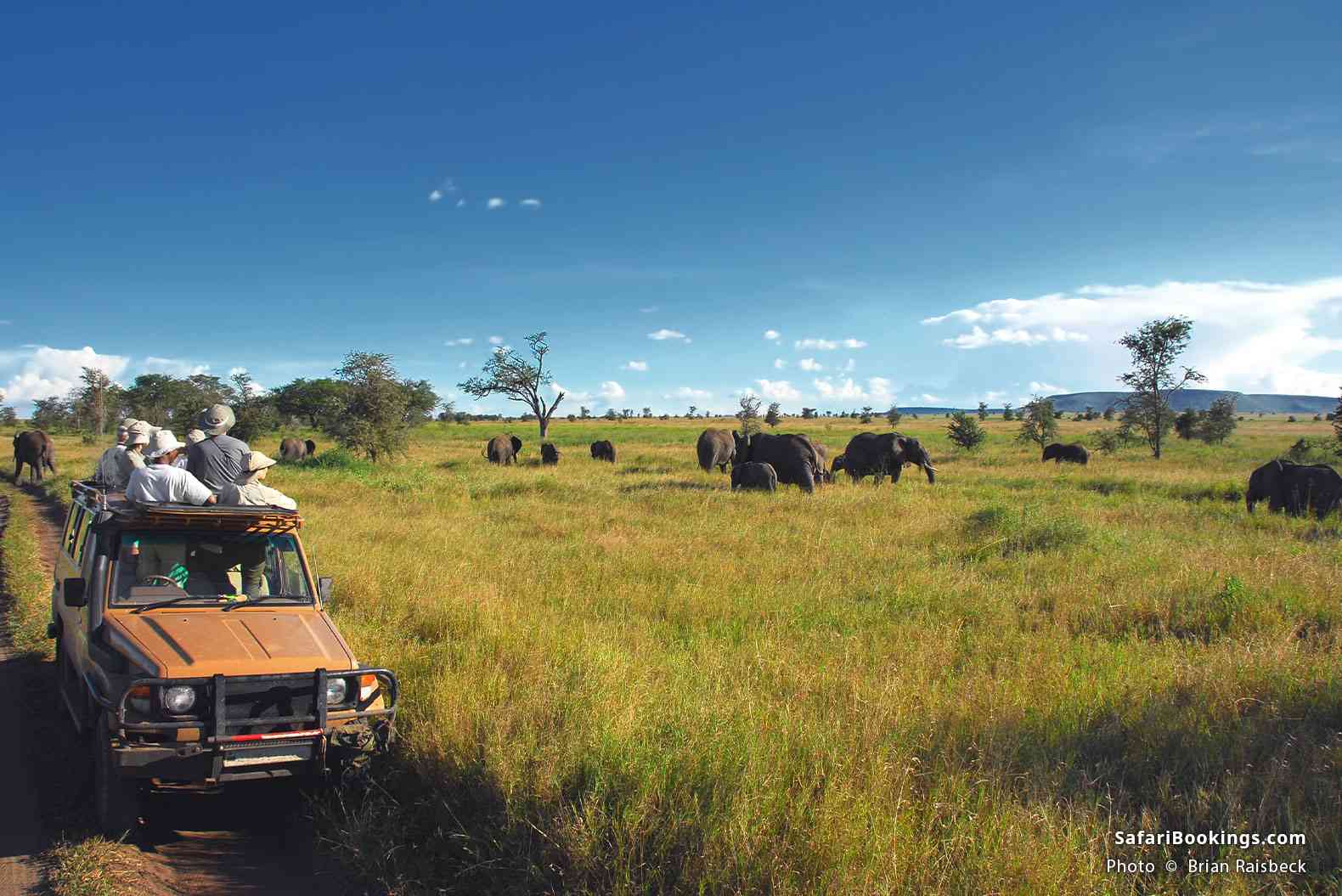 Safari-goers watching a herd of elephants
The cost of a Serengeti safari will depend on several factors. These include duration, group size and type of accommodations, but also which other parks you include on your itinerary, whether you stick to the Seronera area or head farther afield, and whether you fly or drive from Arusha. Typically, you’re looking at US$200 to US$300 per person per day for a budget camping safari that includes some nights in the Serengeti, and US$300 to US$500 for a safari that uses budget and mid-range tented camps or lodges. Luxury safaris might cost anything from US$500 per person per day to upward of US$1,000.
Want To Visit Serengeti?
Click on the button below to compare Serengeti tours offered by top-rated tour operators.
By Philip Briggs Philip is a renowned Africa expert and author of the DK Eyewitness guide to Kenya and Bradt guide to Tanzania.
More About This Author

 Subscribe to our newsletter
 Follow us on Instagram
Safari Tours to Tanzania
-
![9-Day Northern Circuit Extended Safari Adventure]()
9-Day Northern Circuit Extended Safari Adventure
$2,925 to $2,976 pp (USD)
Tanzania: Private tour
Mid-range Lodge & Tented CampYou Visit: Arusha (Start), Tarangire NP, Serengeti NP, Ngorongoro Crater, Lake Manyara NP, Arusha (End)

Go Serengeti African Tours
4.9/5 – 717 Reviews

-
![8-Day Great Migration Safari]()
8-Day Great Migration Safari
$3,206 to $3,319 pp (USD)
Tanzania: Private tour
Mid-range Lodge & Tented CampYou Visit: Arusha (Start), Tarangire NP, Central Serengeti NP, Northern Serengeti NP, Serengeti NP, Ngorongoro Crater, Foothills of Mt Kilimanjaro, Arusha (End)
Safari Soles
5.0/5 – 640 Reviews
-
![7-Day Mid-Range Epic Adventure (3 Nights Serengeti)]()
7-Day Mid-Range Epic Adventure (3 Nights Serengeti)
$2,870 to $3,080 pp (USD)
Tanzania: Private tour
Mid-range Lodge & Tented CampYou Visit: Arusha (Start), Tarangire NP, Serengeti NP, Ngorongoro Crater, Lake Manyara NP, Arusha (End)
Lion King Adventures
5.0/5 – 1,656 Reviews