

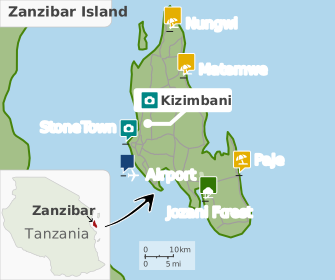
 Google Maps


Zanzibar has been nicknamed the ‘Spice Island’ since the 19th century. If you’re wondering why, the best way to find out is by joining a spice tour. This hands-on and enjoyable outing will take you inland
Read more
to one of the historic plantations around Kizimbani, which is the most fertile part of the island thanks to its rich volcanic soil. Here, you’ll be shown an array of tropical plants used to produce everything from spiced tea to pillow stuffing. You’ll also experience a rural part of Zanzibar with a very different feel from the beach resorts or Stone Town.Background to Zanzibar’s Spice Farming Industry

The plantations around Kizimbani have played a key role in Zanzibar’s economic and political development. The first were planted here in 1820, and their success was one of several reasons why – 20 years later
Read more
– Sultan Said of Oman relocated his capital to Zanzibar. Soon after, the island became the world’s largest clove exporter, accounting for up to 80% of the global yield. The Kizimbani plantations also produced an abundance of other spices, including , and .For much of the 19th century, Zanzibar’s Arab-owned clove plantations were dependent on slave labor provided by captives shipped across from mainland Africa. For this reason, the abolition of slavery in 1873 was followed by a sharp decline in production and exports. Even so, most of the plantations remained under Arab ownership until the , when they were nationalized and management was ceded to local communities. Today, the largest government farms cover 120 hectares/300 acres and are worked by up to 200 people. Most other plantations are roughly a hectare in size and function like family smallholdings.Arriving at Kizimbani

Most spice tours visit one of the large state-owned, community-managed plantations in the Kizimbani area. The most common starting point is Stone Town, some 15km/9mi to the southwest. The drive from here takes anything from 35
Read more
minutes to an hour, depending on traffic. On the way, you’ll pass several palaces and baths built for Omani sultans and other wealthy Arab plantation owners. The scenery changes as you enter the cultivated green countryside around Kizimbani, where you’ll disembark at a plantation and meet your local guide.See and Smell Some of Zanzibar’s Famous Spices

Of all the spices you’ll see at Kizimbani, the one most strongly associated with Zanzibar is the . This fragrant spice is derived from an evergreen tree whose clumped red flower buds are laid out in
Read more
the sun until they dry and turn black. Another of Zanzibar’s most important exports is , which is sourced from the inner bark of several closely related tree species. derives from the root of a banana-like shrub, while is made from the crushed dried leaves of an otherwise unremarkable small tree. comes from hand-picked berries that grow on a vine.One of the most expensive spices grown on Zanzibar is . It comes from the pod of a hand-pollinated vine and has an international retail price of around US$200 per kilogram. , often called the queen of spices, is a shade-loving shrub whose seeds have a distinctive flavor. You’ll taste it in many dishes and drinks, including rice and (spiced tea). , known locally as ‘mchaichai’, is another standard ingredient in the spiced tea so beloved by the people of Zanzibar.Sample a Selection of Sweet Tropical Fruits

Bananas are the most common fruit on Zanzibar and you’ll be shown several varieties on a spice tour. These range from small and deliciously sweet lady fingers to massive purple cooking plantains, all of which hang
Read more
in bunches on fast-growing trees whose large leaves are used locally as umbrellas. In contrast, pineapples, which also grow all over the island, emerge close to the ground from spiky sisal-like bushes. Another familiar fruit is the , which grows on vines that are often used to cover fences; on Zanzibar it is most often used to produce a zesty fruit juice.Less familiar to many visitors will be and , which grow on tall leafy trees. Though they are superficially similar, the jackfruit can weigh up to 30kg/66lb and emerges from the trunk, whereas the breadfruit is much smaller, far less sweet, and dangles from a branch end. The produces a heavy spiky fruit whose foul-smelling flesh has led to it being banned from hotels and public transport in some Asian countries. Altogether less offensive is the (custard apple), which looks like a green hand grenade but tastes like a tropical fruit cocktail with citrusy undertones.Other Plants You Should See on a Spice Tour

Among the most impressive trees you’ll see around Kizimbani is the heavily kapok tree, which can reach a height of 60m/200ft. The pods of this fast-growing tree enclose a cotton-like material that’s used locally to
Read more
stuff pillows, while the lightweight trunk can be hollowed out and used as a canoe. The undergrowth is often a favored site for shade-loving coffee trees of the variety, which are taller than the shrubs cultivated on the mainland. also grows on Zanzibar, and while volumes are too low for chocolate production, you might see locals popping the tasty yellowish beans into their mouth like candy.Many plants you’ll see at Kizimbani are used for decorative or cosmetic purposes. Dried leaves from the are the source of the red dye used for henna painting, a form of body decoration that’s popular with Zanzibari women and tourists alike. The fragrant yellow flowers of the are used to produce perfumes, most famously Chanel No. 5. Local women apply to their faces to keep their skin youthful, while the lychee-like is a fruit whose red seeds are crushed to make a dye used locally as lipstick.Learn About Traditional Medicinal Uses of Plants

A fascinating aspect of a spice tour is the opportunity to learn about the medicinal uses of various tropical plants. is believed to help with bad breath, indigestion and flatulence, while the leaves of
Read more
the are used to reduce blood pressure, and supposedly ease stomach cramps. is the main ingredient in a natural mosquito repellent called citronella oil, while sap is widely used in aromatherapy and reputedly also has aphrodisiac properties. Many fruits grown on Zanzibar, including and , are regarded to be rich in antioxidants.Tea Tasting and Traditional Lunch With a Local Zanzibari Family

Most spice tours end with a tea-tasting session and/or traditional lunch in rural Kizimbani. In both cases, you get to experience how some of the spices you’ve already seen are used by locals. You’ll probably get
Read more
to taste two types of tea: one made with and , and the other with a cinnamon-based infusion.Lunches are usually prepared by a local Zanzibari woman and hosted in her own house. As is customary, you’ll sit in a circle around the food on cushions on the floor. It’s a great opportunity to sample genuine Zanzibari cuisine, including spicy rice, coconut-based chicken curry, cooked , a spinach-like cooked vegetable called and a tomato-and-onion salad called . This will most likely be followed by a plate of fresh fruit that combines the familiar likes of pineapple and banana with and .How To Arrange a Spice Tour
Spice tours can be arranged through pretty much any operator or hotel on Zanzibar. The most common starting point is Stone Town, but tours also leave from most of the island’s other resort towns and villages.
Read more
Usually, spice tours need to be booked a day in advance, and you will most likely join a group of other travelers on the adventure unless you ask specifically for a private excursion. Tours generally leave after breakfast and involve two to three hours wandering around the plantation. Assuming your itinerary also includes lunch, you should expect to get back to your hotel by midafternoon.Nearby Attractions

Traveling between Kizimbani and Stone Town, you might consider stopping at one of several historic palaces and baths whose origins are linked to the Zanzibari spice trade. The oldest is Mtoni Palace, which was built for