Guide to Visiting Amboseli National Park – All You Need To Know
 By Philip Briggs
 Philip is a renowned Africa expert and author of Kenya guides for Bradt, DK Eyewitness and Insight.
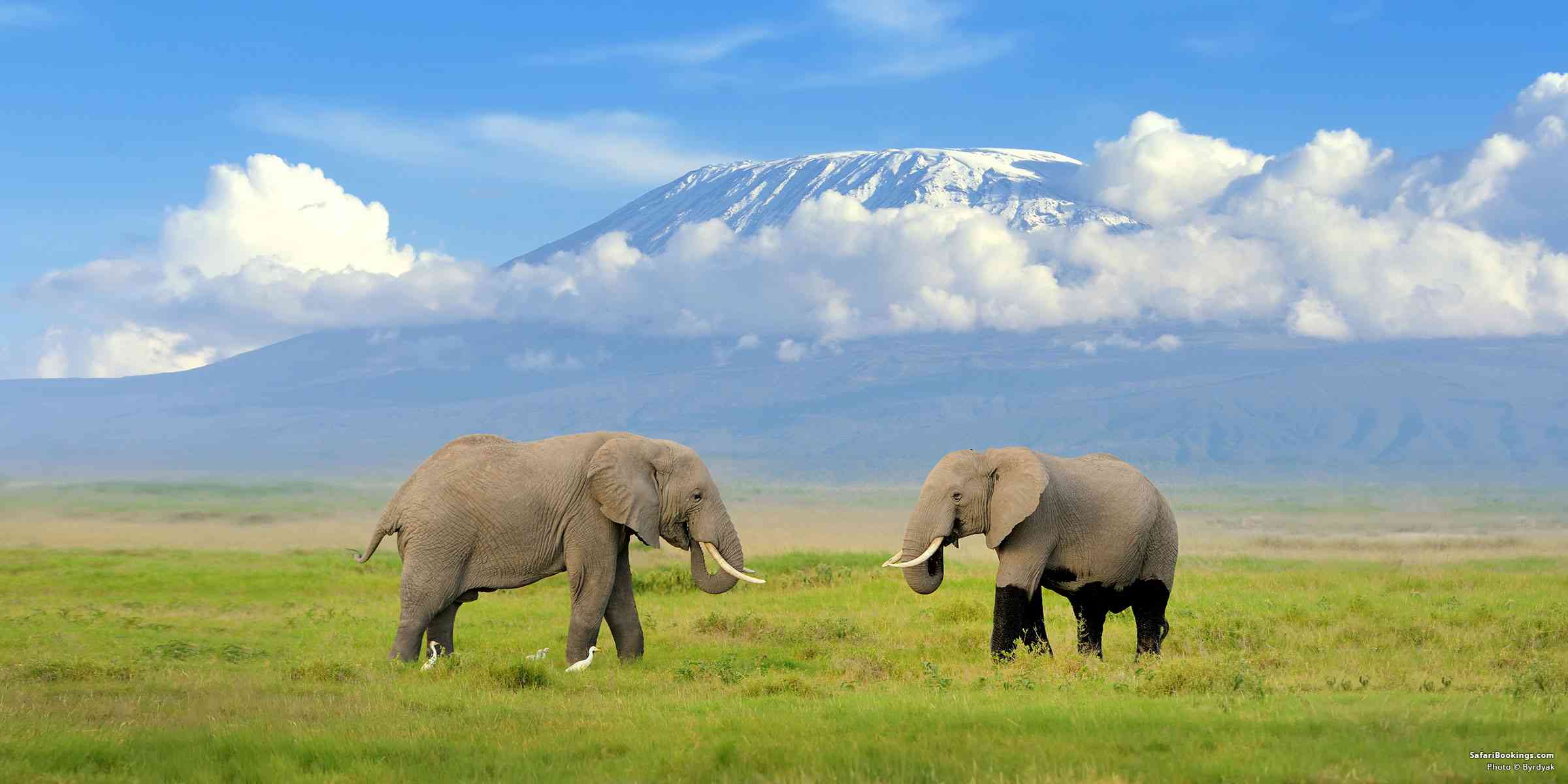
Few images are quite so evocative of East Africa as that of a heavily tusked elephant striding through the bush below Mt Kilimanjaro. This is also the defining image of Amboseli National Park, which protects a mosaic of dusty plains and marshy wetlands below the northern slopes of Africa’s highest mountain. Despite being relatively small at 390km²/151mi² Amboseli is one of Kenya’s most popular national parks, famed for its high elephant densities, but also home to good numbers of lion, cheetah, buffalo, giraffe and other wildlife.
Why Should I Visit Amboseli National Park?
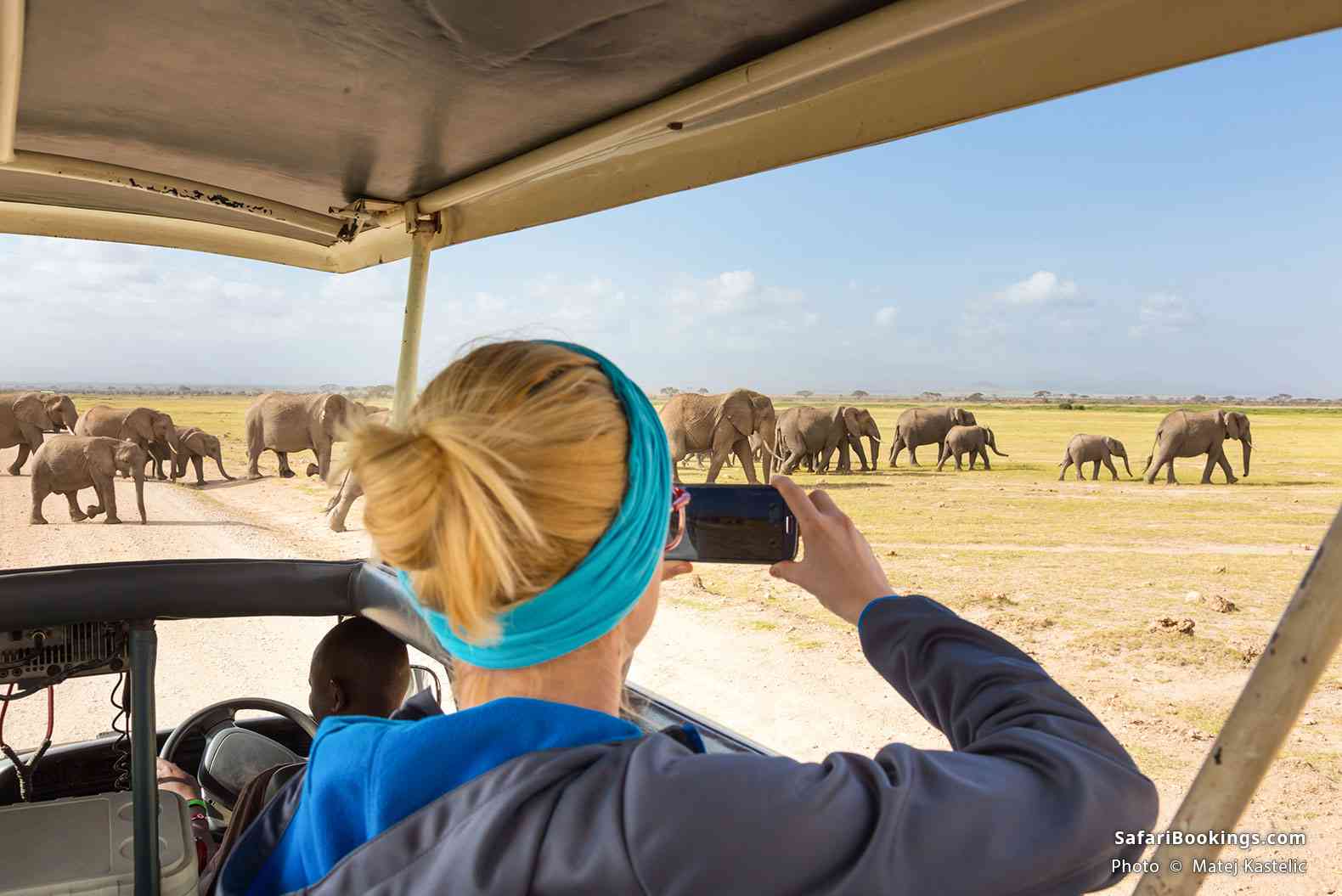 Traveler in a safari vehicle photographing elephants
In two words: Kilimanjaro and elephants. The world’s tallest freestanding mountain, Kilimanjaro is one of Africa’s most iconic sights, and there are few places better than Amboseli for superb views of the mountain. Even better, Amboseli is the only established safari destination where you stand a good chance of capturing wildlife – most especially the park’s abundant elephants – in the same frame as that distinctive snowcapped dome.
While the prospect of seeing elephants below Kilimanjaro tops everybody’s Amboseli wish list, the park has plenty more to keep visitors interested. Lions are quite easily seen, along with buffalo, hippo, giraffe and large herds of wildebeest and zebra, and the wetlands support a dazzling array of water-associated birds. Other attractions include large seasonal flamingo flocks, superb sunsets filtered through a suspension of fine dust, and opportunities to interact with traditional Maasai people.
Where Is Amboseli National Park Located?
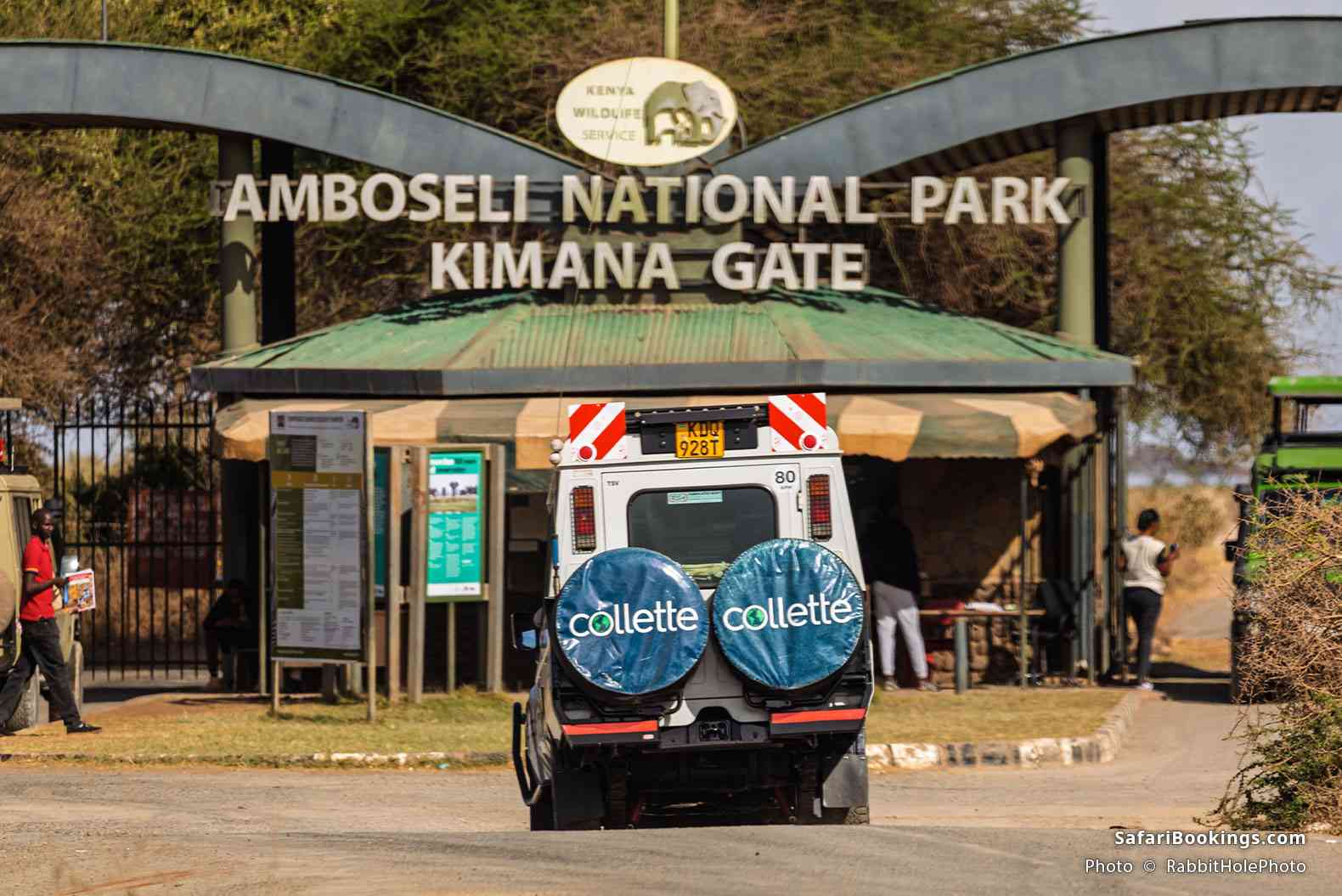 Safari vehicle approaching Amboseli NP’s Kimana Gate
Amboseli National Park lies in the southeast of Kenya, bordering Tanzania. It is roughly 120km/75mi from Nairobi as the crow flies and 300km/186mi inland from Mombasa. The park is relatively flat and low-lying, but it stands at the northern base of Mt Kilimanjaro, which is the tallest point in Africa at 5,895m/19,341ft.
Although Kilimanjaro rises on the Tanzanian side of the border, its distinctive peak dominates the skyline, at least when it isn’t blanketed in clouds. Kilimanjaro has also been a defining influence on Amboseli’s ecology. The fine ashy dust that blankets the plains was deposited when the volcano was still active, while the park’s extensive wetlands are fed by springs and molten snow from the mountain’s upper slopes.
What Wildlife Can I Expect To See?
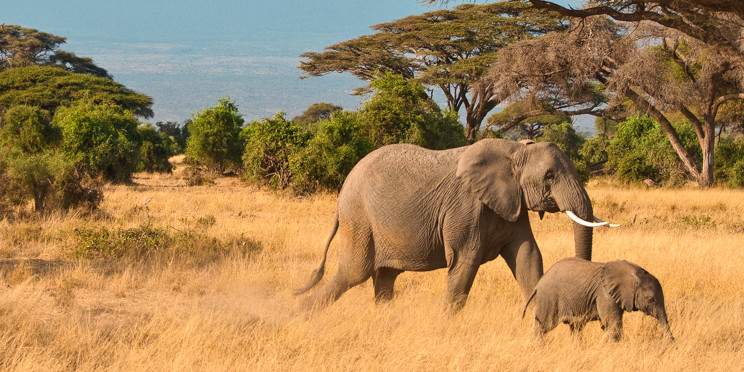
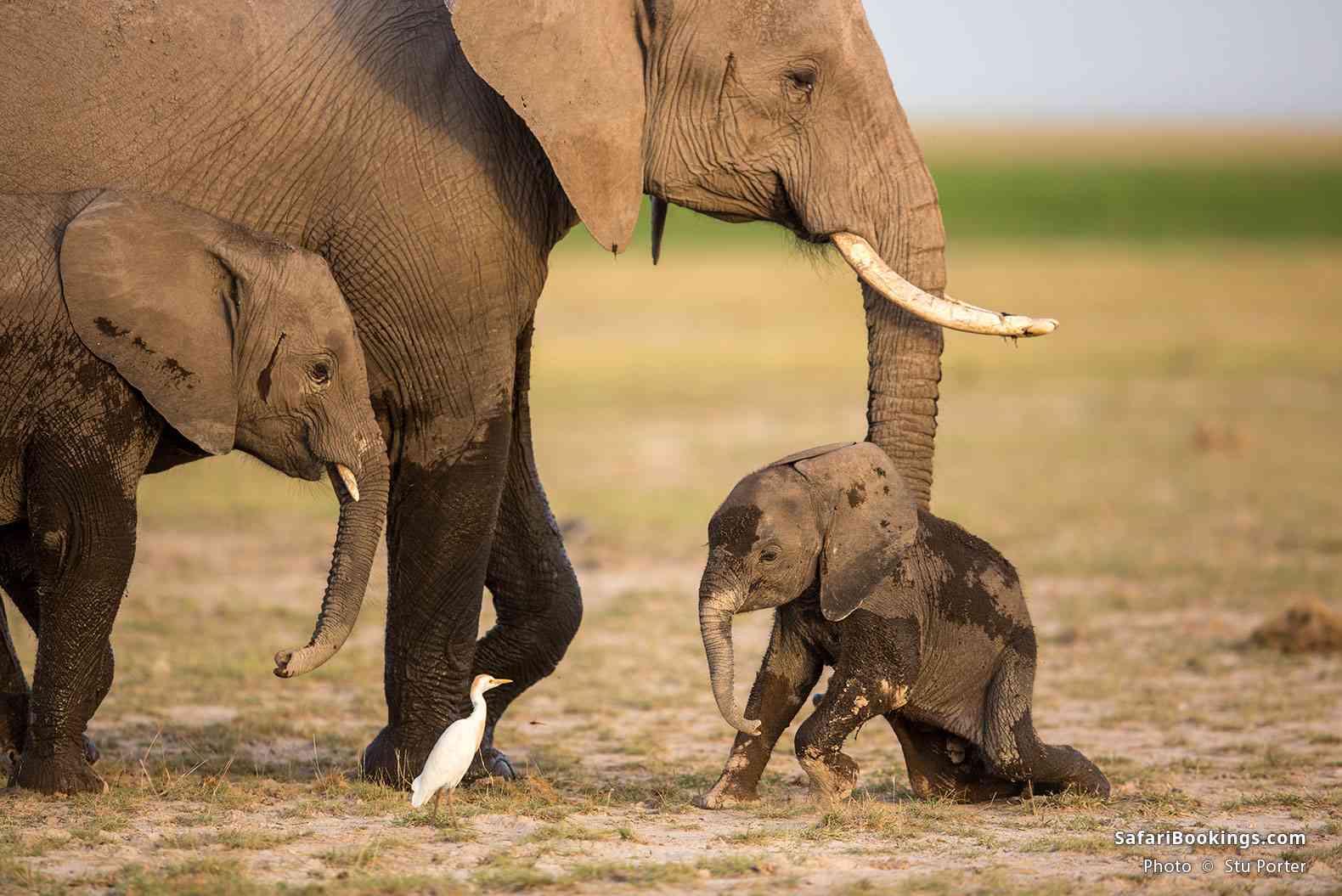 Elephant with calves in Amboseli NP
Amboseli offers arguably the finest elephant viewing in East Africa. Monitored by the Amboseli Elephant Research Project since 1975, the park has never experienced significant commercial poaching. For this reason, it supports some seriously impressive old tuskers, and the matriarchal herds are very relaxed. It’s great fun to watch old bull elephants foraging shoulder-deep in the marshes (also a favored haunt of buffalo and hippos) or family herds marching photogenically across the dusty plains.
Lions are quite common, but are seldom seen closely as they tend to be in the Masai Mara National Reserve. Other carnivores include cheetah, spotted hyena and black-backed jackal. Herds of wildebeest, zebra, Thomson’s gazelle, Grant’s gazelle and impala sweep across the dusty plains, while giraffes nibble at the canopy of acacia trees. Amboseli’s swamps and lakes offer superb bird watching – astute observers might identify 50 water-associated species over the course of a visit, and large flamingo flocks are often present.
How Do I Get to Amboseli National Park?
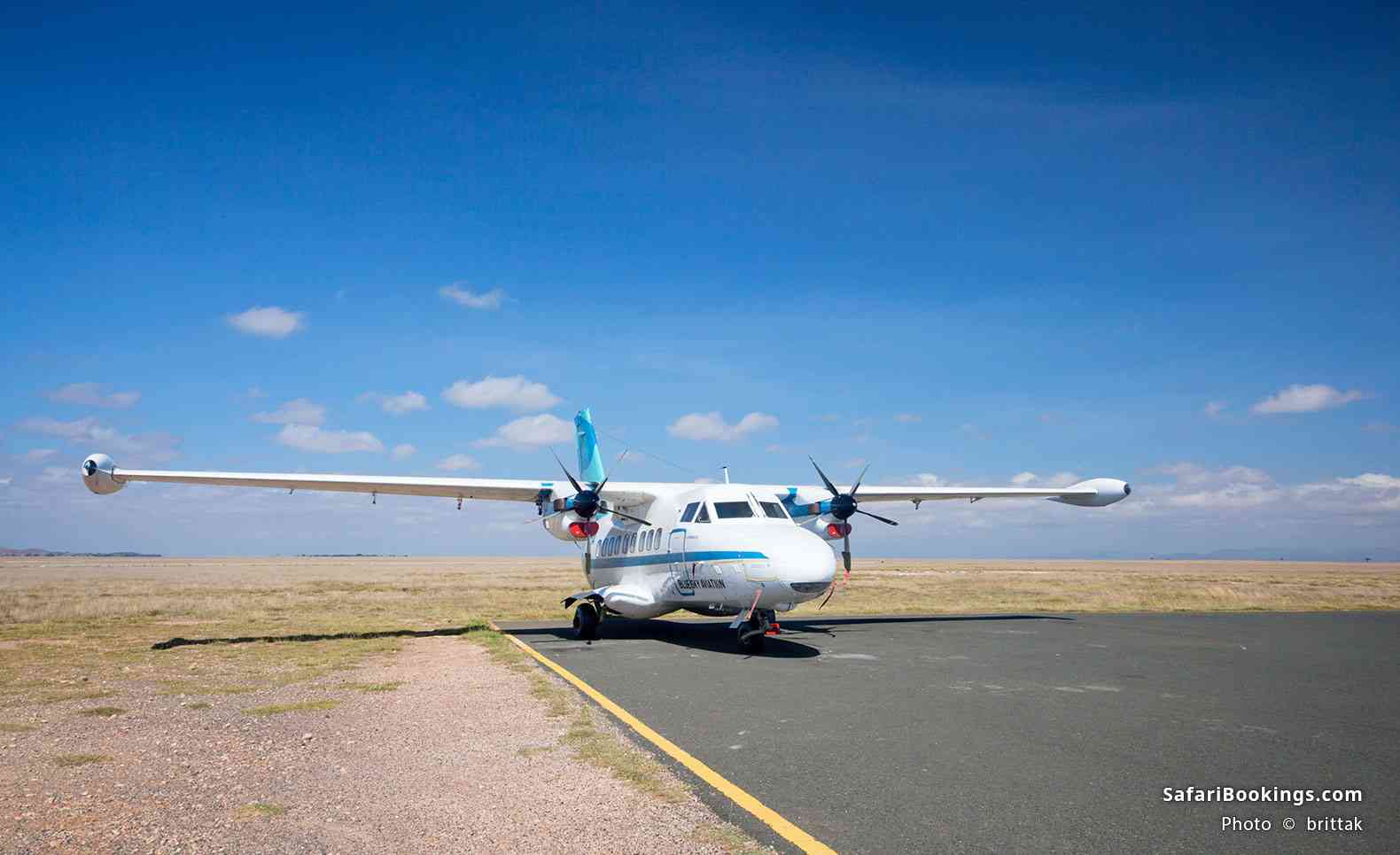 Small aircraft on Amboseli NP’s airstrip
Nairobi’s Jomo Kenyatta International Airport (NBO) is the busiest international flight hub in East Africa and the most popular entry point to Kenya. Daily scheduled flights from Nairobi to Amboseli National Park leave from Wilson Airport (WIL), 30 minutes’ drive west of Jomo Kenyatta. Most visitors to Amboseli book onto an organized air or road safari, but self-drive is possible with an adequate 4x4 vehicle.
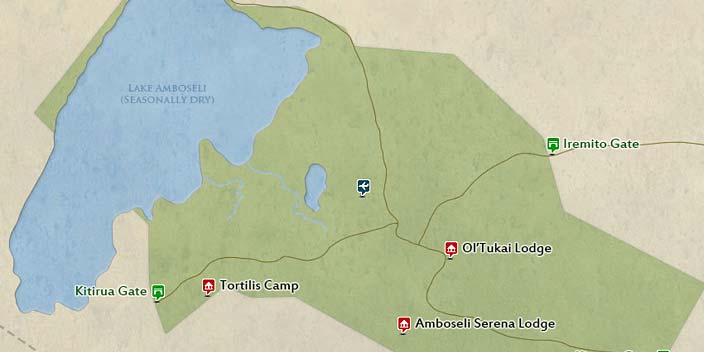
The most useful entrance gates to Amboseli are Iremito and Kimana on the park’s eastern boundary. These lie roughly 205km/127mi (four to five hours’ drive) and 240km/149mi (4½ to 5½ hours’ drive) from Nairobi respectively, and are reached by following the Mombasa Highway southeast to Emali then turning right toward Oloitokitok. You can also travel to Emali on the Madaraka Express (the train service connecting Nairobi and Mombasa) and arrange to be picked up there. A possibility coming from the west is Meshanani Gate, but the 50km/31mi road from Namanga is very rough and dusty.
Can Amboseli National Park Be Combined With Other Parks?
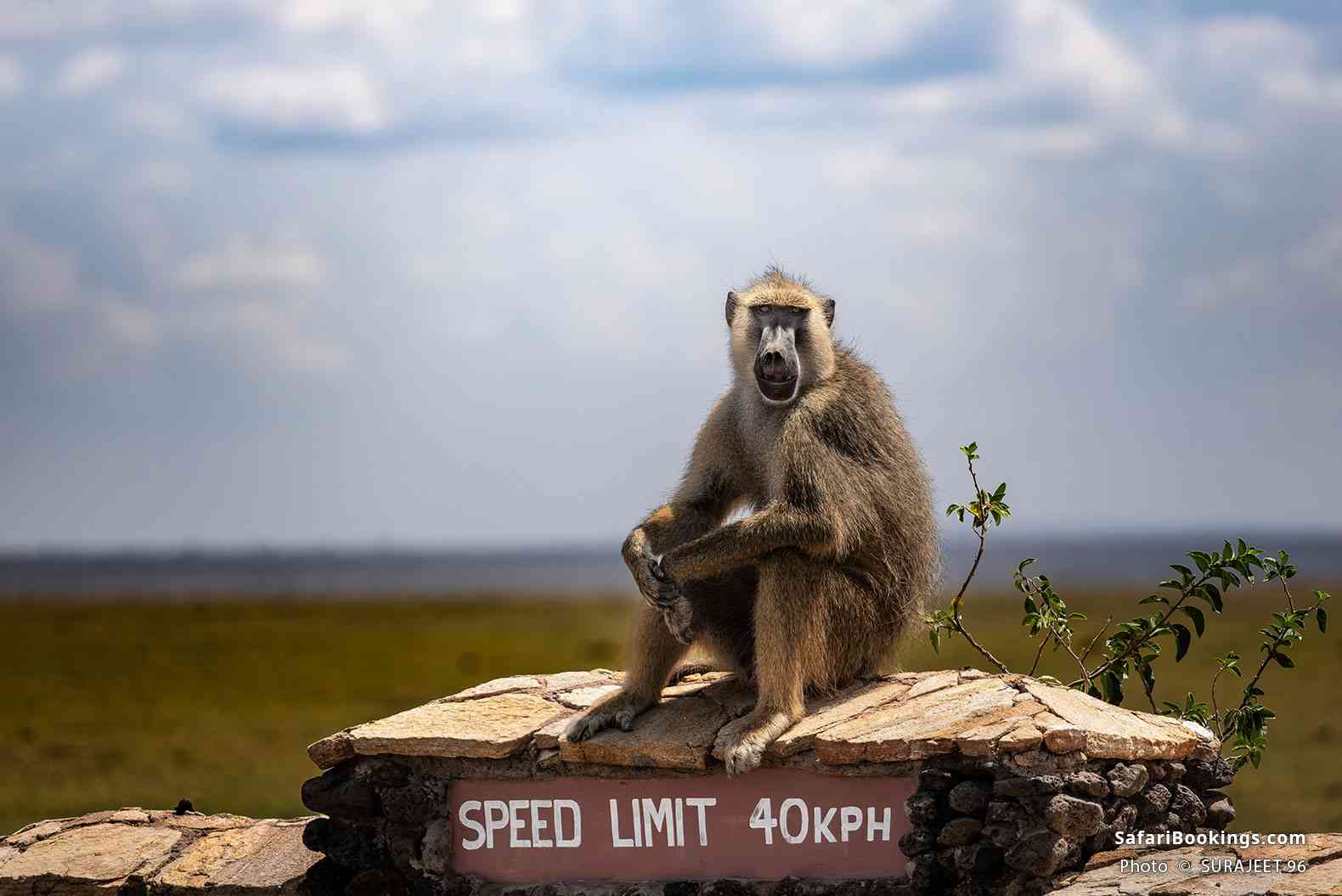 Baboon sitting on a road sign in Amboseli NP
Most Amboseli visits form part of a longer safari itinerary. On road safaris, Amboseli is often paired with Tsavo West National Park, whose Chyulu Gate is only 75km/47mi (1½ to two hours’ drive) from Kimana Gate on a good unsurfaced road. Tsavo West protects a vast volcanic landscape that hosts many of the same species as Amboseli, as well as a significant black rhino population, but it is less busy and has more of a wilderness feel. The even larger Tsavo East National Park, on the other side of the Mombasa Highway, is also worth considering.
Amboseli can be combined with more westerly parks, but this does involve driving through Nairobi or flying. Masai Mara National Reserve is known for its thrilling seasonal wildebeest migration and abundant big cats, while Lake Nakuru National Park hosts both African rhino species and tree-climbing lions in dramatic Rift Valley scenery. Laikipia Plateau, Meru National Park and Samburu National Reserve are good for the Big Five (though Samburu has no rhino), as well as northern specials such as reticulated giraffe, Grevy’s zebra and gerenuk antelope.
When Is the Best Time To Visit?
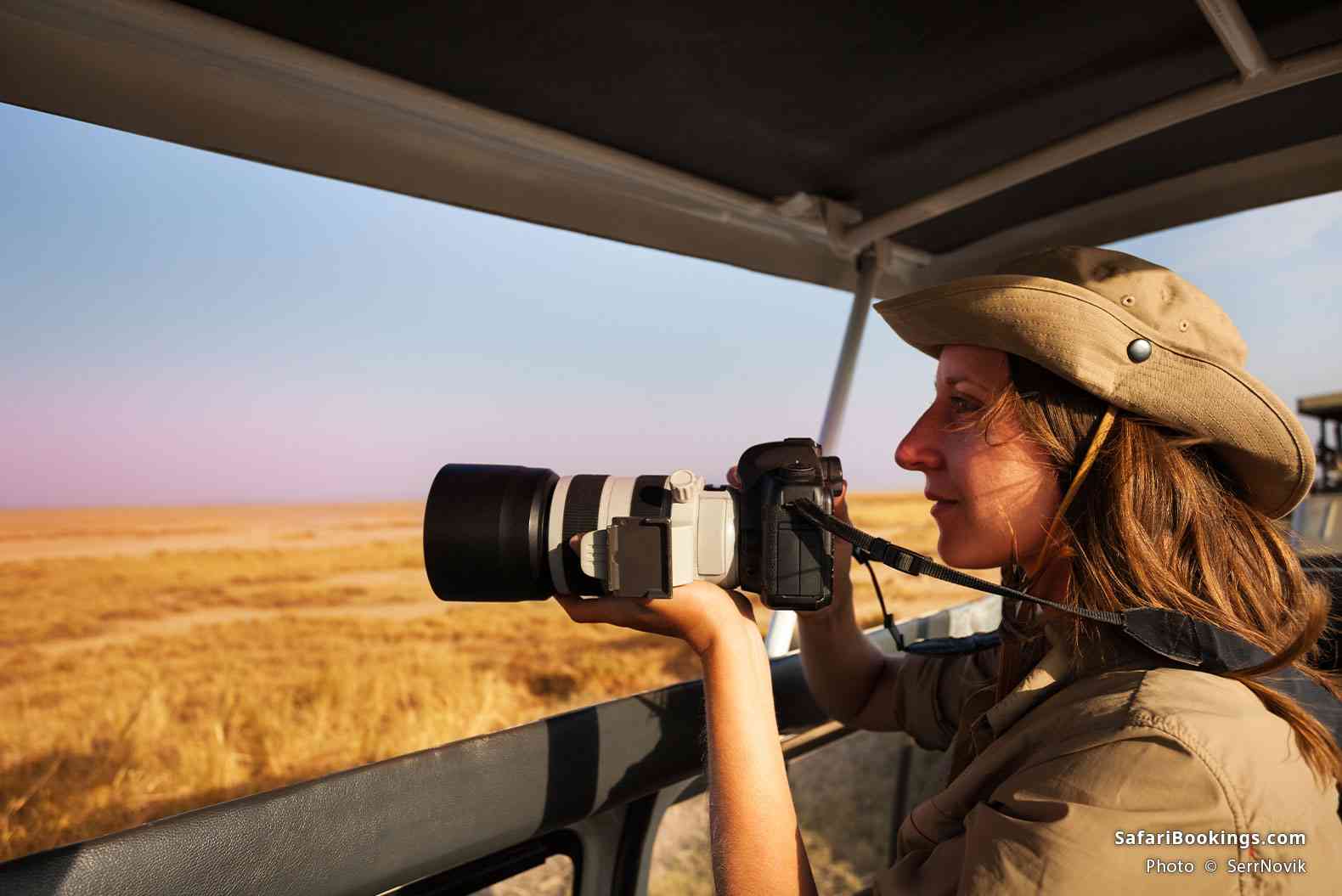 Traveler photographing from a vehicle
Amboseli is rewarding throughout the year. The dry months (June to October and to a lesser extent January to February) typically offer the best wildlife viewing, as vegetation thins out and animals concentrate around the central swamps and lakes. But there’s also much to be said for visiting during the short rains (November and December) or long rains (March to May), when the scenery is greenest, the birdlife most varied and tourist numbers lowest. Mt Kilimanjaro is also most likely to emerge from its customary shroud of clouds – usually in the early morning or late afternoon – after rain.
How Do I Get Around in Amboseli National Park?
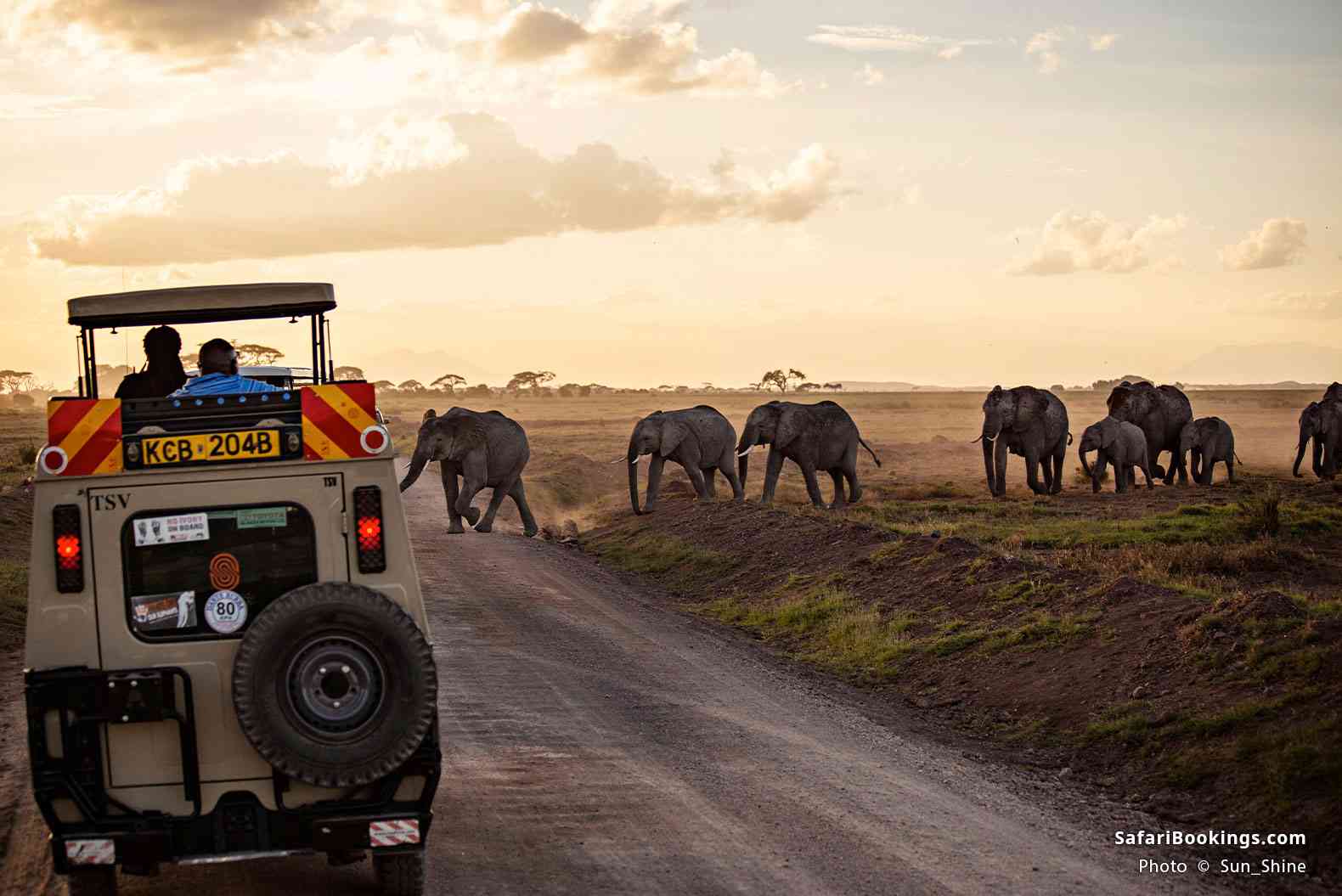 Safari vehicle and elephant herd at sunrise
The only realistic way to get around the dusty unsurfaced roads of Amboseli is in a high-clearance 4x4 vehicle. If you fly into the park, you will most likely stay at an upmarket camp where rates include game drives with a resident guide. If you are on a road safari, you’ll more likely do game drives with the same vehicle and driver you traveled there with. Self-drive is certainly possible, but only in a suitable vehicle.
How Many Days Should I Stay?
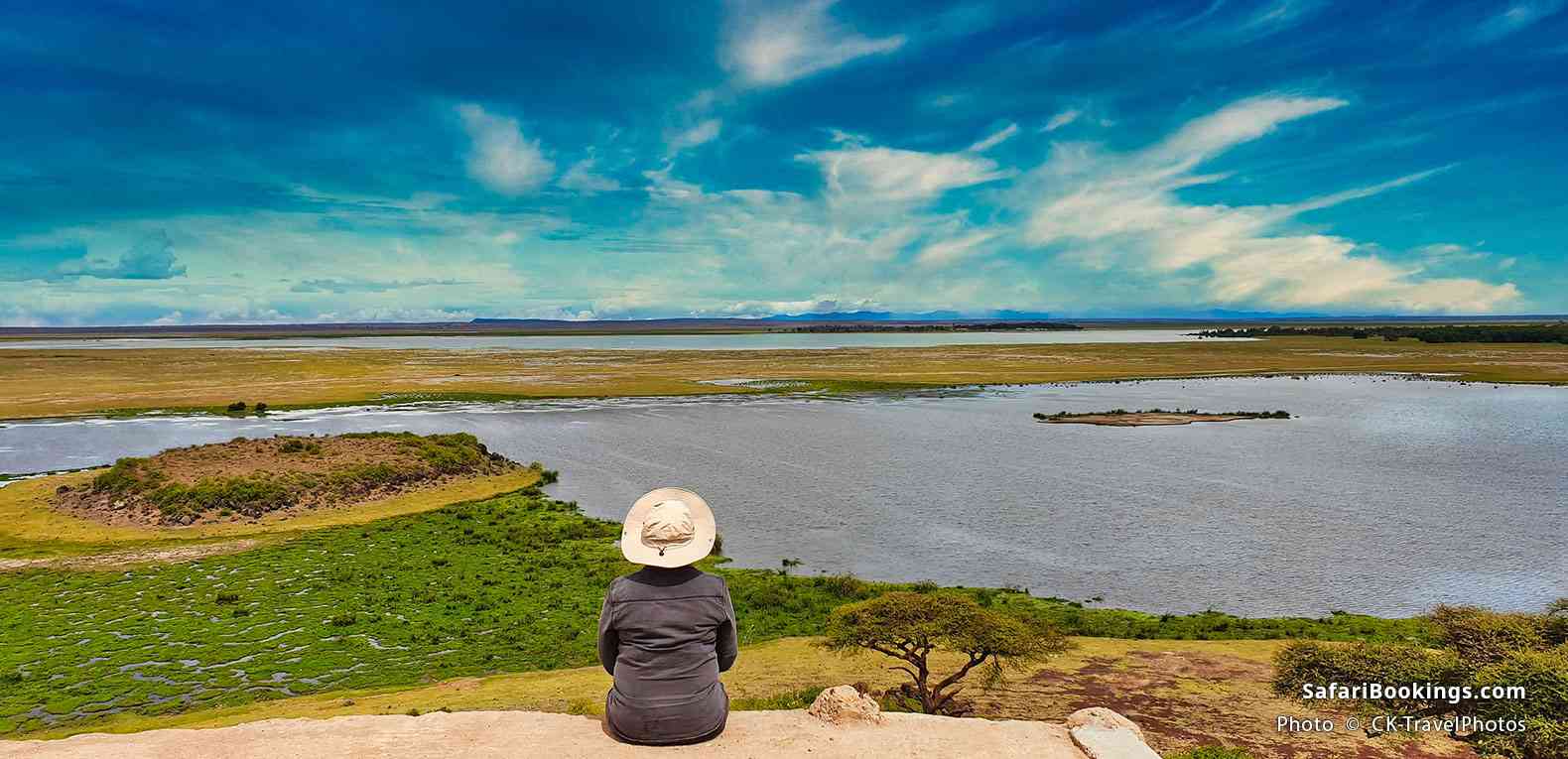 Traveler overlooking Amboseli NP from the top of Observation Hill
Most safaris to Amboseli spend three days there. A two-day safari, with only one night inside the park, will be very rushed, especially if you’re driving from Nairobi. A three-day safari allows a full day to explore the park, with additional game drives on the afternoon you arrive and morning you depart, and it doubles the chances of seeing Kilimanjaro clearly. A four-day, three-night safari is worth considering, especially for those with a strong interest in elephant behavior, wildlife photography or bird watching.
Spending more than four days in this relatively small park would be unusual; the additional time could be more productively dedicated to other parks and reserves.
Is Amboseli National Park Safe To Visit?
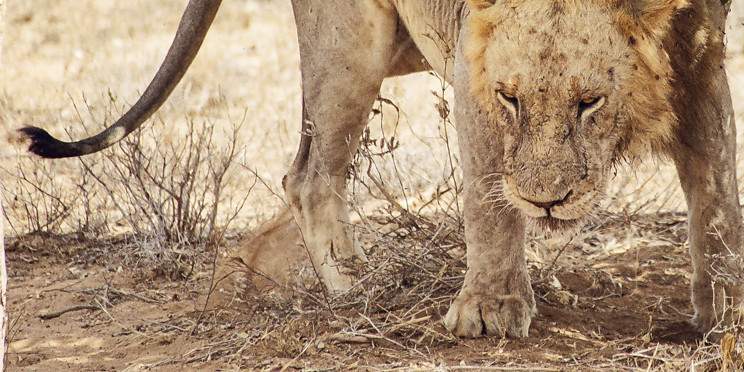
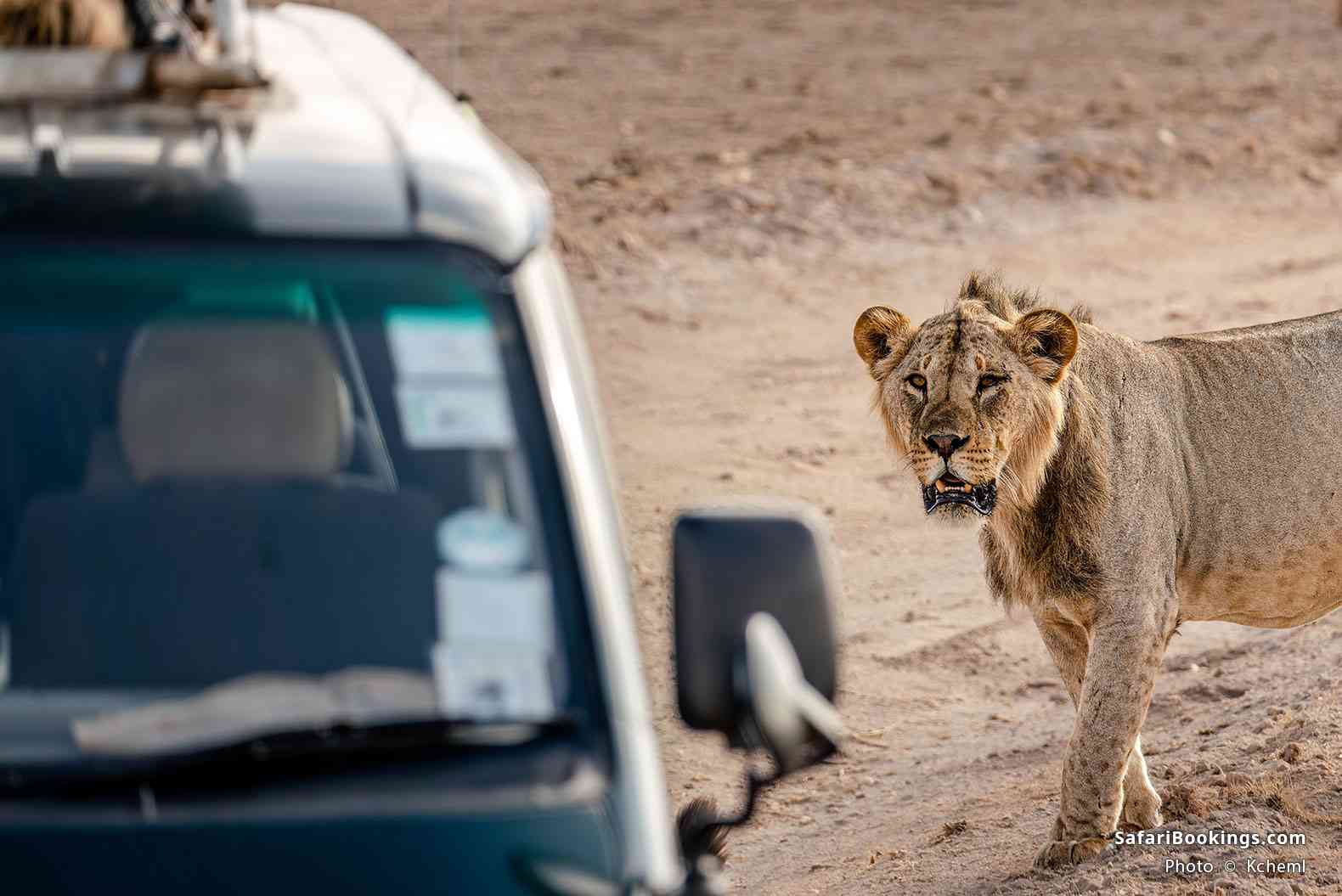 Lion looking at a safari vehicle in Amboseli NP
Amboseli is a safe destination. Assuming you visit on an organized fly-in or road safari, an experienced driver and/or guide will take care of you throughout, and ensure you come to no harm. On game drives, there is little to worry about in terms of dangerous wildlife, provided that you stay in the vehicle and follow your guide’s instructions. There are parks where elephants can be troublesome, but not Amboseli. Here, the elephants are super-relaxed around vehicles, though they should still be treated with respect.
It is recommended that self-drivers install a local SIM card or eSIM loaded with data and airtime in their phone.
Consider taking antimalarial drugs and carrying mosquito repellent.
How Can I Avoid the Crowds in Amboseli National Park?
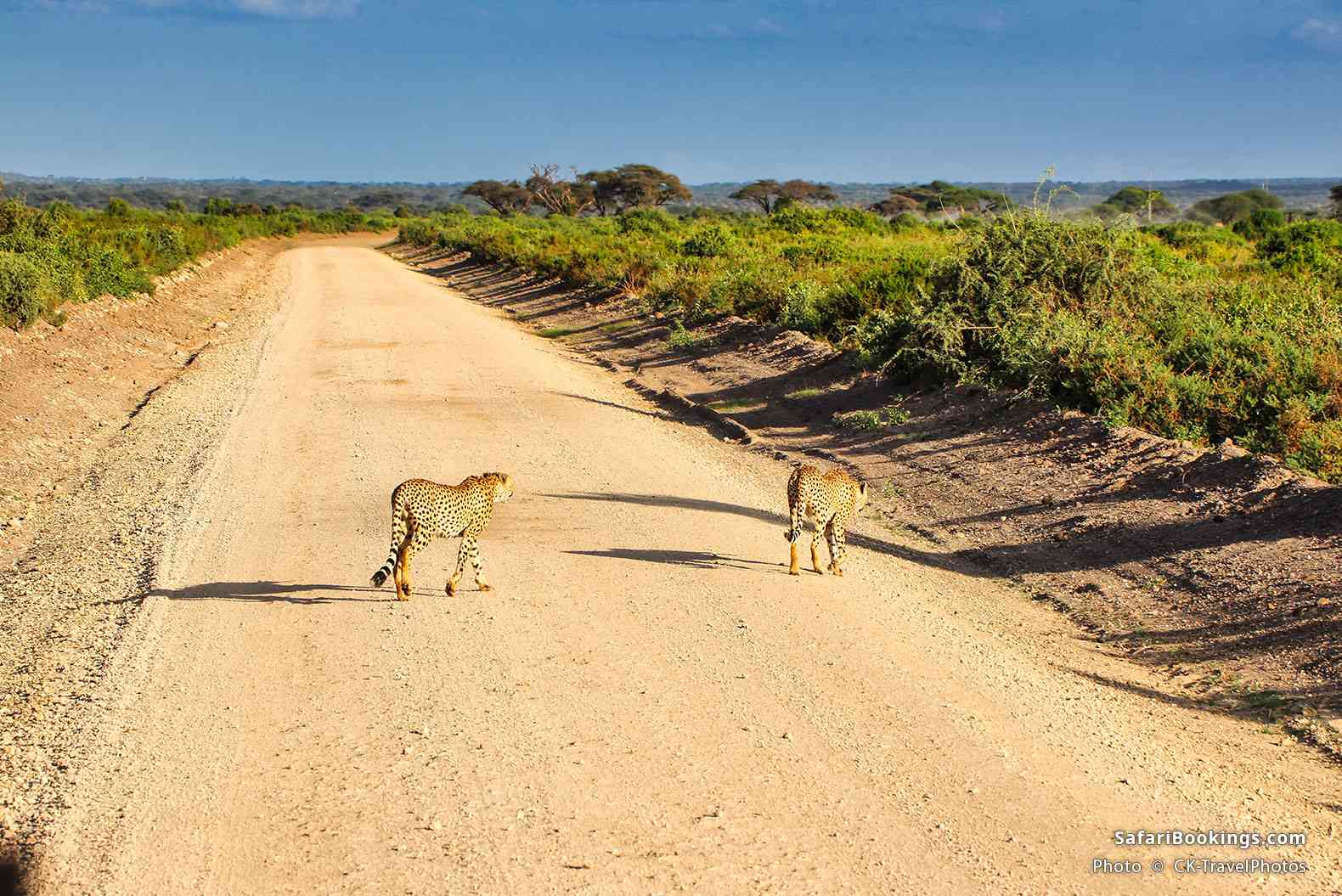 Cheetahs crossing the road in Amboseli NP
Amboseli is relatively small and its central wildlife-viewing circuit gets busy during high season (December to March and July to October). The easiest way to avoid the crowds is to visit out of season, when things are quieter. If you visit in season, the busiest game drive hours are midmorning and late afternoon, so try heading out at other times of day and exploring away from the main road between Kimana and Meshanani Gates via Ol Tukai Lodge (a well-known central landmark). Another option is to stay at an exclusive private lodge in one of the Maasai community conservancies bordering the national park.
What Are the Best Places To Stay?
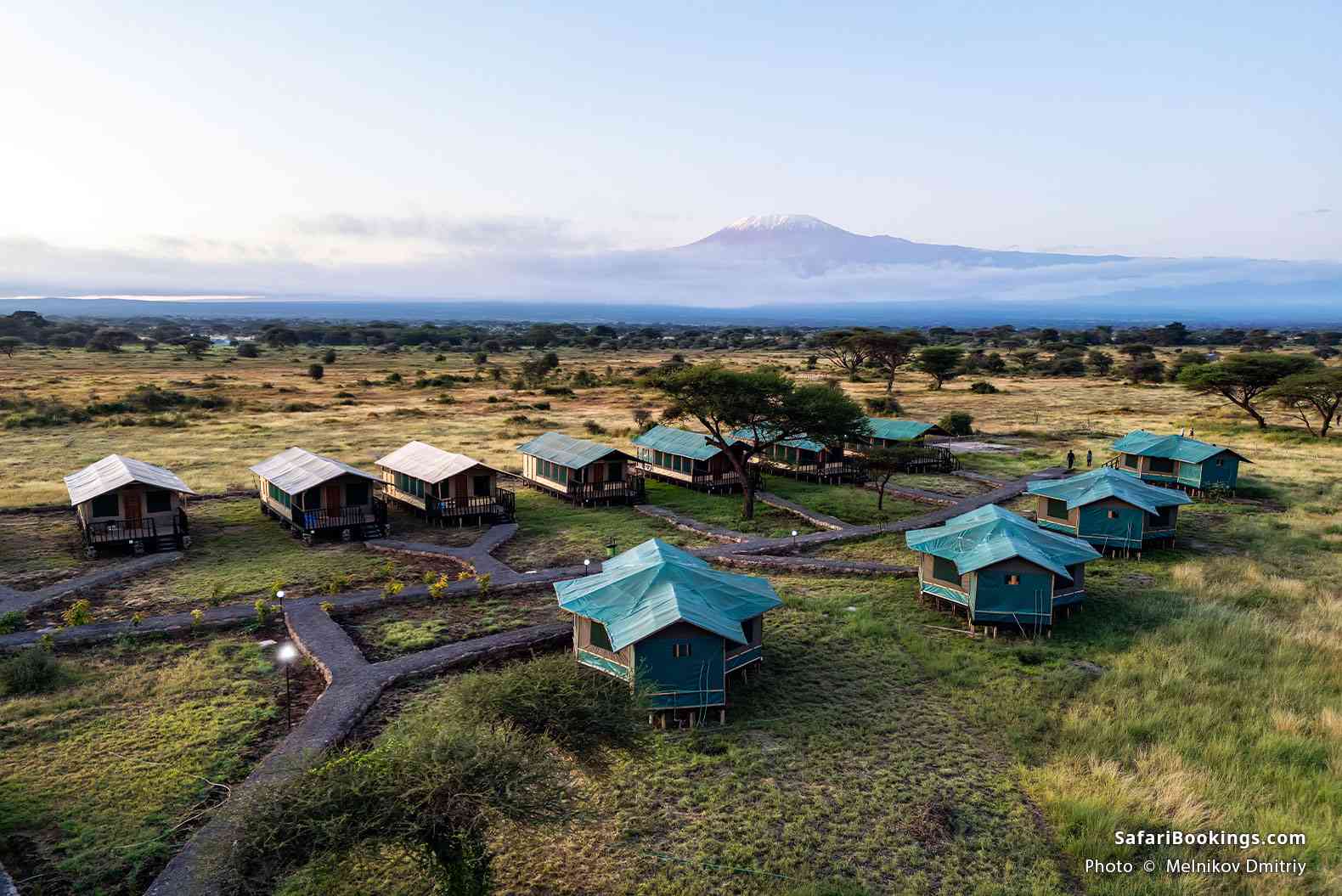 Top view of a tented camp with Mt Kilimanjaro in the background
Accommodations within Amboseli National Park are relatively limited and slot mainly into the upper mid-range and luxury categories. With the exception of one hotel-like lodge with 90-plus rooms and landscaped grounds, these are mostly small all-inclusive lodges and tented camps offering an immersive safari experience. Most are oriented to face Mt Kilimanjaro or overlook swamps teeming with birds and other wildlife. Options outside the national park are more varied and include community-run campsites and mid-range lodges. In addition, a few exclusive lodges and camps are set in Maasai community conservancies bordering the park.
What Facilities Are There?
 Sign on a traditional mud building in Amboseli NP
Outside of lodges and camps, facilities in Amboseli are somewhat limited. The park infrastructure includes several entrance gates and picnic sites, mostly with toilet facilities, as well as an airstrip. Ol Doinyo Orok Picnic Site, centrally located on Observation Hill, is worth singling out for its stunning views over Enkongo Narok Swamp to Mt Kilimanjaro.
There is no filling station, ATM, bank, grocery shop or stand-alone restaurant inside the park, but all these facilities are present in Emali (if driving to Iremito and Kimana Gates) or Namanga (on the way to Meshanani Gate). A filling station and a few small grocery kiosks can be found in the village of Kimana, which lies on the main Emali-Oloitokitok Road, about 25km/16mi outside the gate of the same name.
What Are the Costs of Visiting Amboseli National Park?
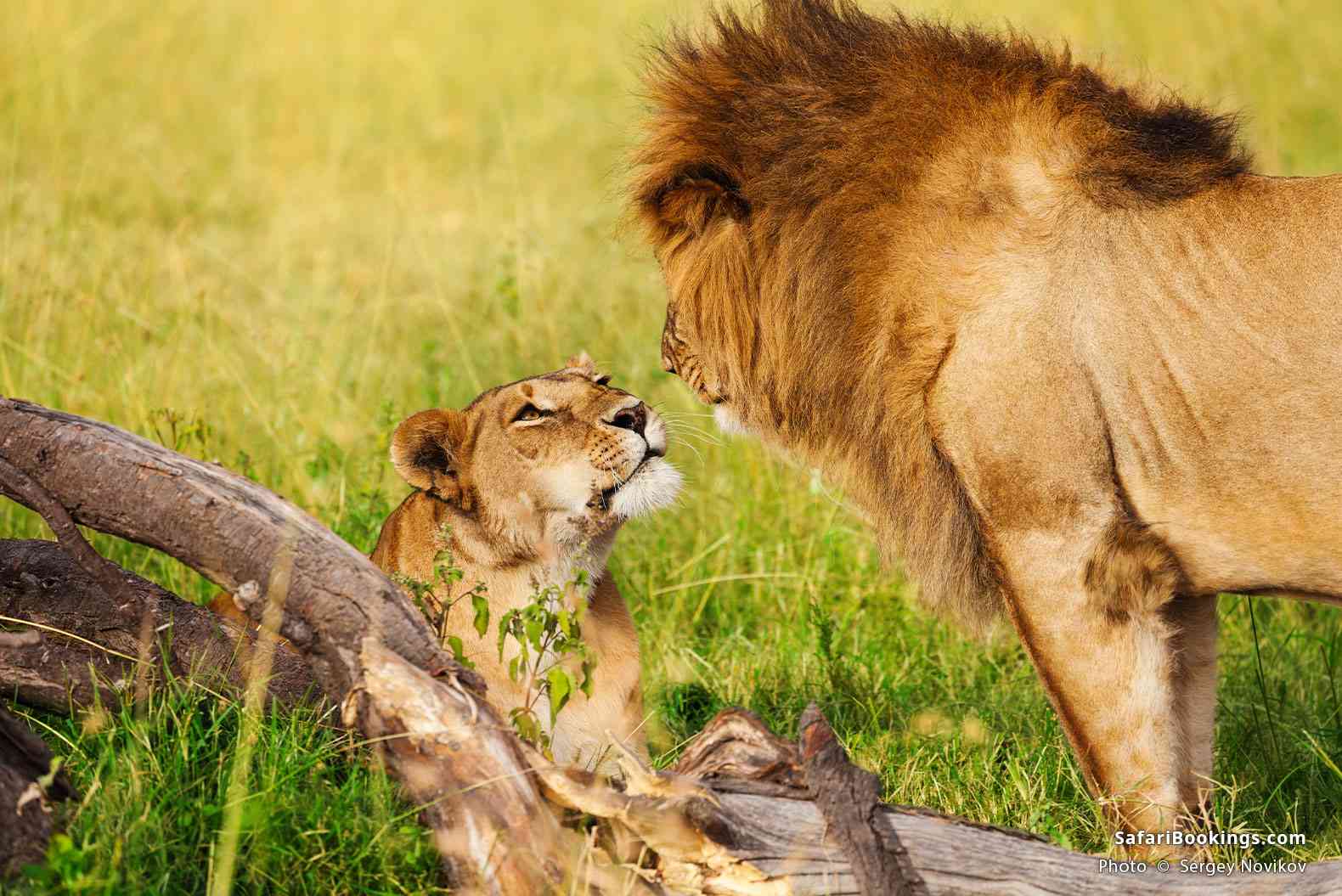 Lions in Amboseli NP
A wide range of factors will influence the cost of an Amboseli safari. These include the duration of the trip and the group size, as well as quality of accommodations, time of year, and how you get there from Nairobi. A three-day budget trip using a simple tented camp typically costs around US$350 to US$500 per person, while mid-range safaris of the same duration are in the ballpark of US$700 to US$1,000. Comparable luxury safaris might cost upward of US$1,200.
Amboseli is often incorporated into longer tours and safaris, the cost of which will depend on an even greater number of variables. Typically, however, budget safaris start around US$150 to US$200 per person per day, mid-range at US$250 to US$300 and luxury at US$500-plus.
Want To Visit Amboseli?
Click on the button below to compare Amboseli tours offered by top-rated tour operators.
By Philip Briggs Philip is a renowned Africa expert and author of Kenya guides for Bradt, DK Eyewitness and Insight.
More About This Author


 Subscribe to our newsletter
 Follow us on Instagram
Safari Tours to Kenya
-
![6-Day Let's Go Masai Mara Nakuru and Amboseli in a Group]()
6-Day Let's Go Masai Mara Nakuru and Amboseli in a Group
$973 to $1,145 pp (USD)
Kenya: Shared tour (max 8 people per vehicle)BudgetTented Camp & Hotel
You Visit: Nairobi (Start), Masai Mara NR, Lake Nakuru NP, Amboseli NP, Nairobi (End)

Jungleroam Safaris
5.0/5 – 1,988 Reviews

-
![6-Day Masai Mara-Nakuru-Amboseli Kenya Safari 4x4 Jeep]()
6-Day Masai Mara-Nakuru-Amboseli Kenya Safari 4x4 Jeep
$805 to $895 pp (USD)
Kenya: Shared tour (max 7 people per vehicle)BudgetTented Camp & Hotel
You Visit: Nairobi (Start), Masai Mara NR, Lake Nakuru NP, Amboseli NP, Nairobi (End)
Bienvenido Kenya Tours and Safaris
4.8/5 – 195 Reviews
-
![3-Day Masai Mara Fly-in, Fly-out Luxury Safari]()
3-Day Masai Mara Fly-in, Fly-out Luxury Safari
$1,145 to $1,832 pp (USD)
Kenya: Private tourLuxuryTented Camp
You Visit: Nairobi (Start), Masai Mara NR, Nairobi (End)
Bigmac Africa Safaris
5.0/5 – 57 Reviews