

 Google Maps


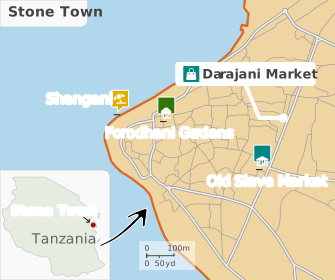
Colorful Darajani Market, also known as Marikiti Kuu (‘Great Market’), has been the commercial hub of Stone Town since the late 19th century. Situated on the east side of Stone Town, it is a fascinating place
Read more
to explore, with an atmosphere that is both lively and welcoming. This historic market is also a great place to sample the mouthwatering fruits, fragrant spices and other fresh tropical produce for which Zanzibar is known.Darajani Market in History

Darajani (which means ‘On the Bridge’) was established in the 1880s following the closure of Stone Town’s notorious slave market. Back then, Darajani was perched on the western shore of Pwani Ndogo (‘Small Beach’), a wide
Read more
creek that separated Stone Town from the more modern settlement of Ng’ambo (‘The Other Side’). As its name suggests, Darajani originally stood alongside the only bridge across the creek, a site that would have made it very convenient for traders coming from Ng’ambo or farther afield.The covered market at Darajani was built in 1904. The creek that separated Darajani from Ng’ambo was reclaimed in the 1920s, as part of a government program to improve the infrastructure of the rapidly growing city. Today, Darajani is landlocked, and no sign of the creek or bridge remains.Exploring Darajani Market

The focal point of chaotic Darajani is a handsome colonial-style covered market on the west side of Benjamin Mkapa Road. Built in 1904, this has a whitewashed stone block facade and an ornate corrugated iron roof.
Read more
Most of the covered market is piled high with fruits and vegetables, including the likes of , and . The seafood section is easily located by its pungent fishy smell. Behind it, an altogether more pleasing aroma comes from a warren of stalls selling the varied spices – , , and so on – for which Zanzibar is renowned.Surrounding the market, countless small dukas (shops) stock a range of local and imported tinned and dry goods. You’ll see red-robed Maasai people selling bead-embroidered sandals, SIM card sellers seated under green umbrellas with the distinctive Zantel logo, and vendors crushing in old-fashioned juicing machines. For local fabrics, head across to the east side of Benjamin Mkapa Road and take a look around the more sedate and orderly Darajani Souk, which specializes in textiles and clothing.Safety at Darajani Market

As is the case with other parts of Stone Town, Darajani Market is safe and incidents of theft are rare. That said, busy local markets are often a hunting ground for pickpockets, so it is best
Read more
not to carry valuables or cash in obvious places, and to stay alert. It is not necessary to visit with a local guide, but it might make some people feel more secure. If you are buying rather than just looking around, be aware that bargaining is customary but best done with grace and good humor.How To Get to Darajani Market

Darajani Market has a prominent location on Benjamin Mkapa Road, 150m/490ft north of the junction for the Anglican Cathedral. The market is easily reached by taxi and frequently included on guided tours of Stone Town. It
Read more
is also close enough to most hotels and other points of interest to be reached independently on foot. If you are coming through Stone Town, it is easy to get lost in the alleys. For those who enjoy that kind of thing, this is part of the fun; for those who don’t, it might be another good reason to arrange a local guide.Nearby Attractions

Darajani Market is often visited in combination with the Old Slave Market and Anglican Cathedral, less than 5 minutes’ walk farther south. Most major points of interest in Stone Town lie within walking distance of Darajani