

 Google Maps


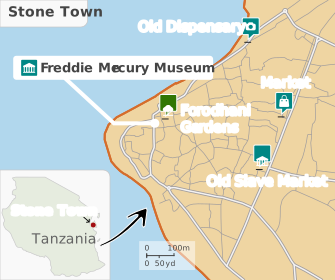
Freddie Mercury is Zanzibar’s most famous son. The flamboyant Queen frontman was born Farrokh Bulsara in Stone Town in 1946, and for the next eight years his family lived in a two-story house 100m/328ft inland from
Read more
Shangani waterfront. This handsome building on Kenyatta Road is now often referred to as Freddie Mercury House. Since 2019, it has also been home to the Freddie Mercury Museum, a fun installation designed by Zanzibari photographer Javed Jafferji with support from Queen guitarist Brian May and Freddie’s sister Kashmira.-
1
View Historic Photographs of Zanzibar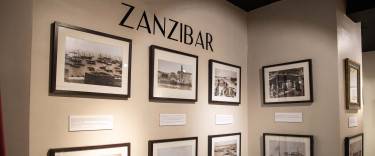
Historic photos of Zanzibar The first display you’ll encounter when you enter the museum is a wall of absorbing sepia-toned photographs of Stone Town in the early 20th century. Subjects include the old harbor, which was then packed withRead more
these traditional boats; the former Soko Kuu (main market) on Portuguese Street – now Gizenga Street – behind the Old Fort; and Darajani Market in 1904, shortly after it was founded. The photos offer fascinating glimpses into Zanzibar’s past. They’ll be particularly interesting if you’ve already done a walking tour around Stone Town and recognize some of the historic landmarks. -
2
Explore Freddie’s Roots and ChildhoodAnother set of photographs explores Farrokh Bulsara’s formative years. He was born at Stone Town’s Mnazi Mmoja Hospital to an Indian mother and an Irani father who worked with the British Colonial Office. From ages fiveRead more
to eight, he studied around the corner at St Joseph’s School, after which he went to boarding school in India, where he excelled at sports and the arts. Farrokh was already going by the name Freddie when he came back to Stone Town aged 16 in 1962. Shortly afterward, the Bulsara family fled to the UK to escape the . Freddie never returned to Zanzibar.The Bulsara family practiced an ancient Persian religion called Zoroastrianism. One of the museum’s most interesting photos shows the Agiyari Temple – built in 1883 and now near-derelict – where they worshipped. Others show young Farrokh boxing, acting in a school play, and fronting his first group The Hectics (as a precocious nine-year-old). In all these photos, the future Freddie Mercury is easily recognized by his distinctive front teeth and overbite, which he refused to have fixed for fear it might reduce his incredible four-octave vocal range. -
3
Read Handwritten Song Lyrics and Dedications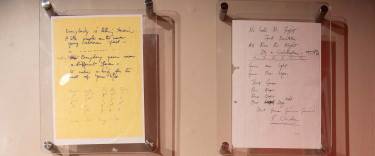
Handwritten lyrics on display The next wall is covered with dedications from some of the people who knew Freddie best: close relations, childhood friends, Queen band members and other contemporary musicians. Around the corner from this is a wall coveredRead more
in Freddie’s original handwritten song lyrics. Most of these scribbles date from his teenage years – when he allegedly declared “I’m not going to be a star, I’m going to be a legend” – but there are also drafts of more familiar songs that later became famous. -
4
Enjoy Colorful Queen-related Memorabilia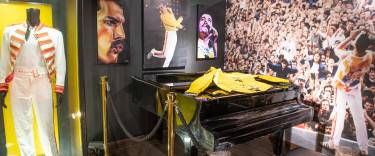
Displays of Queen memorabilia The museum’s last set of displays takes you away from Zanzibar and into the more familiar territory of Queen’s popular heyday. This started in 1974, when their fourth single ‘Killer Queen’ charted at number 2 inRead more
the UK, and it was cemented a year later when ‘Bohemian Rhapsody’ rocketed up the charts to enjoy a nine-week stay at number 1. It was cut short in 1991, when Freddie died of HIV-related causes at the age of 45.The centerpiece of this exhibition is Freddie’s original piano. Other memorabilia of those heady days include old-style album covers, dynamic photographs, glamorous stage costumes, painted portraits and a TV showing select live performances (including Live Aid in 1985).


How To Get to the Freddie Mercury Museum

The Freddie Mercury Museum lies on the corner of Kenyatta Road and Gizenga Street in the heart of Stone Town. Most people visit it on foot, either as part of a guided Stone Town tour, or
Read more
as a shorter excursion in its own right. It’s a well-known landmark, and very close to Forodhani Gardens and the row of upmarket hotels that lines Shangani waterfront, so anyone can point you in the right direction. If you don’t want to walk, Kenyatta Road is one of Stone Town’s few motorable roads, so catch a taxi.Nearby Attractions

Depending on your definition of the word, pretty much anywhere in Stone Town would qualify as nearby. This means that the Freddie Mercury Museum can easily be visited along with other Stone Town highlights. Some of