41-50 of 50 Best Things To Do in Tanzania
-
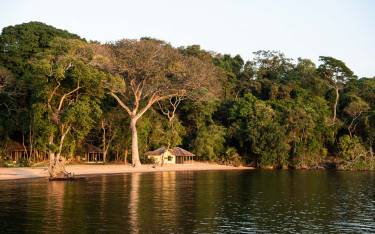
Rubondo Island Camp Rubondo Island National Park, Tanzania. Photo by Ariadne van Zandbergen. © All rights reserved 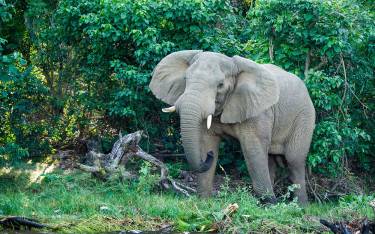
Elephant on Rubondo Island Rubondo Island National Park, Tanzania. Photo by Ariadne van Zandbergen. © All rights reserved 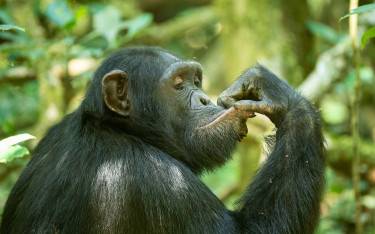
Chimpanzee on Rubondo Island Rubondo Island National Park, Tanzania. Photo by Ariadne van Zandbergen. © All rights reserved 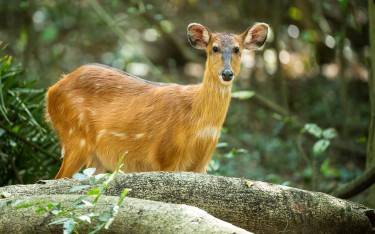
Sitatunga on Rubondo Island Rubondo Island National Park, Tanzania. Photo by Ariadne van Zandbergen. © All rights reserved 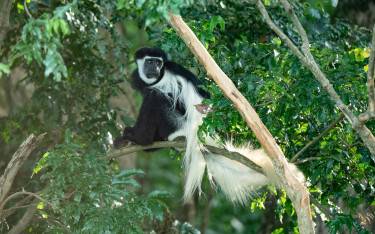
Black-and-white colobus on Rubondo Island Rubondo Island National Park, Tanzania. Photo by Ariadne van Zandbergen. © All rights reserved 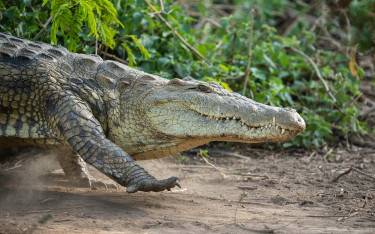
Nile crocodile on Rubondo Island Rubondo Island National Park, Tanzania. Photo by Ariadne van Zandbergen. © All rights reserved 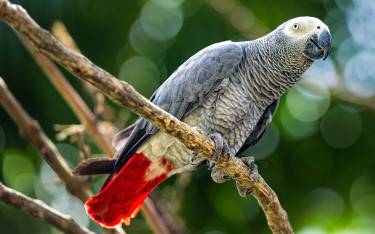
Grey parrot on Rubondo Island Rubondo Island National Park, Tanzania. Photo by Richard Susanto. © All rights reserved 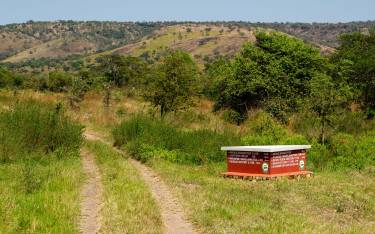
Road through Burigi-Chato NP Burigi-Chato National Park, Tanzania. Photo by Ariadne van Zandbergen. © All rights reserved 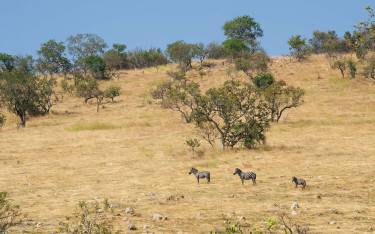
Plains zebras in Burigi-Chato NP Burigi-Chato National Park, Tanzania. Photo by Ariadne van Zandbergen. © All rights reserved 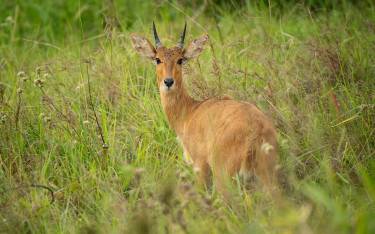
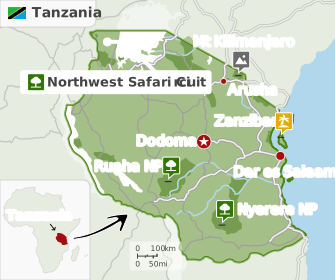
Bohor reedbuck in Ibanda-Kyerwa NP Ibanda-Kyerwa National Park, Tanzania. Photo by Ariadne van Zandbergen. © All rights reserved 41. Explore the Emerging Northwest Safari Circuit
This new circuit includes Rubondo Island and four national parks created in 2019
Tanzania’s far northwest is separated from the Serengeti by the vast open waters of Lake Victoria. The only established national park in this obscure region is Rubondo Island, which lies in the southwest of Lake VictoriaRead more
and ranks as one of the best places in Africa to see the swamp-dwelling . Introduced wildlife on the forested island includes elephant, giraffe and monkey. The island also harbors two communities descended from orphaned and captive individuals released there in the 1960s. One of the communities is for trekking excursions.For adventurous , the northwest contains four largely undeveloped parks created in 2019. The most alluring is Burigi-Chato, Tanzania’s fifth-largest national park, which extends for 4,707km²/1,817mi² between Lake Victoria and the Rwandan border. The other national parks are Ibanda-Kyerwa, Rumanyika-Karagwe and Kigosi. Minziro Forest Reserve, on the Ugandan border, is a birding hot spot that harbors 50 species unrecorded elsewhere in Tanzania. -
Google Maps
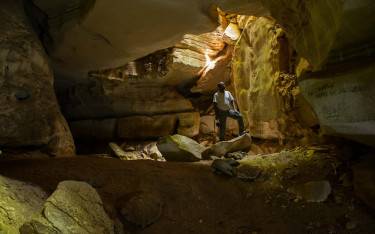
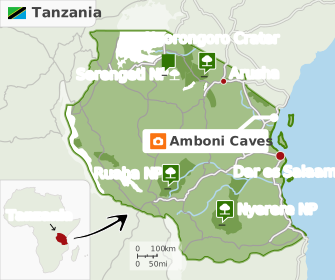
Amboni Caves Amboni Caves, Tanzania. Photo by Ariadne van Zandbergen. © All rights reserved 42. Go Underground at the Amboni Caves
One of East Africa’s most extensive caves lies near the port of Tanga
Amboni is shrouded in legend. It has been claimed improbably that this vast limestone cave system runs underground all the way to Mt Kilimanjaro. In days gone by, a healing spirit called Mizimu was said toRead more
reside in the main cave, and sick or infertile locals would leave offerings at a shrine there. Today, a guided tour leads through a maze of narrow passages and caverns to an array of natural sculptures that variously resemble a ship, the map of Africa, the Statue of Liberty and different animals.Next to the cave, a stand of coastal forest flanking the Mkulumuzi River is home to monkeys. Because Amboni lies at the base of the Usambara Mountains, this forest patch is a good place to look for (popular household plants that are naturally to the Eastern Arc Mountains) in their wild state. -
Google Maps
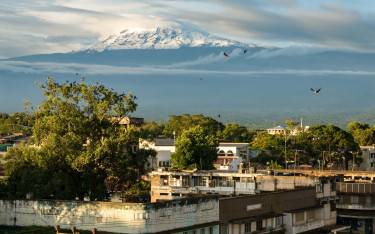
Mt Kilimanjaro towering over the town of Moshi Moshi, Tanzania. Photo by Salparadis. © All rights reserved 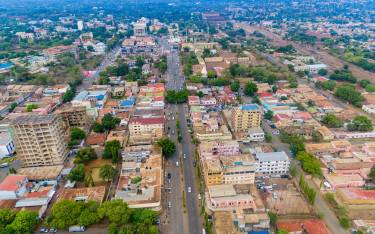
Aerial view of Moshi Moshi, Tanzania. Photo by Moiz Husein. © All rights reserved 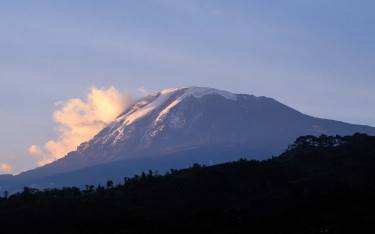
Mt Kilimanjaro seen from Moshi Mount Kilimanjaro, Tanzania. Photo by Ariadne van Zandbergen. © All rights reserved 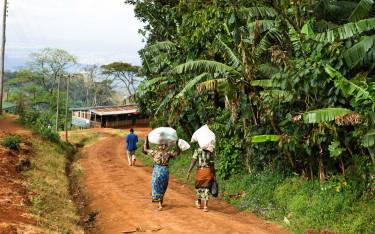
Road through Chagga farmland Foothills of Mt Kilimanjaro, Tanzania. Photo by Ariadne van Zandbergen. © All rights reserved 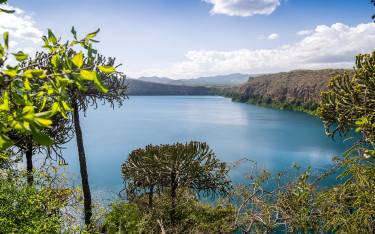
Lake Chala Lake Chala, Tanzania. Photo by Jacek_Sopotnicki. © All rights reserved 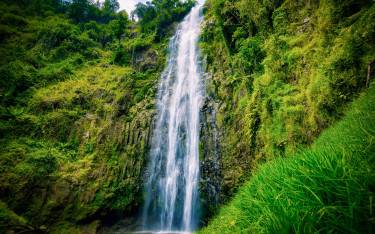
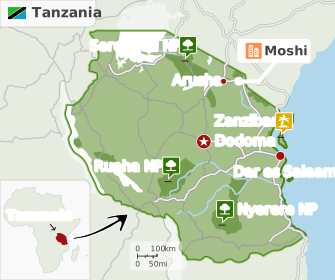
Materuni Waterfalls Materuni Waterfalls, Tanzania. Photo by Robert Cernat. © All rights reserved 43. Visit Moshi at the Base of Mt Kilimanjaro
This functional town boasts one of the most enviable locations in Africa
Arrive in Moshi on a dusty summer afternoon and you’re likely to find it somewhat underwhelming. But with luck, all that will change as dusk approaches, and the clouds on the town’s northern skyline dissipate toRead more
reveal the domed peak of Kilimanjaro in all its snowcapped majesty.Magnificent setting aside, there’s a lot to do and see around Moshi. To learn about the local Chagga culture, try the rewarding cultural tourism programs at the small towns of Machame and Marangu, both of which lie high on the forested slopes of Kilimanjaro. Other local attractions include the spectacular 80m-/262ft-high Materuni Waterfalls, the crystal-clear spring-fed natural swimming pools at Kikuletwa, and the staggeringly beautiful Lake Chala nestled at the base of a deep volcanic crater. -
Google Maps
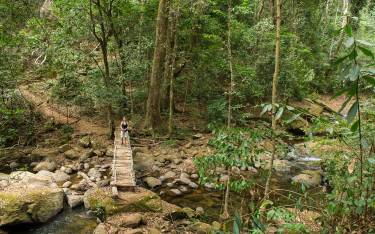
Hiker crossing the Sanje River Udzungwa Mountains National Park, Tanzania. Photo by Ariadne van Zandbergen. © All rights reserved 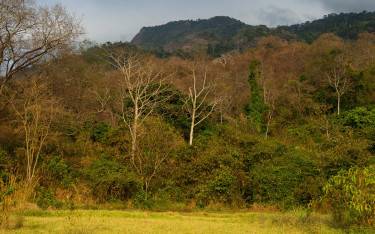
Forested mountain slopes Udzungwa Mountains National Park, Tanzania. Photo by Ariadne van Zandbergen. © All rights reserved 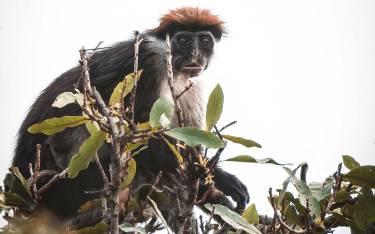
Udzungwa red colobus Udzungwa Mountains National Park, Tanzania. Photo by Yorick Guns. © All rights reserved 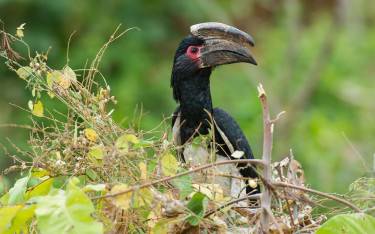
Trumpeter hornbill Udzungwa Mountains National Park, Tanzania. Photo by Ariadne van Zandbergen. © All rights reserved 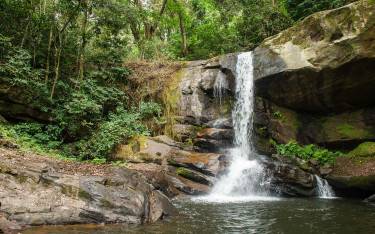
Sanje Waterfall Udzungwa Mountains National Park, Tanzania. Photo by Ariadne van Zandbergen. © All rights reserved 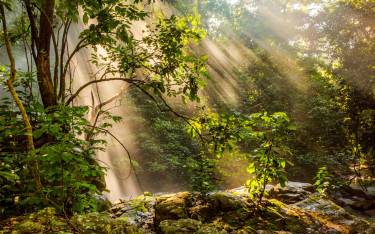
Forest interior Udzungwa Mountains National Park, Tanzania. Photo by Moiz Husein. © All rights reserved 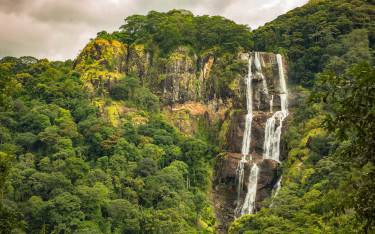
Sanje Waterfall Udzungwa Mountains National Park, Tanzania. Photo by Moiz Husein. © All rights reserved 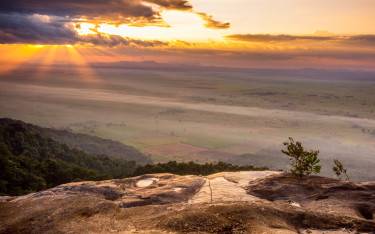
View from the top of Sanje Waterfall Udzungwa Mountains National Park, Tanzania. Photo by Moiz Husein. © All rights reserved 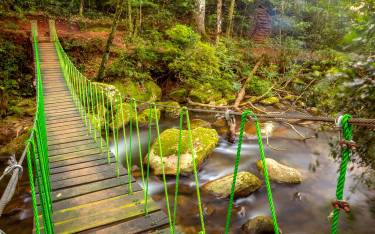
Suspension bridge over the Sanje River Udzungwa Mountains National Park, Tanzania. Photo by Moiz Husein. © All rights reserved 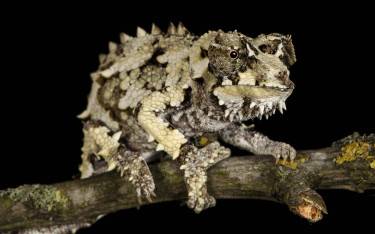
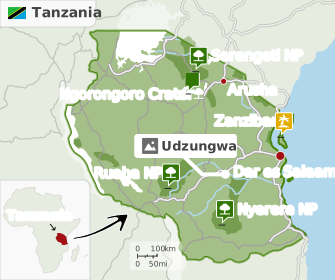
Spiny-flanked chameleon Udzungwa Mountains National Park, Tanzania. Photo by Ferdy Timmerman. © All rights reserved 44. Hike, Watch Birds and Spot Monkeys in Udzungwa
The largest of the Eastern Arc mountain ranges is a display of
Udzungwa is an extraordinary place. Despite human , this most southerly of the Eastern Arc ranges still supports around 2,000km²/772mi² of pristine forest whose high biodiversity is linked to an altitudinal span of 250m to 2,576mRead more
(820ft to 8,451ft). To give some idea of Udzungwa’s biological wealth, a full five primate species, including and , are unique to this one mountain range. birds include the Udzungwa forest partridge, a relic of an ancient Asian lineage that dates back 15 million years.The easiest access is on the east side of Udzungwa Mountains National Park, where the forested footslopes can be explored on a number of scenic guided day trails that offer much to delight wildlife enthusiasts. Serious bird-watchers hoping to tick off Udzungwa forest partridge and other high-altitude endemics are better off heading to the more remote forest reserves on the western side of the range. -
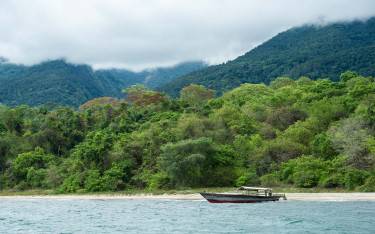
Forested shore of Lake Tanganyika Great Rift Valley, Tanzania. Photo by Ariadne van Zandbergen. © All rights reserved 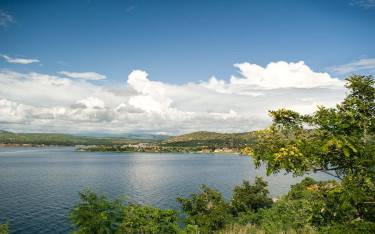
Lake Tanganyika Kigoma, Tanzania. Photo by Guenterguni. © All rights reserved 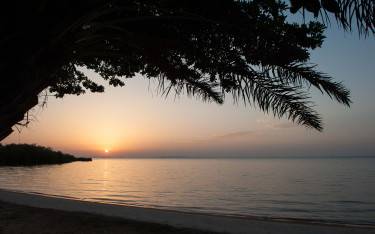
Sunset over Lake Victoria Lake Victoria, Tanzania. Photo by Ariadne van Zandbergen. © All rights reserved 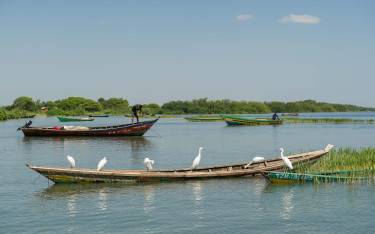
Fishing boats on Lake Victoria Lake Victoria, Tanzania. Photo by Ariadne van Zandbergen. © All rights reserved 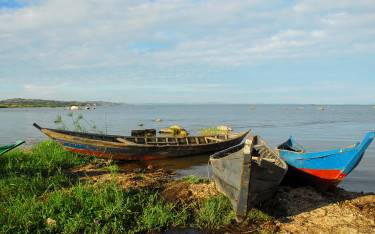
Fishing boats on Lake Victoria Lake Victoria, Tanzania. Photo by Alida Vanni. © All rights reserved 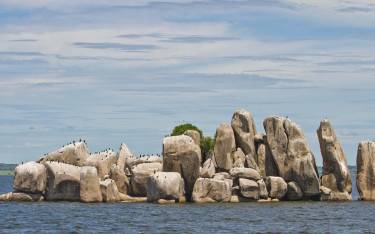
Rocky island on Lake Victoria Lake Victoria, Tanzania. Photo by PeterVanDam. © All rights reserved 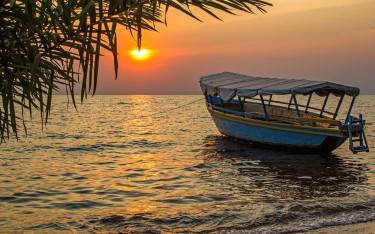
Sunset over Lake Victoria Lake Victoria, Tanzania. Photo by MattiaATH. © All rights reserved 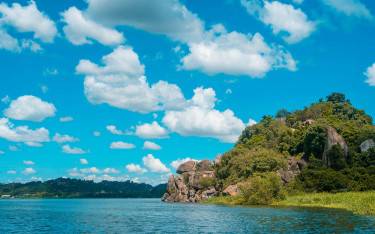
Lake Victoria Lake Victoria, Tanzania. Photo by Moiz Husein. © All rights reserved 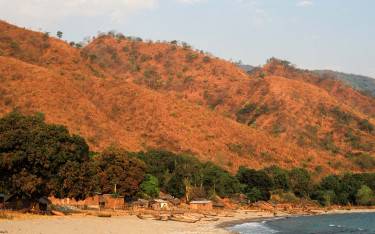
Lake Nyasa Matema Beach, Tanzania. Photo by Ariadne van Zandbergen. © All rights reserved 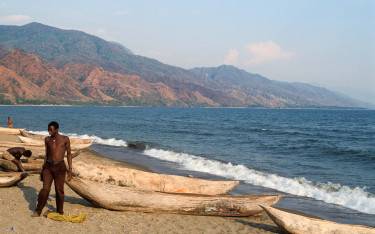
Lake Nyasa Matema Beach, Tanzania. Photo by Ariadne van Zandbergen. © All rights reserved 45. See Africa’s Three Largest Lakes
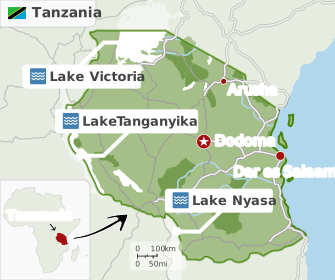
Lakes Victoria, Tanganyika and Malawi (Nyasa) all lie partly within Tanzania
Africa’s three great lakes lay at the heart of the 19th century’s greatest geographic riddle: the source of the Nile River. After decades of speculation, the answer turned out to be Lake Victoria, which also ranksRead more
as the world’s second-largest freshwater body by surface. This expansive but relatively shallow lake forms the western limit of the Serengeti migratory ecosystem and is easily visited as an extension of a safari to that park’s Western Corridor.More beautiful, but also more remote from the main tourist circuit, is a pair of long, narrow lakes hemmed in by the mountainous . Lake Tanganyika, the world’s longest and second-deepest freshwater body, is most frequently visited by people who want to go in Mahale Mountains or Gombe National Parks. Finally, though many people are unaware of it, the most northerly and arguably spectacular part of Lake Malawi nudges into Tanzania, where it is known as Lake Nyasa. -
Google Maps
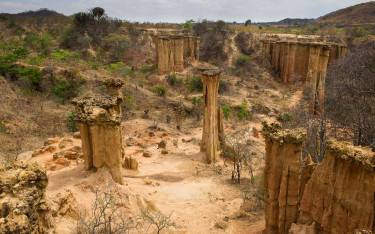
Isimila Stone Age Site Iringa, Tanzania. Photo by Ariadne van Zandbergen. © All rights reserved 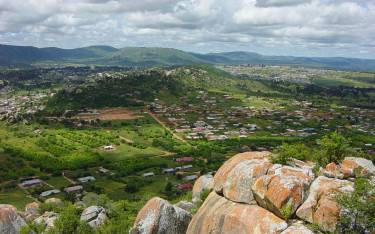
Iringa town Iringa, Tanzania. Photo by Matt Crypto. © All rights reserved 46. Take an Urban Break in Iringa
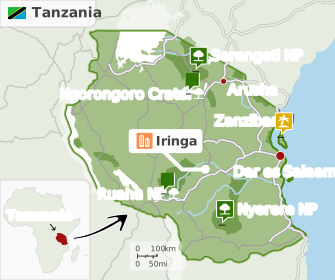
Break up the drive to Ruaha National Park at this historic gateway town
In addition to being the leaping-off point for road safaris to Ruaha, Iringa is a rewarding stop in its own right. It is the principal town of the Hehe people, a Bantu group whose famed resistanceRead more
to colonial rule ended in 1898, when King Mkwawa took his own life rather than letting himself be captured by the Germans. The name Iringa derives from the Hehe ‘lilinga’, in reference to a large fort built nearby by Mkwawa.Iringa’s town center, perched on a prominent ridge, is dotted with colonial-era relics. These include the German Boma that dates to 1900 and houses an informative local history museum. Igeleke Rock, on the town’s northern outskirts, is decorated with prehistoric rock art similar to that found at Kondoa. Slightly farther afield is Isimila Stone Age Site, where an important collection of stone tools and animal fossils has been unearthed in a gorge studded with impressive eroded sandstone pillars. -
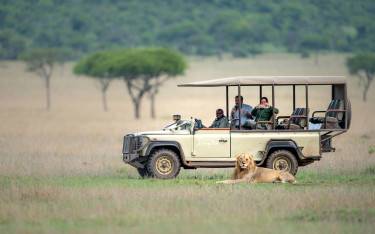
Safari vehicle in Grumeti GR Grumeti Game Reserve, Tanzania. Photo by Singita. © All rights reserved 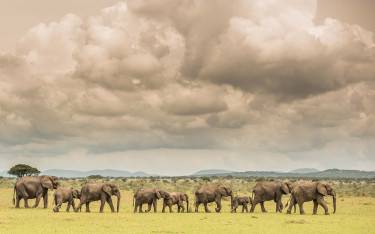
Herd of elephants in Grumeti GR Grumeti Game Reserve, Tanzania. Photo by Singita. © All rights reserved 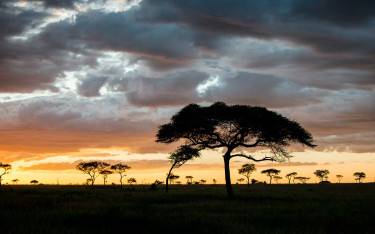
Sunset over the savannah in Grumeti GR Grumeti Game Reserve, Tanzania. Photo by Singita. © All rights reserved 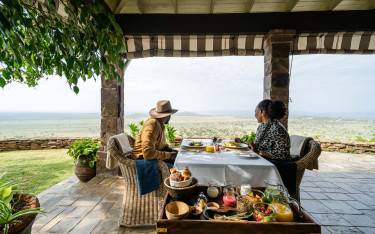
Breakfast in Grumeti GR Grumeti Game Reserve, Tanzania. Photo by Singita. © All rights reserved 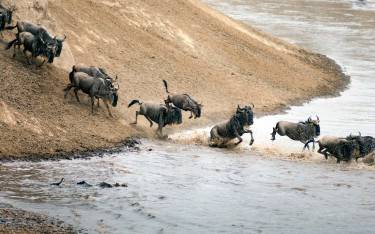
Wildebeest crossing the Grumeti River Western Serengeti National Park, Tanzania. Photo by drferry. © All rights reserved 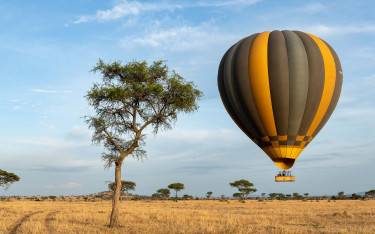
Hot-air balloon safari in Grumeti GR Grumeti Game Reserve, Tanzania. Photo by Singita. © All rights reserved 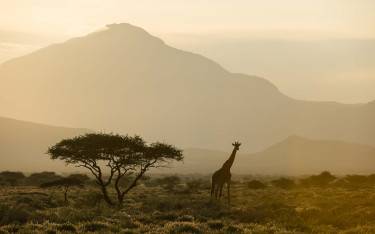
Giraffe in West Kilimanjaro West Kilimanjaro, Tanzania. Photo by Ariadne van Zandbergen. © All rights reserved 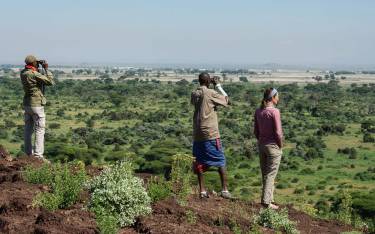
Walking safari in West Kilimanjaro West Kilimanjaro, Tanzania. Photo by Ariadne van Zandbergen. © All rights reserved 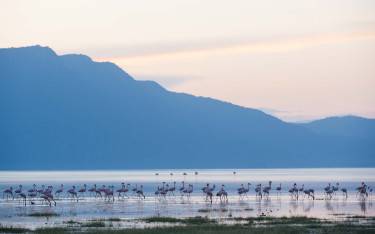
Flamingos in Lake Manyara at Chem Chem Chem Chem-Burunge Wildlife Management Area, Tanzania. Photo by Ariadne van Zandbergen. © All rights reserved 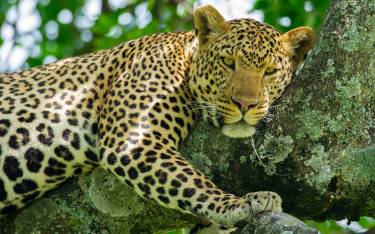
Leopard at Klein's Camp Loliondo Game Controlled Area, Tanzania. Photo by Ariadne van Zandbergen. © All rights reserved 47. Avoid the Crowds in a Private Conservancy
Conservancies bordering national parks offer an exclusive safari experience
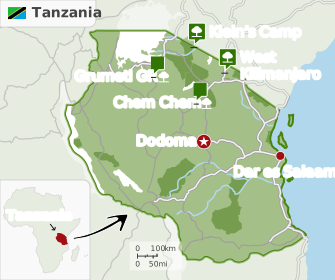
For the ultimate in exclusive safari experiences, try one of the private conservancies buffering Tanzania’s national parks. Foremost amongst these is Grumeti Game Reserve, which shares an unfenced border with the Serengeti’s Western Corridor and isRead more
usually crossed by the in June or July. Leased to the award-winning ecotourism operator Singita, Grumeti is not cheap to visit. But a capacity of 60 guests in a vast area of 1,416km²/547mi² makes it one of Africa’s most exclusive safari destinations.Other top-notch conservancies include Klein’s Camp bordering the Northern Serengeti, Chem Chem on the eastern shore of Lake Manyara, and Enduimet Wildlife Management Area set on Maasai community land in West Kilimanjaro. -
Google Maps
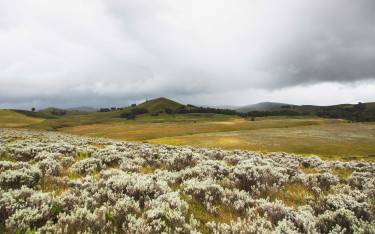
Flowers in Kitulo NP Kitulo National Park, Tanzania. Photo by Daniel Msirikale. © All rights reserved 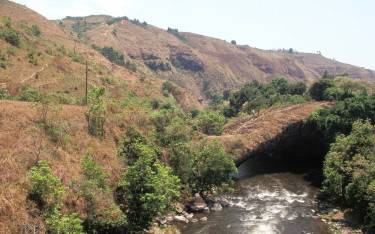
Daraja la Mungu ('Bridge of God') Southern Highlands, Tanzania. Photo by Ariadne van Zandbergen. © All rights reserved 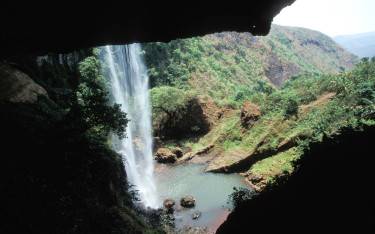
Kaporogwe Waterfall Southern Highlands, Tanzania. Photo by Ariadne van Zandbergen. © All rights reserved 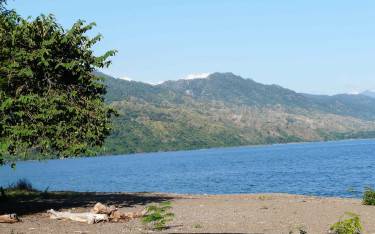
Matema Beach, Lake Nyasa Matema Beach, Tanzania. Photo by Egbert. © All rights reserved 48. Venture Into the Remote Southern Highlands
Explore a genuinely off-the-beaten-track region studded with scenic gems
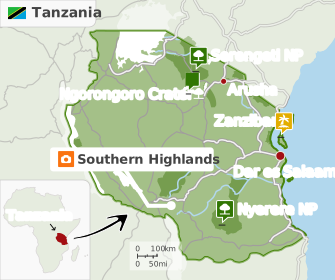
You could create a full holiday itinerary around exploring the remote highlands of southern Tanzania. Kitulo National Park, also known as Bustani ya Mungu (‘Garden of God’), is a hiker’s paradise set on a grassy highlandRead more
plateau whose seasonal floral explosions have led to it being dubbed the Serengeti of Flowers. The forests here and on nearby Mt Rungwe (a dormant 2,981m/9,780ft volcano) protect a variety of rare wildlife, including the kipunji monkey, an Tanzania discovered as recently as 2006.Scenic highlights scattered around these volcanic highlands include Ngosi and Masoko Crater Lakes, several impressive waterfalls, and a spectacular natural lava formation called Daraja la Mungu (‘Bridge of God’). If you’re longing for some beach time, look no further than the town of Matema, which stands below the imposing Livingstone Mountains at the northern tip of Lake Nyasa (as the Tanzanian portion of Lake Malawi is known locally). -
Google Maps
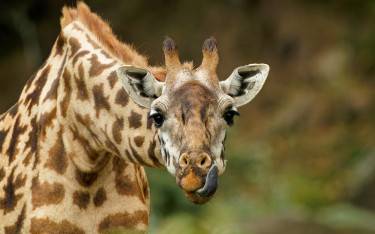
Close-up of a giraffe Arusha Giraffe Centre, Tanzania. Photo by Martin Pelanek. © All rights reserved 49. Crane Your Neck at Arusha Giraffe Centre
Learn about and meet Africa’s natural skyscrapers on this rewilded farm
The Arusha Giraffe Centre is dedicated to highlighting what the Giraffe Conservation Foundation terms the ‘silent extinction’ of the world’s tallest animal (three subspecies of which are listed as or ). Owned and managedRead more
by committed conservationists, it lies totally off-grid and since 2005 has been transformed from depleted farmland to rewilded .The center is home to three translocated from the nearby Mswakini Corridor, a hot spot for bushmeat poachers that falls outside of Tanzania’s system of protected areas. It’s great fun to get close to these lofty creatures on foot. There’s also an informative education center where you’ll learn more about giraffes and the threats that have resulted in a 50% drop in Africa’s wild population since the 1990s. -
Google Maps
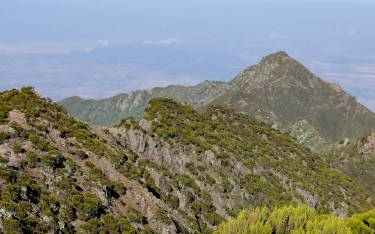
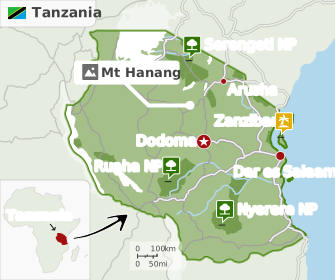
Mt Hanang Mount Hanang, Tanzania. Photo by Macabe5387. © All rights reserved 50. Climb the Forested Slopes of Mt Hanang
Summit Tanzania’s fourth-tallest mountain on a steep day or overnight hike
For budget-conscious hikers, Hanang – which rises to 3,420m/11,220ft from the low-lying floor – makes for a fabulously scenic and affordable alternative to Mt Kilimanjaro or Mt Meru. It is possible to summit andRead more
return in one long day, but only if you’re very fit and treat the outing as something of an endurance test.A more realistic approach to climbing Hanang is an overnight hike, sleeping in a cave or tent. This will allow you time to explore the different vegetation zones, enjoy the views and keep an eye open for wildlife. You might spot , , and the (and very colorful) . Guides can be arranged in the base town of Katesh.