Top 26 Best Things To Do in Stone Town
 By
Philip Briggs
Philip is an acclaimed travel writer and author of many guidebooks, including the Bradt guides to Uganda, Tanzania, Kenya and South Africa.
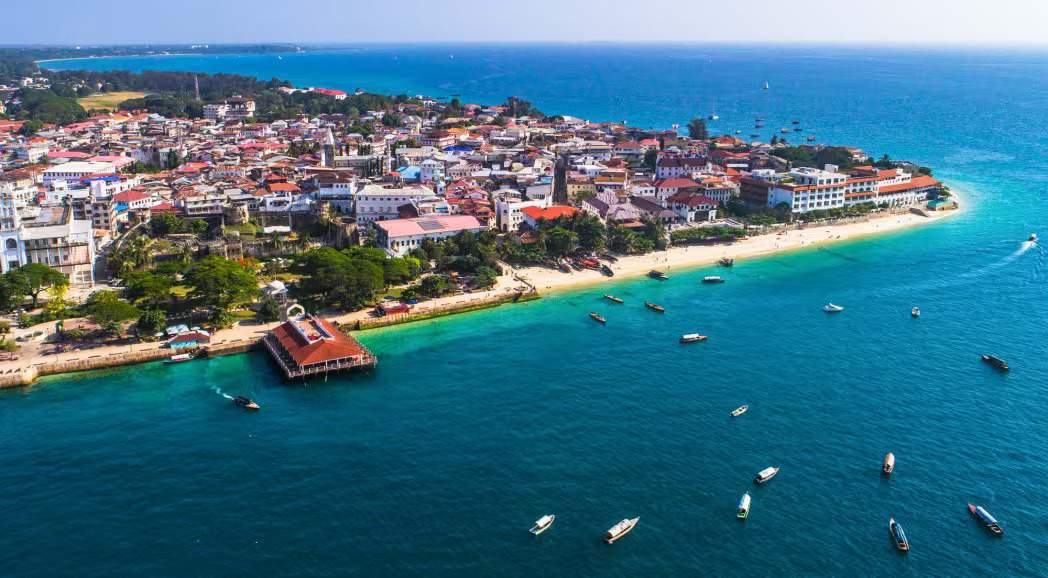
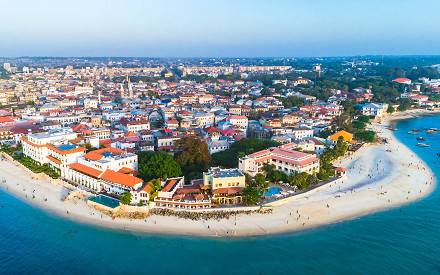
Stone Town is as enjoyable as it is compelling. This Swahili port was for centuries the hub of a trade network that extended across the Indian Ocean to Arabia, Asia and beyond. At the heart of Stone Town is an atmospheric knot of pedestrian-friendly alleys lined with timeworn architectural landmarks. The old town also has a pretty waterfront, and it provides a great base for excursions to some of the most alluring beaches, beautiful coral gardens and finest safari destinations Africa has to offer.
1. Wander Through Winding Alleys on a Walking Tour
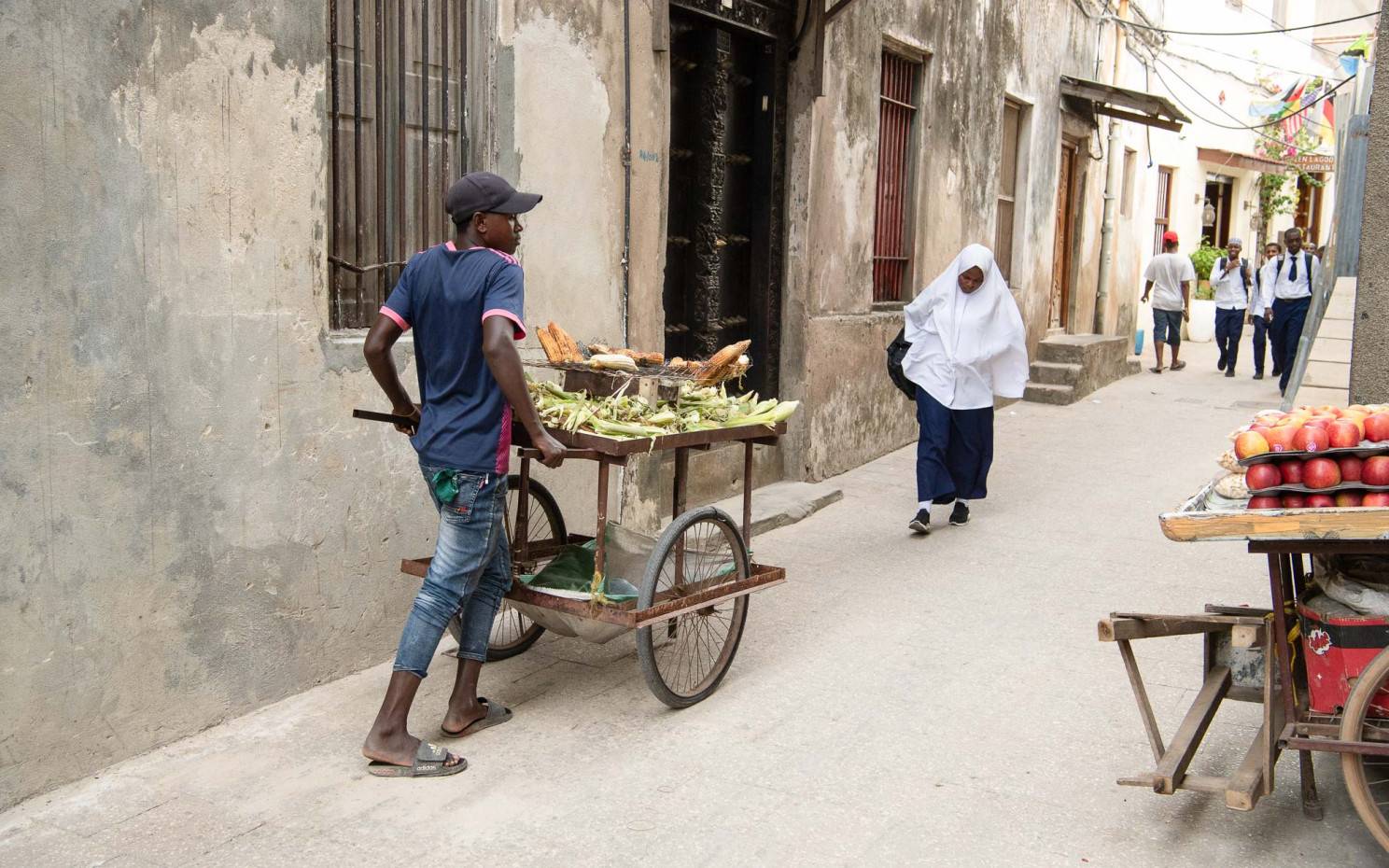 Alley in the old town. Photo: Ariadne van Zandbergen
Stone Town is best explored on foot – not least because many of its atmospheric old alleys are simply too narrow to be traversed any other way. The easiest way to get to grips with the town’s complex layout is a guided tour, which can be arranged through any hotel or local tour operator. Guided tours are particularly suited to time-restricted visitors who want to check all the major landmarks in one condensed outing.
Stone Town is safe and easy enough to explore without a guide. Every fresh turn will reveal something different, and the town is compact enough that you’ll never be far from a recognizable landmark. True, newcomers are bound to lose their bearings every so often, but that’s part of the fun. Just embrace the local catchphrases ‘pole pole’ (‘slowly slowly’) and ‘hakuna matata’ (‘no problem’), and take the attitude that you’re not so much lost as seeing new things.
View Route on Google Maps | Download Route as GPX
2. Visit the Fabulous Freddie Mercury Museum
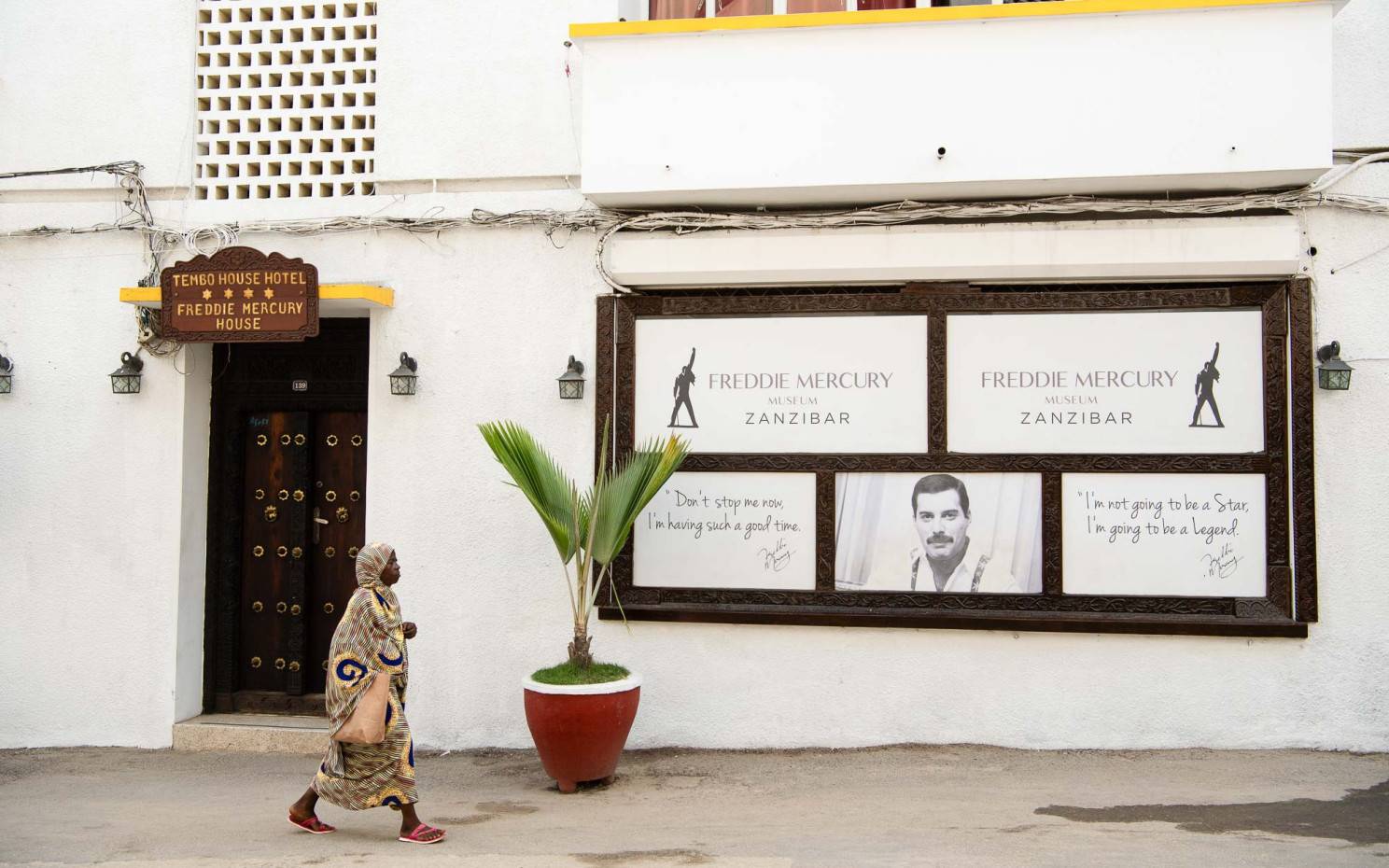 Freddie Mercury Museum. Photo: Ariadne van Zandbergen
It’s a little-known fact that Freddie Mercury was born in Stone Town and spent the first eight years of his life here. The house on Kenyatta Road where young Freddie – then called Farrokh Bulsara – lived with his Indian mother Jer, Irani father Bomi (an employee of the British Colonial Office) and sister Kashmira is now a museum. One of Zanzibar’s most popular attractions, it displays a wealth of material relating to Freddie’s early childhood in Stone Town, his subsequent years spent at boarding school in India, and the popular heyday of Queen.
About the Freddie Mercury Museum | View on Google Maps
3. Feast on Grilled Seafood at Forodhani Gardens
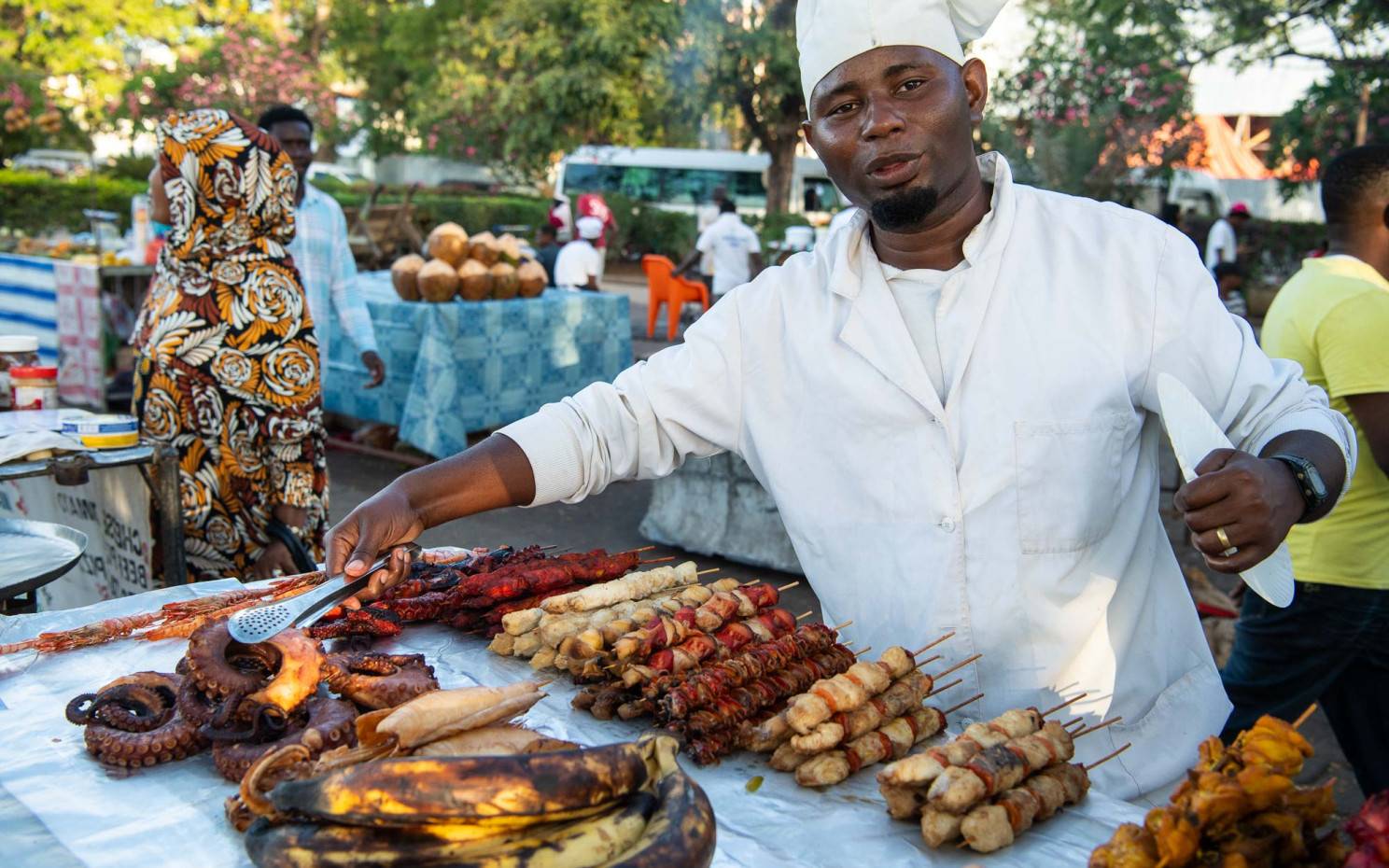 Food stall at Forodhani Gardens. Photo: Ariadne van Zandbergen
Forodhani Gardens is a lovely spot to visit at any time of day. Opened in 1936 to mark the joint silver jubilee of Sultan Khalifa II and King George V, it feels like an oasis of well-tended greenery on Stone’s Town’s historic waterfront, and is also a great place to watch ordinary Zanzibari folk go about their business. But Forodhani Gardens really comes into its own toward dusk, when its westward orientation allows you to enjoy the sun setting over the sea, and a lively nighttime food market specializes in freshly grilled seafood and other Swahili cuisine.
About Forodhani Gardens | View on Google Maps
4. See the Old Slave Market & Anglican Cathedral
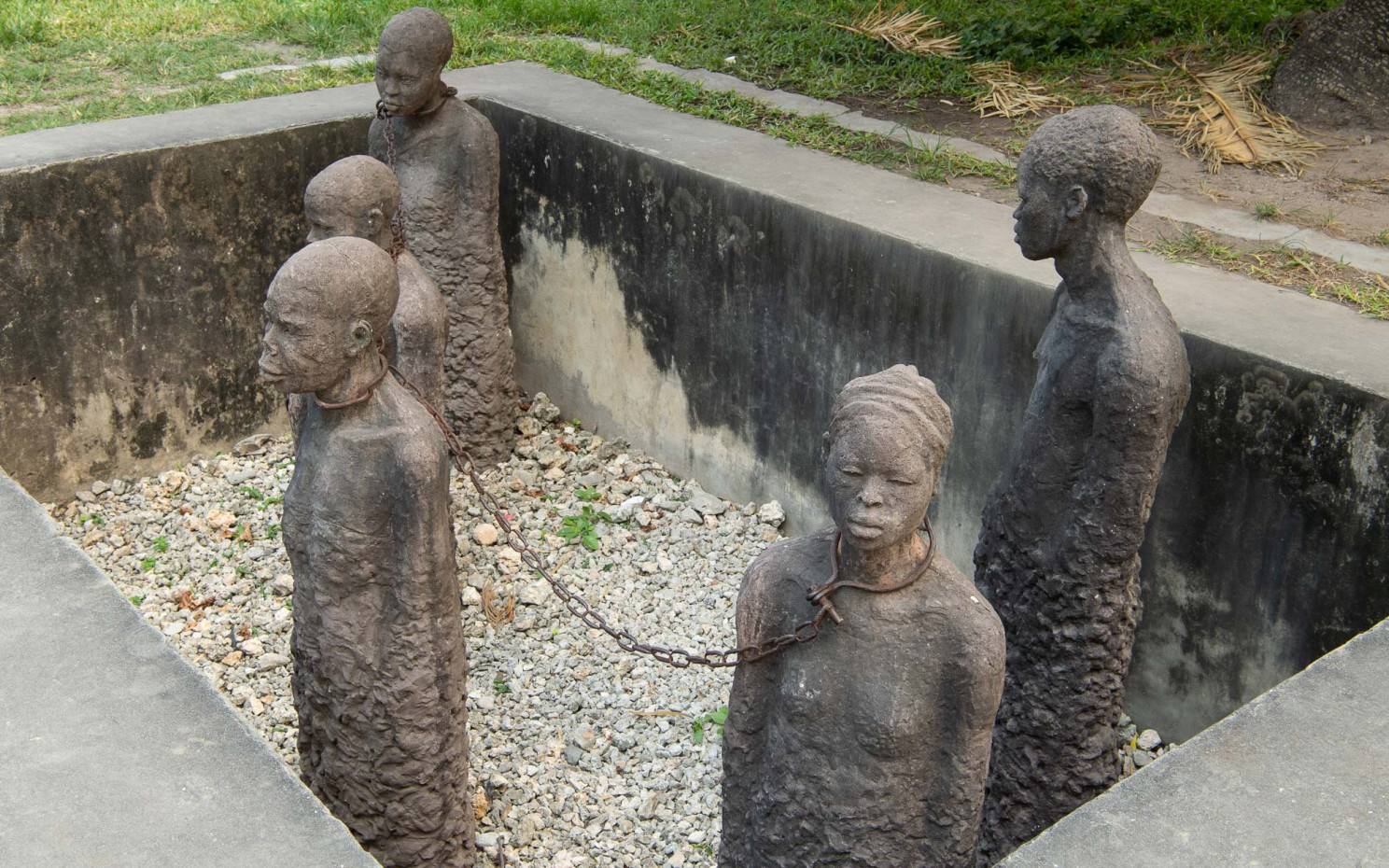 Sculpture of slaves chained in a pit. Photo: Ariadne van Zandbergen
For much of the 19th century, Zanzibar lay at the hub of the East African slave trade. Indeed, it has been estimated that from 1820 onward, more than 50,000 captives from the African interior were sold annually at Stone Town’s Mkunazini Slave Market. The market was finally shut down in 1873, when Sultan Barghash of Zanzibar abolished the slave trade, and the Anglican Cathedral was built on the site.
The pulpit of this handsome cathedral occupies an identical location to the slave market’s old whipping post. In the courtyard outside is a powerful Slave Trade Memorial sculpted in 1998 by the Scandinavian artist Clara Sörnäs. More potent still is the East African Slave Trade Exhibit, which stands in a mission outbuilding that dates to 1877. Here, a series of exhibits illustrated with period photos and drawings provides a sobering overview of every aspect of the brutal 19th-century slave trade out of Zanzibar.
About the Old Slave Market | View on Google Maps
5. Chill on Urban Shangani Beach
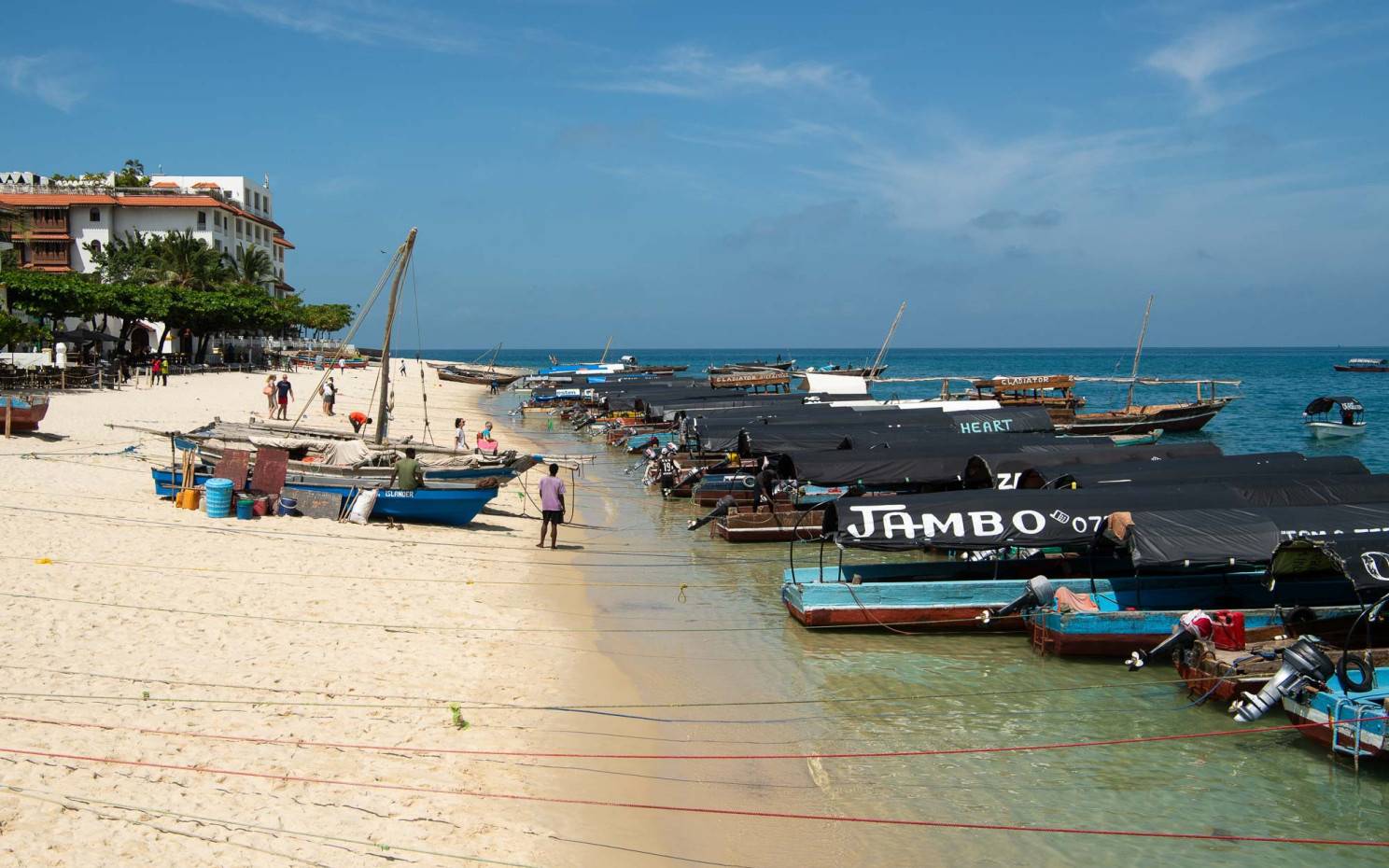 Boats at Shangani Beach. Photo: Ariadne van Zandbergen
Shangani is no conventional beach destination. But it’s a fun place to hang out. Combining the down-to-earth feel of a Swahili fishing beach with a historic waterfront location in Stone Town’s most upmarket quarter, it also boasts a compelling sense of place. Below a row of 19th-century hotel facades you’ll see fishers show off their catch, teenagers kick around a football, and dhows cruise past with billowing sails. Locals swim here, and even if the relatively murky water puts you off taking a dip, it’s worth heading to the cluster of bars and restaurants around Shangani Gardens for sundowners.
6. Tap Your Toes to Traditional Taarab Music
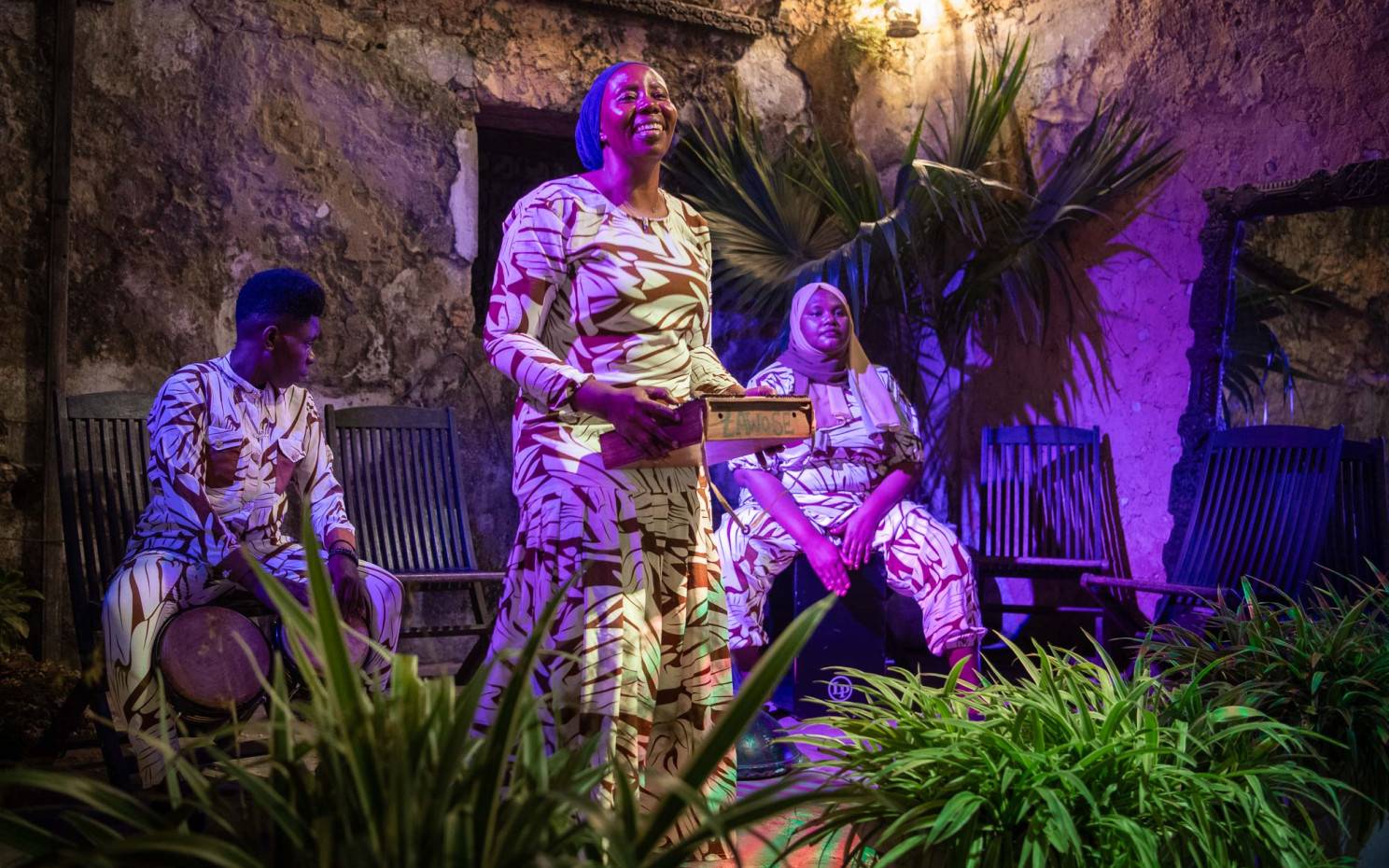 Taarab music at the Secret Garden. Photo: Ariadne van Zandbergen
The roots of taarab go back to the 1870s, when Sultan Barghash sent a musician called Mohammed Ibrahim to Egypt to master the qanun (an Arabian stringed instrument). Mohammed later formed the Zanzibar Taarab Orchestra, whose unique fusion of Arabian, Indian and African styles soon became widely mimicked elsewhere in East Africa. Taarab was popularized by Siti Binti Saad, a mold-breaking singer who was born the daughter of slaves but went on to record more than 250 songs – many of which addressed gender-based violence and other social injustices – between 1928 and her death in 1950.
Taarab music is still alive and well on Zanzibar. Ask around about places to see live performances. Current artists include the Uwaridi Female Band, Culture Musical Club and Dhow Countries Music Academy Young Stars, and regular venues include the Old Customs House, the Old Fort and the Secret Garden. Alternatively, visit during February’s Sauti za Busara music festival.
7. Browse the Stalls of Bustling Darajani Market
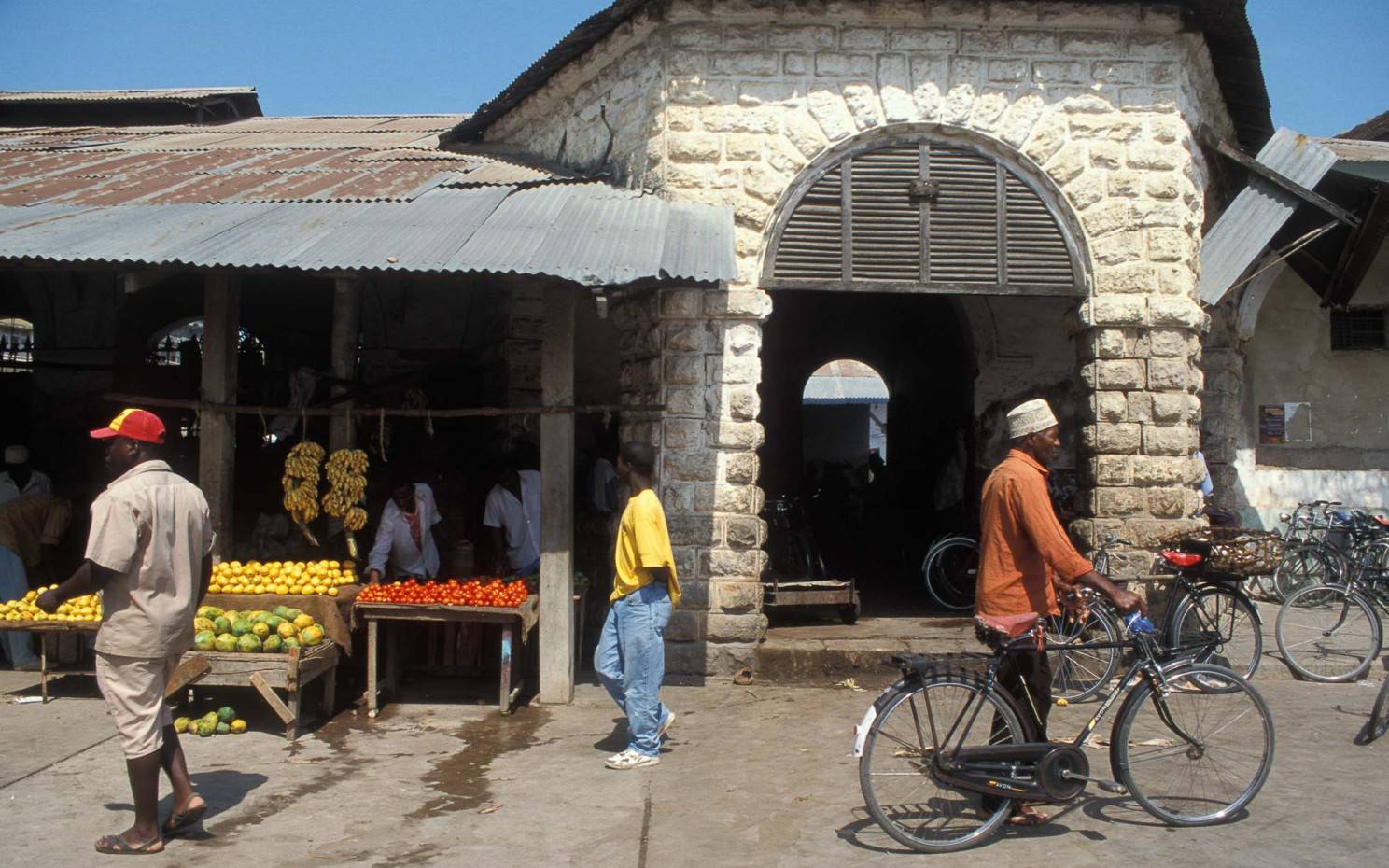 Covered market built in 1904. Photo: Ariadne van Zandbergen
A stroll through the chaotic but welcoming Marikiti Kuu (Great Market) at Darajani, on the east side of Stone Town, is one of Zanzibar’s defining cultural experiences. This is a great place to try some of the delicious tropical fruits and spices for which the island is famed. It also assaults visitors – in the best possible way – with the unfiltered colors, fragrances, sights and sounds of a genuine urban Swahili market.
The centerpiece of Darajani is a colonial-style covered market constructed in 1904. Back then, the market was perched on the edge of a wide creek that separated Stone Town from the more modern settlement of Ng’ambo. The creek was filled in as part of a land reclamation program in the 1920s, and nothing remains of the bridge (daraja) hinted at in the market’s name.
About Darajani Market | View on Google Maps
8. Tour the Fascinating Princess Salme Museum
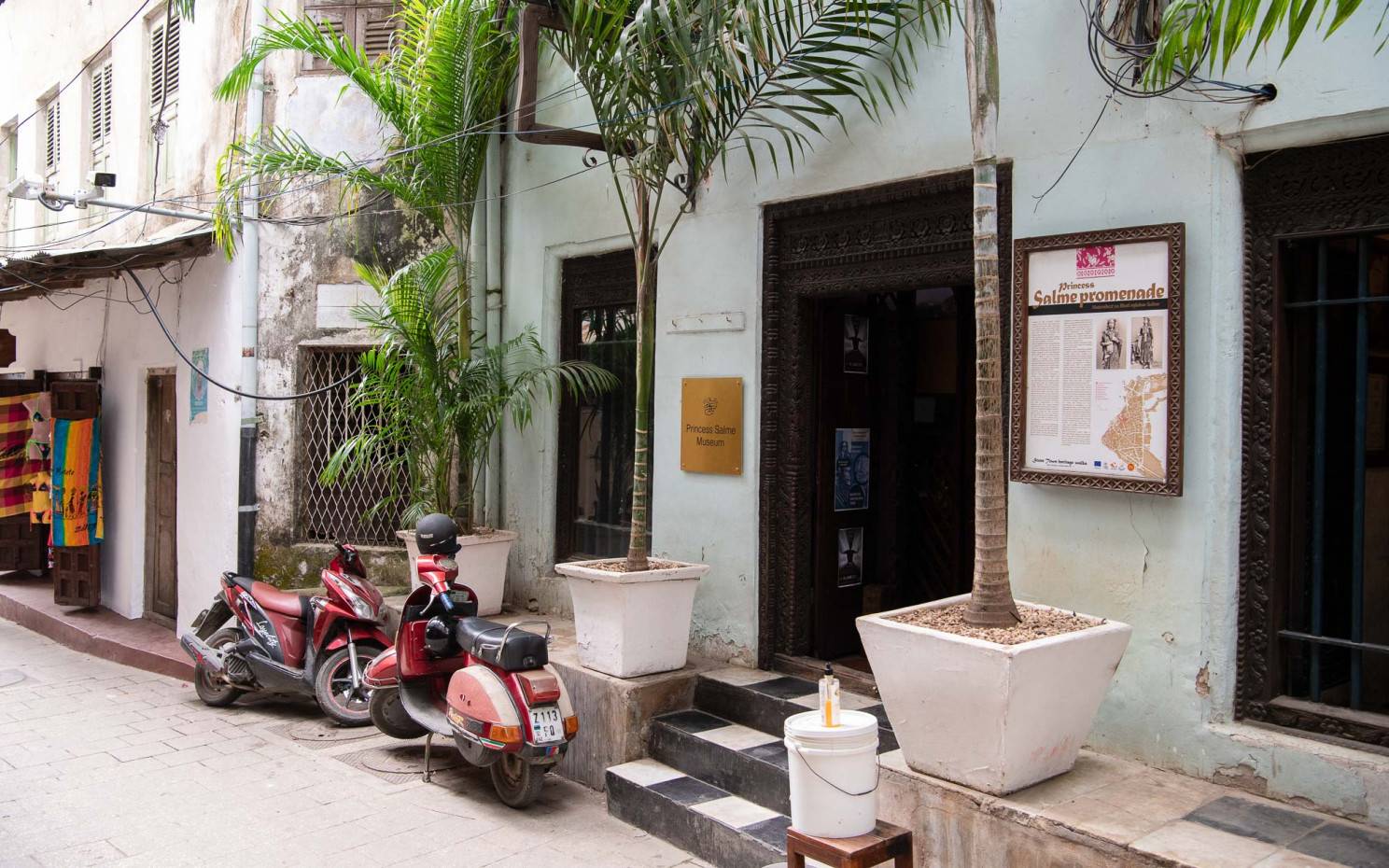 Princess Salme Museum. Photo: Ariadne van Zandbergen
The lovingly curated Princess Salme Museum is dedicated to its namesake, the youngest of Sultan Said’s 36 children. Born in 1844, Salme broke with Omani tradition by insisting on learning to read and write, then later – when aged 21 – by having an affair with the German merchant Rudolph Ruete. In 1866, the pregnant princess set sail for the Port of Aden (Yemen) to avoid the shame and likely punishment associated with having an illegitimate child, particularly one fathered by a non-Muslim.
In Aden, Salme took Christian instruction, was baptized under the name Emily, and married Ruete before relocating to Hamburg. Following her husband’s death, Emily Ruete penned the book ‘Memoirs of an Arabian Princess From Zanzibar’, making her the first East African woman to publish an autobiography. Her remarkable story is brought to life by a wealth of photos and memorabilia displayed in this small museum in Stone Town.
9. Stroll Around the Historic Old Fort
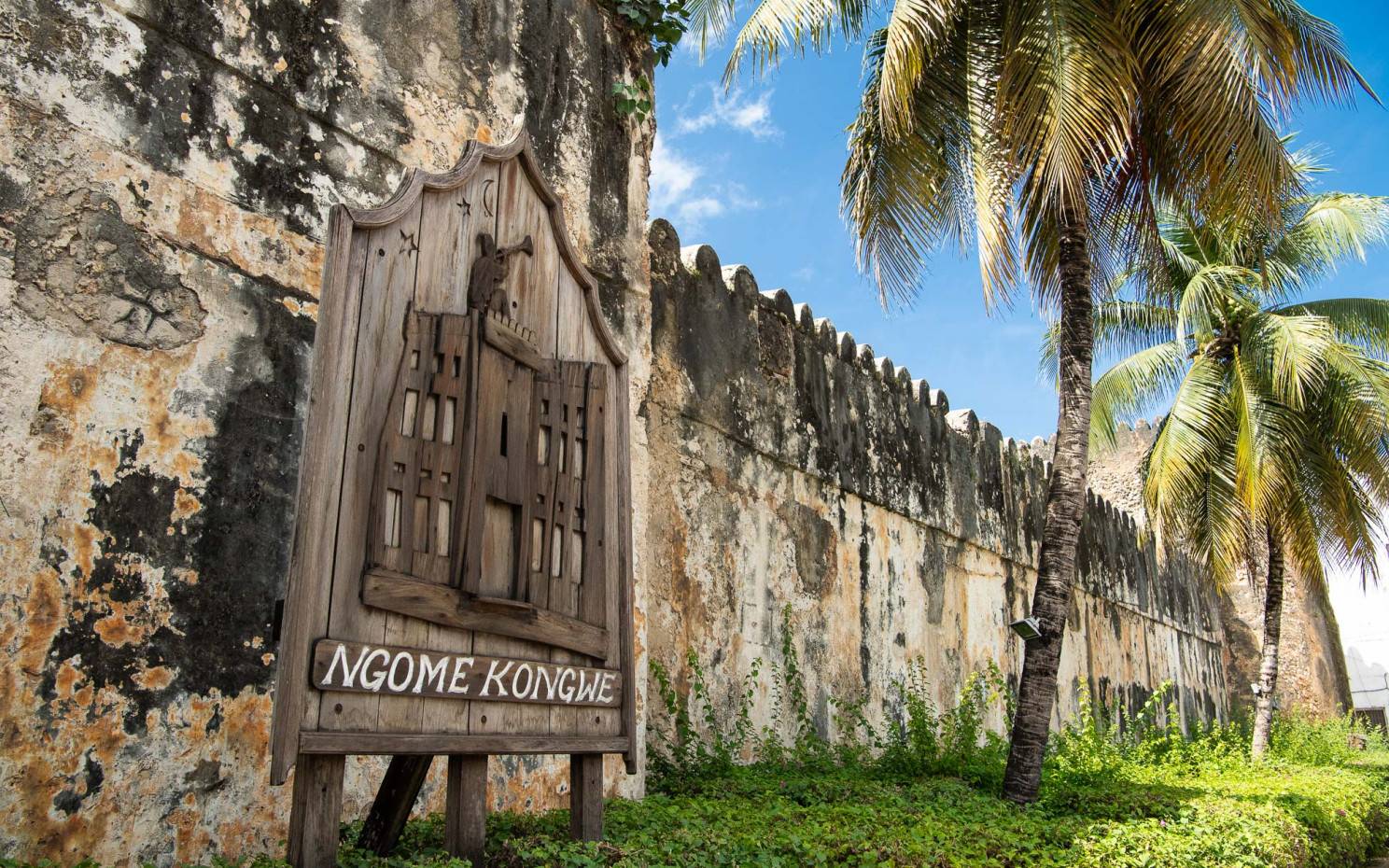 The Old Fort. Photo: Ariadne van Zandbergen
At the time of writing (July 2026) the Old Fort is closed for renovations. Before visiting, please check to see if it has reopened. Incorporating the walls of a Portuguese church built in 1598, the Old Fort took its present shape a century later after Zanzibar was captured by Omani Arabs. Its castellated northern facade once occupied a defensive location on the seafront, but today it is stranded a short distance inland overlooking Forodhani Gardens. Over the years, the fort has served as a prison and a railway terminal, but following extensive renovations in 1997, it is now a cultural center with a tree-shaded café, an amphitheater, various craft shops and an art gallery. A wooden staircase climbs to the fortified western ramparts.
About the Old Fort | View on Google Maps
10. Join a Spice Tour to a Plantation at Kizimbani
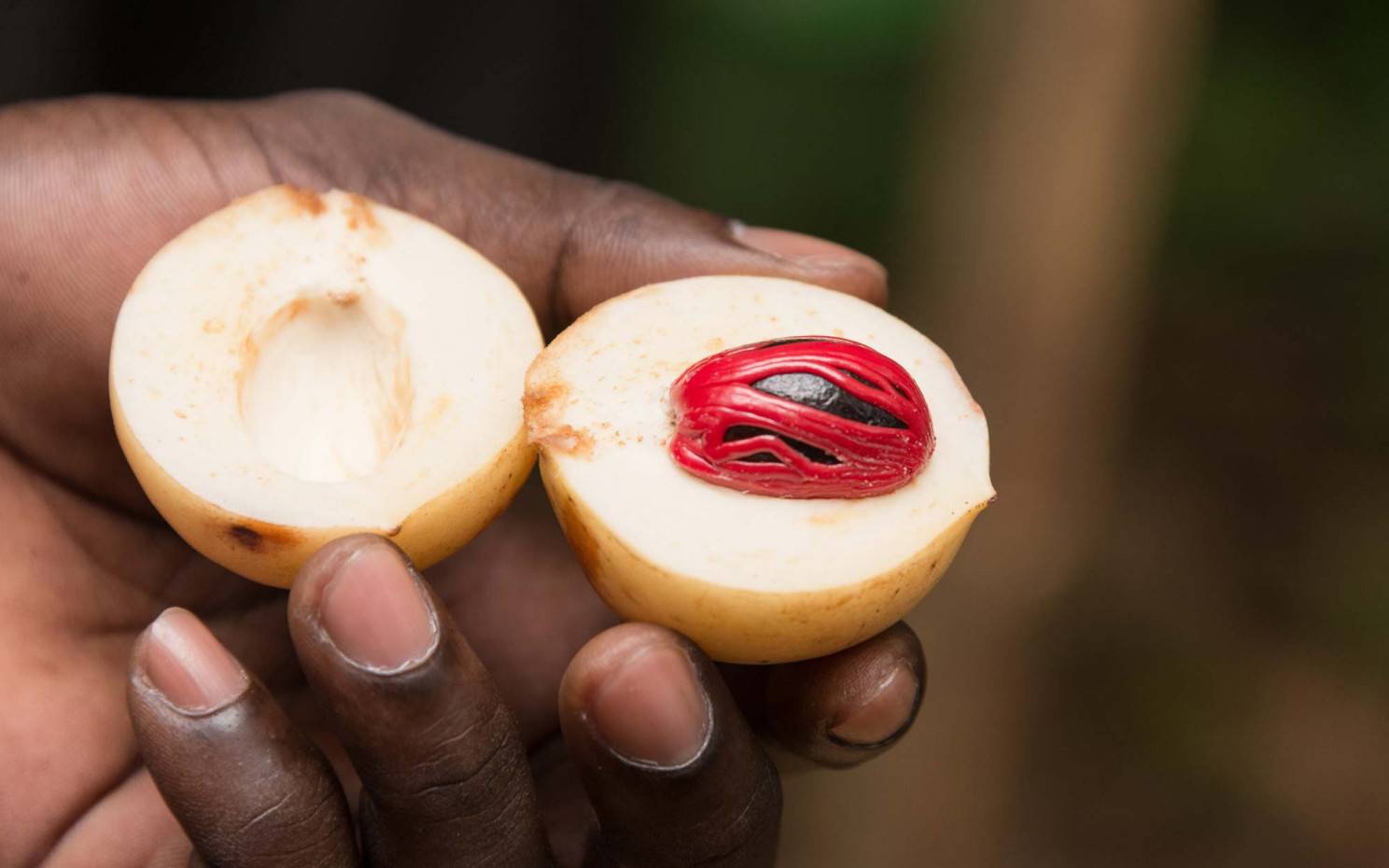 Freshly harvested nutmeg. Photo: Nlink
Zanzibar was nicknamed the Spice Island in the 19th century, when it was the world’s most important clove exporter. The cloves were produced on plantations belonging to wealthy Omani slave owners in the vicinity of Kizimbani, which is the most fertile part of Zanzibar due its volcanic soil. On a visit to one of these plantations, which are now government-opened and community-managed, you’ll be shown a variety of local produce: from cloves, vanilla and pepper to jackfruits, pineapples and coconuts. Most tours include a lunchtime stop at a local homestead to sample traditionally spiced Swahili dishes.
Zanzibar Spice Farm Tours | About Spice Tours | View on Google Maps
11. Shop for Zanzibar-made Crafts and Other Goods
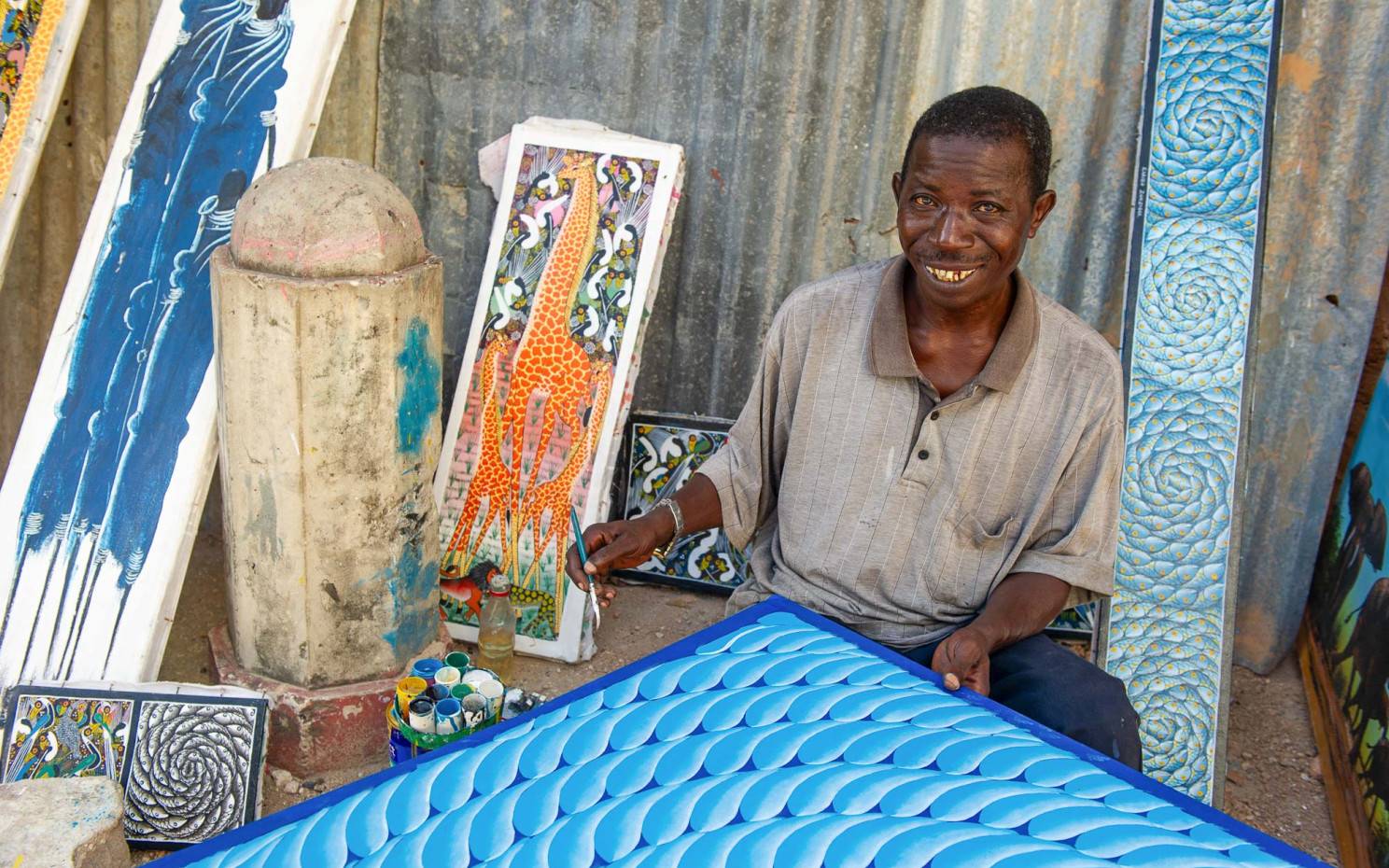 Tingatinga painter. Photo: Ariadne van Zandbergen
Stone Town is a wonderful destination for a spot of retail therapy. Narrow Hurumzi and Gizenga Streets are lined with a mix of stylish shops and smaller stalls selling – among other things – surreally colorful Tingatinga paintings, bright local fabrics, and organic cosmetic products handcrafted from homegrown fruits and spices. A scattering of more upmarket souvenir shops and boutiques can be found on the wider and busier Kenyatta Road. When shopping in Stone Town, look out for the ‘Made in Zanzibar’ logo. This indicates the item was made by a member of a respected network of small, ethical fair-trade producers.
12. Set Sail for Idyllic Changuu (Prison) Island
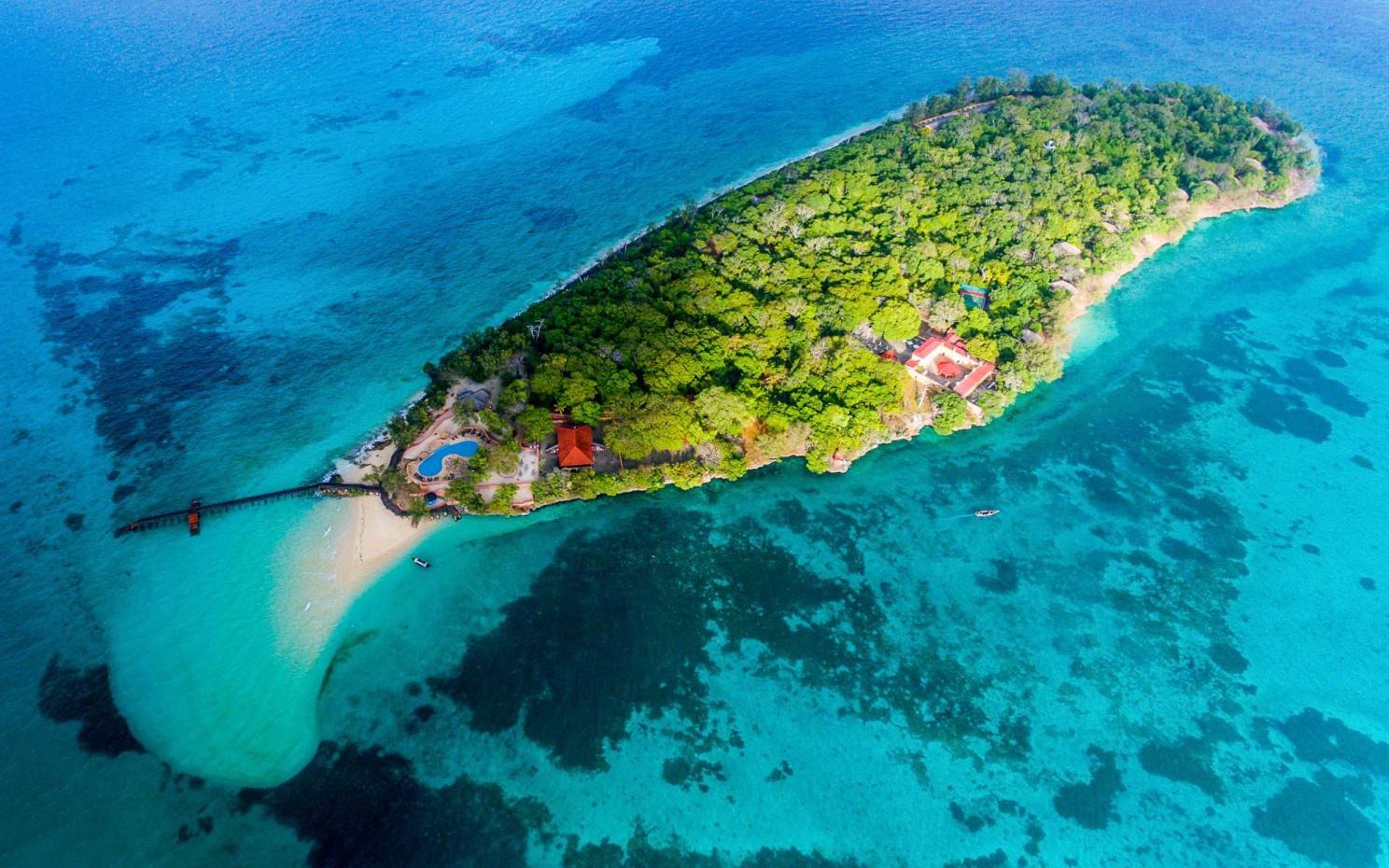 Aerial view of the forested island. Photo: Moiz Husein
This popular destination for a day trip out of Stone Town is also called Prison Island in reference to a well-preserved stone building built there as a quarantine center in the 1890s. The 3.5km/2.17mi boat trip to Changuu offers fabulous views back to Stone Town’s historic Shangani and Forodhani waterfronts. Once there, you can visit a well-run sanctuary that protects a population of Aldabra giant tortoises introduced from the Seychelles in 1919. After that, you’ll most likely head on to have a barbecue lunch at the isolated sandbar known as Nakupenda Beach.
Changuu Island Day Trips | About Visiting Changuu Island | View on Google Maps
13. Sip Sundowners on the Breezy Seafront
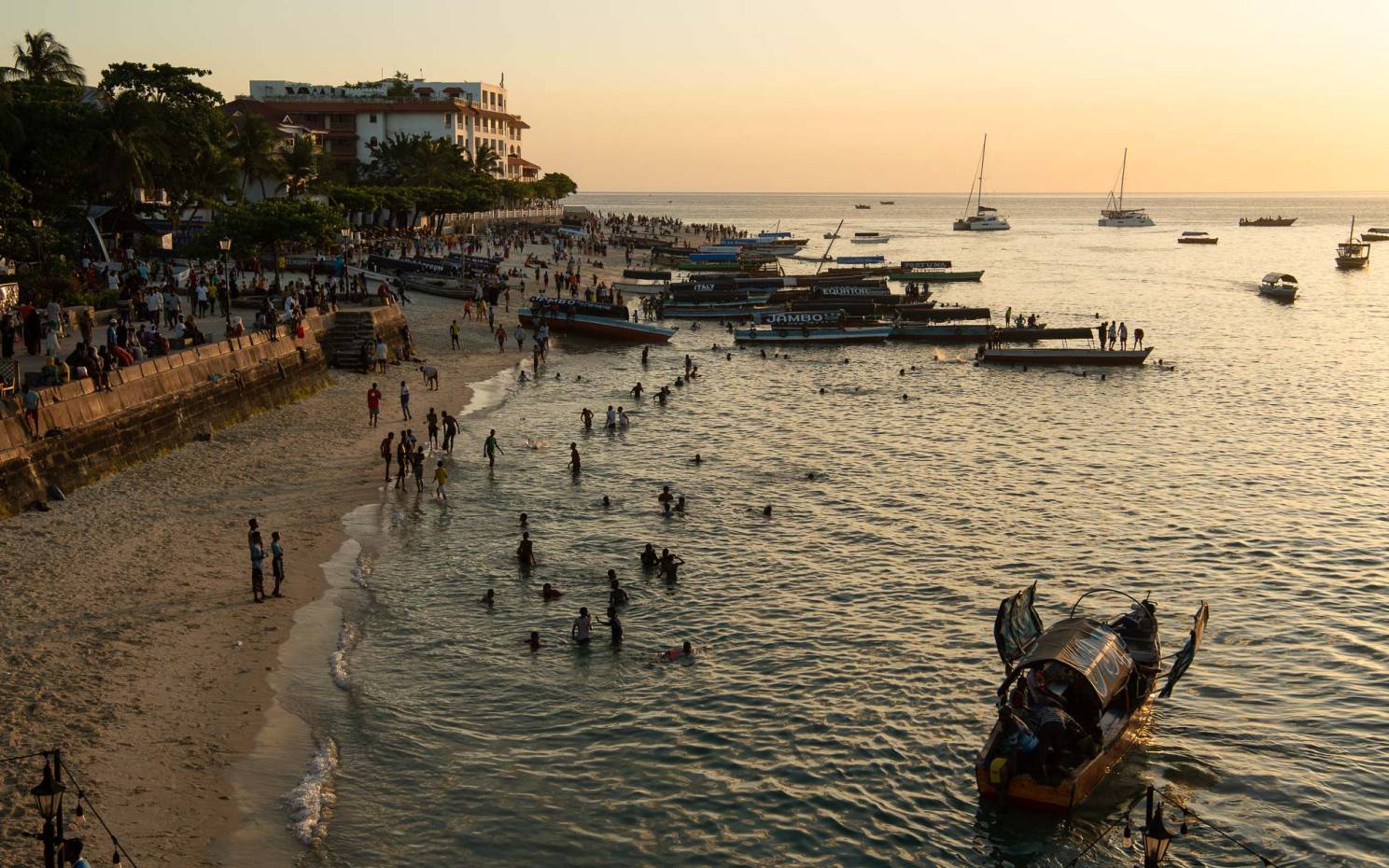 Shangani Beach view from Cape Town Fish Market. Photo: Ariadne van Zandbergen
There’s no more agreeable way to end a hot day in Africa than sipping a cocktail, mocktail or chilled beer as the sun sets in the tropical sky. And where better to do this than at one of the west-facing hotels and restaurants that line Stone Town’s main waterfront?
Stone Town’s most established sundowner spot is the Cape Town Fish Market, a lively contemporary restaurant that stands on a stilted jetty jutting out from Forodhani Gardens. There are plenty of other choices too. Wherever you end up, it is immensely satisfying to watch the sun set like a glowing orange ball over the Indian Ocean as sailing dhows cruise past and palms sway gently in the sea breeze.
14. Indulge in a Pampering Treatment at Mrembo Spa
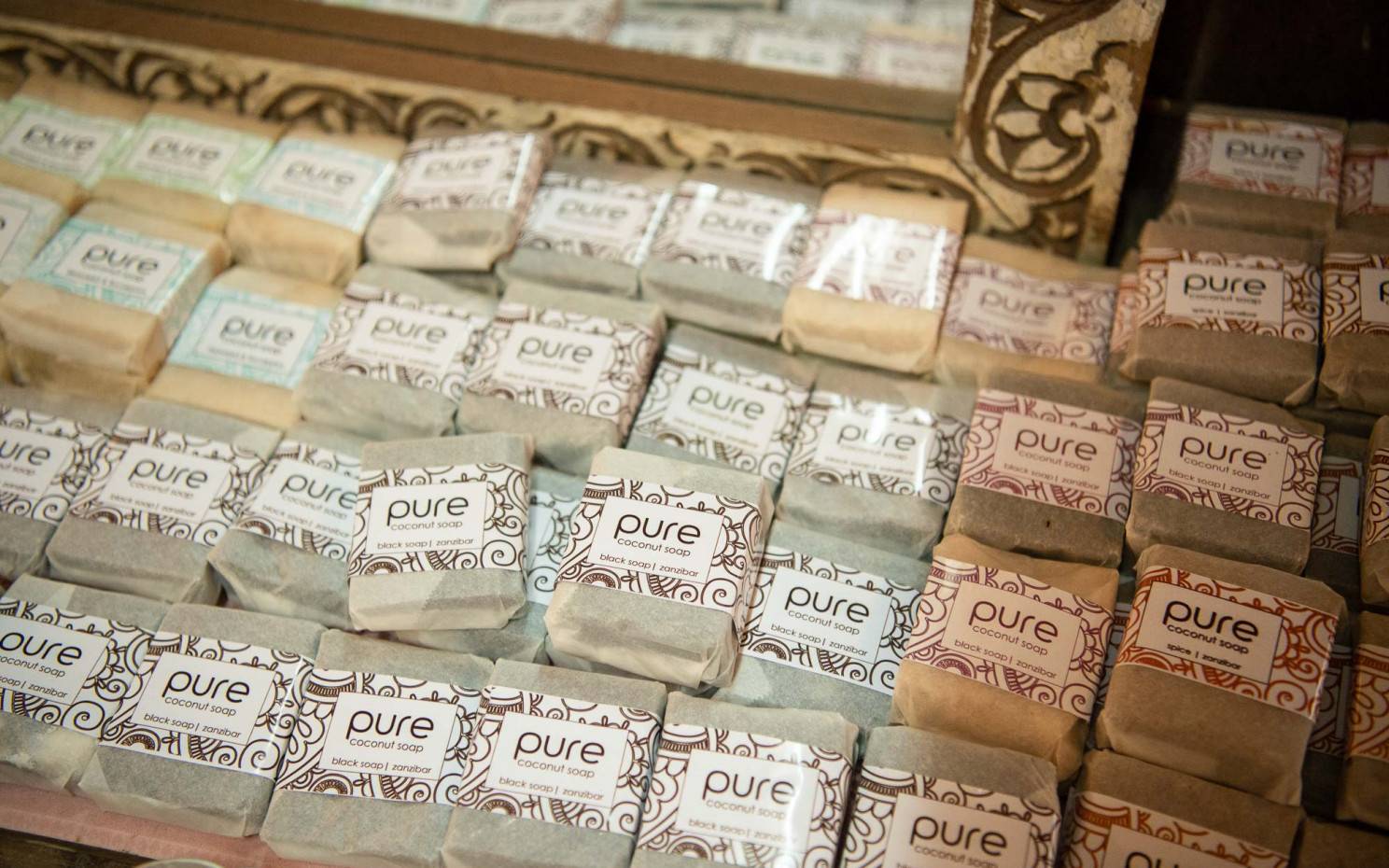 Coconut soap for sale at Mrembo Spa. Photo: Ariadne van Zandbergen
Founded in 2007, Mrembo (Kiswahili for ‘beautiful’) is a much-loved wellness center that provides a livelihood for more than 10 Zanzibari families. Its signature Singo Scrub, based on a traditional Swahili bridal ritual, uses an exfoliating oil scented with ylang-ylang, sandalwood, jasmine, geranium and rose petal. It offers a variety of other traditional treatments, as well as aromatherapy massages, quality henna skin painting, and workshops focused on Swahili cooking and spice blending. An attached shop stocks Mrembo’s own Pure brand of cosmetics and oils, which are made entirely from organic and ethically sourced local ingredients.
15. Swim Through Dazzling Underwater Coral Gardens
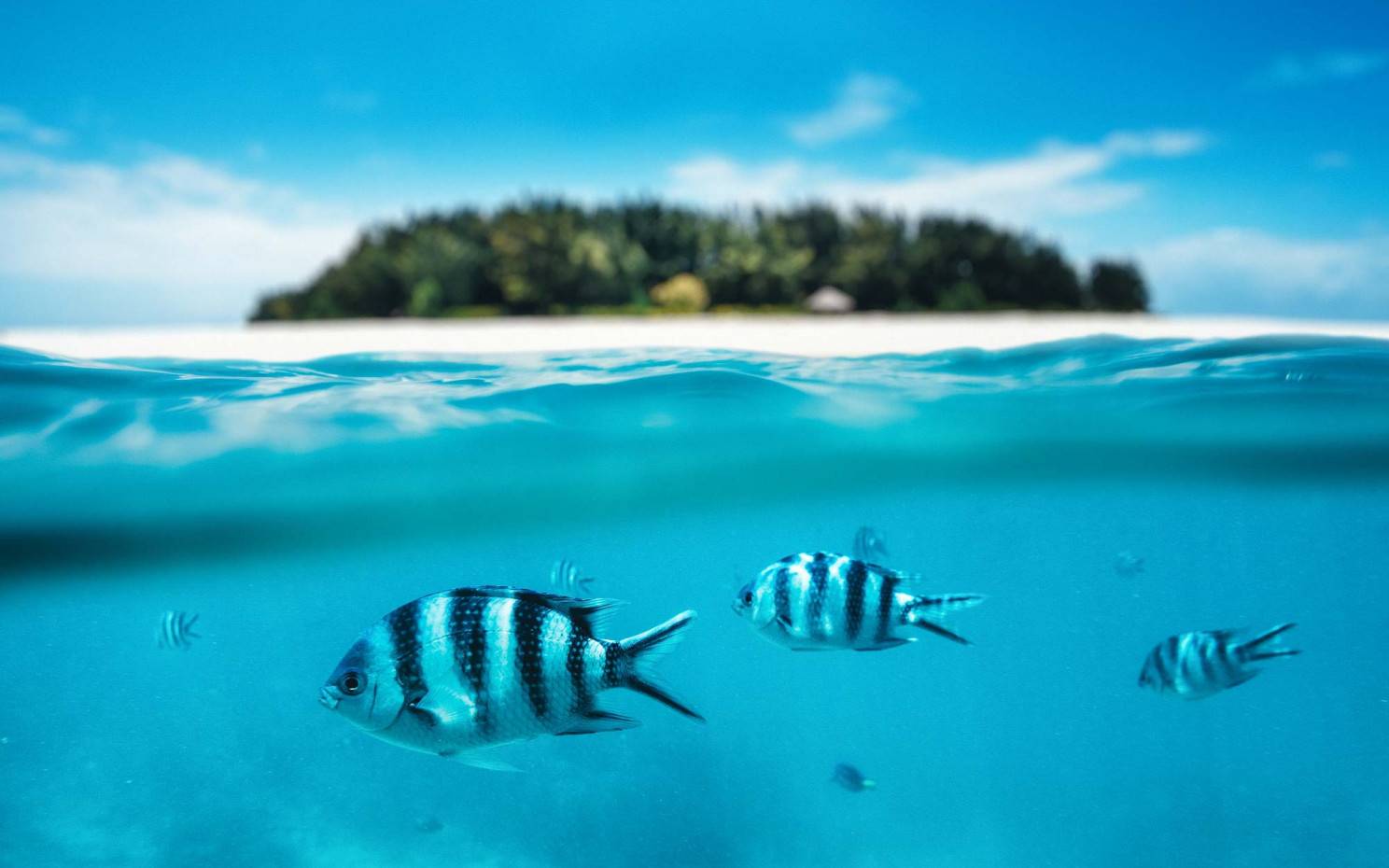 Snorkeling at Mnemba Atoll. Photo: Borut Trdina
Zanzibar is a world-class snorkeling destination. Snorkeling tours leave daily from Stone Town to explore beautiful coral formations at Mnemba Atoll, Menai Bay and Blue Lagoon. On the boat trip out, you might well see dolphins and turtles, and most excursions also include a seafood barbecue on a beach. But the highlight will be when you leap off the boat to enter a colorful underwater world of surreal coral sculptures swirled around by a kaleidoscopic array of fish.
Zanzibar is equally rewarding for divers, with more than 25 recognized sites clustered along the northeast coast and around smaller islands such as Mnemba, Tumbatu and Bawe. These deep sites share much in common with the coral gardens visited by snorkelers, but they offer a greater chance of encountering larger creatures such as stingrays, sharks and moray eels. The best choice of site will depend on several factors, including your experience level and prevailing weather conditions; plenty of PADI-registered dive schools are available to advise you.
Zanzibar Snorkeling Trips | Zanzibar Islands & Atolls
16. Track Monkeys in Jozani Forest
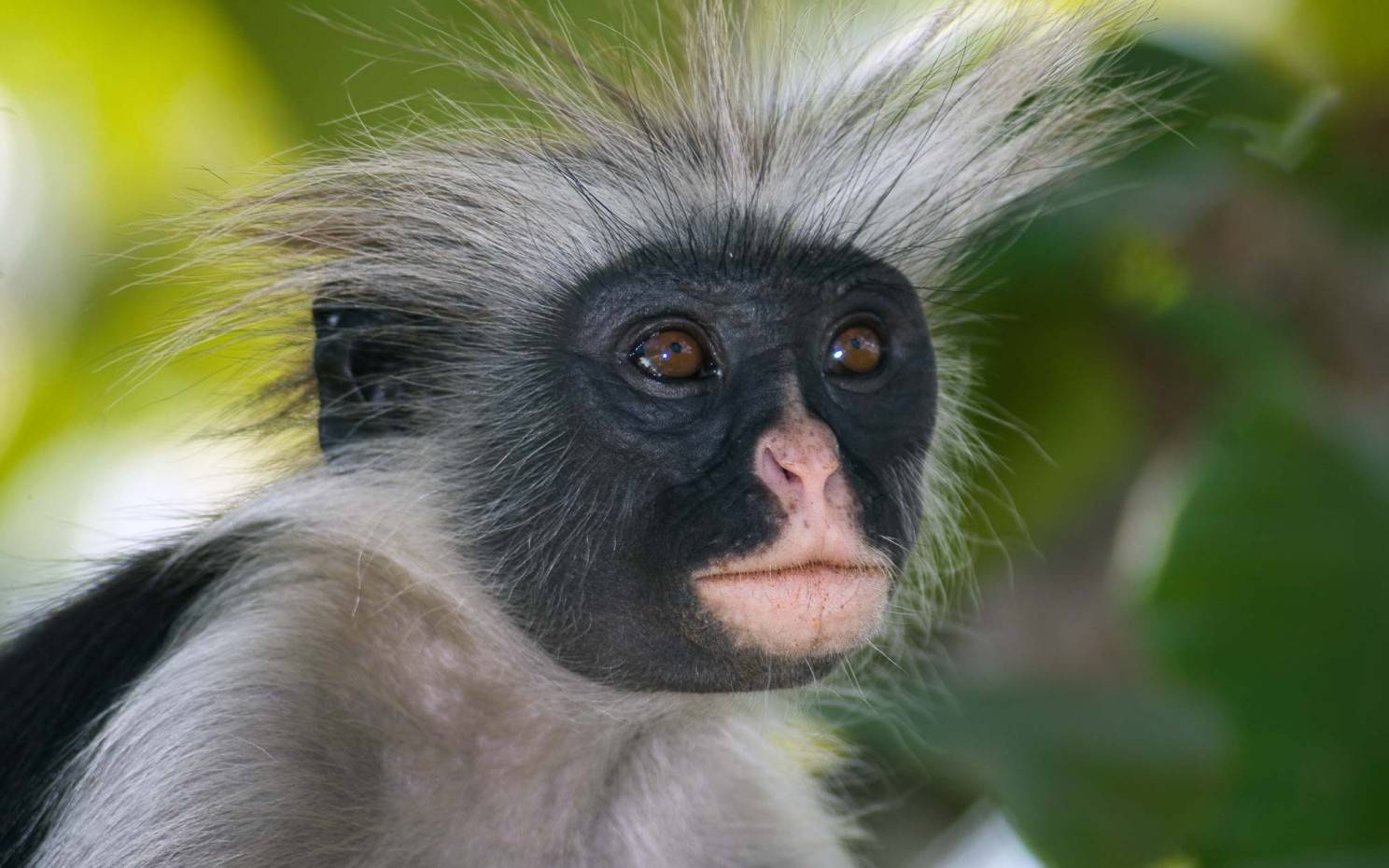 Zanzibar red colobus. Photo: Ariadne van Zandbergen
For a different kind of day trip out of Stone Town, join a guided tour to Zanzibar’s only national park, which protects Jozani Forest as well as mangrove-lined Chwaka Bay. This is the main stronghold for the Endangered Zanzibar red colobus, a shaggy-fringed monkey that occurs nowhere else in the world. Guided forest walks at Jozani almost invariably result in close-up encounters with a habituated colobus troop and you should also see the playful blue monkey. Another attraction is a wooden boardwalk that runs through the heart of a mangrove swamp.
Jozani Day Trips | About Visiting Jozani Forest | View on Google Maps
17. Go to Mass at St Joseph’s Cathedral
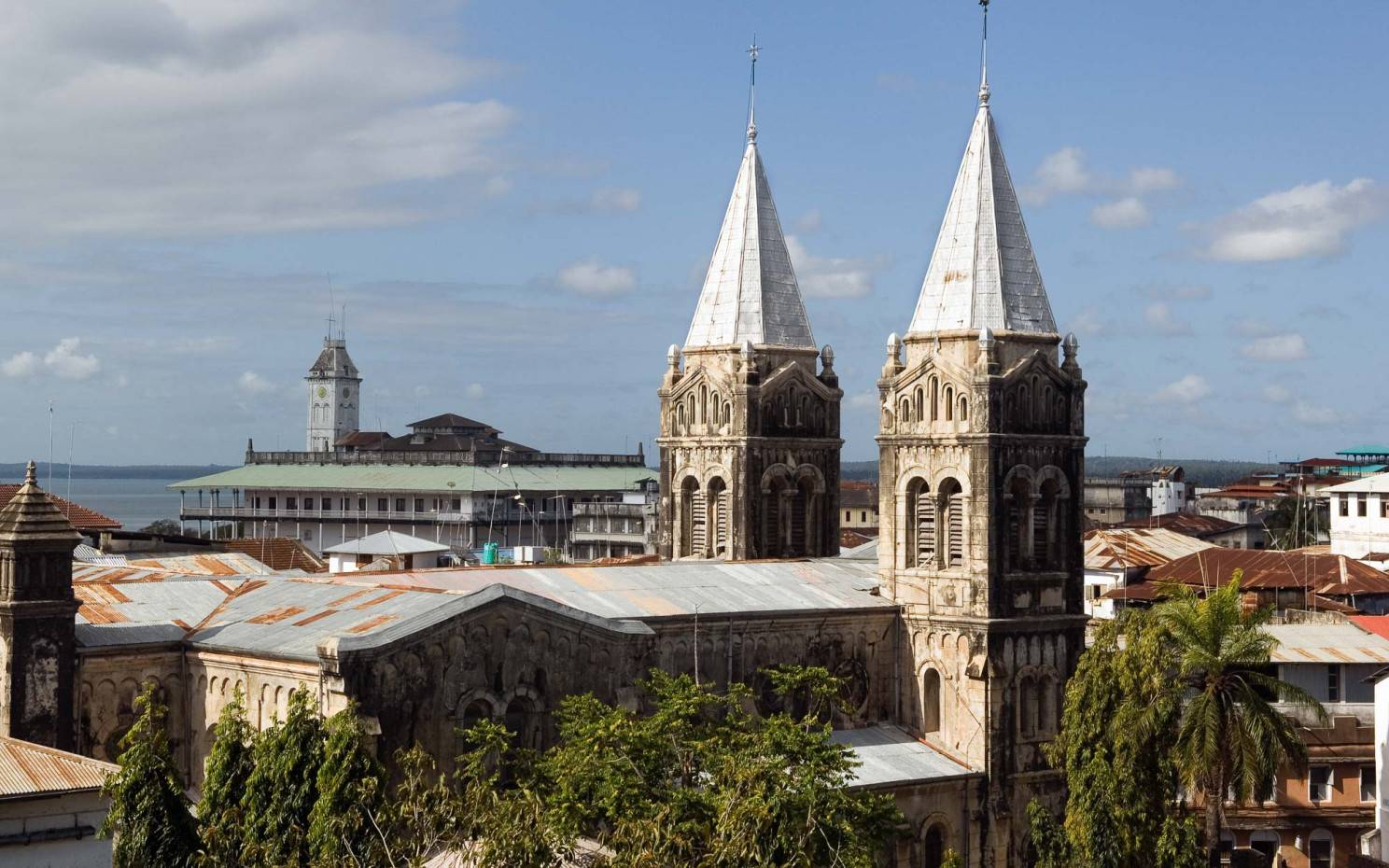 Twin spires of St Joseph's Cathedral. Photo: Ariadne van Zandbergen
One of the most prominent features of Zanzibar’s skyline is the tall twin spires of St Joseph’s Cathedral, which is said to have been modeled on its counterpart in Marseille in France. The building was constructed by French priests and local converts from 1893 to 1897, but the site has hosted a Catholic mission since the 1860s. Daily morning masses are still attended by Stone Town’s small Catholic community (with four services on Sunday) and times are advertised on a board outside the main gate. The attached museum is less than essential, but it does contain some interesting historical photos of Zanzibar.
18. Dine Out on Traditional Zanzibari Fare
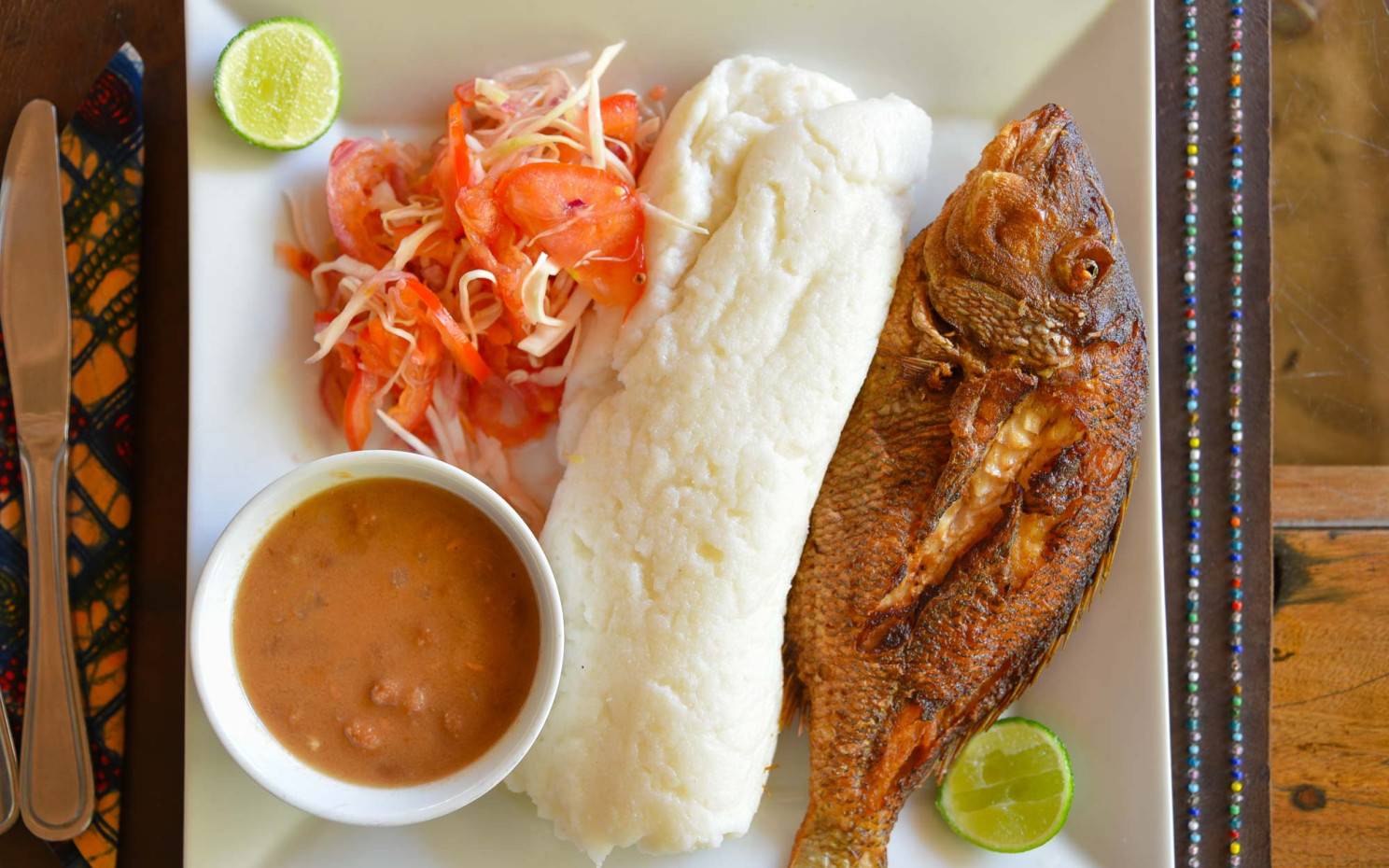 Swahili dish: ugali and deep-fried fish. Photo: Ivan13dm
Stone Town has a lively culinary scene. In addition to hosting a cosmopolitan range of international restaurants – from Indian and Chinese to Italian and Ethiopian – it is a great place to sample Swahili cuisine. Local favorites include spicy rice-based pilau and biryani, along with Swahili-style curries cooked in a tomato-and-coconut-based sauce. Seafood is of a high standard: try charcoal-grilled fish basted in a ginger-and-garlic marinade, or fresh lobsters, prawns and calamari. Sweet-toothed visitors can treat themselves to kashata (a type of coconut candy) and mandazi (the local equivalent of doughnuts).
19. Head Out of Town to an Idyllic Tropical Beach
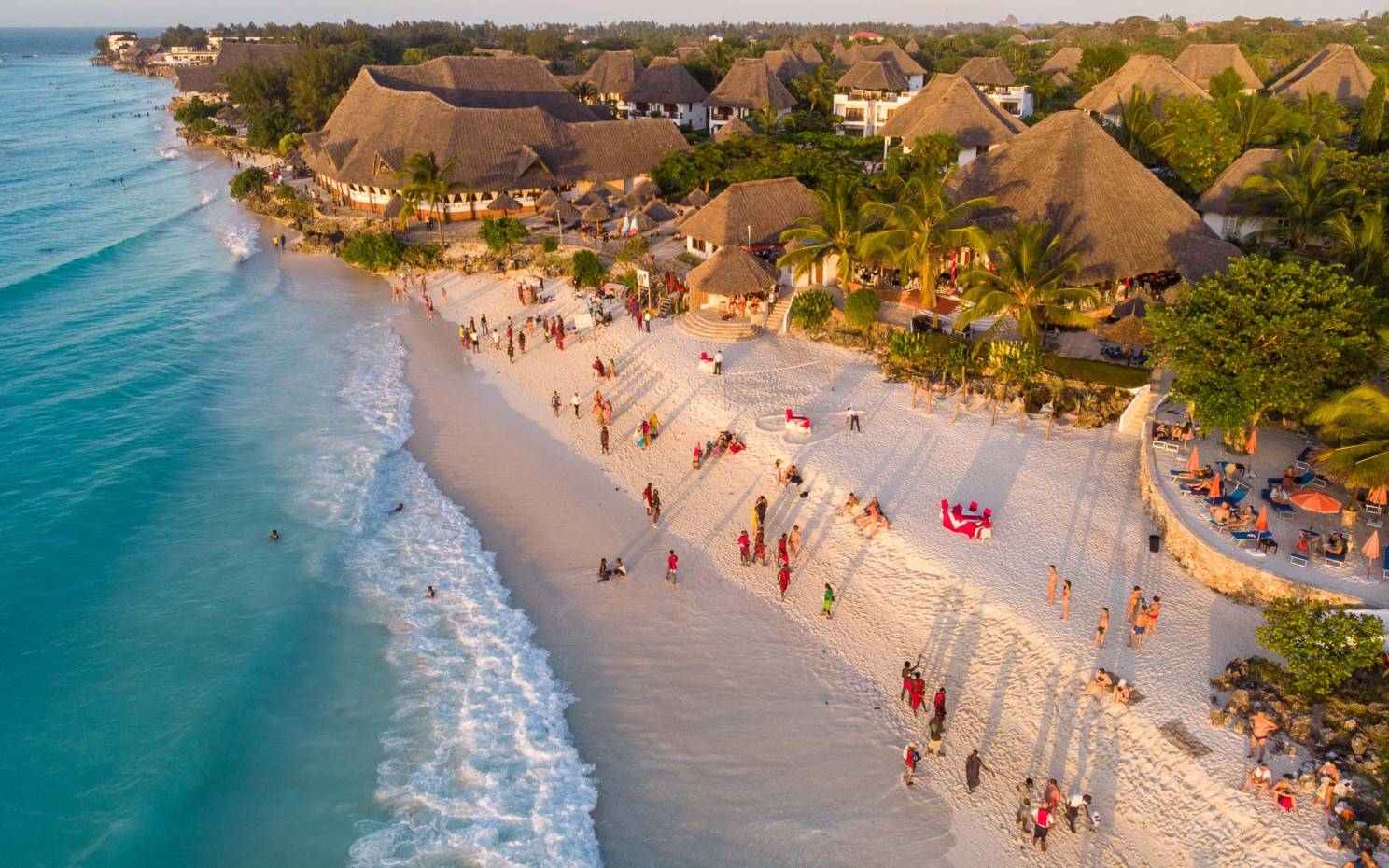 Nungwi Beach. Photo: Gideon Ikigai
For many visitors to Zanzibar, it’s all about sun, sand and surf. And even if you prefer to base yourself in characterful Stone Town, it’s worth taking time to visit one of the island’s postcard-perfect palm-lined beaches. There’s plenty of choice. If you enjoy a trendy scene, Paje is a favorite with kitesurfers, while Nungwi and Kendwa are ideal for swimming and sundowners. Quieter options include stunning Mtende close to the island’s southern tip, or low-key Bwejuu and Michamvi Kae. Whichever beach you visit, aim to be there at high tide, when swimming conditions are generally best.
Zanzibar Beach Packages | Best Beaches of Zanzibar
20. Go on a Fly-in Safari to Mainland Tanzania
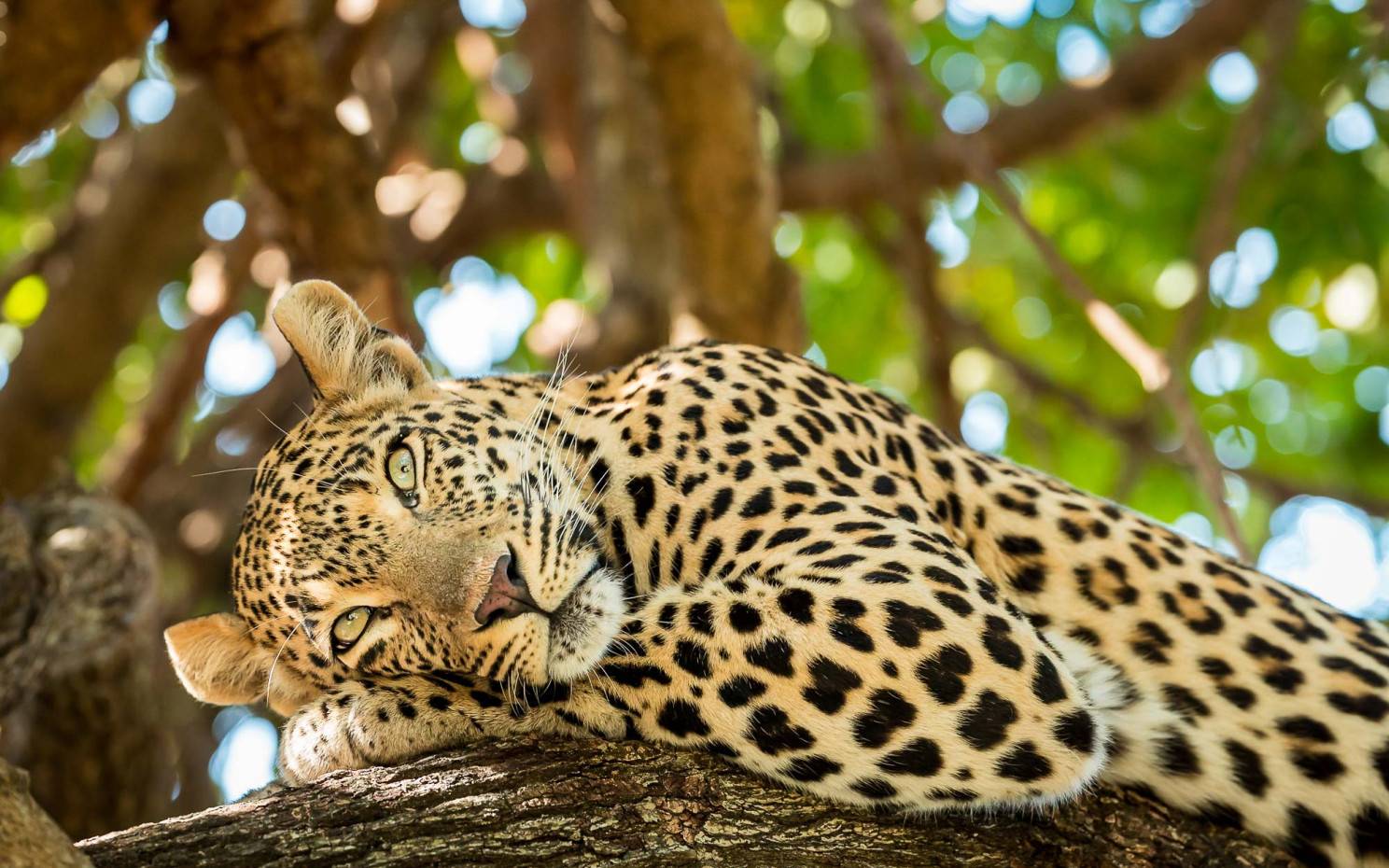 Leopard in a tree in Southern Serengeti NP. Photo: Dennis Stogsdill
Tanzania boasts some truly stellar safari destinations, most of which are accessible by air from Stone Town. For those with limited time, a one- or two-day safari to either Nyerere (Selous) or Mikumi National Parks comes with a good chance of spotting lion, elephant, buffalo, giraffe, zebra and other iconic African wildlife. Nyerere also offers the opportunity to join a boat safari, dodging around hippos and crocodiles, on the mighty Rufiji River.
For those with more time, a longer fly-in safari to the Serengeti is highly recommended. This world-famous national park offers excellent year-round wildlife viewing, with high densities of lion, leopard, cheetah and other carnivores. Time it right and you might even catch the celebrated wildebeest migration on the move. A Serengeti safari is easily combined with a visit to the Ngorongoro Crater, which is the world’s largest intact volcanic caldera, and also one of the best places to see the Endangered black rhino.
21. Visit the Historic Hamamni Persian Baths
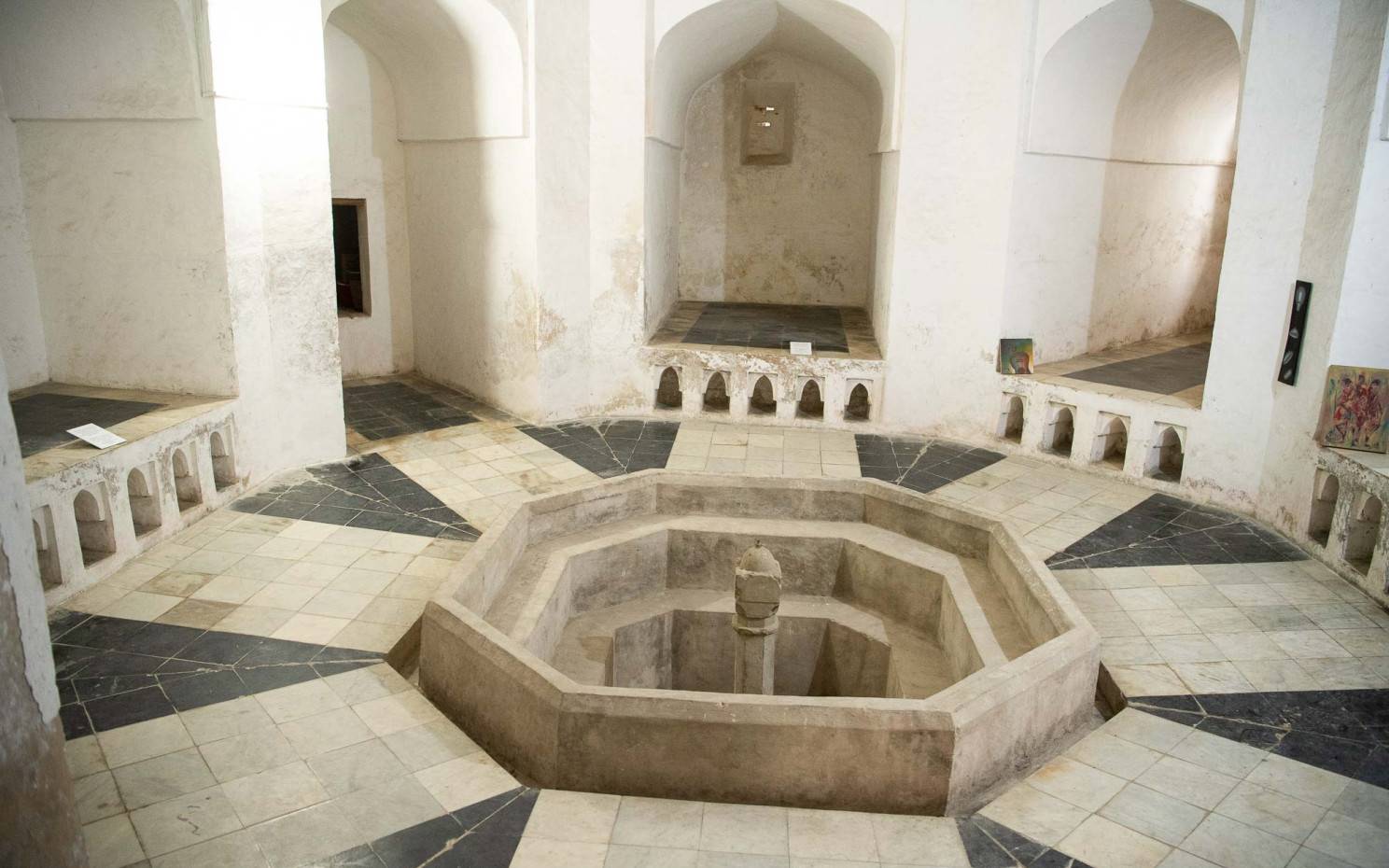 Hamamni Persian Baths. Photo: Ariadne van Zandbergen
The Omani plantation owners and slave traders who settled Zanzibar in the 19th century built several Persian-style bathhouses. The largest and most intricate of these lies in the heart of Stone Town and lends its name to the neighborhood of Hamamni (literally ‘Place of Baths’). Commissioned in the 1870s by Sultan Barghash, this bathhouse was designed by the Iranian architect Haji Gulamhussein and remained in use until the 1920s. Illuminated by skylights, the interior incorporates a six-sided pool and hot and cold baths that were fed by aqueducts. Visitors can follow a narrow staircase up to the twin-domed roof.
22. Dine Out on the Roof of Emerson on Hurumzi
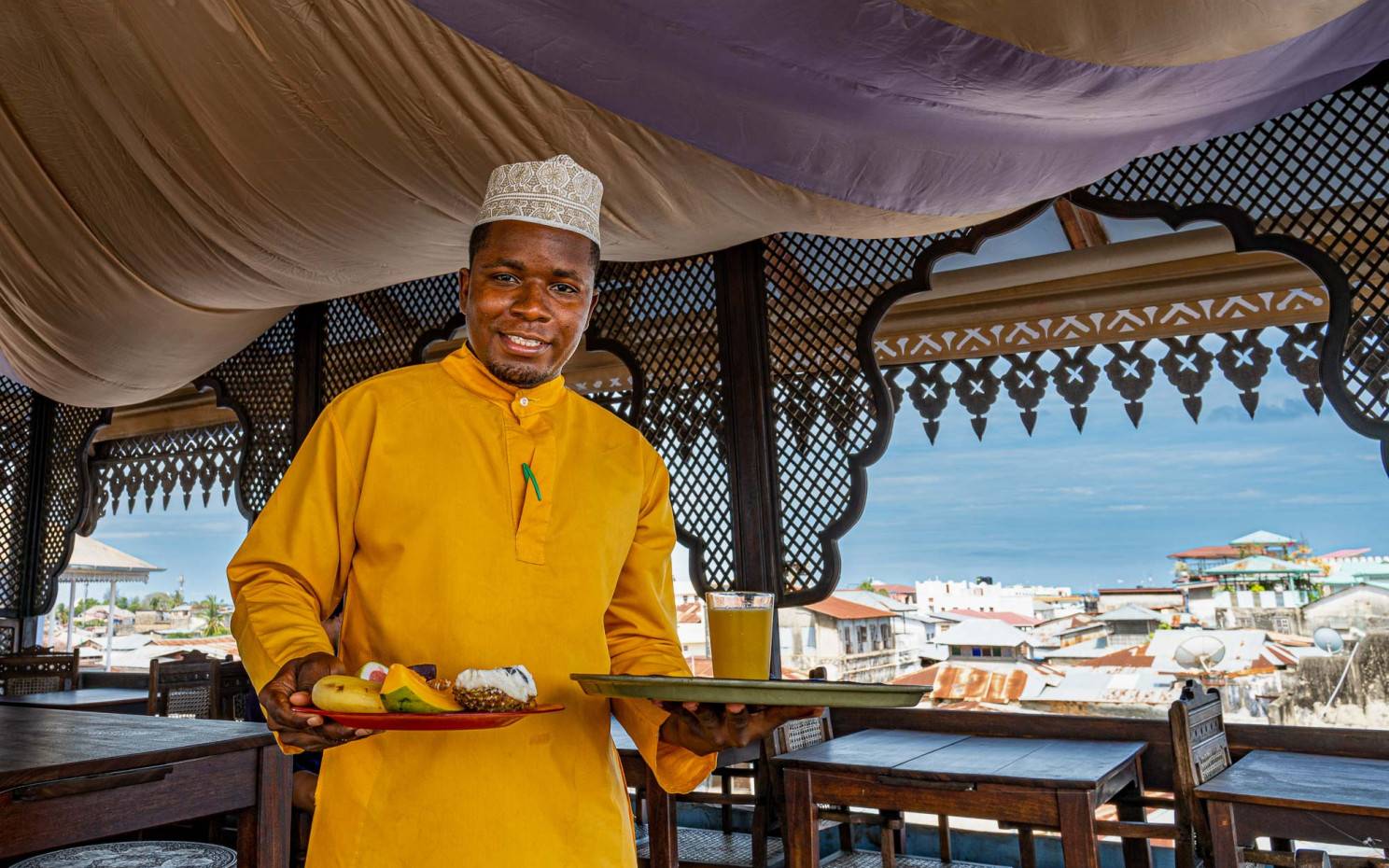 Server at the rooftop Tea House. Photo: Dr
Arguably Zanzibar’s most prestigious fine-dining venue, the Tea House is perched on the roof of Emerson on Hurumzi, one of Stone Town’s tallest buildings. Here, cocktail in hand, you can enjoy panoramic views over the alleys, minarets and spires of Stone Town as the sun sets over the Indian Ocean. Sundowners are followed by a three-course set menu of Zanzibari-style seafood, accompanied by traditional taarab music performed by members of the Dhow Countries Music Academy. Space is limited and there is only one daily seating, so booking is usually necessary.
23. Admire the Handsome House of Wonders
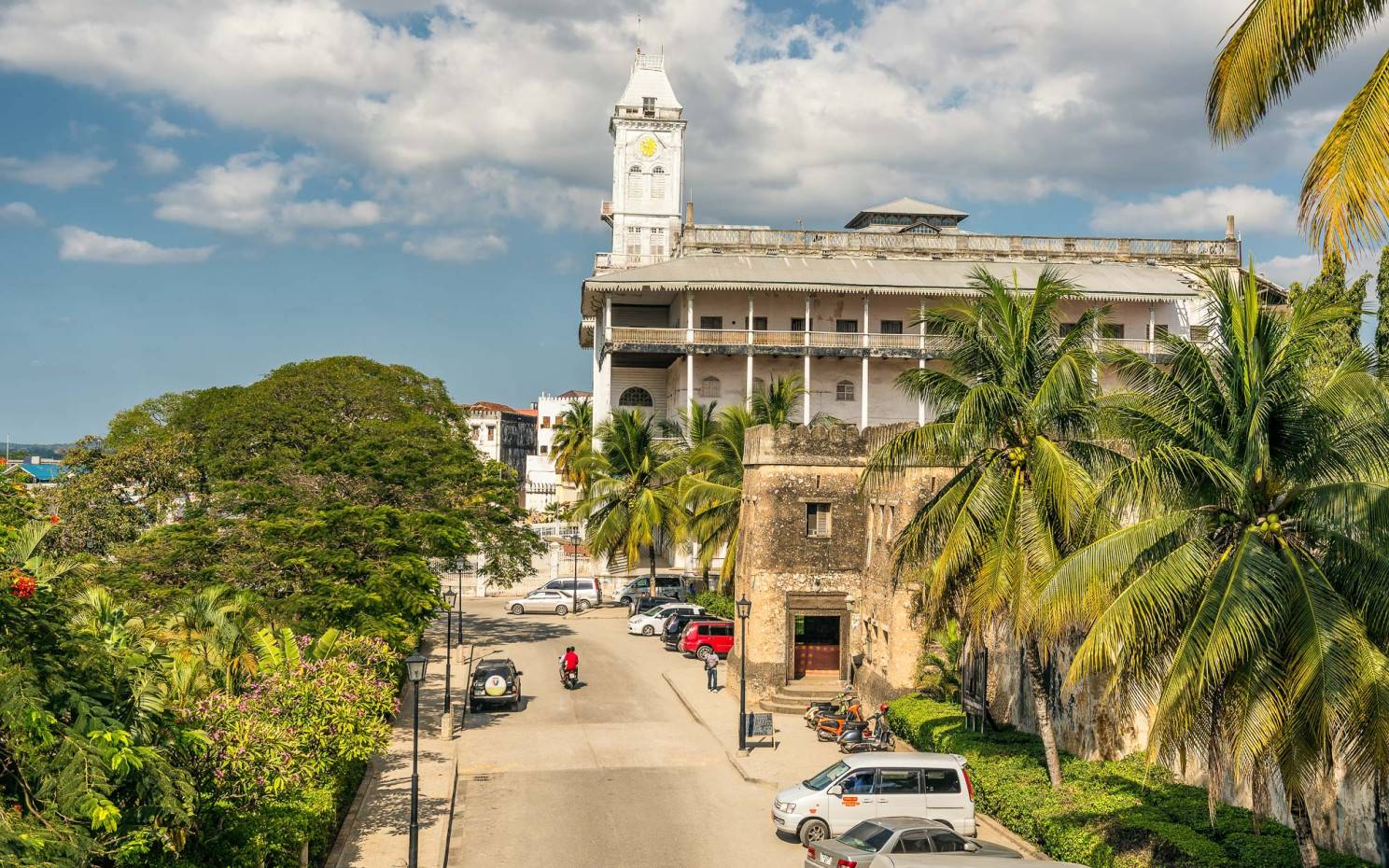 The House of Wonders. Photo: miroslav_1
One of the most architecturally impressive landmarks on Stone Town’s historic waterfront is the 19th-century ceremonial palace nicknamed Beit al Ajaib, meaning ‘House of Wonders’. Built in 1883 for Sultan Barghash, it was the first building on Zanzibar to have electric lights and an elevator, which is why locals found it so wondrous. The construction is also notable for its tall ceilings, ornate tiered balconies and a tall clock tower that was integrated into the facade in 1897.
According to local legend, Beit al Ajaib stands on the same site as an earlier palace built for an influential 17th-century queen called Fatuma. Prior to being rendered unsafe by partial collapses in 2016 and 2020, the old palace housed the Museum of History and Culture. Unfortunately, the facade has for some years been obscured by scaffolding associated with restoration works.
24. Make a Day or Overnight Trip to Chumbe Island
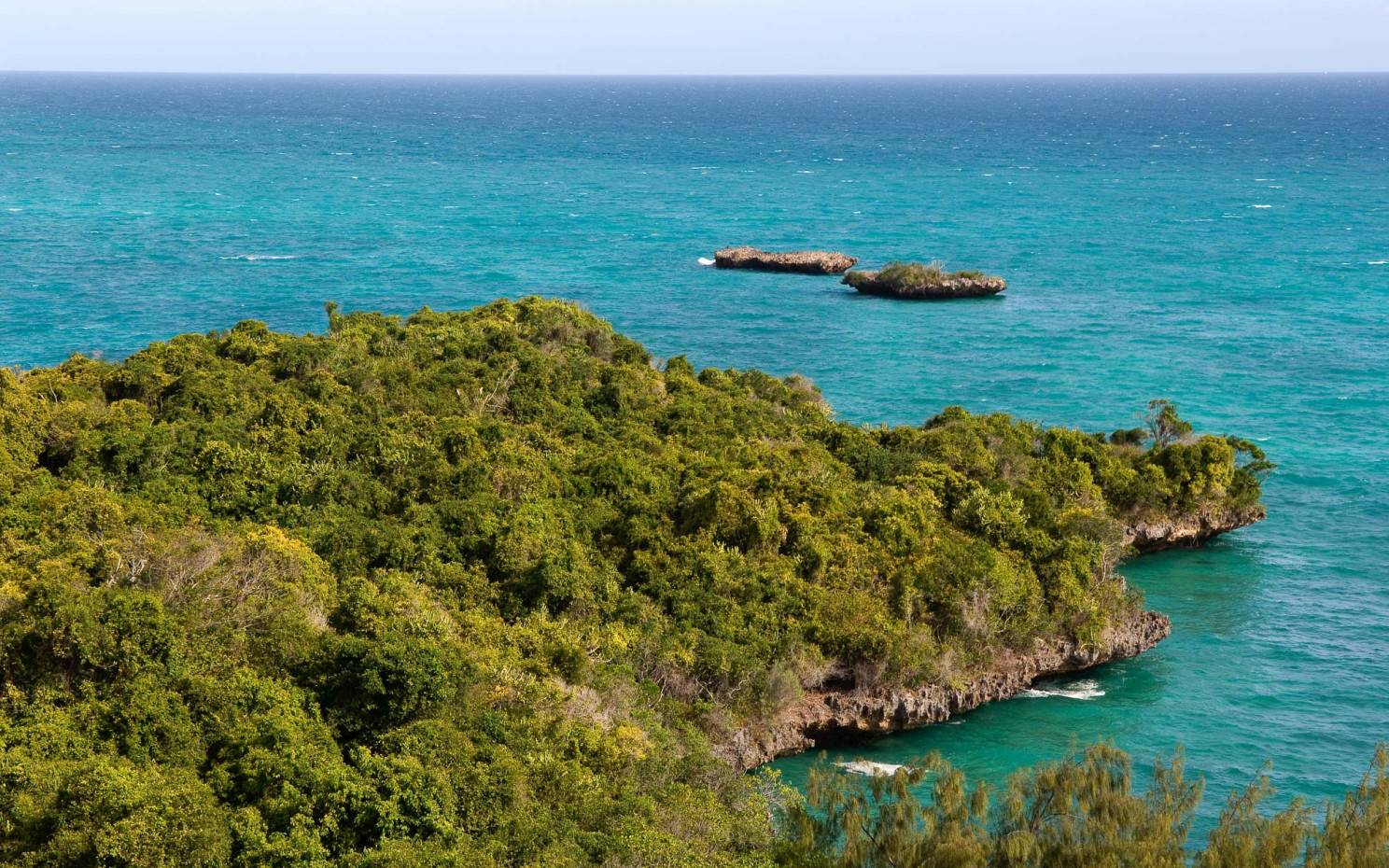 Chumbe Island. Photo: Ariadne van Zandbergen
Created in 1991, Chumbe Island Coral Park protects the tiny namesake island as well as some of the region’s most pristine and snorkel-friendly reefs. Overnight guests get to stay in a gorgeous low-impact ecolodge whose five solar-powered units, built using organic local materials, exude a barefoot luxury feel. Otherwise uninhabited, the island features a small sandy swimming beach, as well as a lighthouse erected in 1904. It’s also one of the best places to look for the world’s largest land-living arthropod, the absolutely monstrous coconut crab. Day packages from Stone Town are available when the lodge isn’t full.
About Chumbe Island | View on Google Maps
25. Delve Into Zanzibar’s Past at Kibweni Palace
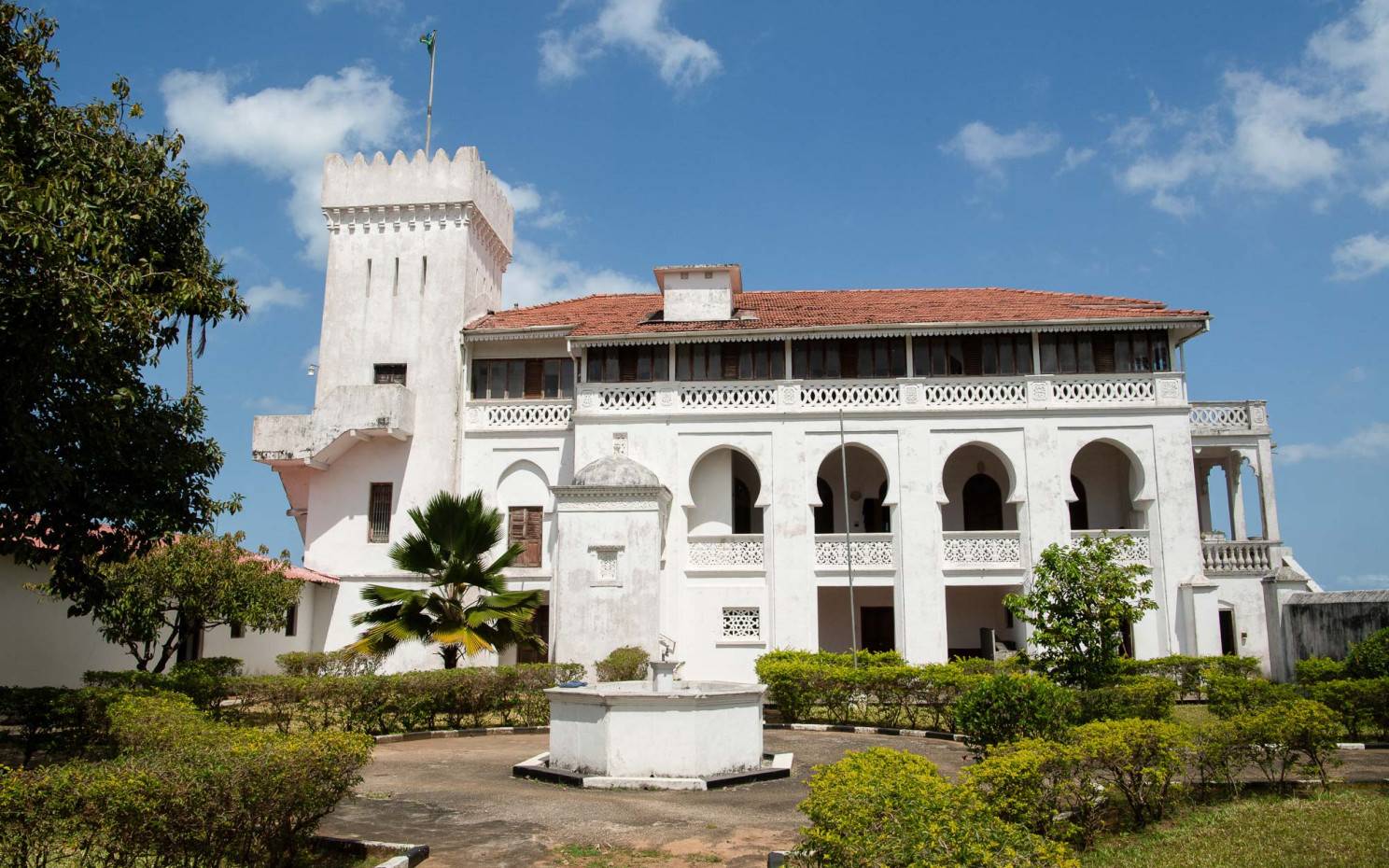 Kibweni Palace Museum. Photo: Ariadne van Zandbergen
Designed by the British architect John Sinclair in 1915, this three-story mansion at Kibweni was originally the country residence of Sultan Khalifa II, who named it Kassrusaada (‘Palace of Happiness’). In 2022, it was opened as the Kibweni Palace Museum and all the contents of the former People’s Palace Museum, opposite Forodhani Gardens, were moved across to it. Exhibits focus on the period when Zanzibar was under Omani rule, and include 19th-century paintings of Stone Town, a contemporary portrait of Sultan Said, household items and furniture from various sultans’ palaces, and a room dedicated to Princess Salme.
26. Time Travel to Ancient Swahili Ruins
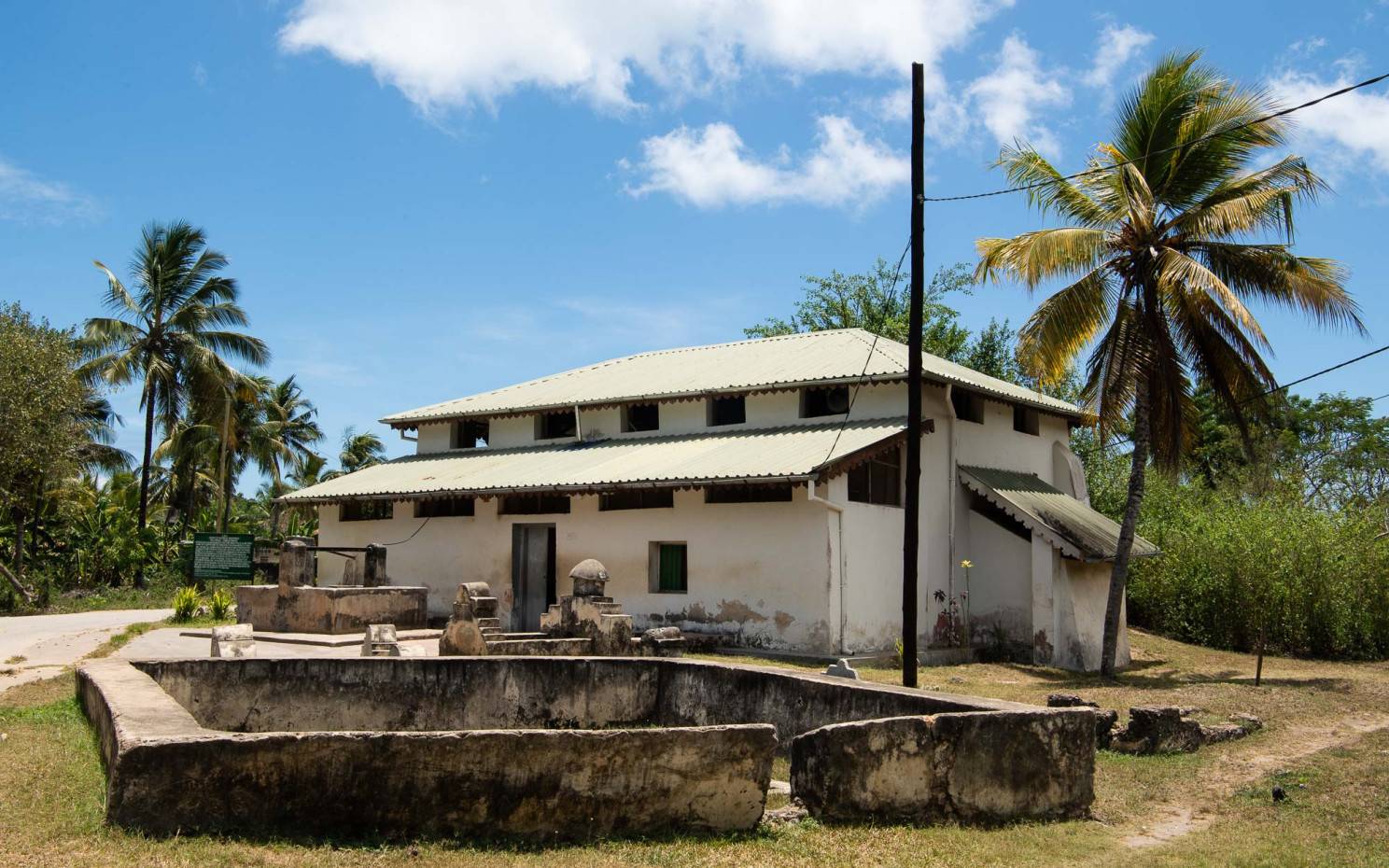 The 900-year-old Kizimkazi Mosque. Photo: Ariadne van Zandbergen
The most ancient ruin on Zanzibar is Unguja Ukuu, of which a few crumbling walls survive dating back to the 8th to 10th centuries. The island’s oldest intact structure, set close to its southern tip, is Kizimkazi Mosque, which can be dated more accurately due to the presence of an Arabic inscription from 1107 CE. Farther north, close to Nungwi and Kendwa, stand the Fukuchani Ruins, a fortified Swahili trading port dating back to the 16th century. Many other ruins date from the 19th-century Omani occupation; these include the coastal Mtoni and Maruhubi Palaces as well as the ruined Persian baths at Kizimbani and Kidichi.
Want To Visit Stone Town?
Click on the button below to compare Stone Town tour packages offered by top-rated tour operators.
By
Philip Briggs
Philip is an acclaimed travel writer and author of many guidebooks, including the Bradt guides to Uganda, Tanzania, Kenya and South Africa.
More About This Author



 Subscribe to our newsletter
 Follow us on Instagram
African Safari Tours
-
![4-Day Tanzania Private Mid-Range with Arrival Tour]()
4-Day Tanzania Private Mid-Range with Arrival Tour
$1,176 to $1,227 pp (USD)
Tanzania: Private tour
Mid-range Lodge & HotelYou Visit: Arusha (Start), Tarangire NP, Lake Manyara NP, Ngorongoro Crater, Arusha (End)

Go Serengeti African Tours
4.9/5 – 749 Reviews

-
![5-Day Ndutu Migration -Calving Season]()
5-Day Ndutu Migration -Calving Season
$1,532 to $1,620 pp (USD)
Tanzania: Private tour
Mid-range Lodge & Tented CampYou Visit: Arusha (Start), Ndutu (Southern Serengeti NP), Central Serengeti NP, Ngorongoro Crater, Tarangire NP, Arusha (End)
Top Selected Tours
5.0/5 – 194 Reviews
-
![4-Day Rwanda Gorilla and Golden Monkey Trekking Tour]()
4-Day Rwanda Gorilla and Golden Monkey Trekking Tour
$2,387 pp (USD)
Rwanda: Private tour
Mid-range HotelYou Visit: Kigali (Start), Volcanoes NP (Gorillas), Kigali Airport (End)
Expedition Rwindi Voyage
5.0/5 – 98 Reviews