Tanzania Safari Itinerary - How To Spend 7 to 10 Days
 By Ella McKendrick
 Ella McKendrick is a travel writer and filmmaker, boasting a substantial online following on YouTube and running a successful blog.
Boasting the world’s highest lion population as well as hosting the natural phenomenon of the great wildebeest migration, Tanzania is one of the most popular safari destinations in Africa. It’s a country that gets under your skin, well and truly hooking you on the safari bug, as I found out firsthand. Since first visiting Tanzania four years ago, I’ve made it my mission to come back at least once per year and now have six visits under my belt. With each visit, my knowledge of Tanzania has expanded. I’ve now been fortunate enough to explore all corners of the Serengeti National Park, as well as each park on the famed Northern safari circuit, including hidden gems such as Arusha National Park.
Of course, during my Tanzania safaris I’ve made some mistakes, especially on my first visit (accidentally basing myself more than four hours away from the great migration in the Serengeti!), and learned some valuable lessons. And so, with all of this in mind, I have carefully crafted what I deem to be the ultimate seven-to-10 day Tanzania itinerary, using my wealth of experience exploring Tanzania. In my experience, seven days is an ideal amount of time to go on safari in Tanzania. It allows you enough time to explore my top three safari destinations at a relaxed pace.
The three-day extension to this itinerary, bringing it to 10 days, allows you to visit the tropical island of Zanzibar. This is the perfect way to unwind after an action-packed safari, perhaps sunbathing on the white sand beaches, sipping on a fresh coconut as you admire the glistening Indian Ocean, or seeing some of the island’s highlights, such as the historic town of Stone Town.
Let’s get into it!
Day 1: Arusha
Today’s the day that you arrive in Tanzania! After a long journey that has likely consisted of a number of flights, you’ll probably want some time to relax and settle into the country. That’s certainly how I feel anyway. Arusha is the gateway to Tanzania’s Northern safari circuit. The city is about an hour away by road from Kilimanjaro International Airport and is home to a range of hotels and lodges.
Where To Stay in Arusha
My favorite lodge in Arusha is Gran Meliá Arusha. This hotel sits within a luxury category. With spacious, comfortable rooms, ample dining opportunities and a large swimming pool that looks out over their own organic garden, I find this hotel is the perfect place to shake off the jet lag. A lovely mid-range alternative is Arusha Farm House. This boutique hotel only has a handful of rooms, giving it a quiet feel. It also has a swimming pool.
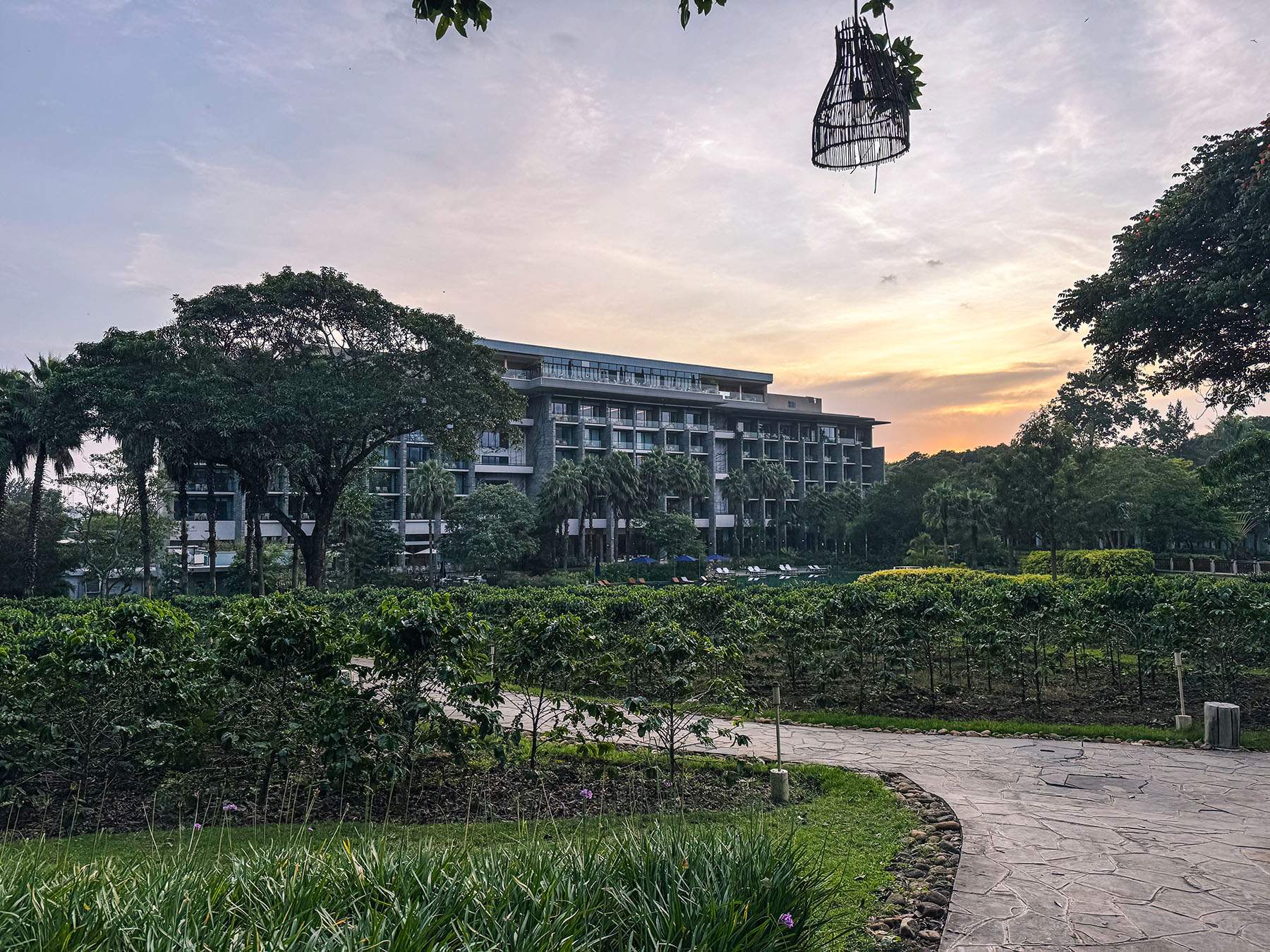 Gran Meliá Hotel in the heart of Arusha city
Things To Do in Arusha
If your flight gets into Kilimanjaro International Airport early and you have the energy, there are a number of things that you can do in Arusha.
Perhaps my favorite thing to do is visit Arusha National Park. Bordering the city to the north, this little-known park is a great introduction to safaris in Tanzania. As well as game drives, you can embark on walking safaris or even canoeing safaris. Arusha National Park is a great place to see giraffes. You can also hope to spot zebras, waterbuck, buffalo and some interesting primate species such as the blue monkey and Kilimanjaro colobus monkey. The walking safari was a real highlight for me on my visit. The landscape in this park is just so gorgeous, with Mt Meru towering over you.
Other popular activities near Arusha include Kikuletwa (Chemka) Hot Springs, about an hour outside the city, and hiking to Materuni Waterfalls, also an hour away.
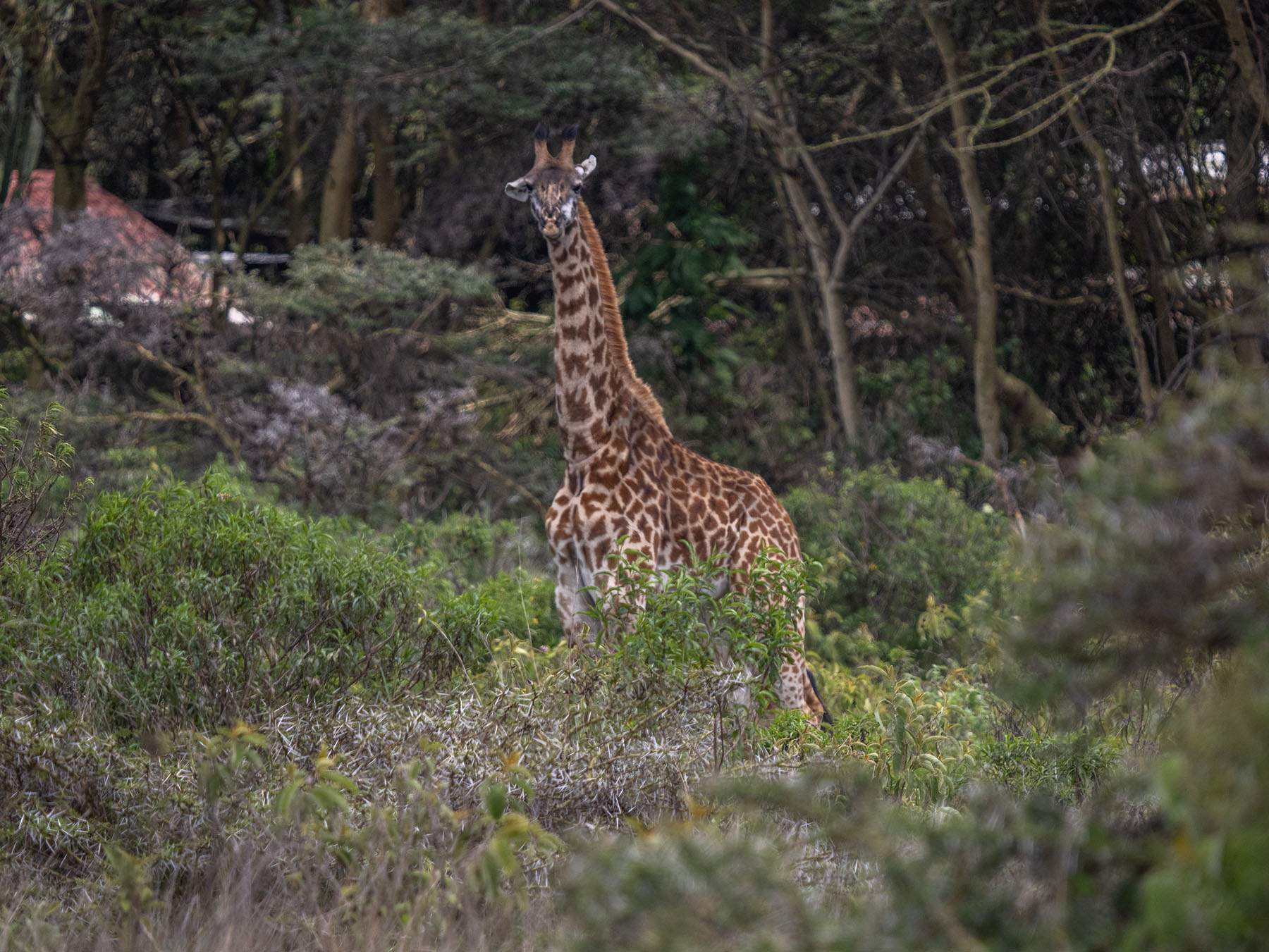 Masai Giraffe in Arusha National Park
Day 2: Tarangire National Park
Today your safari truly begins as you journey from Arusha city to your first safari destination – Tarangire National Park. Tarangire is famous for its huge elephant herds and iconic baobab trees. However, as I’ve found through experience, this park is so much more than that. And the best part is that the park is relatively undiscovered, certainly the central and southern parts of the park anyway.
The drive between Arusha and Tarangire’s main gate takes around three hours. Most of the route is on smooth tarred roads, with just the last 20 minutes taking you down a bumpy track that gives you your first experience with the ‘African massage’. There is an airstrip (Kuro Airstrip) within Tarangire, so flying between Arusha and Tarangire is a possibility and takes around 30 minutes. As the drive between Arusha and Tarangire is pretty short and straightforward, I don’t think flying is strictly necessary. In order to make the most of your day, I’d recommend setting off from Arusha no later than 7 AM. This allows you to reach Tarangire at 10 AM.
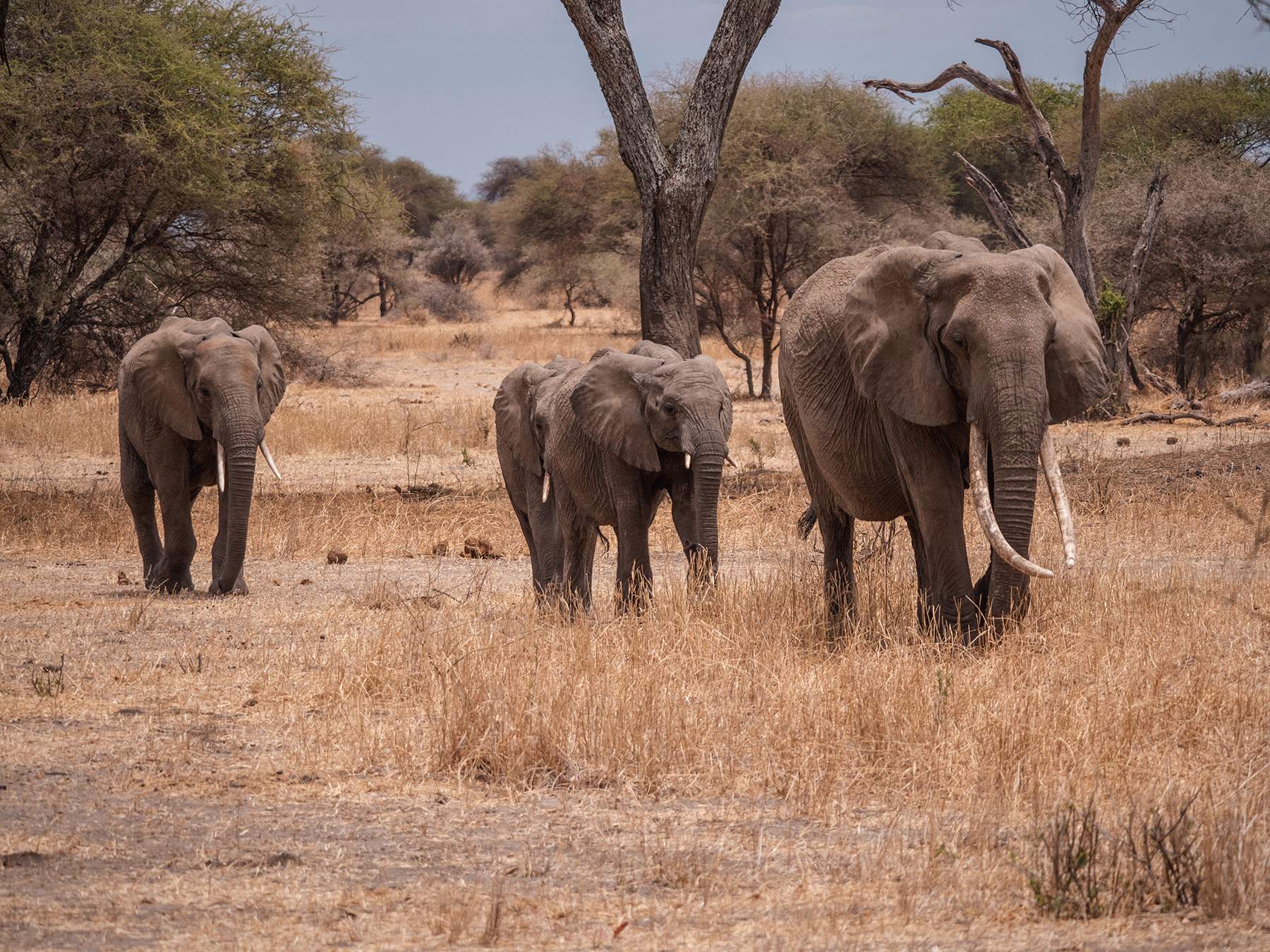 A breeding herd of elephants in Tarangire National Park
Tarangire is extremely popular with day visitors. These are travelers who arrive from Arusha during the mid-morning and then depart at around 2 PM, journeying onward to Ngorongoro Crater and likely spending the night at either a halfway point between the two or just outside Ngorongoro Conservation Area. This is what I did on my first visit to Tarangire and I found it to be a long and exhausting day. Spending such a short amount of time in Tarangire also doesn’t allow you to journey that far into the park and so you’re missing out on some of the best that Tarangire has to offer.
In this itinerary, we’re going to do things differently and spend a night within the heart of the national park. After a few hours of game driving in northern Tarangire, we’re going to head to our Tarangire lodge for a hot lunch and some time to recharge both our own batteries and our camera batteries. After a couple of hours to enjoy some lunch, settle into your room and freshen up, perhaps with a nice hot shower, it’s time to head out for an evening game drive, your second game drive of the day. You’ll be able to explore parts of the park that few visitors see, as they’re out of reach for day visitors. You can enjoy fewer crowds while at the same time having some high-quality sightings. I was lucky enough to spot a pair of courting leopards – an extremely rare find!
You’ll head back to your lodge for your evening meal and a good night’s rest. Make sure your luggage is all packed up as tomorrow you have an early start.
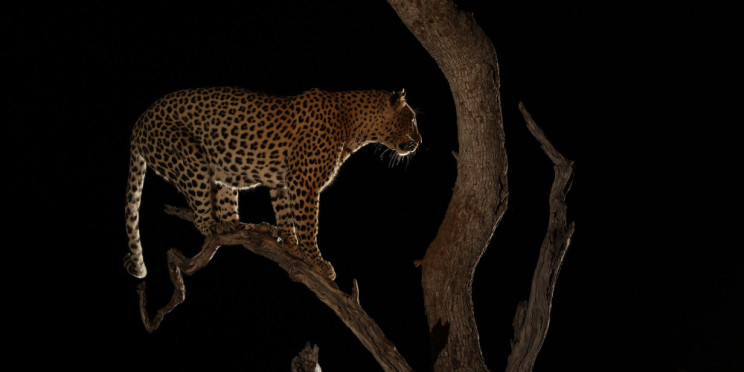
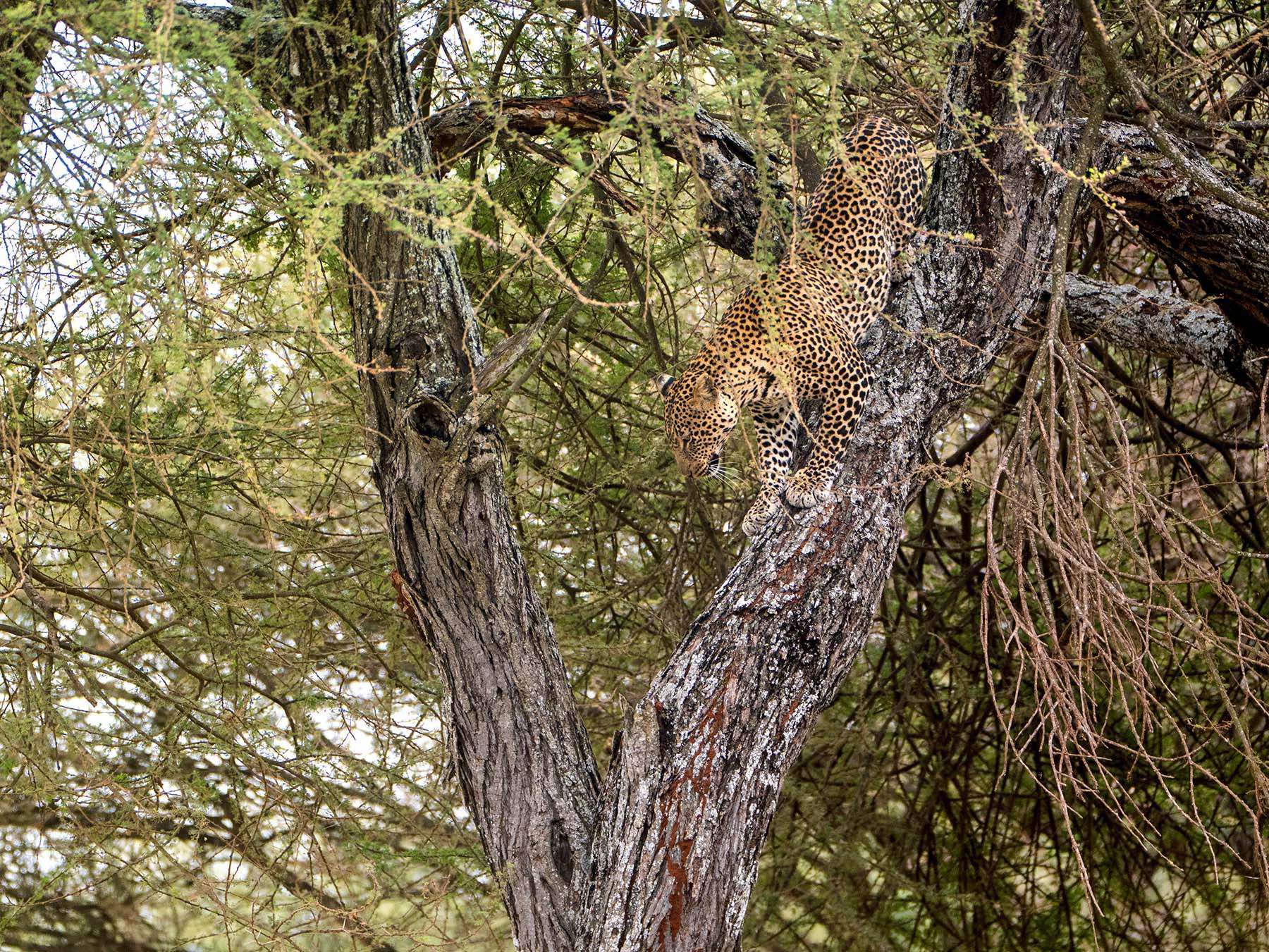 A leopard in Tarangire National Park
Where To Stay in Tarangire National Park
There are several options when it comes to lodging inside Tarangire. I have personally stayed in Safari Haven Tarangire Camp and absolutely loved it! It feels like it’s in the middle of nowhere, surrounded by pure wilderness. This lodge falls into a mid-range price bracket but the rooms are spacious and feel luxurious. The food is also spectacular. Other options include Oliver’s Camp, which is a luxury option, and Tarangire Elephant Springs, which is also luxury.
Day 3: Tarangire National Park to Ngorongoro Crater
This morning you’ll have another opportunity to explore Tarangire National Park. I’m a strong believer in getting out into parks as soon as the gates open and Tarangire is no exception. The park opens at 6 AM, so I’d recommend requesting a picnic breakfast and heading out at 6 AM sharp. The early mornings give you the best chances of finding predators while they’re still active. Additionally, the lighting at this time of day is magical. There’s nothing like watching an East African sunrise.
You’ll gradually meander farther north as the morning goes by. Silale Swamp is a great area to explore. Not only is it incredibly scenic, but it’s very productive for wildlife, from birds to big cats. There’s also a lovely picnic site here called Silale Picnic Site, which is a great place to enjoy your packed breakfast. Tarangire’s park fees are valid for 24 hours, which means you’ll have to leave the park just before 10 AM (when you arrived the day before).
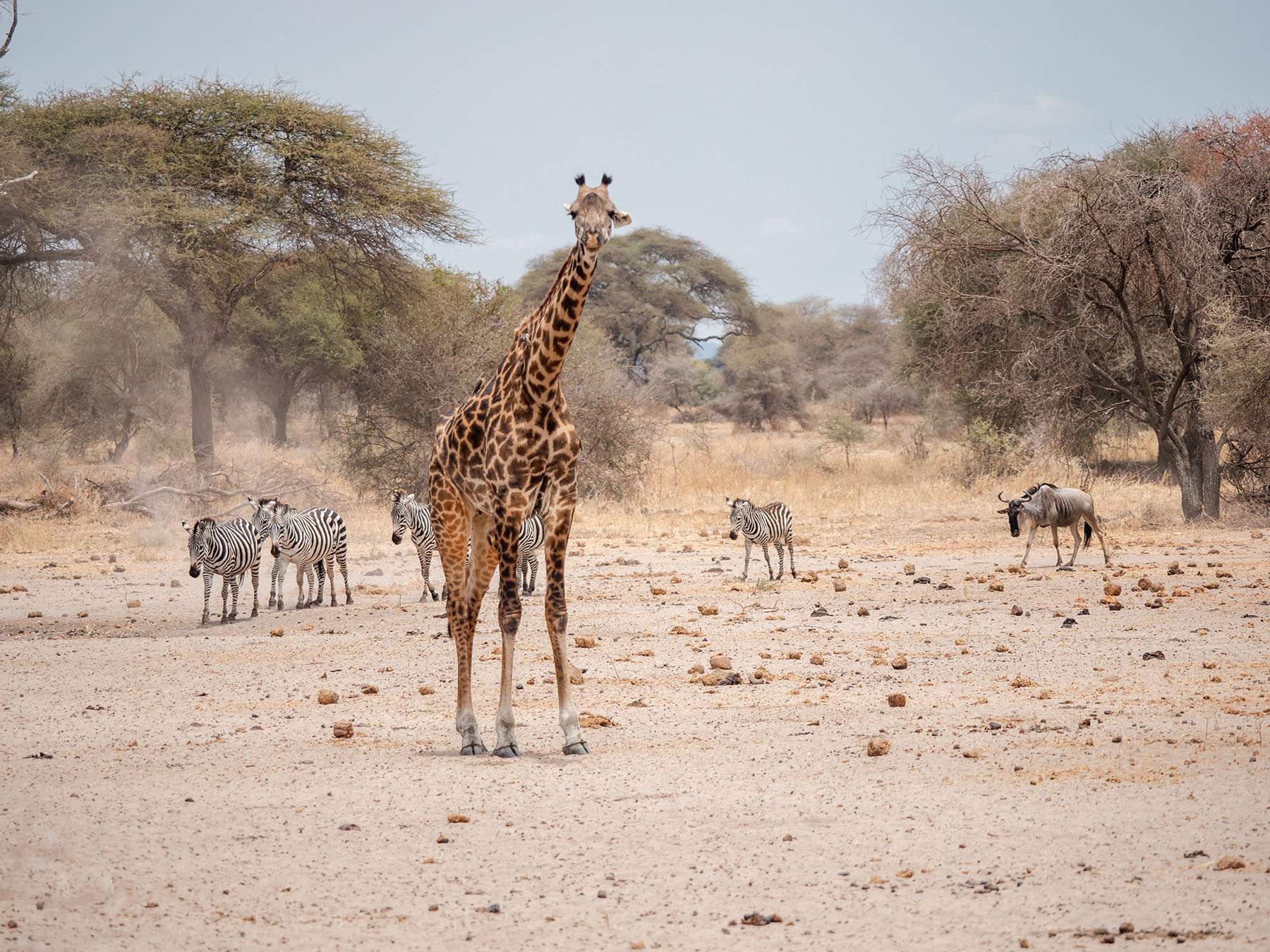 Giraffe and zebras in Tarangire National Park
You’ll then journey toward Ngorongoro Crater. As you’ll be spending the night within the conservation area, on the crater rim, you can expect the drive to take between three and four hours, depending on the traffic and road conditions. The road is smooth for the first couple of hours, until you reach the gates to Ngorongoro Conservation Area. Here, as you wind around the crater rim, you’ll find yourself on an unpaved road that’s surrounded by lush forests. It’s a truly scenic drive, and if you’re lucky you can even spot wildlife in the forest. I’ve encountered waterbuck and zebras here. I’ve even heard reports of leopards being spotted in the trees.
Just before you reach the Ngorongoro Conservation Area, you’ll pass through the town of Karatu. This is a great place to stop and have lunch. There are designated picnic areas where you can enjoy the lunch that was made by your lodge.
You’ll arrive at your lodge during the midafternoon, when there’s still enough light to see the fantastic views into Ngorongoro Crater. Enjoy your evening meal before getting some rest ahead of your early start tomorrow.
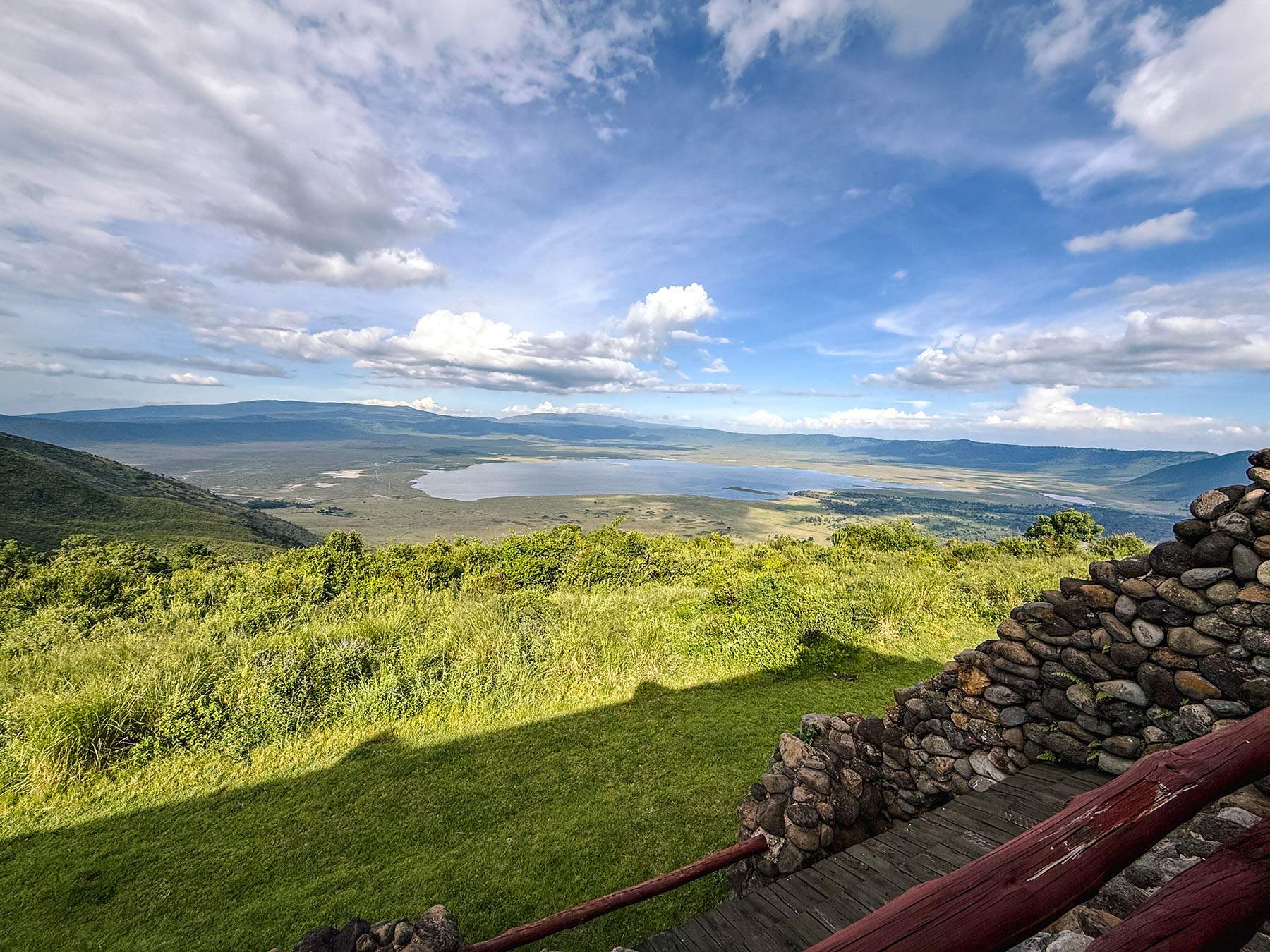 View of Ngorongoro Crater floor from Ngorongoro Serena Safari Lodge
Where To Stay Near Ngorongoro Crater
Staying on the crater rim is by far the best way to make the most of the crater. Not only do you have superb views, but you have easy access to the descent road, allowing you to enter the crater tomorrow morning at first light, before most visitors arrive from Karatu a few hours later.
My favorite place to stay is Ngorongoro Serena Safari Lodge. It’s located just 10 minutes from the descent road and has wonderful views of the crater. The only caveat with staying on the crater rim is that there are limited lodges and they tend to fall into the luxury price bracket. However, I strongly believe that if there’s any location worth stretching your budget to luxury for, this is the one!
Day 4: Ngorongoro Crater
As with yesterday, we’re going to head out just before 6 AM with picnic breakfasts. The goal is to be one of the first vehicles to arrive at the gates to Ngorongoro Crater, which sit at the top of the descent road. Your early start will truly be rewarded as you see the sun rise over the crater rim, lighting up this ethereal and prehistoric-looking landscape.
Sunrise is the best time to be in the crater as this is when the crater’s huge lion prides are active. There’s a pride whose territory is very close to the descent road and it’s not uncommon to spot them bathed in golden light as they march through their territory. I’ve spotted them on most of my visits to the crater – always at sunrise. The only time I didn’t spot them was when I arrived in the crater in midmorning, when they were already fast asleep under bushes somewhere.
Rhinos can also be spotted in the early morning, particularly the black rhinos. Rhinos have become much easier to spot in the crater since the introduction of white rhinos in 2026.
You can hope to spot an array of wildlife in Ngorongoro Crater including rhinos, lions, wildebeest, zebras, buffalo, gazelles and hippos. Giraffes, crocodiles and impalas are notably absent from the crater. Cheetahs also haven’t been seen here for many years. While leopards are present, they are rarely seen. One species that I’ve found Ngorongoro Crater to be particularly good for is the rare serval. I managed to spot a whole family of them hunting rodents on my first visit.
You will enjoy your picnic breakfast beside a scenic hippo pool before continuing your search for wildlife.
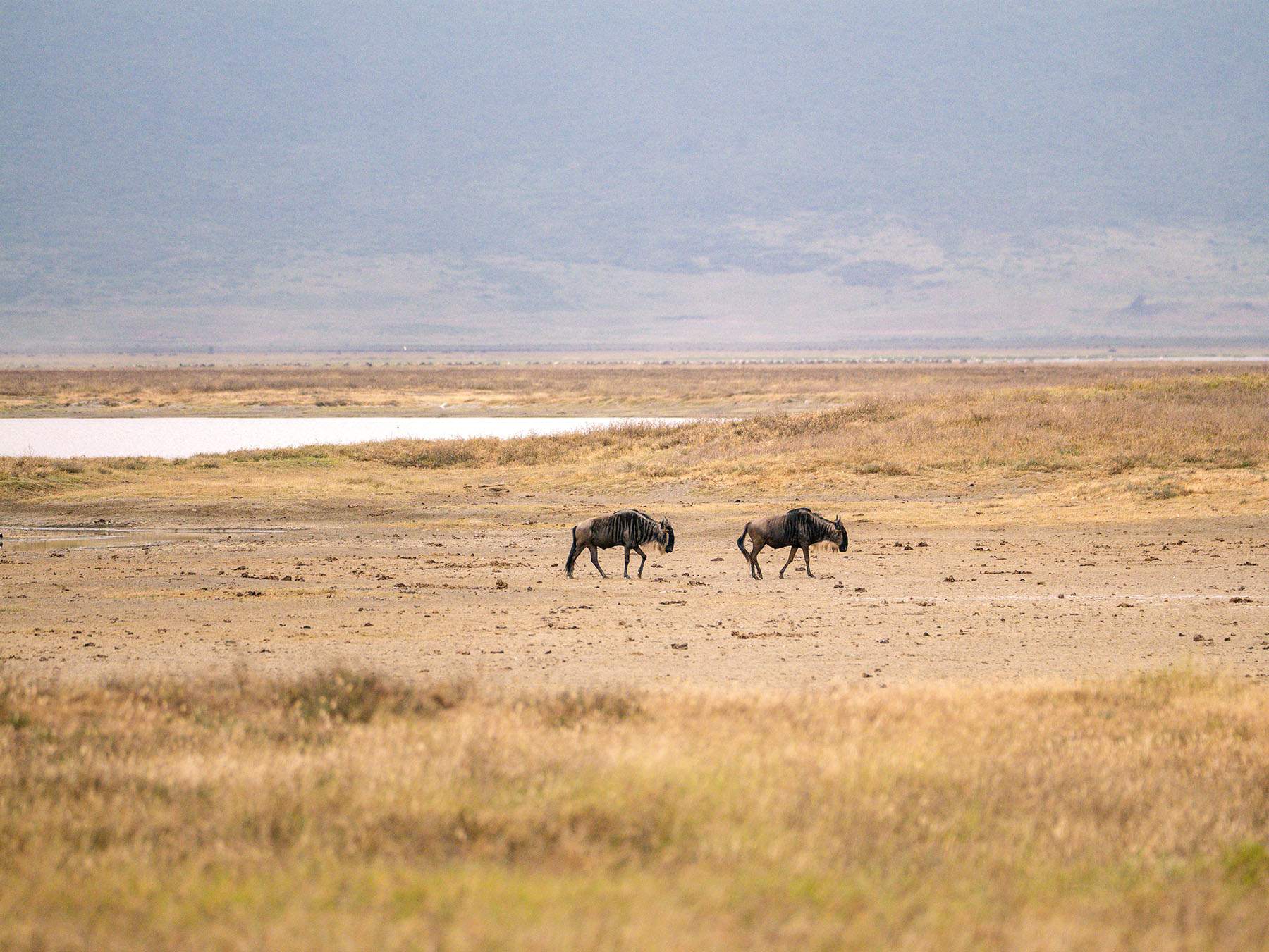 Wildebeest in Ngorongoro Crater
During the early afternoon you will stop for a picnic lunch. There’s a lovely picnic area in the Lerai Forest within the crater. Alternatively, there’s one atop the crater rim. Birds of prey such as black kites are quite fond of the picnic areas, so hold your food close to you as you eat, otherwise they may swoop down and take your lunch! I saw this happen to an unsuspecting woman.
After lunch, you will journey to Central Serengeti. The drive takes around four hours and will meander through protected wildlife areas, so there will be ample wildlife-spotting opportunities on the way. Be warned though, the road that links Ngorongoro Crater and Central Serengeti is badly corrugated, making for quite the bumpy (and, of course, fun) ride.
It is possible to exchange the drive for a flight. However, as the closest airstrip to Ngorongoro Crater that runs scheduled flights is Lake Manyara, which is actually in the wrong direction (between the crater and Arusha), there’s not much time-saving, if any at all, once you consider the fact that you have to arrive an hour before your flight. As you drive through the Ngorongoro Highlands, keep a lookout for giraffes. This is a favorite haunt of theirs and it’s not uncommon to see dozens beside the road. You’ll arrive at your tented camp in the heart of the Serengeti at sunset.
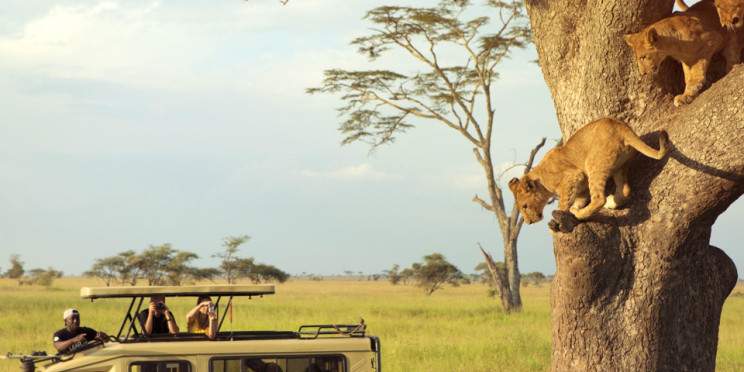
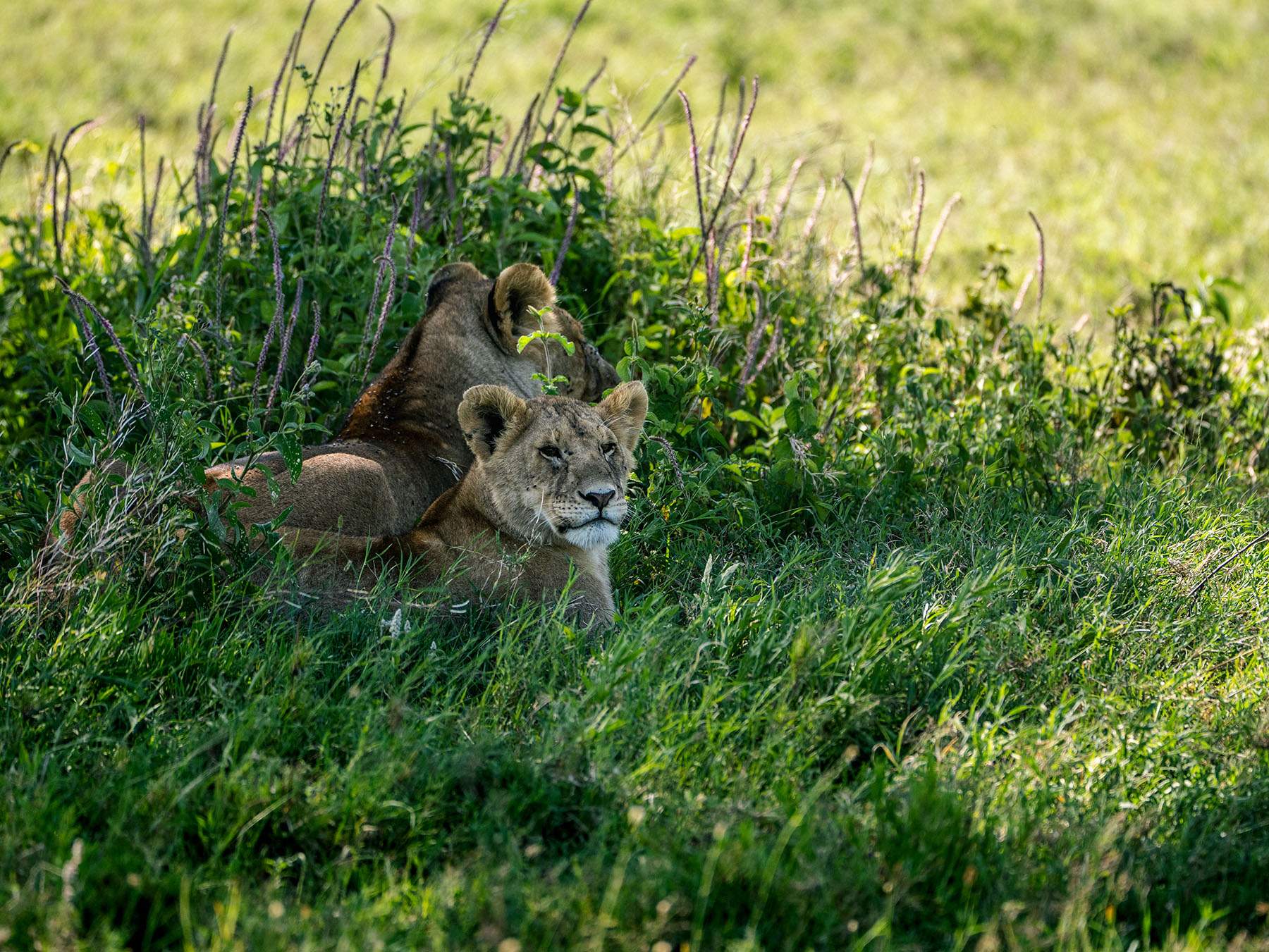 Lion cubs in Central Serengeti
Where To Stay in Central Serengeti
There are so many lovely tented camps to choose from. I’d personally recommend staying in tented camps rather than lodges as these allow you to feel close to nature and hear the sounds of the bush at night, while not compromising on any comforts. They often have large four-poster beds, wooden floors and en suite bathrooms with running water, including hot showers. Some of my favorites are Siringit Serengeti Camp and Serengeti Sametu Camp.
Day 5: Central Serengeti
Today you have the full day to explore one of the most productive wildlife areas in the world. Central Serengeti is particularly known for its exceptional big cat sightings. Lions, leopards and cheetahs are all possibilities here. In fact, you’d have to be incredibly unlucky not to see a lion here!
As usual, I’d recommend arranging a picnic breakfast and heading out at 6 AM sharp. Trust me, it’s well worth it. I managed to spot a majestic male lion hauling a freshly caught wildebeest through the yellow grass just as the sun peeped its head over the horizon, painting the entire landscape gold. Even better, there were no other vehicles in sight. There are few things as magical as this.
I’d recommend splitting your day into a morning and afternoon game drive, returning to your camp for a hot lunch in between. Mornings and evenings are the best times of the day to see wildlife and take photos as it’s cooler, meaning the animals are more active and the light is softer. It therefore makes sense to use the hottest and quietest time of the day to relax.
Your afternoon game drive in Central Serengeti will give you the opportunity to spot any species that you haven’t already seen. As well as big cats, the Serengeti is great for elephants, giraffes, hippos, crocodiles, buffalo, zebras and a range of antelope species. The birdlife is also impressive. As the sun sets, you’ll return to your tented camp for your evening meal and a rest.
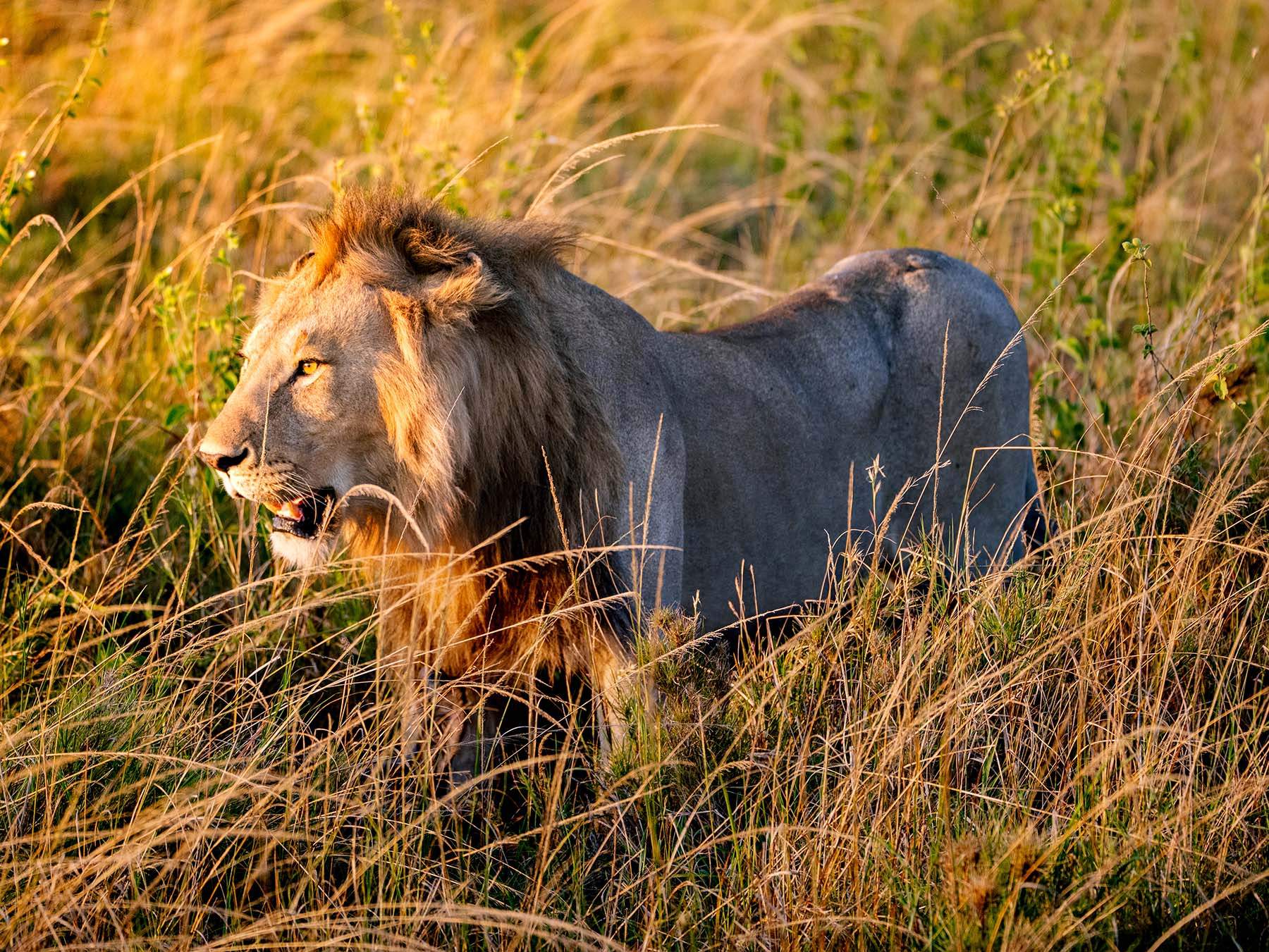 Male lion in Central Serengeti
Day 6: Northern or Western Serengeti
This morning you have options. You can either head out for a game drive like yesterday, or you can embark on a hot-air balloon safari. Balloon safaris involve very early starts (think a 3 AM alarm!) in order to take to the skies for sunrise. There are few things as surreal and memorable as viewing the sprawling plains of the Serengeti from the sky. After a balloon safari, you’ll enjoy a champagne breakfast in the middle of the bush. I do believe a balloon safari is worth it, though it is worth noting it will add around US$500 per person to your safari costs.
After your morning game drive or balloon safari, you will journey to either Northern or Western Serengeti. Which region you choose depends on the location of the great migration. Between May and June the migrating herds typically start moving from their calving grounds (the exact timing is dependent on the rains) and head towards the Western Corridor, and then from roughly July to October, they can typically be found in Northern Serengeti. When in Northern Serengeti, there may be opportunities to view the famous Mara River crossings, where the herds cross the raging, crocodile-infested Mara River. At other times of year they are either in the south (Ndutu plains) or Central Serengeti, and so you’d stay in these areas at those times.
The Serengeti is a vast national park and so it generally takes a few hours to journey between regions. The exact length of time depends on what you see on the way as there will be an abundance of wildlife to keep you entertained as you drive.
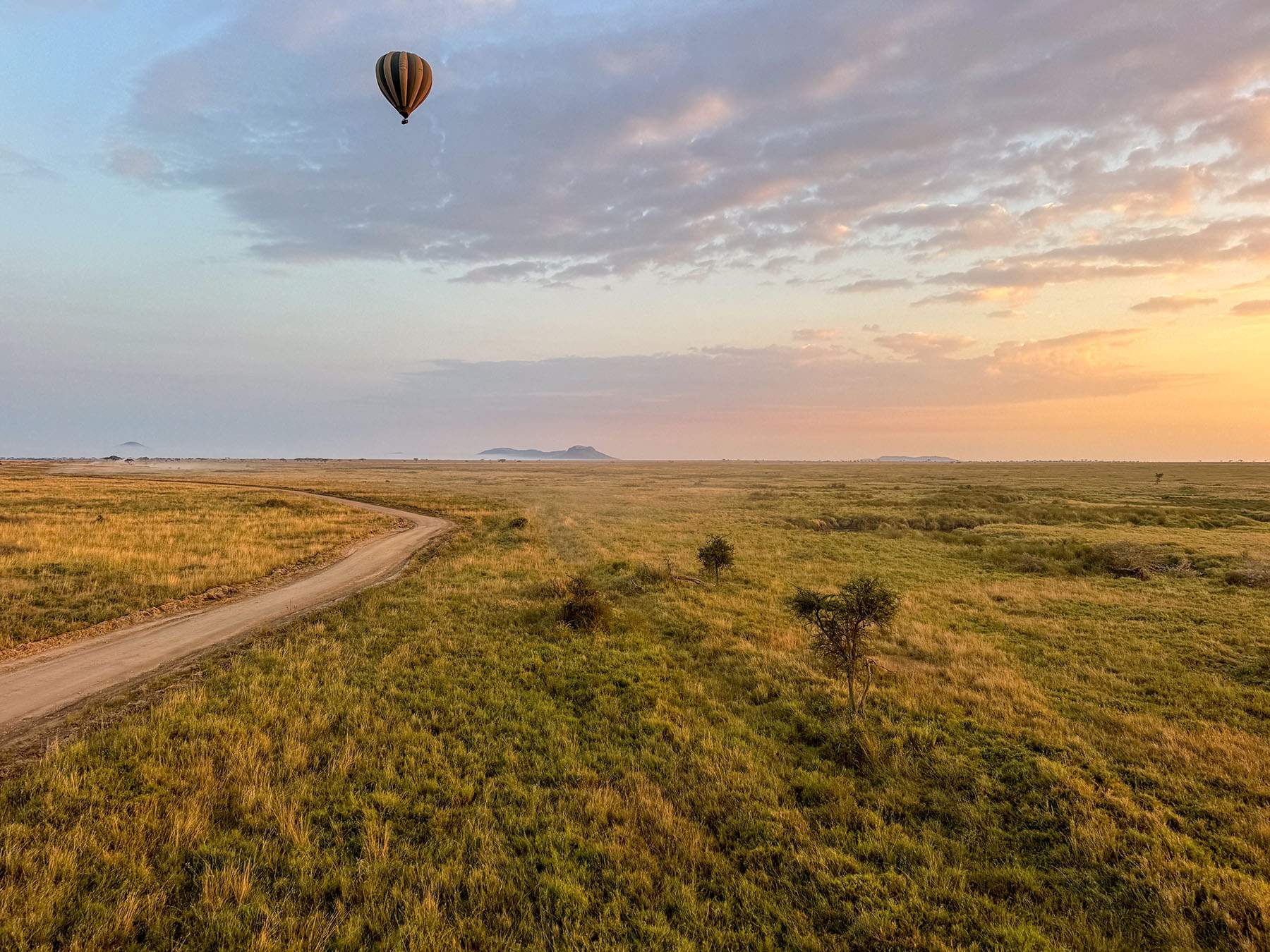 A hot-air balloon drifting over the Serengeti plains
After stopping for a picnic lunch on the way, you will enjoy an afternoon drive during which you will seek out the great wildebeest herds. Nothing quite prepares you for the scale of the migration and photos just can’t do it justice. It really is something that you have to witness in person and I am certain it will take your breath away.
After a long but exciting day, you will stay the night in a tented camp in either Western or Northern Serengeti. Spend the evening listening to the sounds of the Serengeti night as you enjoy dinner before retiring to rest for the night. You’ll want a good night’s sleep as, you guessed it, it’s another early start tomorrow!
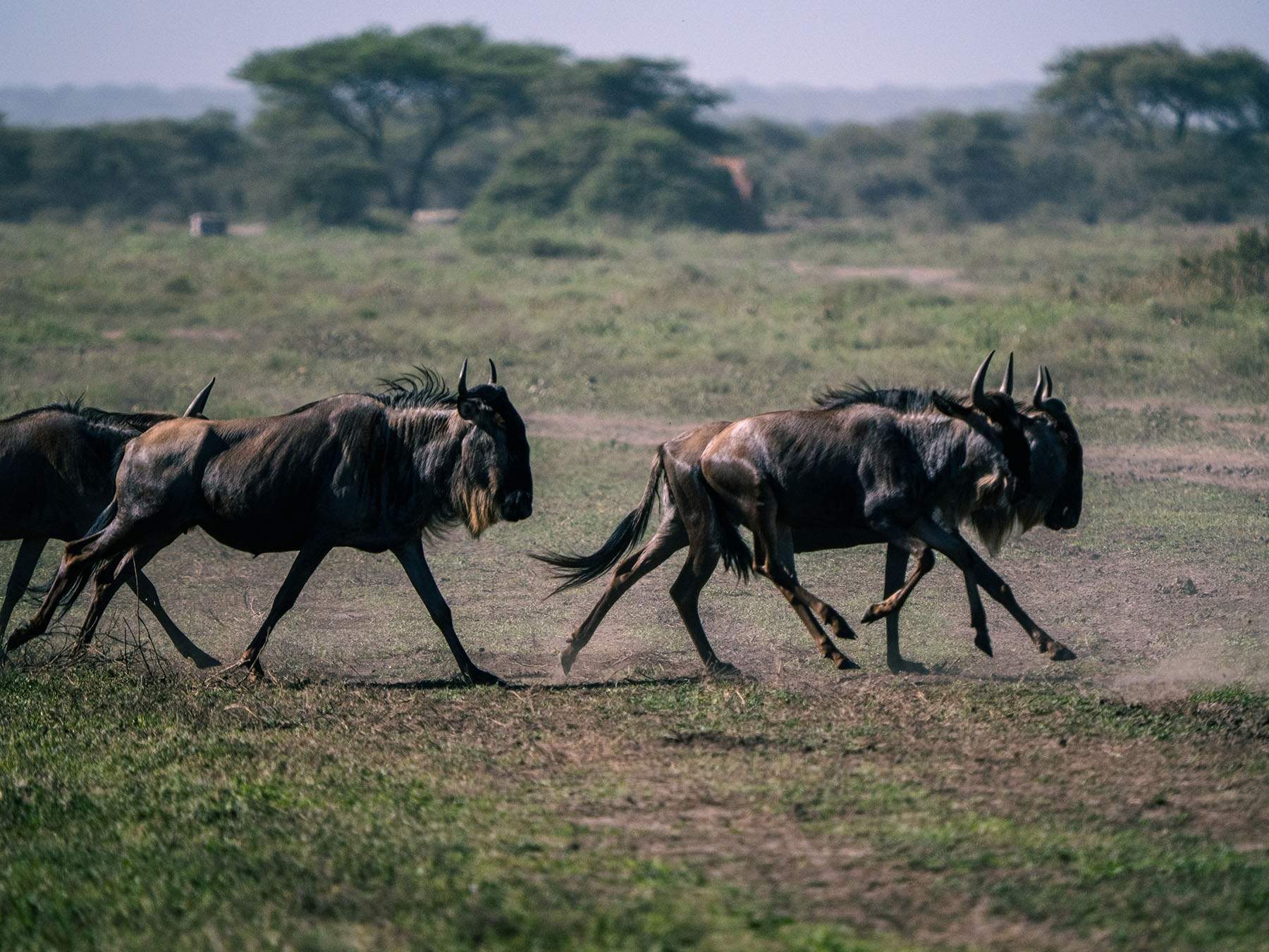 The great wildebeest migration in the Serengeti
Where To Stay in Northern or Western Serengeti
In Northern Serengeti, Lemala Kuria Hills Lodge is a fantastic luxury option. For those on a mid-range budget, Safari Haven Migration Camp is one of my favorites. In Western Serengeti, lodging options are more limited. Lahia Tented Lodge is my favorite choice.
Day 7: Northern or Western Serengeti to Zanzibar
It’s your last morning on safari in Tanzania, so you’ll want to make the most of it. Rising at dawn gives you the best chances to tick off those final animals from your wishlist, and enough time to journey to the Mara River to see a crossing if you’re in Northern Serengeti at the right time of year.
After an exhilarating morning spent searching for wildlife, you will enjoy your final picnic lunch before it’s time to say farewell to the Serengeti.
The best way to journey back to Arusha from here is via light aircraft. Each corner of the Serengeti has its own airstrip with frequent scheduled flights to and from Arusha Airport. Flying between the Serengeti and Arusha takes about an hour, which is significantly quicker than driving. In contrast, driving between Northern Serengeti or Western Serengeti and Arusha takes an entire day and so wouldn’t allow you any time for a morning game drive.
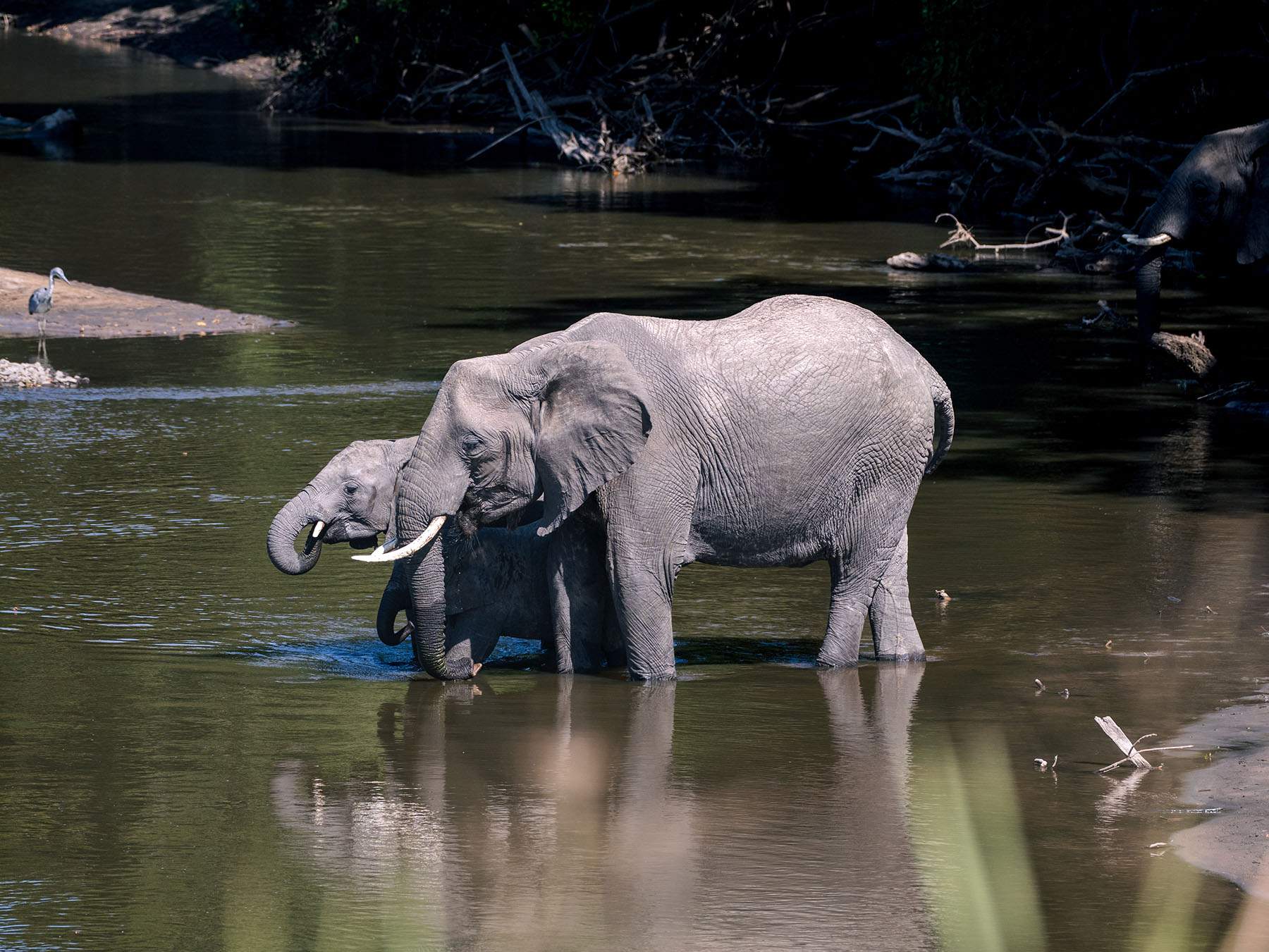 Elephants drinking in the Grumeti River in the Serengeti
Once in Arusha, it’s either an hour’s drive to Kilimanjaro International Airport if your itinerary ends here, or, if you’re staying for 10 days, it’s time to hop on your second flight of the day and journey to the tropical island of Zanzibar.
My favorite domestic airline to book with is Flightlink. They have the most favorable luggage restrictions (25kg/55lb including hand luggage compared to 15kg/33lb with many other airlines) and operate both flights between Arusha and Serengeti and Arusha and Zanzibar, so it’s possible to book your Serengeti to Zanzibar tickets in one go. The flight between Arusha and Zanzibar takes around an hour. Once in Zanzibar, you will journey to your hotel for the next few nights.
Where To Stay on Zanzibar
There’s an abundance of beaches and hotels on Zanzibar and each beach suits a slightly different demographic. My own personal favorite beaches to stay at are Pongwe and Matemwe, on the east of the island. While they don’t benefit from sunset views and they have tidal variation, they feel quiet and untouched. My favorite hotel on Zanzibar is Tulia Zanzibar Unique Beach Resort (luxury). Just up the road is LUX* Marijani, which I think is excellent value for money. It has gorgeous rooms and is a lovely resort for a mid-range price.
If you’d rather base yourself on a more lively beach with sunset views and no tides, Nungwi and Kendwa in the north are extremely popular. Kilindi Zanzibar (luxury) is my favorite hotel on Kendwa Beach. Now, because Kendwa Beach is so popular, the mid-range options don’t have the best reviews, though Kendwa Rocks Beach Hotel is arguably in the best location. Nungwi Dreams by Mantis is a solid choice for Nungwi Beach.
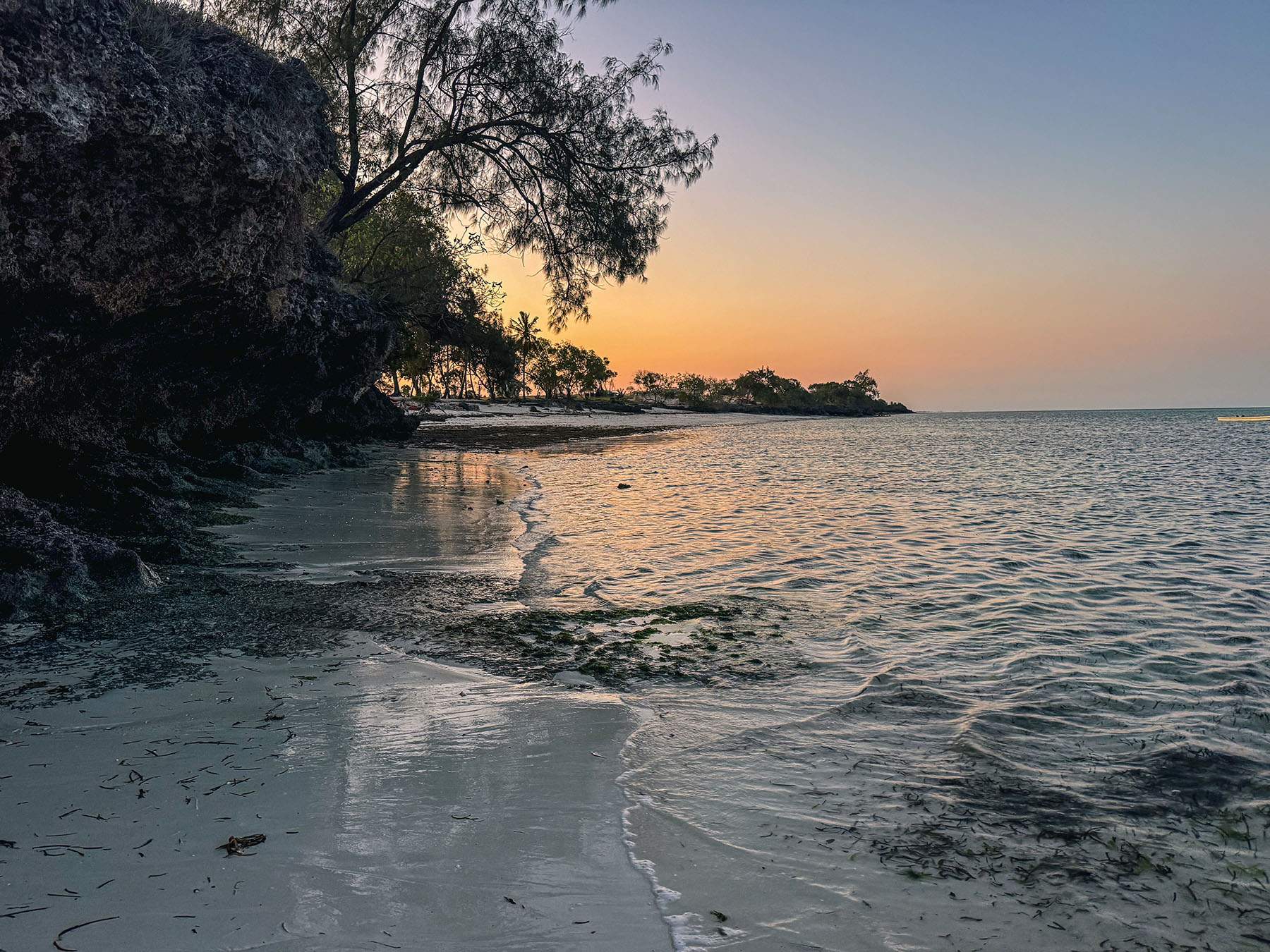 Sunset on Pongwe Beach on Zanzibar
Days 8 to 10: Zanzibar
After an action-packed safari, I imagine you want to take these next few days at a leisurely pace, unwind and fall into the rhythm of island life. Therefore, rather than give you a day-by-day itinerary for your time here, I’ll give you some of my favorite things that you can do, should you fancy a break from swimming and sunbathing.
My top pick for things to do on Zanzibar is to take a boat trip to Mnemba Atoll. There are dozens of tours available as it’s one of the most popular activities.I would recommend choosing a tour that excludes the dolphin watching. I personally found the dolphin watching to be very uncomfortable as too many boats crowd the dolphins. Instead, enjoy snorkelling on Mnemba reef and then a picnic lunch on a sandbar. You can make your trip even better by requesting a private sandbar. There’s nothing like standing on your own private island in the middle of the Indian Ocean, with no other soul in sight!
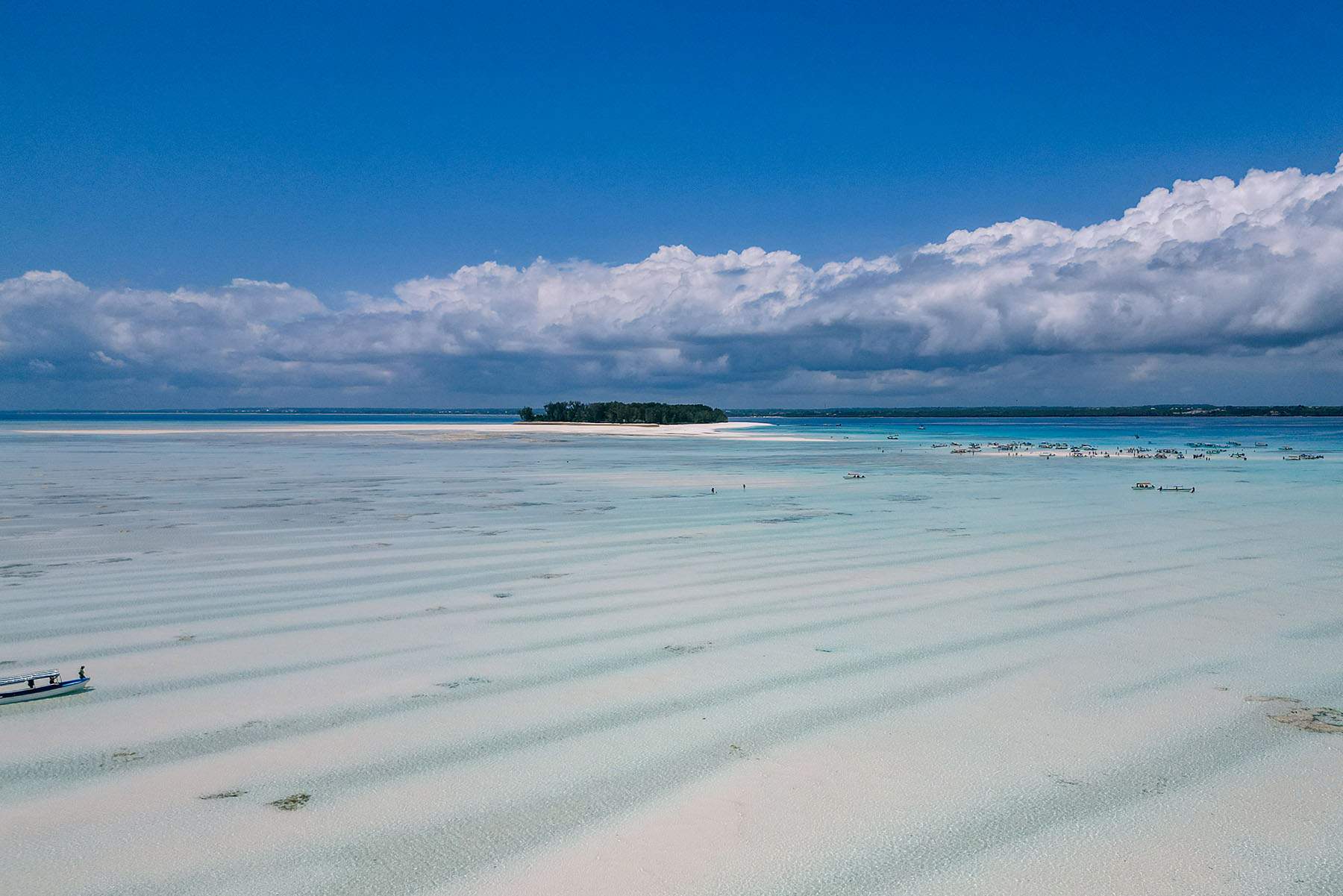 Mnemba Atoll on Zanzibar
Visiting Stone Town is also worthwhile. The old town is very picturesque and it's lovely to stroll down the cobblestone streets, taking a peek inside some of the countless independent stores. Sharazad The Door Restaurant & Cafe is a great place to grab a bite to eat in Stone Town. It’s a small restaurant, hidden away within a shop. It can be a bit challenging to find but, trust me, it’s worth it. I enjoyed some fabulous fresh seared tuna here. There are many sights to see in Stone Town such as the Freddie Mercury Museum and the Old Fort. A tour isn’t strictly necessary as the old town is very walkable.
Jozani Forest is a great place for nature-lovers who aren’t done with their safari just yet. This is a great place to see the endemic Zanzibar red colobus monkey. Additionally, you’d likely spot blue monkeys and a range of birds. I saw a beautiful sunbird in the forest.
A visit to Jozani Forest will also take you to a mangrove swamp where you can spot coastal birds such as the western reef heron (I saw one eating a prawn), as well as some sizable red crabs.
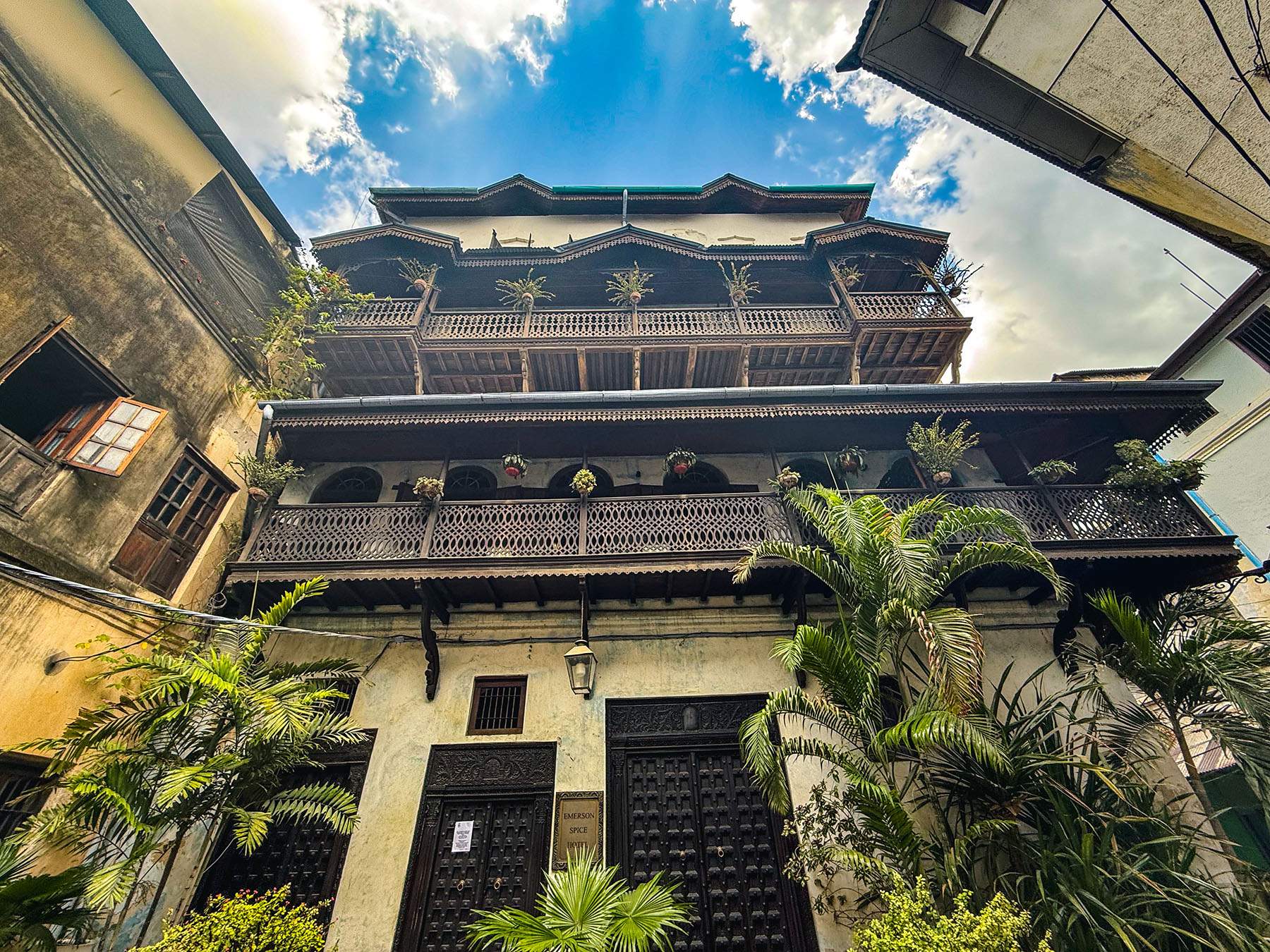 Architecture in Stone Town, Zanzibar
Conclusion
A seven-to-10 day safari in Tanzania allows you enough time to comfortably see the very best that Tanzania has to offer. Seven days is the perfect length of time to explore Tarangire, Ngorongoro Crater and Serengeti at a nice pace and three days at the end of your safari allows you time to relax and see the beauty of Zanzibar.
After visiting more than 10 African countries and experiencing countless safaris, Tanzania remains one of my all-time favorite safari destinations. I have no doubts that you will come back with memories that will last a lifetime, and perhaps the desire to book another African safari!
Want To Visit Tanzania?
Click on the button below to compare Tanzania safaris offered by top-rated tour operators.
7 to 10 day Tanzania Safari Tours
By Ella McKendrick Ella McKendrick is a travel writer and filmmaker, boasting a substantial online following on YouTube and running a successful blog.
More About This Author





 Subscribe to our newsletter
 Follow us on Instagram
Safari Tours to Tanzania
-

11-Day Serengeti Inside out Glamping Safari
$3,117 to $3,517 pp (USD)
Tanzania: Private tour
Mid-range Lodge & Tented CampYou Visit: Moshi (Start), Arusha (City), Arusha NP, Lake Manyara NP, Ndutu (Southern Serengeti NP), Serengeti NP, Northern Serengeti NP, Ngorongoro Crater, Tarangire NP, Kilimanjaro Airport, Moshi (End)
Shemeji Safari
4.9/5 – 306 Reviews

-
10-Day Tanzania Northern Circuit Comfort Adventure
$3,477 to $3,963 pp (USD)
Tanzania: Private tour
Mid-range Lodge & Tented CampYou Visit: Arusha (Start), Tarangire NP, Lake Manyara NP, Ndutu (Southern Serengeti NP), Western Serengeti NP, Northern Serengeti NP, Serengeti NP, Ngorongoro Crater, Arusha (End)
Paradise & Wilderness
4.9/5 – 271 Reviews
-
![3-Day Zanzibar to Serengeti with Four Seasons Lodge]()
3-Day Zanzibar to Serengeti with Four Seasons Lodge
$2,255 to $2,828 pp (USD)
Tanzania: Private tourLuxuryLodge
You Visit: Zanzibar (Start), Central Serengeti NP, Ngorongoro Highlands, Ngorongoro Crater, Zanzibar (End)
Professional Safaris
5.0/5 – 173 Reviews